
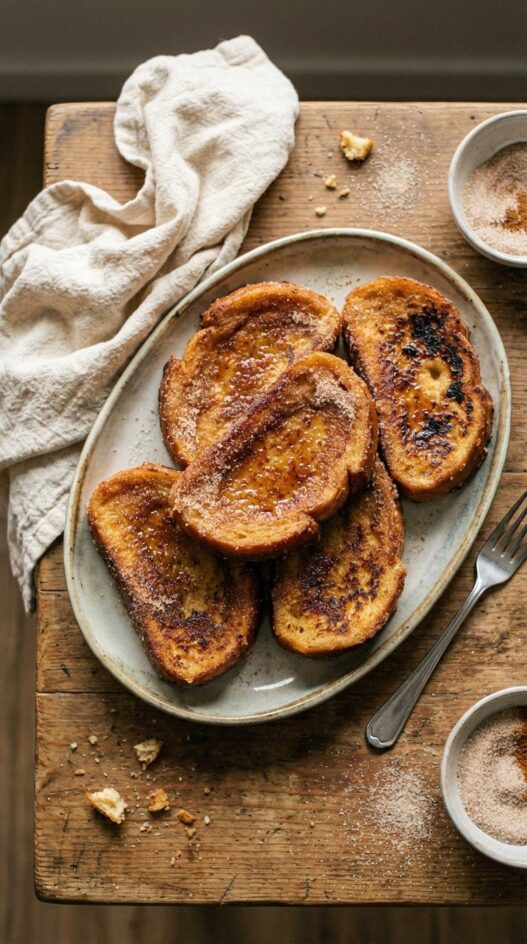
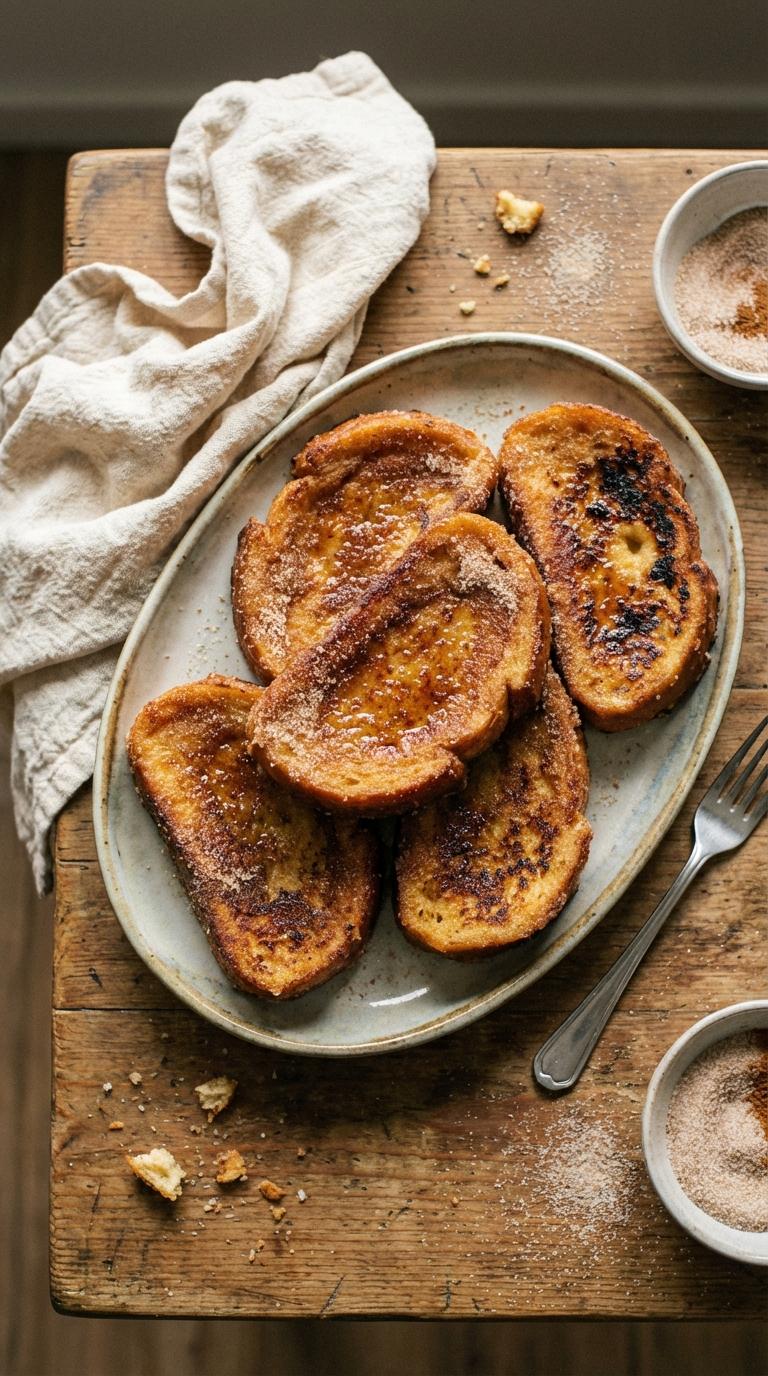
In Spain, Semana Santa is as much about food as it is about processions. Torrijas show up in bakery windows across the country every spring, stacked high and glistening with sugar. They have been part of Holy Week for centuries, a way to use up stale bread during a period when meals followed the rhythms of the church calendar. Every family has a version. This is mine.
The bread goes into warm cinnamon milk and sits there until it is completely saturated, almost falling apart. Then egg, hot oil, and a thick coat of cinnamon sugar. They come out shatteringly crisp on the outside with a custard-soft center that barely holds together. Eat them warm.
How to Make Torrijas
Choosing and Soaking the Bread
Use a sturdy white loaf, ideally one or two days old. Fresh bread disintegrates in the milk. If your bread is too soft, cut it into 2.5cm (1 inch) slices and leave them uncovered on a rack for a few hours.
Pour the warm cinnamon milk over the slices and let them soak for a full hour. They should be heavy with milk but still hold their shape when you lift them carefully.
Getting the Fry Right
The oil needs to be at 170C (340F) before the first slice goes in. Too cool and the torrijas absorb oil and turn greasy. Too hot and the egg coating burns before the center warms through.
Fry two or three at a time. Flip once. Drain on paper towels for just a few seconds, then roll them in the cinnamon sugar while still hot so the coating sticks.
Torrijas, Spanish (not-French) toasts
- Total Time: 30 minutes
- Yield: Serves 6
- Diet: Omnivore
Description
Crispy Spanish toast, soaked in spiced milk and fried to golden perfection. A delightful Easter treat, warm or cold.
Ingredients
- 1 loaf bread loaf
- 4 cups (1 liter) whole milk
- 3 tbsp sugar
- 1 stick cinnamon
- 3-4 eggs
- Sunflower oil
- Sugar and cinnamon
Instructions
- Cut the bread into 1 inch (2.5cm) slightly diagonal slices and arrange them on a shallow dish.
- In a saucepan, combine milk, sugar, and a cinnamon stick. Bring to a boil, then remove from heat and let infuse for 5 minutes.
- Discard the cinnamon stick and pour the milk over the bread; let soak for one hour.
- Beat the eggs in a large plate.
- Heat oil to medium heat in a large frying pan.
- Using a large spatula, carefully transfer the soaked bread slices, one by one, into the beaten egg, turning to coat both sides. Then, dip the slices into the hot oil.
- Fry for 3-4 minutes per side, until golden brown.
- Remove the torrijas and place them on a paper towel-lined dish. Sprinkle thoroughly with sugar and cinnamon. Serve warm or cold.
Notes
- Stale bread works best for torrijas; it absorbs the milk mixture more effectively.
- For a richer flavor, use a combination of whole milk and heavy cream in the milk mixture.
- To prevent the torrijas from becoming soggy, ensure the oil is hot enough before frying and don’t overcrowd the pan.
- Prep Time: 15 minutes
- Cook Time: 15 minutes
- Category: Brunch
- Method: Frying
- Cuisine: Spanish
Nutrition
- Serving Size: 2 slices
- Calories: 250
- Sugar: 15
- Sodium: 100
- Fat: 12
- Saturated Fat: 7
- Unsaturated Fat: 5
- Carbohydrates: 35
- Fiber: 2
- Protein: 5
- Cholesterol: 100
Frequently Asked Questions
Can I use brioche or challah instead of a plain white loaf?
You can, but the result will be richer and softer since both already contain egg and butter. A plain white bread or a baguette gives you the traditional contrast between the crisp fried exterior and the milk-soaked center. Enriched breads work, they just taste different.
How far ahead can I make torrijas?
They are best within a few hours of frying. If you need to make them ahead, fry and drain them, then reheat in an oven at 180C (350F) for about 5 minutes. Skip the cinnamon sugar coating until after reheating so it stays dry and gritty rather than dissolving.
Can I bake torrijas instead of frying them?
You can bake them at 200C (400F) on an oiled sheet pan for about 12 minutes per side. They will not get the same shattery crust that frying gives, but they will still be good. Brush the egg-dipped slices with a little oil before baking to help them brown.
If You Liked This Recipe, You Are Going To Love These:
Crescia: Umbria’s Spectacular Easter Cheese Bread
Easter Bread from Patsy’s Italian Restaurant
Classic Australian Hot Cross Buns


I’ve actually used your recipes for five or so years now. My family love it and anyone I’ve made them for do too. I lost the recipe and was so pleased to search and find it still available. Thanks so much for sharing it. And I completely agree; slicing the bread the night before really does help the flavour when you pour the warm milk over. I’ve always used honey to sweeten mine. I’ve even used seeetner instead of sugar and while not as good it’s still a lovely desert
it is a great recipe especially for a Spanish project
Thank you for this amazing recipe!