
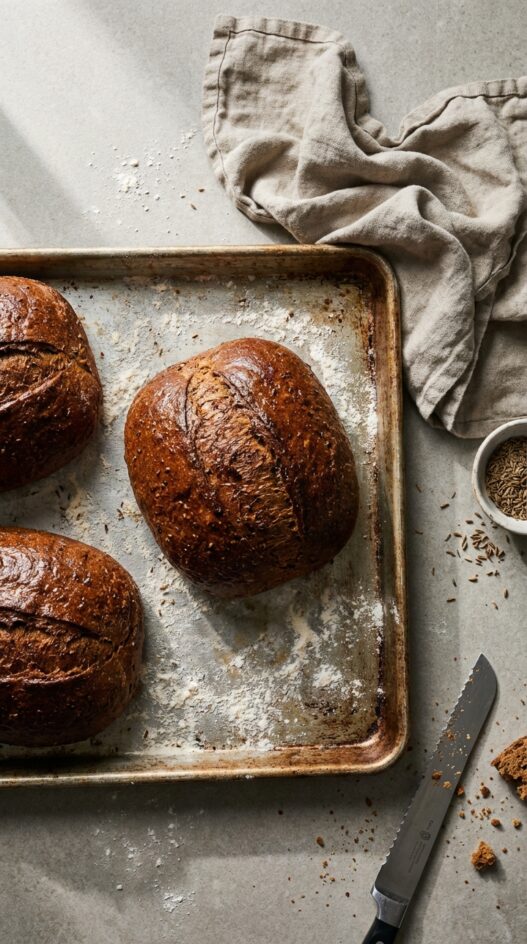
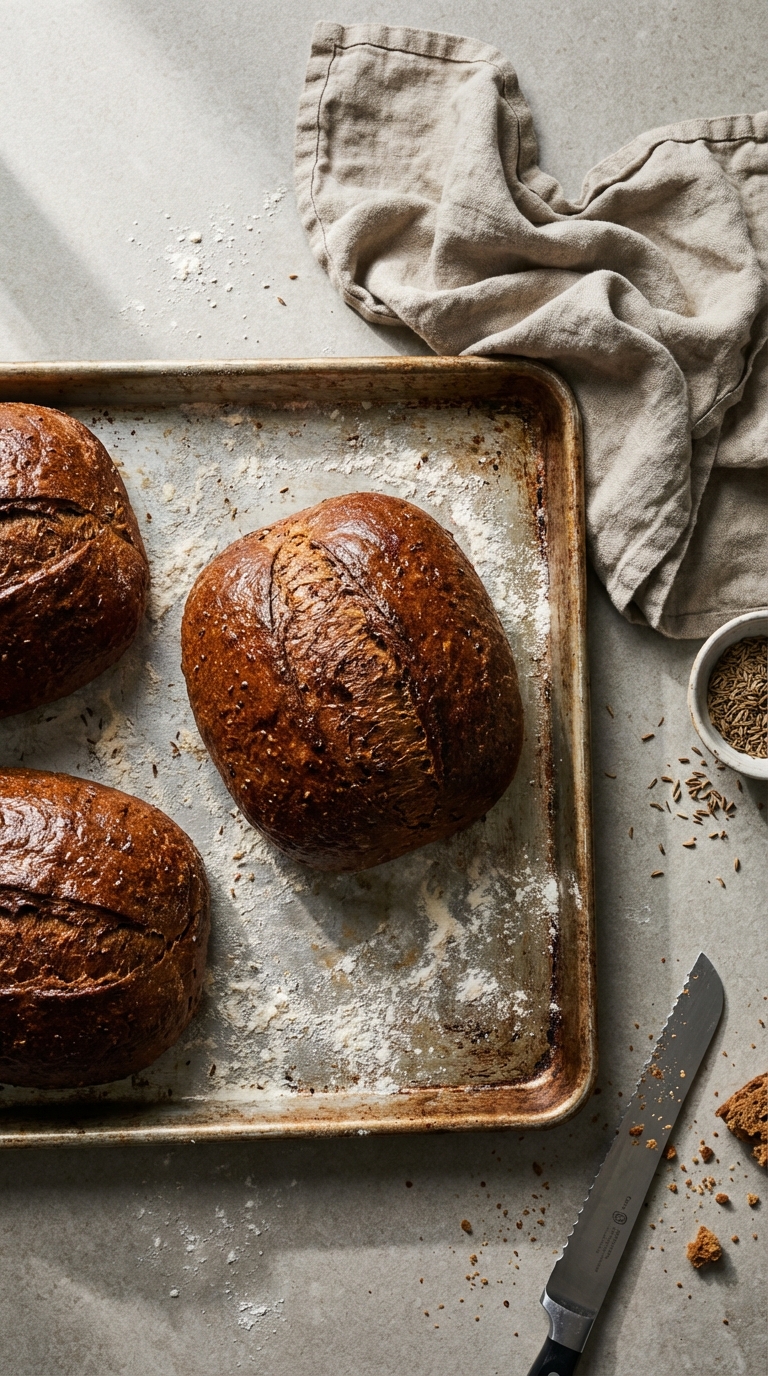
The classic, slightly sweet Swedish limpa bread is absolutely delicious. Top with cheese, smoked salmon or prosciutto.
Swedish Limpa Bread, a savory rye staple, carries with it the flavors of Scandinavia. It’s distinguished by its iconic pairing of fragrant orange zest, anise, and caraway. Traditionally baked during holiday season, but enjoyed by millions of Swedes daily for breakfast or lunch, Limpa’s hearty crust and soft interior make it a unique, versatile bread, perfect for sandwiches.
When I was little, my family was lucky enough to have a friend who would bake us this bread on occasion, introducing me to its rich, intoxicating flavor. My mom started baking it frequently and has passed the recipe on to me. My favorite way to eat limpa is toasted with Havarti cheese but the dense, moist bread goes well with many toppings and also makes gourmet sandwiches. Try it with thinly sliced gravlax, adorned with fresh dill, which complements its caraway notes. For a sweet pairing, consider lingonberry jam, offering a tangy contrast.
Print
Swedish Limpa Bread
- Total Time: 60 minutes
- Yield: Makes 3 loaves
- Diet: Omnivore
Description
Classic Swedish limpa: slightly sweet, delicious. Top with cheese, salmon, or prosciutto!
Ingredients
- 2 1/4 tsp yeast
- 2 1/2 cups (600 ml) warm water
- 3/4 cups (170 ml) molasses
- 1 Tbsp sugar
- 1 tsp salt
- 1 Tbsp anise seeds
- 1/3 cups (80 ml) shortening
- 2 cups (473 ml) rye flour
- 5-6 cups (1200-1400 ml) bread flour
- 1 egg
Instructions
- Dissolve the yeast in warm water. Stir in the molasses, sugar, salt, anise seeds, shortening, and rye flour, one at a time. Beat until smooth.
- Gradually mix in the bread flour until the dough is manageable (it will be slightly tacky).
- Knead the dough on a lightly floured surface until a smooth ball forms.
- Place the dough ball in a greased bowl, greased side up. Cover and let rise for 1 1/2-2 hours, or until doubled in size.
- Punch down the dough, round it into a ball, and let it rise for 1 hour.
- Shape the dough into three round loaves and place them on a greased baking sheet. Cover with a towel and let rise for 1 hour.
- Beat an egg and brush the loaves with the beaten egg (optional).
- Bake the bread at 350°F (175°C) for 30-40 minutes, or until the internal temperature reaches 190-200°F (88-93°C). The bread will sound hollow when tapped. Cover with foil if the crust browns too quickly.
Notes
- For a richer flavor, use dark molasses instead of light.
- To prevent sticking, generously grease your baking sheet and the bowl used for rising.
- Store the cooled limpa in an airtight container or breadbox at room temperature for up to 3 days, or freeze for longer storage.
- Prep Time: 20 minutes
- Cook Time: 40 minutes
- Category: Baking
- Method: Baking
- Cuisine: Swedish
Nutrition
- Serving Size: 1 slice
- Calories: 300
- Sugar: 15
- Sodium: 300
- Fat: 10
- Saturated Fat: 5
- Unsaturated Fat: 5
- Carbohydrates: 50
- Fiber: 5
- Protein: 5
- Cholesterol: 20
Frequently Asked Questions
Can I use a different type of flour instead of rye flour for Swedish Limpa Bread?
While rye flour is essential for the traditional flavor and texture of Limpa, you can experiment with a blend of whole wheat and all-purpose flour, but the bread may lose its characteristic taste.
What can I substitute for orange zest if I don’t have any?
If you don’t have orange zest, you can use lemon zest as an alternative; it will give a different citrus note but will still enhance the flavor of the bread.
Is it necessary to use both caraway and anise seeds in this recipe?
Yes, using both caraway and anise seeds is important to achieve the signature flavor profile of Swedish Limpa, as they each contribute distinct aromatic qualities that complement the bread.
The whole house smelled like the holidays when I baked this on a rainy Sunday. So distinctive with that orange and caraway, and wonderful with sharp cheese. Thank you!
What can I substitute for the shortening?
Hey Tiffany, butter or lard would be my top choices for sure!
Warm the buttermilk slightly before mixing. It really helps with activating the yeast, especially if your kitchen is cool. Happy baking!
Thumbs up!
I have been looking for the perfect limpa recipe – so happy to have found this!
Hi,
I was wondering if you could suggest how I best could mix in the rock solid shortening. At the moment it’s not mixing in well.
Thanks!
‘Limpa’ Is Swedish for ‘loaf’, so perhaps someone misunderstood or misheard the instructions?
Nevertheless, rye or råg bread is popular here in Sweden and Denmark.
I loved all your wonderful breads from Amsterdam, Oslo, Copenhagen and Stockholm. Thank you for sharing your recipe. I cannot wait to get home to Johannesburg to try to bake these delicious loaves.
Hi Kelsey. What shortening do you use?
Can this be made in a breadmaker?