
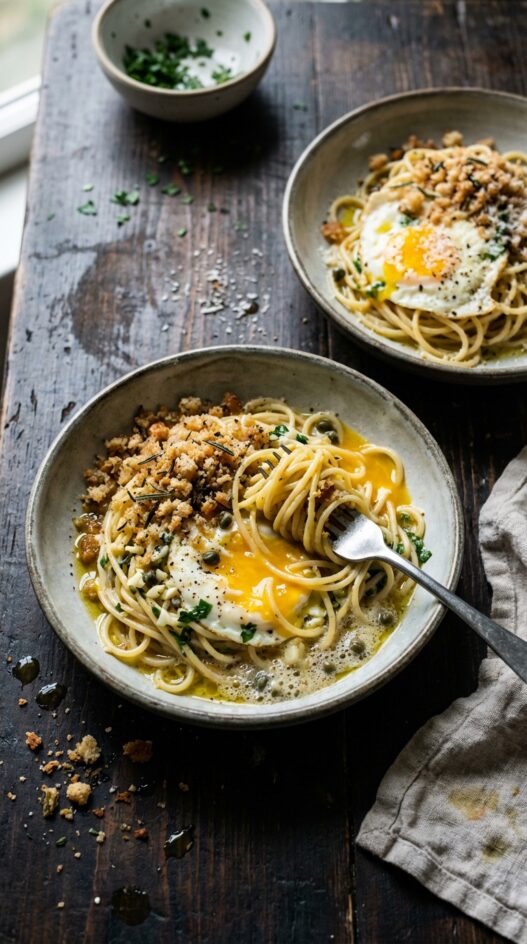
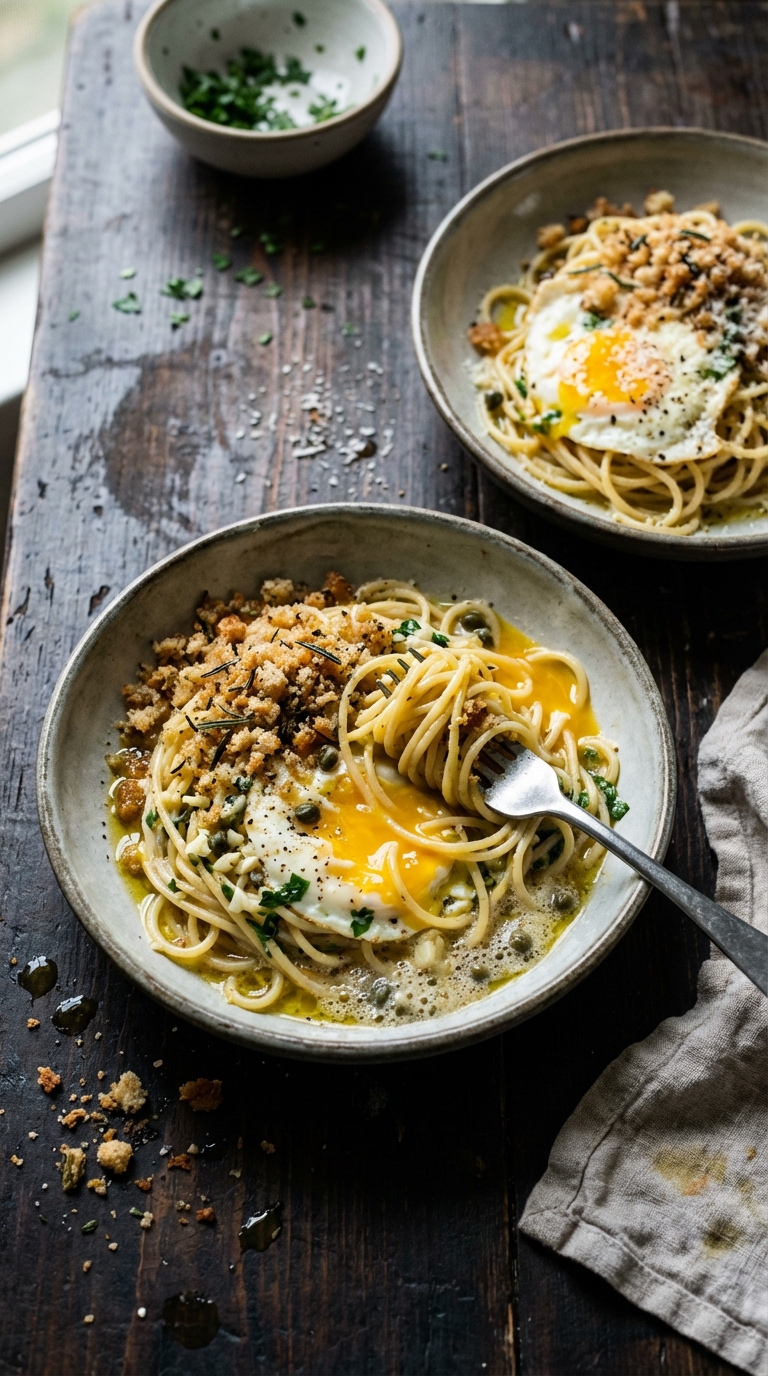
Sometimes called “poor man’s parmesan”, pangritata is a great way to use up stale bread to improve your pasta dishes. Here, in a delicious combo with lemon, parsley, garlic and fried eggs.
Life can get a bit hectic sometimes, so don’t forget to take a step back, and eat spaghetti with pangritata, oil, garlic, lemon and a fried egg. That’s what I love about this meal – it’s simplicity.
You may be asking yourself – what is this pangritata business? Pangritata, also known as ‘the poor man’s parmesan’ involves adding crispy fried breadcrumbs, flavored with rosemary and garlic, to pasta.
The al dente pasta, parsley, garlicky fried egg, parmesan cheese and pangritata all come together in unison and make this dish a humble, fantastic dinner. It is also so easy (and cheap) that it would make a great meal to serve at for a dinner party with some sides.
How to Make Spaghetti Pangritata with Fried Eggs
For the Pangritata:
- Heat Oil: In a large fry pan, heat 2 tablespoons of olive oil over medium-high heat.
- Toast Breadcrumbs: Add the breadcrumbs to the pan and sauté until golden and crispy, about 4 to 5 minutes.
- Add Flavorings: Stir in the chopped rosemary, then remove from heat quickly to prevent burning.
- Finish with Lemon: Once cooled, mix in the lemon juice and set aside.
For the Pasta:
- Cook Pasta: Bring a large pot of well-salted water to a boil and cook the spaghetti until al dente, according to package instructions.
- Prepare Eggs and Garlic: Wipe out the skillet used for pangritata, add 1 tablespoon each of olive oil and butter, and melt over medium heat. Add garlic, then carefully break the eggs into the skillet. Adjust the heat to avoid burning the garlic while allowing the egg whites to set but keeping the yolks runny.
- Combine: Drain the pasta, reserving ½ cup of the cooking water. Return the pasta to the pot, then add the garlic, eggs, and fat from the skillet, parsley, and capers. Toss well, breaking up the eggs. Use the reserved pasta water to help combine the ingredients smoothly.
- Serve: Plate the pasta, season with black pepper and salt, sprinkle over with grated cheese, and top with the prepared pangritata.
Recipe Notes
- Pangritata: Ideal for adding crunch and flavor; ensure not to burn the garlic as it can become bitter.
- Egg Cooking: Cook eggs on a gentle heat to avoid overcooking the yolks.
- Pasta Water: Use a few spoonfuls of the starchy pasta water to create a silky, smooth sauce that binds the spaghetti and sauce ingredients together.
Spaghetti Pangritata with Fried Eggs
- Total Time: 25 minutes
- Yield: Serves 2
- Diet: Omnivore
Description
Crispy pangritata breadcrumbs add a delightful crunch to this simple spaghetti dish. Fried eggs and fresh herbs finish it perfectly.
Ingredients
- 2 tablespoons olive oil
- 1/2 cup fresh or stale coarse breadcrumbs
- 2 teaspoons minced fresh rosemary leaves
- 1 teaspoon lemon juice
- Spaghetti for 2
- 1 tablespoon olive oil
- 1 tablespoon butter
- 2 cloves minced garlic
- 2 large eggs
- 3 tablespoons chopped Italian parsley
- 1 teaspoon small capers (optional, drained)
- Freshly ground black pepper
- 1/4 cup grated Parmesan cheese
- Lemon juice
Instructions
For the Pangritata
- In a large fry pan, heat 2 tablespoons of olive oil over medium-high heat.
- Add the breadcrumbs to the pan and sauté until golden and crispy, about 4 to 5 minutes.
- Stir in the chopped rosemary, then remove from heat quickly to prevent burning.
- Once cooled, mix in the lemon juice and set aside.
For the Pasta
- Bring a large pot of well-salted water to a boil and cook the spaghetti until al dente, according to package instructions.
- Wipe out the skillet used for pangritata, add 1 tablespoon each of olive oil and butter, and melt over medium heat. Add garlic, then carefully break the eggs into the skillet. Adjust the heat to avoid burning the garlic while allowing the egg whites to set but keeping the yolks runny.
- Drain the pasta, reserving 1/2 cup of the cooking water. Return the pasta to the pot, then add the garlic, eggs, and fat from the skillet, parsley, and capers. Toss well, breaking up the eggs. Use the reserved pasta water to help combine the ingredients smoothly.
- Plate the pasta, season with black pepper and salt, sprinkle over with grated cheese, and top with the prepared pangritata.
Notes
- For extra crispy pangritata, spread the breadcrumbs in a single layer on the pan and avoid overcrowding.
- If you don’t have fresh rosemary, 1 teaspoon of dried rosemary can be substituted, but reduce the amount to ½ teaspoon.
- Store leftover spaghetti separately from the pangritata to maintain its crispiness. Reheat gently before serving.
- Prep Time: 10 minutes
- Cook Time: 15 minutes
- Category: Main Course
- Method: Pan-Frying
- Cuisine: Italian
Nutrition
- Serving Size: 1.5 cups
- Calories: 450
- Sugar: 2
- Sodium: 400
- Fat: 25
- Saturated Fat: 8
- Unsaturated Fat: 15
- Carbohydrates: 55
- Fiber: 4
- Protein: 18
- Cholesterol: 200
Frequently Asked Questions
How do I ensure the pangritata doesn’t burn while cooking?
Keep a close eye on the breadcrumbs as they sauté, stirring frequently, and remove the pan from heat as soon as they turn golden and crispy.
Can I use fresh bread instead of stale bread for the pangritata?
Yes, you can use fresh bread, but be sure to dry it out first by toasting it lightly in the oven before proceeding with the recipe.
What can I substitute for rosemary in the pangritata?
If you don’t have rosemary, you can use dried oregano or thyme as a flavorful alternative.
If You Liked This Recipe, You’ll Love These
- Spicy Pork Sausage Spaghetti
- Eggplant and Cauliflower Curry with Tofu
- Crispy Salmon Cakes with Homemade Remoulade Sauce
- Sicilian Cavatappi with Breadcrumbs and Anchovies





will make this as soon as I copy the recipe. the crunch! the garlic! the rosemary! Oh my my! whats not to love!!!!!!!