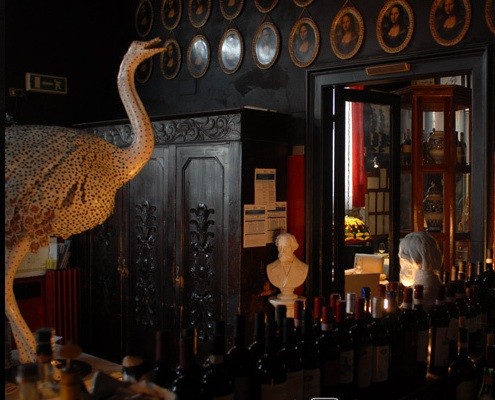
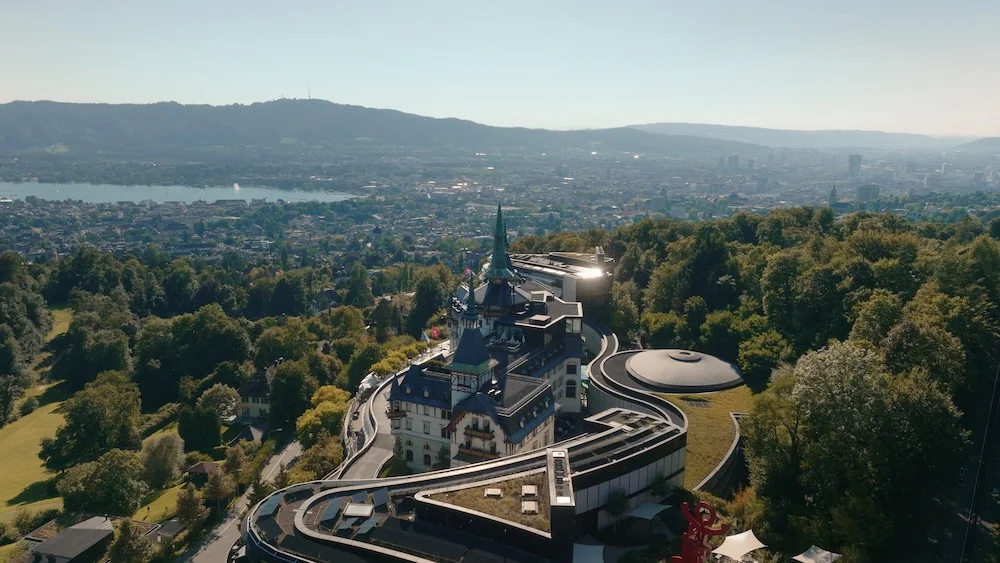
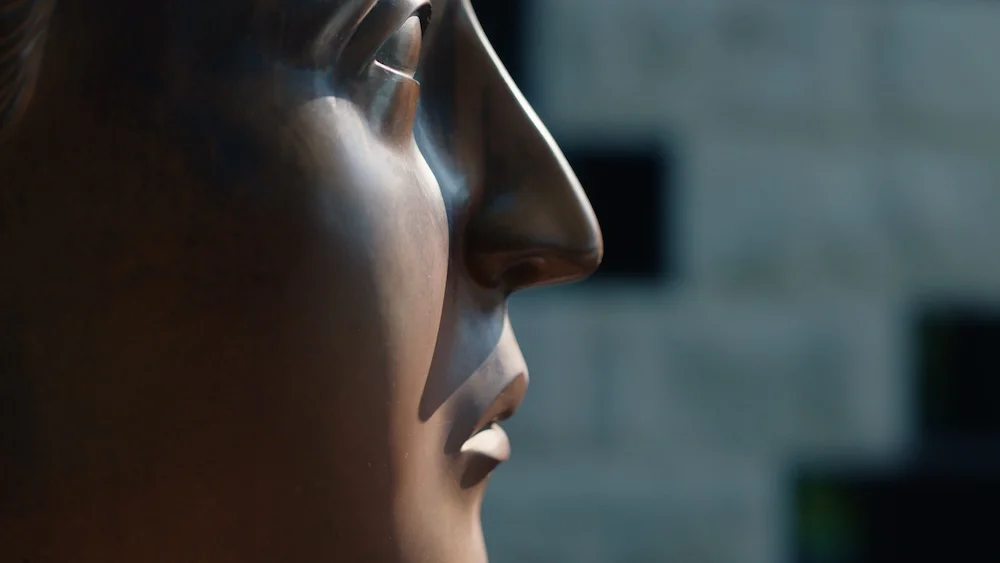
The Dolder Grand has a challenge most hotels would be glad to have. Its art collection, valued at something in the region of a half billion euros, is so spectacular that some guests arrive to see it rather than to sleep in the hotel. More than a hundred works hang through the public rooms and the corridors: Dalí, Keith Haring, Takashi Murakami, Botero, a Magritte you come upon beside a velvet armchair, a grand Sylvester Stallone for the people who need to be told the collection also has a sense of humor.
The building is a collected object in itself. It opened in 1899 as a Kurhaus, a health retreat for people seeking clean Alpine air above the city, and in 2008 Norman Foster grafted two modern wings onto the original turreted castle without anyone feeling the join. Downstairs, Heiko Nieder holds two Michelin stars in the majestic dining rooms of The Restaurant.
Everything named in the two paragraphs above was acquired, built, or awarded on the assumption that it would still be there in fifty years and, then there is the fourth floor.
A Japanese Counter Hidden Inside a Suite
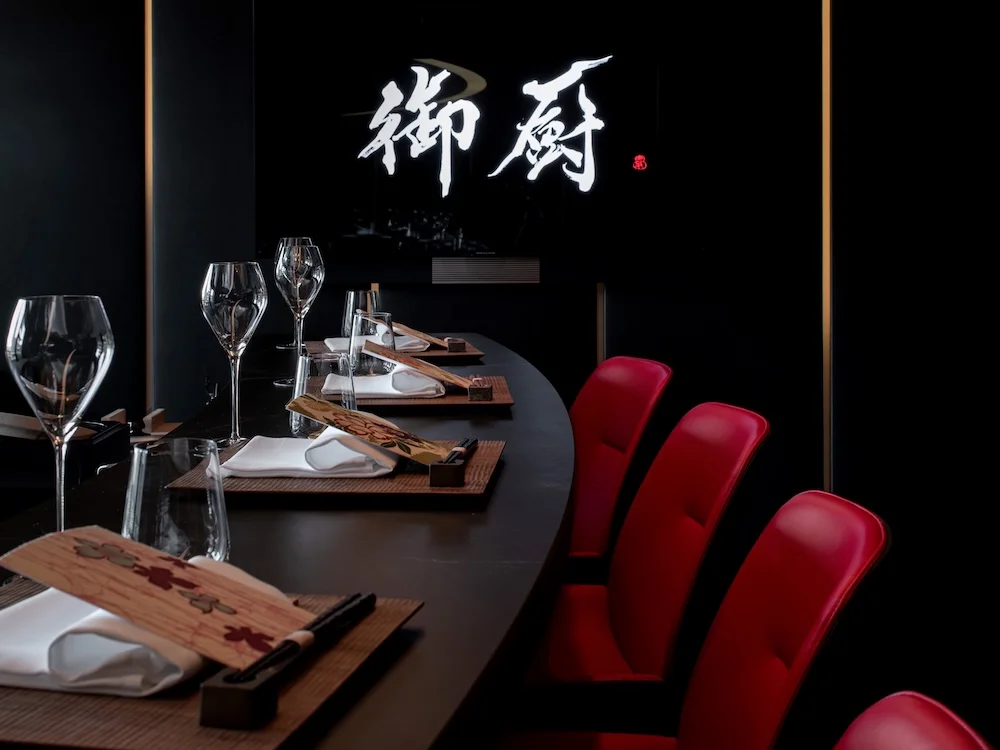
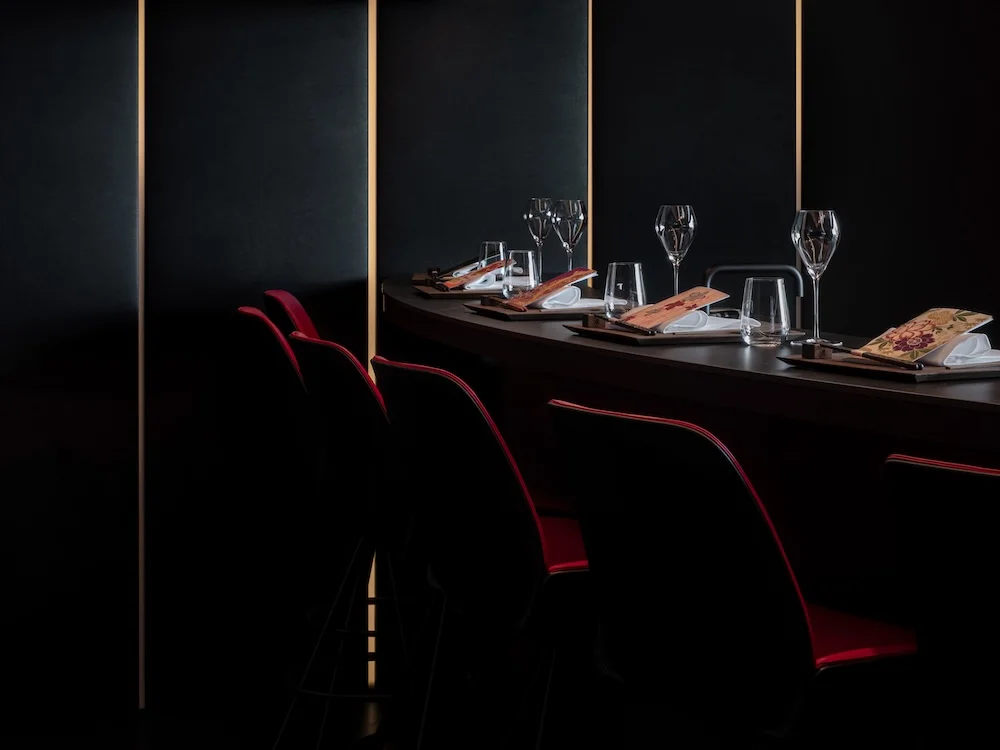
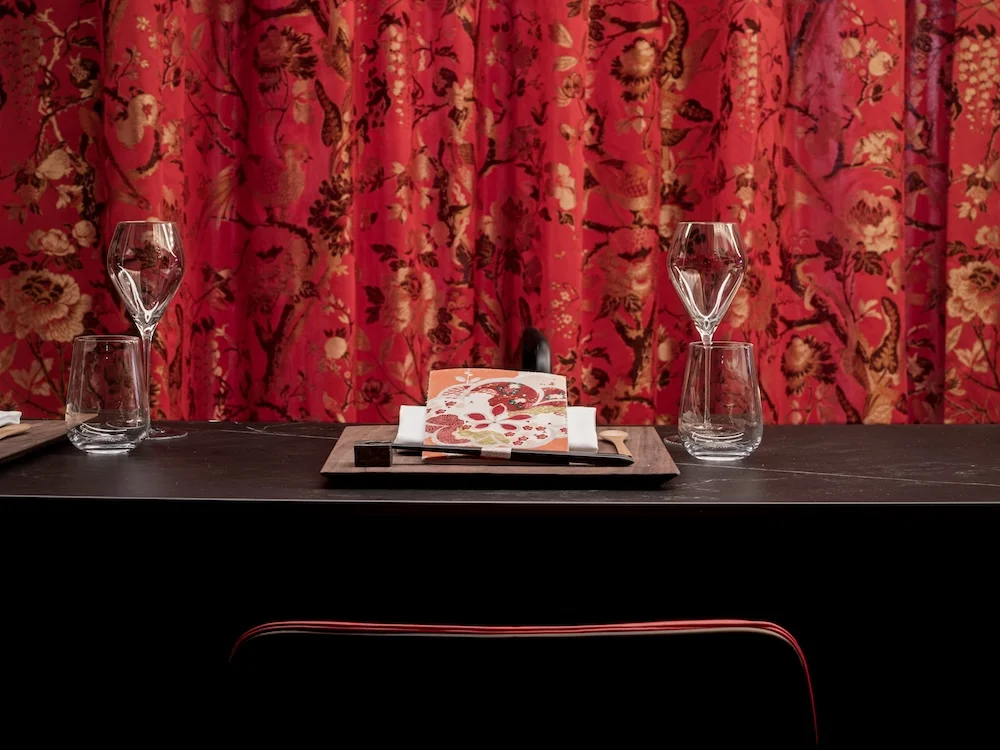
Mikuriya doesn’t look like a restaurant because it isn’t one, exactly. It occupies a converted part of Suite 100, the hotel’s rock-and-roll suite, a sixties-inspired apartment that comes with a guitar signed by the Rolling Stones and floor-to-ceiling windows over Lake Zurich and the Alps. A corner of it was given over to a counter, eight red leather barstools, and a chef.
There is no sign. You are collected in the lobby by a host, walked through the building, taken up in a rear elevator, and shown to a door that announces nothing at all. The effect, by every account, is of having been let into somewhere you were not supposed to find. Which is worth pausing on, because it is precisely how the Dolder’s collection works too. The art here is not announced or roped off or labeled at eye level. You turn a corner and there it is.
Mikuriya is the same proposition with a door on it. The name means “a kitchen where food is prepared for special guests.” Japanese, as a language, has a word for that.
Omakase, or the Surrender of Choosing
The word that governs the room is *omakase*, usually rendered as “I leave it up to you.” It comes from the verb *makaseru*, to entrust, and it describes an arrangement in which the guest gives up the right to choose and hands it to the chef. It’s a style of cuisine that is revered in Japanese culture and arouses curiosity. It’s also, if you think about it for a second, similar to a museum. A curator selects and you look. Here a chef selects and you swallow.
Kappo, Not a Sushi Counter
The word omakase has come to mean, in most of the world, a man pressing twenty pieces of nigiri in a row. That is Edomae, the Tokyo school, built on techniques invented to handle fish from the bay before refrigeration existed: curing, marinating in soy, aging, simmering. An Edomae omakase is sushi from beginning to end.
Mikuriya is kappo, which is a different discipline. The word comes from cutting and cooking, and it means a counter progression of composed dishes, hot and cold, prepared in front of the guest. Sushi appears, but as a movement rather than the whole symphony.
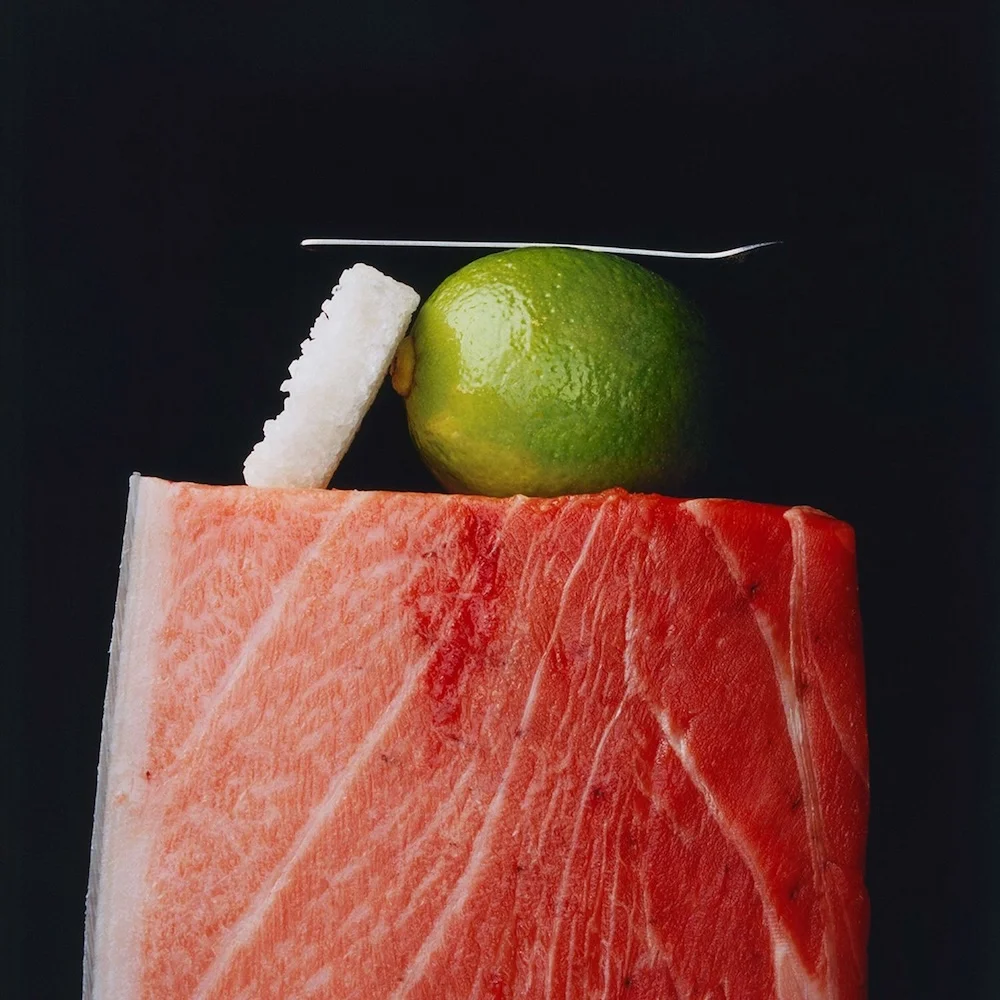
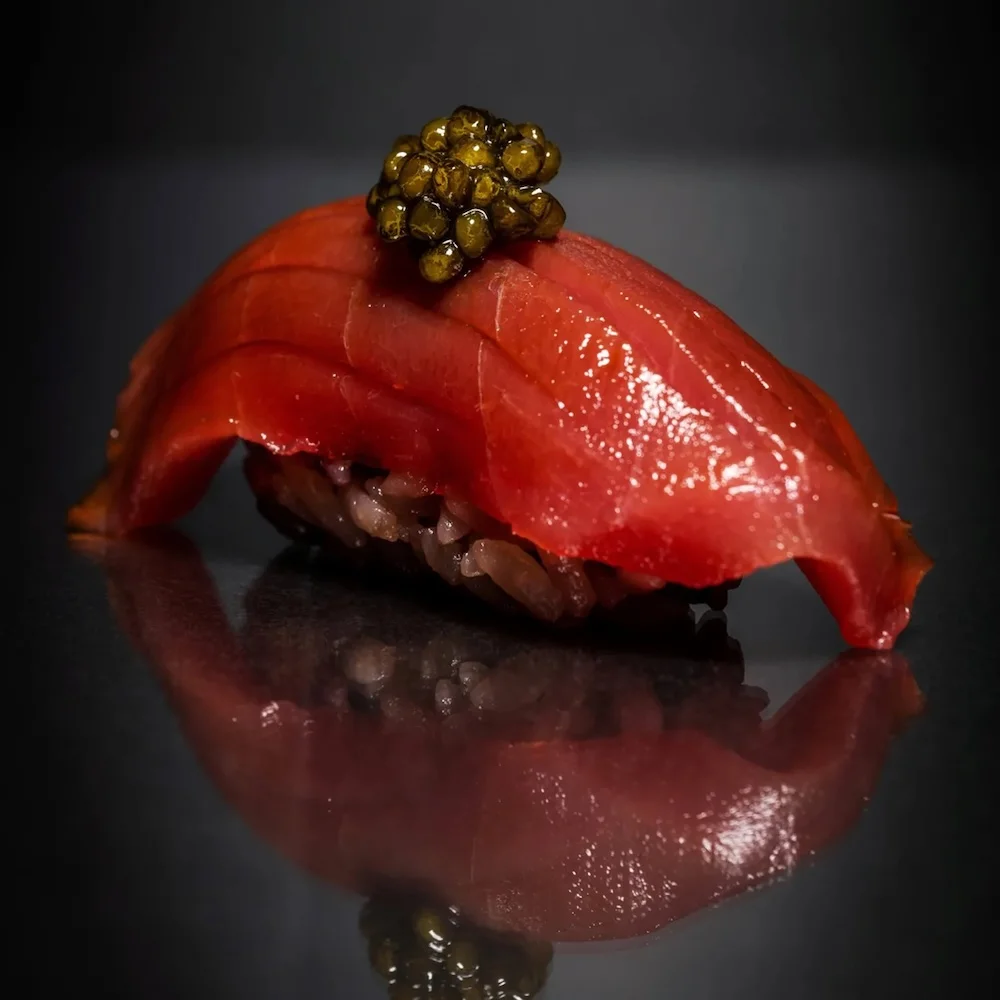
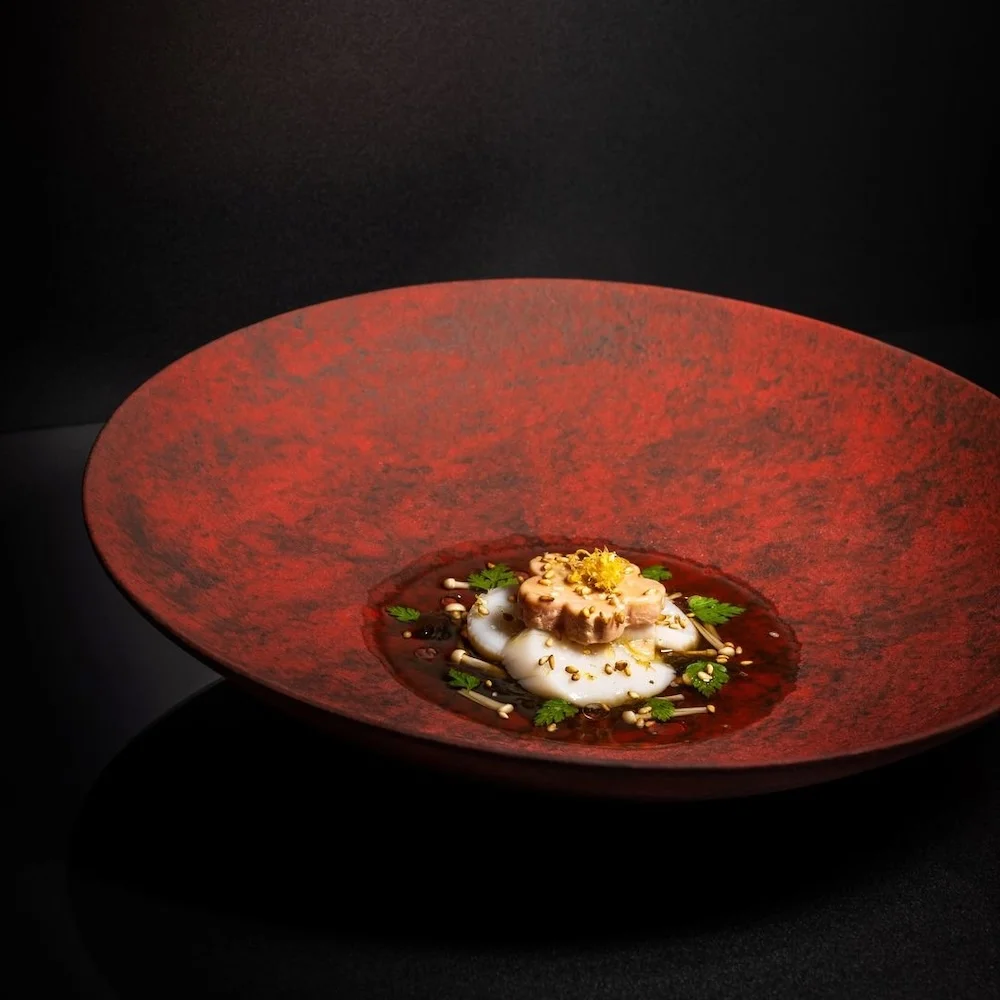
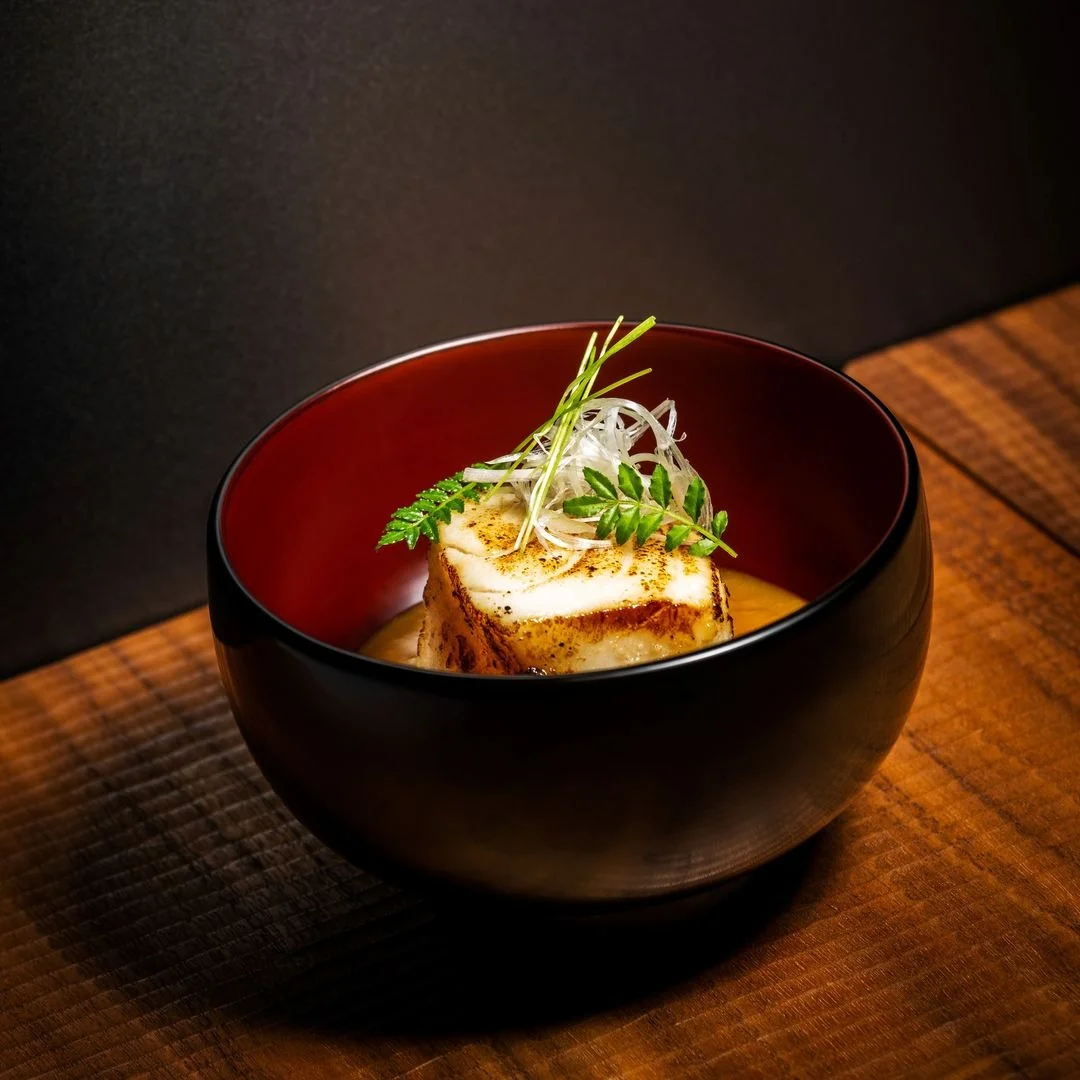
The menu proves that. Before any rice is pressed, there is a king crab tartare with caviar and a mustard miso sauce; an unagi dashimaki tamago of eel, Japanese omelet and truffle; a sea bream carpaccio in irizake; a kaki chawanmushi, the savory steamed custard, with oyster and Swiss trout roe; agedashi tofu; a wagyu consommé; sashimi of bluefin, kingfish and salmon; abalone with a liver miso sauce; and a wagyu sukiyaki of Miyazaki A5 with an onsen egg. Only then do the nigiri arrive, five of them, closing with toro and caviar. Dessert is soy milk pudding, shine muscat, and a red shiso sorbet.
Roughly thirteen courses, currently priced at around $420, Wednesday through Saturday, doors open at 6.30 with service from 7pm. GaultMillau has given it 17 points, which in the Swiss system is a serious number.
The Swiss Inside the Japanese
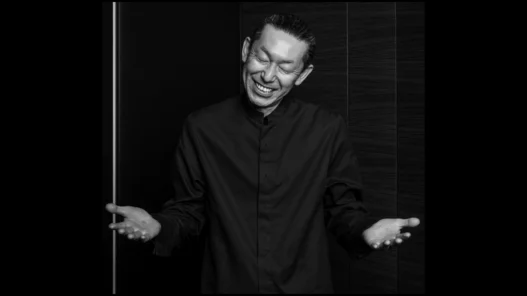
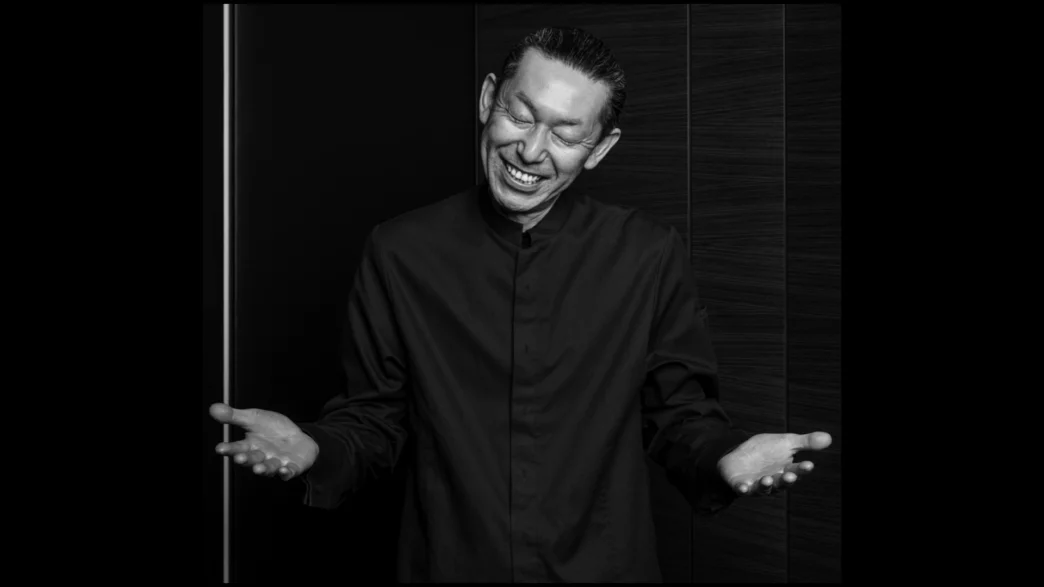
Chef Atsushi Hiraoka has spent some thirty years moving between Japan and Switzerland, and the menu is a track record of that.
Scan the provenance list the restaurant prints at the bottom of its own card and the surprise is how little of it is Japanese. The scallops and the wagyu come from Japan. Everything else travels in from elsewhere: abalone from France, alfonsino from Portugal, bluefin from the Mediterranean, eel and sweet shrimp from Italy, oysters from France, sea bream from Greece, caviar from China. And then two lines that could not belong to a sushi menu in Tokyo: Swiss salmon and Swiss trout roe.
This is the genuinely unusual thing about Mikuriya: A Japanese chef, three decades into a Swiss life, is applying the grammar of kappo to a lake fish that no Japanese kitchen has any tradition of cooking. The alpine salmon and the local trout roe are the part of the menu that sits Mikuriya in its place.
What Eight Seats Are For
Eight seats is small enough that the chef can talk to the room, that the sake can be poured from a choice of cups, that the people on the stools end up talking to each other. It’s also small enough to make the arithmetic brutal. Nothing can be hidden at that distance and nothing can be repeated. Each piece is made once, for one person, and gone inside ten seconds.
The Collection and the Counter
Which brings us back to the walls downstairs. Everything the Dolder Grand has gathered over a century and a quarter was acquired on the understanding that it would persist. The Haring and the Murakami and the Magritte will be hanging in those corridors long after every guest currently in the building is dead. That’s what a collection is for. It’s an argument against time, but on the fourth floor, behind a door with nothing written on it, eight people sit down each evening in front of a man who spends the night making things that are designed to vanish. No signature, no edition number, no provenance, no resale. The menu rotates with the seasons, so even the recipes do not survive intact. The entire output of that room disappears nightly, into eight people, and cannot be recovered by anyone.
It is the most perishable work in the building, and it may be the only thing in the Dolder Grand that you cannot possibly see twice.
Mikuriya. The Dolder Grand, Kurhausstrasse 65, 8032 Zurich, Switzerland. www.thedoldergrand.com