
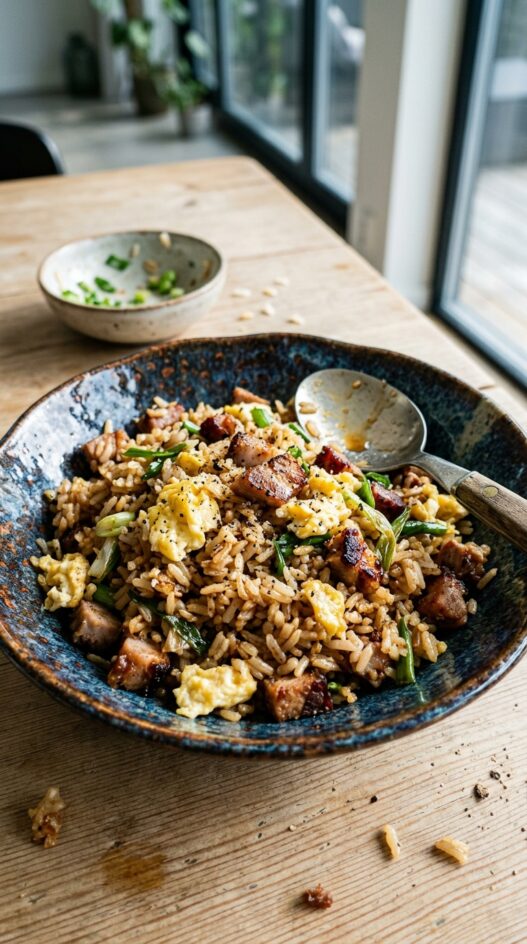
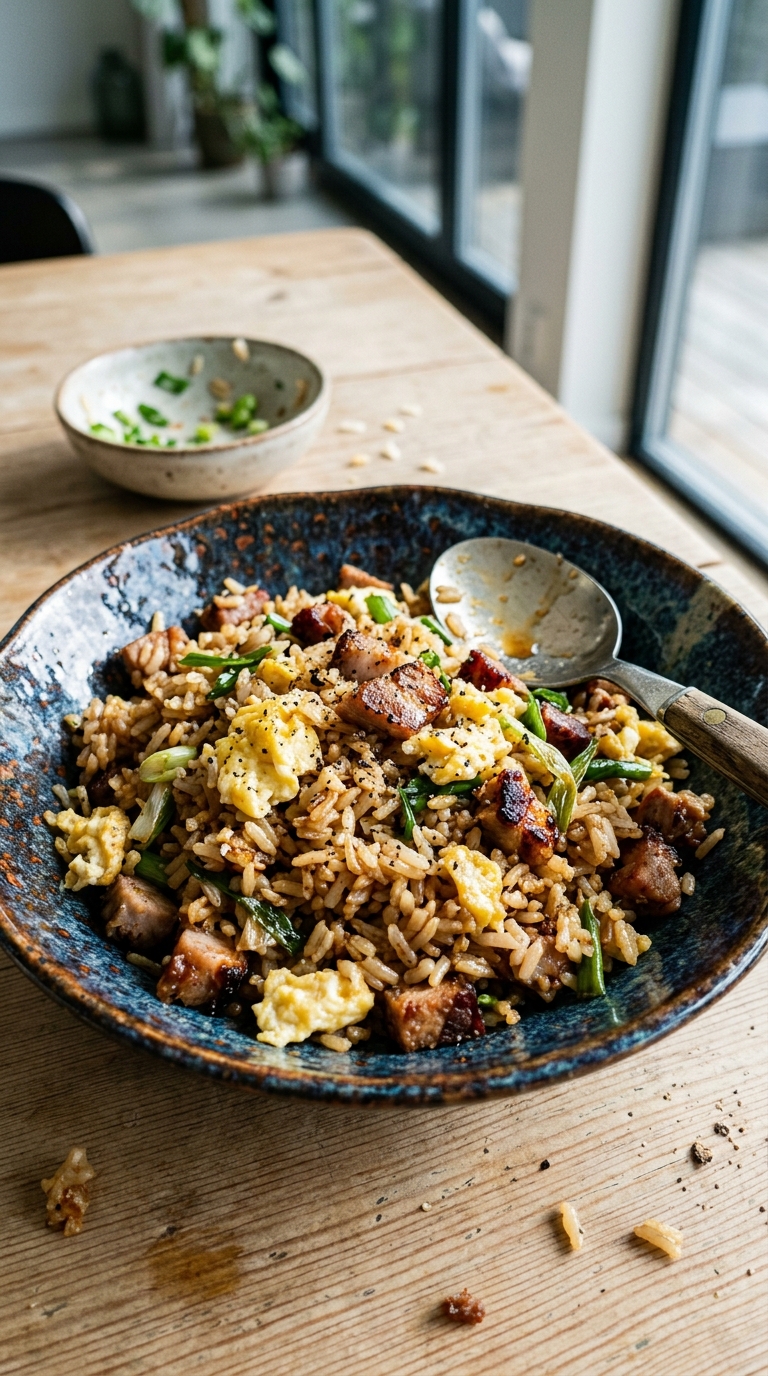
This was one of my dad’s specialties when I was growing up. It was always a treat {and still is} when he makes it. His version of Cha Han is at the top of my comfort food list. But unlike most typical comfort foods, it is actually pretty healthy. This is now a year-round staple in my family’s meal rotation. It is light enough for summer yet warming and soothing for winter.
I’ve attempted to add rough quantities to the recipe but it really is best when it is made to taste. Each batch ends up being a little bit different and you can start to determine how you like it. You can make rice specifically for the dish but it’s also a great way to transform leftover plain rice into a new meal. My family likes to eat Cha Han with grilled scallops or teriyaki chicken, among other things.
Print
Pork Fried Rice {Cha Han}
- Total Time: 30 minutes
- Yield: 4 servings
Description
This Japanese Pork Fried Rice, or Cha Han, is a comforting dish that transforms plain rice into a flavorful meal with BBQ pork, eggs, and green onions.
Ingredients
- 2 cups (421g) uncooked long grain rice
- 1 small package BBQ pork, chopped
- 2 eggs
- Roughly 1/4 cup (12g) chopped green onion
- 1/2 - 1 tsp (2-5g) black pepper, to taste
- 1-2 tbsp (15-30mL) soy sauce, to taste
- Butter, for scrambling eggs
Instructions
- Cook 2 cups of rice according to the instructions on the package, or use leftover plain white rice.
- In a pan lightly coated with butter, scramble the eggs over medium heat until just set. Remove from the pan and set aside.
- In a large pan, add the chopped BBQ pork and cook over medium heat until heated through.
- Add the cooked rice to the pan with the pork and stir to combine.
- Mix in the scrambled eggs and chopped green onion, stirring until evenly distributed.
- Season with black pepper and soy sauce to taste, stirring well to ensure the flavors are evenly mixed.
- Cook for an additional 2-3 minutes, stirring occasionally, until the rice is heated through and slightly crispy.
Notes
- This dish is a great way to use up leftover rice.
- Adjust the soy sauce and black pepper to your taste preferences.
- Serve with grilled scallops or teriyaki chicken for a complete meal.
- The recipe can be adapted by adding other vegetables or proteins according to your preference.
- Prep Time: 10 minutes
- Cook Time: 20 minutes
- Category: Main Course
- Cuisine: Japanese
Nutrition
- Serving Size: 1 serving
- Calories: 350
- Sugar: 1
- Sodium: 600
- Fat: 10
- Carbohydrates: 45
- Fiber: 2
- Protein: 15
- Cholesterol: 100
If You Liked This Recipe, You’ll Love These
- Fried Rice with Kimchi and Pork Belly
- Nasi Goreng – Malaysian Fried Rice
- Katsu Fried Chicken and Rice Burger
- Japanese-Inspired Beef and Rice Gyudon Bowls
Frequently Asked Questions
Can I use freshly cooked rice, or does it need to be leftover?
Either works — cook 2 cups of rice according to instructions on the package, or use leftover plain white rice. This is a great way to transform leftover plain rice into a new meal, and I grew up eating it as a family staple. Leftover rice that has dried out slightly will fry up with slightly more texture.
What is BBQ pork and where do I find it?
BBQ pork (char siu) is a Cantonese-style roasted pork with a sweet, savory glaze — I use one small package, chopped. It’s typically available at Chinese grocery stores or Asian supermarkets, often pre-cooked in the deli section. My father used it as the hallmark ingredient in this family recipe.
What does the author serve alongside Cha Han?
In my family, we love to eat Cha Han with grilled scallops or teriyaki chicken. You can also add other vegetables or proteins directly to the fried rice itself as a way to customize it.

You are correct that Japanese food contains short grain rice. (I have made my cha han with both short and long grain depending on what I have in the kitchen, and this time I just happened to have long grain.) This recipe is my family’s take on cha han, and it is a recipe from one of my parents’ favorite noodle shops near Tokyo which they received from the owner over 30 years ago when they lived in Japan. He used bbq pork (or char siu) in his Japanese noodle shop. Given that fried rice has origins in China and Chinese food has influenced many different cuisines, including Japanese, it is no surprise that there are plenty of different versions and interpretations of dishes. This is actually an example of one of my favorite things about food: fusion of cuisines and seeing how different cuisines and cultures influence others. In short, whether you call this cha-han or not, I hope that you enjoy my family’s recipe as much as we do!
Japanese people do not eat long grain rice, nor do they eat char Sui, they use short or medium grain rice, and cha-shu which is salty versus the sweet char-Sui. This recipe is not a cha-Han recipe, but a Chinese fried rice recipe