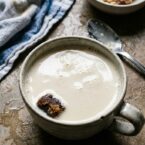
How To Make Your Own Soy Milk
- Total Time: 10 mins
- Yield: 1 liter
Description
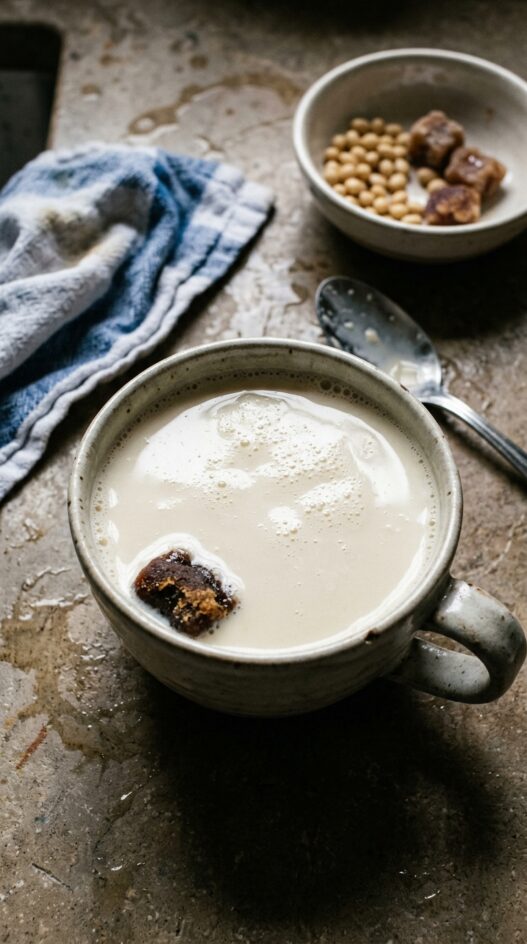
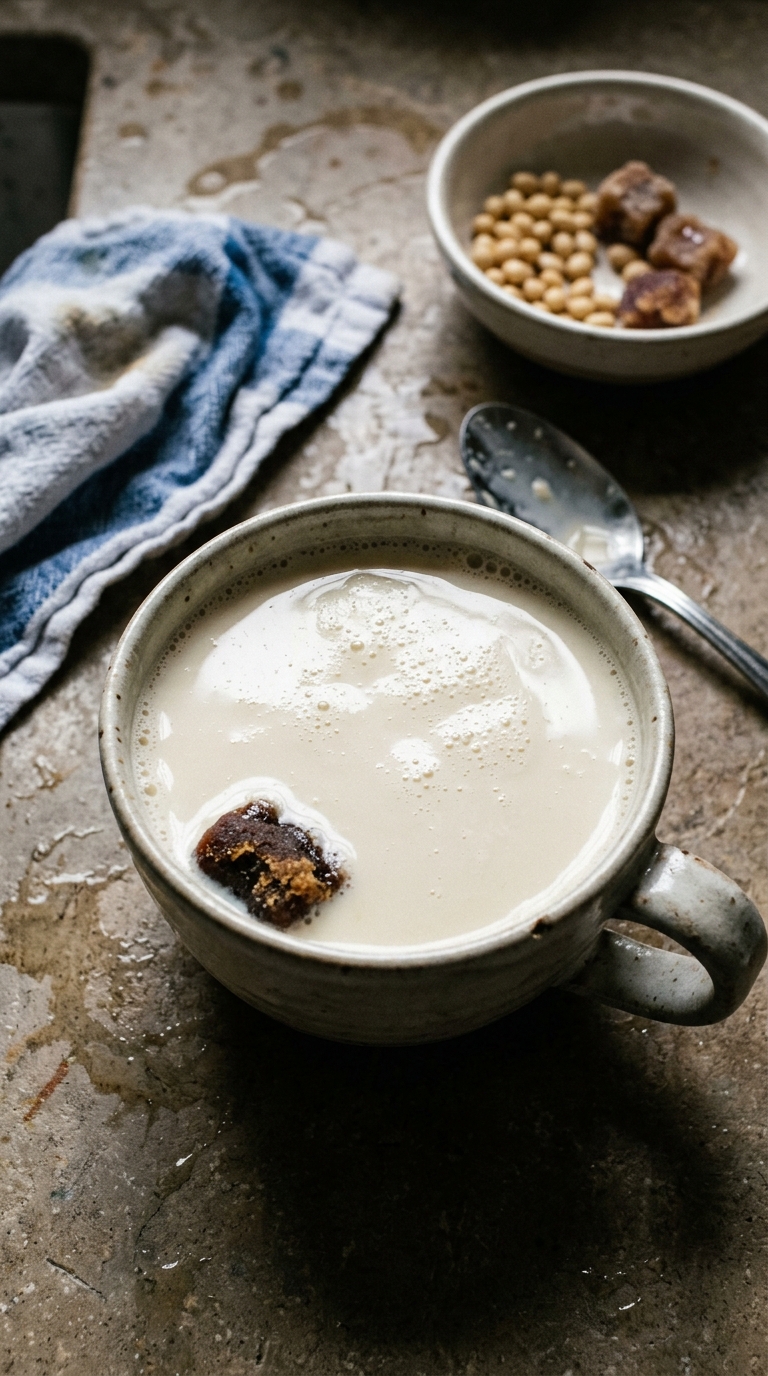
With just three ingredients and very little active time you can make your own soy milk at home.
Ingredients
- 150g Organic Soy Beans
- 1 1/2 liter Water
- Sugar to taste (Brown or Rock Sugar)
Instructions
- Soak the soybeans overnight. Rinse and drain well. (Remove soybean skin for gout sufferers)
- Blend/puree soybeans with water until it become a smooth blend.
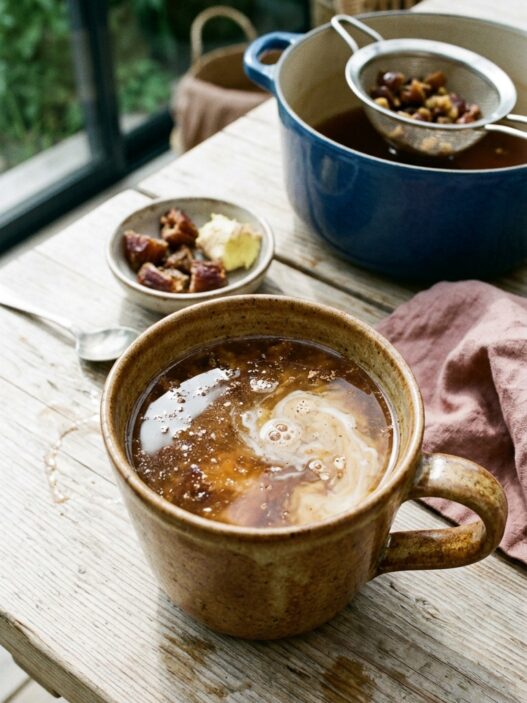
- Pour the blended soybeans into a muslin cloth over a pot, and squeeze the milk out. Retain the okara (soybean pulp) for other cooking & baking.
- Bring soy milk to a boil. Screw pine leaves (pandan leaves) can be added for extra fragrant taste. Simmer for about 5 minutes, stirring constantly to prevent a layer of skin from forming on the surface. If left alone, the milk might boil over.
- Add sugar to taste. Serve warm or chilled.
- Prep Time: 5 mins
- Cook Time: 5 mins
- Category: Beverage
- Cuisine: Asian
Nutrition
- Serving Size: 1 cup
- Calories: 80
If You Liked This Recipe, You’ll Love These
- How to Make Golden Milk
- A Comparison of Popular Dairy Milk Substitutes
- How to Make Goat’s Milk Ricotta
- Badam Kesar: Soothing Almond-Saffron Milk
Frequently Asked Questions
Why does the milk need to be stirred constantly while simmering?
If you leave it unattended the milk might boil over, and constant stirring prevents a layer of skin from forming on the surface. Simmer for about 5 minutes after it reaches a boil.
What is okara, and what do I do with it?
Okara is the soybean pulp left behind after you squeeze the milk through the muslin cloth. I always retain it for other cooking and baking rather than discarding it — it’s fiber-rich and can be added to baked goods, patties, or soups.
What are pandan (screw pine) leaves, and do I need them?
I sometimes add pandan leaves during the simmer stage for extra fragrance. Pandan is a tropical plant common in Southeast Asian cooking with a sweet, grassy aroma. It’s entirely optional and can be skipped if unavailable without affecting the milk itself.