




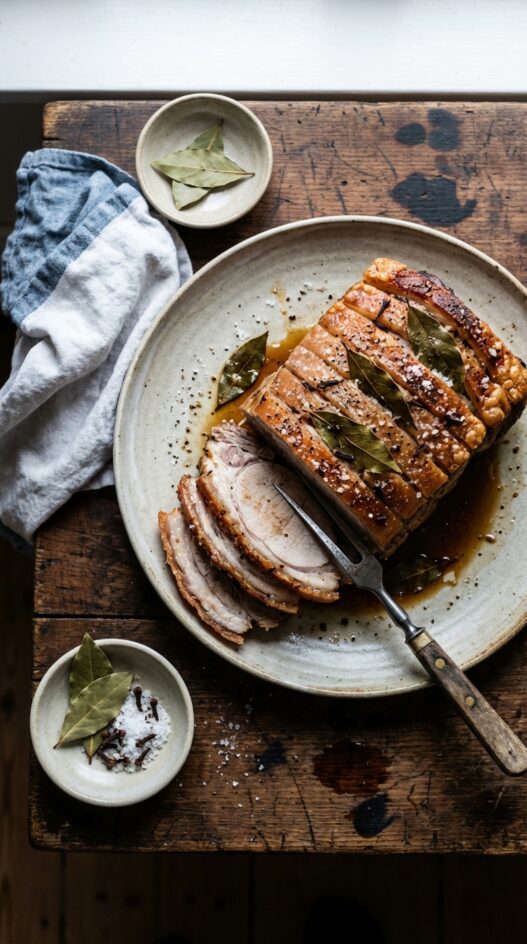
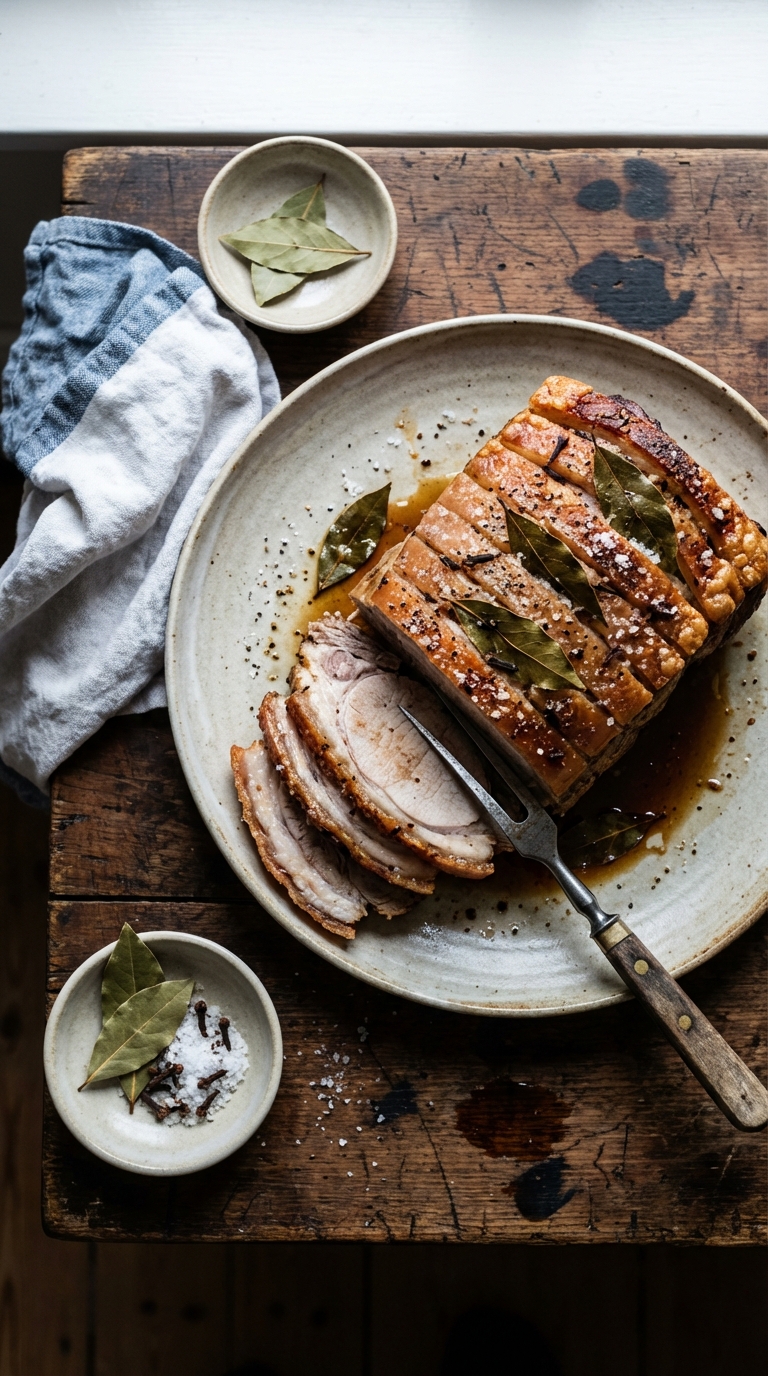
Crispy and crackly on the outside. Beautifully moist and light pink on the inside. The Danish pork roast is a tradition worth embracing even if you’re not Scandinavian. It looks gorgeous, tastes divine, and will elicit oohs and aaaahs from across your holiday table.
The holidays is a time for indulging in delicious, hearty meals with loved ones, and there’s no better way to celebrate the season than with a classic Danish pork roast. Known as “flæskesteg” in Denmark, this traditional dish is the perfect combination of juicy, tender pork and crispy, golden crackling.
Not only is Danish pork roast delicious, it’s also relatively easy to prepare, which means you can focus on enjoying the company of your friends and family instead of stressing out in the kitchen. And let’s be honest, who doesn’t love a big, delicious roast on a cold winter day? 
Choosing the Right Cut of Roast for Flæskesteg
About the Cut: Grisekam and Alternatives
“Grisekam” (or Nakkekam) is a Danish term for the pork loin roast, often with the rib bones attached and a thick layer of fat and rind (skin) on top. This cut is ideal for achieving the signature crispy crackling that makes Flæskesteg so iconic in Danish cuisine. It’s a versatile cut that balances tenderness with enough fat to ensure juicy, flavorful meat.
When selecting your pork roast, here are some key considerations:
1. Key Features of Grisekam:
- Rind and Fat Layer: The thick rind and fat layer are crucial for achieving crispy crackling. Ensure these are intact and evenly distributed.
- Bone-In vs. Boneless: A bone-in roast adds flavor during cooking and helps keep the meat juicy. However, boneless is easier to slice and serve.
- Size: A 3–4 lb (1.4–1.8 kg) roast is perfect for 6–8 people. For a larger gathering, adjust the size accordingly.
2. Alternatives to Grisekam:
If “Grisekam” is unavailable, consider these substitutes:
- Pork Shoulder (with Rind): Known for its marbling, pork shoulder is a slightly fattier option that delivers juicy meat and crispy crackling.
- Pork Belly: This cut is fattier than loin and offers excellent crackling, but the meat will be richer and less lean.
- Pork Rib Roast: This cut is leaner but can still deliver great results if cooked carefully. Ensure the rind is intact for crackling.
- Boneless Pork Loin with Rind: Easier to carve and widely available, this is a practical substitute that still delivers on flavor.
3. What to Ask Your Butcher:
When selecting the roast, communicate your needs clearly to your butcher:
- Specify you want the rind (skin) and fat layer left on for the best crackling.
- Ask for the pork loin or shoulder, bone-in or boneless, depending on your preference.
- Request the rind to be scored in even 1/2-inch (1.25 cm) increments if you don’t want to do it yourself. Make sure to let your butcher know NOT to score into the meat – as it will cause the juices to leak into the rind and make it soggy.
How to Make Flæskesteg – Danish Pork Roast
Step 1: Prepare the Pork Roast
- Preheat the oven to 450°F (230°C).
- Pat the pork roast dry with paper towels. Using a sharp knife, score the rind and fat in 1/2-inch (1.25 cm) increments, cutting halfway through the fat but not into the meat.
Step 2: Season the Pork
- In a small bowl, mix sea salt and dried cloves.
- Rub the mixture generously all over the pork, ensuring it gets into the cuts in the rind.
- Sprinkle freshly ground black pepper over the roast for added flavor.
- Insert dried bay leaves into some of the cuts for a classic Danish aroma.
Step 3: Initial Roasting
- Place the seasoned pork on a roasting rack in a roasting pan, rind side up.
- Roast at 450°F (230°C) for 30 minutes to start crisping the rind.
Step 4: Add Water and Continue Cooking
- Lower the oven temperature to 350°F (175°C).
- Carefully pour 4 cups (1 liter) of boiling water into the roasting pan.
- Continue roasting for an additional 1.5–2 hours, or until the internal temperature of the meat reaches 145°F (63°C).
Step 5: Rest and Serve
- Remove the roast from the oven and let it rest for 10–15 minutes to allow the juices to redistribute.
- Serve with traditional Danish accompaniments like caramelized potatoes, red cabbage, and a rich gravy made from the drippings.
101 Guide to Succeeding with Danish Pork Roast
1. How to Get the Perfect Crackling
- The rind must be dry. Pat it thoroughly with paper towels before seasoning.
- Scoring the rind evenly ensures it crisps uniformly. Be careful not to cut into the meat.
- Starting at a high temperature helps the rind puff and blister beautifully.
2. Importance of the Water
- Adding boiling water creates steam, keeping the meat tender while preventing the drippings from burning.
- The water also helps keep the kitchen from getting smoky during the high-heat roasting stage.
3. Gravy Tips
- Use the drippings to make a rich gravy. Skim off excess fat, then whisk in a bit of flour and stock, cooking until thickened.
4. Resting Is Key
- Resting allows the juices to redistribute, making the meat more flavorful and tender. Make sure to leave it completely untouched and uncovered for at least 15 minutes after taking it out of the oven.
How to Make Flæskesteg: Danish Pork Roast with Crispy Crackling
- Total Time: 135 minutes
- Yield: Serves 6
- Diet: Omnivore
Description
Crispy crackling and tender pork, a classic Danish Christmas Eve dish. Perfect for a special occasion.
Ingredients
- 3-4 lbs (1-2 kg) bone-in pork loin roast with rind and fat intact
- 2-3 tbsp sea salt
- 1 tsp dried cloves
- Freshly ground black pepper
- 3-4 dried bay leaves
- 4 cups (1 l) boiling water
Instructions
- Preheat the oven to 450°F (230°C).
- Pat the pork roast dry with paper towels. Using a sharp knife, score the rind and fat in 1/2-inch (1.25 cm) increments, cutting halfway through the fat but not into the meat.
- In a small bowl, mix sea salt and dried cloves. Rub the mixture generously all over the pork, ensuring it gets into the cuts in the rind. Sprinkle freshly ground black pepper over the roast. Insert dried bay leaves into some of the cuts.
- Place the seasoned pork on a roasting rack in a roasting pan, rind side up. Roast at 450°F (230°C) for 30 minutes.
- Lower the oven temperature to 350°F (175°C). Pour 4 cups (1 liter) of boiling water into the roasting pan. Continue roasting for an additional 1.5–2 hours, or until the internal temperature of the meat reaches 145°F (63°C).
- Remove the roast from the oven and let it rest for at least 15 minutes uncovered to allow the juices to redistribute.
- Serve with traditional Danish accompaniments.
Notes
- For extra crispy crackling, score the rind deeply and generously salt the skin several hours before roasting.
- Substitute juniper berries for cloves for a slightly different flavor profile.
- Leftover roast can be shredded and used in sandwiches or salads for up to 4 days when stored properly in an airtight container in the refrigerator.
- Prep Time: 15 minutes
- Cook Time: 120 minutes
- Category: Main Course
- Method: Roasting
- Cuisine: Danish
Nutrition
- Serving Size: 250g
- Calories: 450
- Sugar: 5
- Sodium: 800
- Fat: 30
- Saturated Fat: 10
- Unsaturated Fat: 15
- Trans Fat: 0g
- Carbohydrates: 15
- Fiber: 2
- Protein: 40
- Cholesterol: 100
Frequently Asked Questions
What type of pork roast should I use for Flæskesteg?
You should use ‘Grisekam’ or Nakkekam, which is a pork loin roast with a thick layer of fat and rind on top, ideal for achieving crispy crackling.
How can I ensure that the crackling on my Flæskesteg turns out crispy?
Make sure to score the rind deeply and evenly, and apply salt generously before roasting to help draw out moisture and promote crispiness.
What internal temperature should the pork reach for optimal doneness?
The pork should reach an internal temperature of 145°F (63°C) to ensure it is juicy and safe to eat.


Subbed apple cider vinegar for regular vinegar in the marinade. Added a bit of tang that worked well with the crispy crackling.
Not a bad idea Kevin!