
“I am a cyborg,” says Adrià Colominas, with absolute seriousness. Then he presses a point on his forearm near the wrist and blue and green lights emerge beneath his skin. The astonishment among those present is total.
Colominas has the look of a mad scientist: a determined gaze, unruly hair, an inscrutable expression, and a subcutaneous chip where he stores sensitive information that he transmits wirelessly from his arm to any computer. Next to him, his partner smiles. Juan Manuel Umbert knows Colominas like a brother, and nothing about him surprises him any longer. Though, at the same time, this pair have chosen to live permanently installed in wonder.
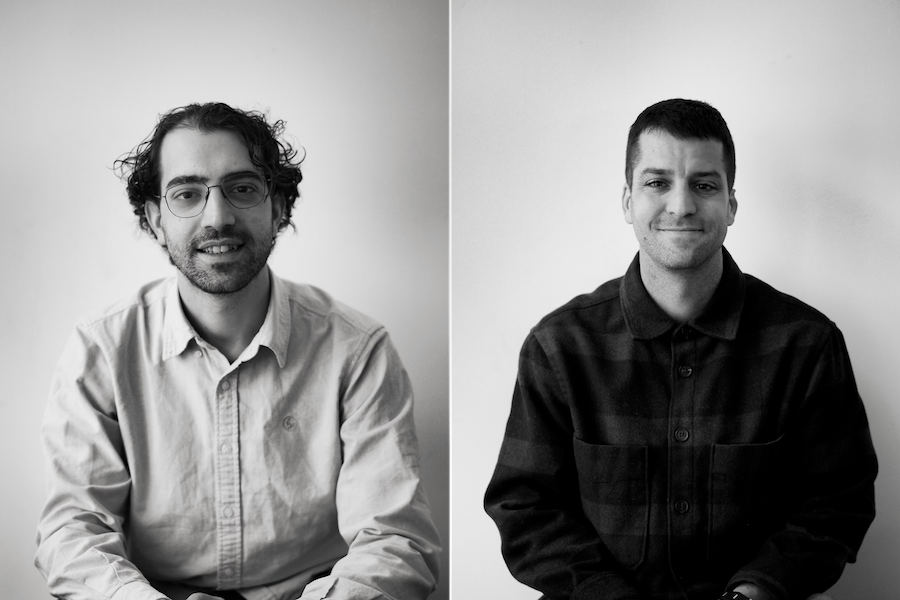
From their company in Barcelona, Makeat, Colominas and Umbert reinvent the edible world by applying creativity, knowledge and technology. Their mission is to awaken gastronomy’s potential. And among their clients are luxury brands, ultra-premium spirits, some of the best bars on the planet and several Michelin-starred restaurants.
The scene described above took place two or three years ago, inside what Makeat will transform into Il Milione, and which, until then, was simply the chef’s table at the three Michelin-starred Lasarte restaurant in Barcelona.
In Q’s Culinary Quarters
One of the most celebrated moments in any James Bond film is the visit to the laboratory where Q, the eccentric inventor, presents 007 with his latest innovations. They are lethal weapons, sometimes nearly lethal to Q himself, but what hooks the audience is the fascinating ingenuity contained in every prototype.
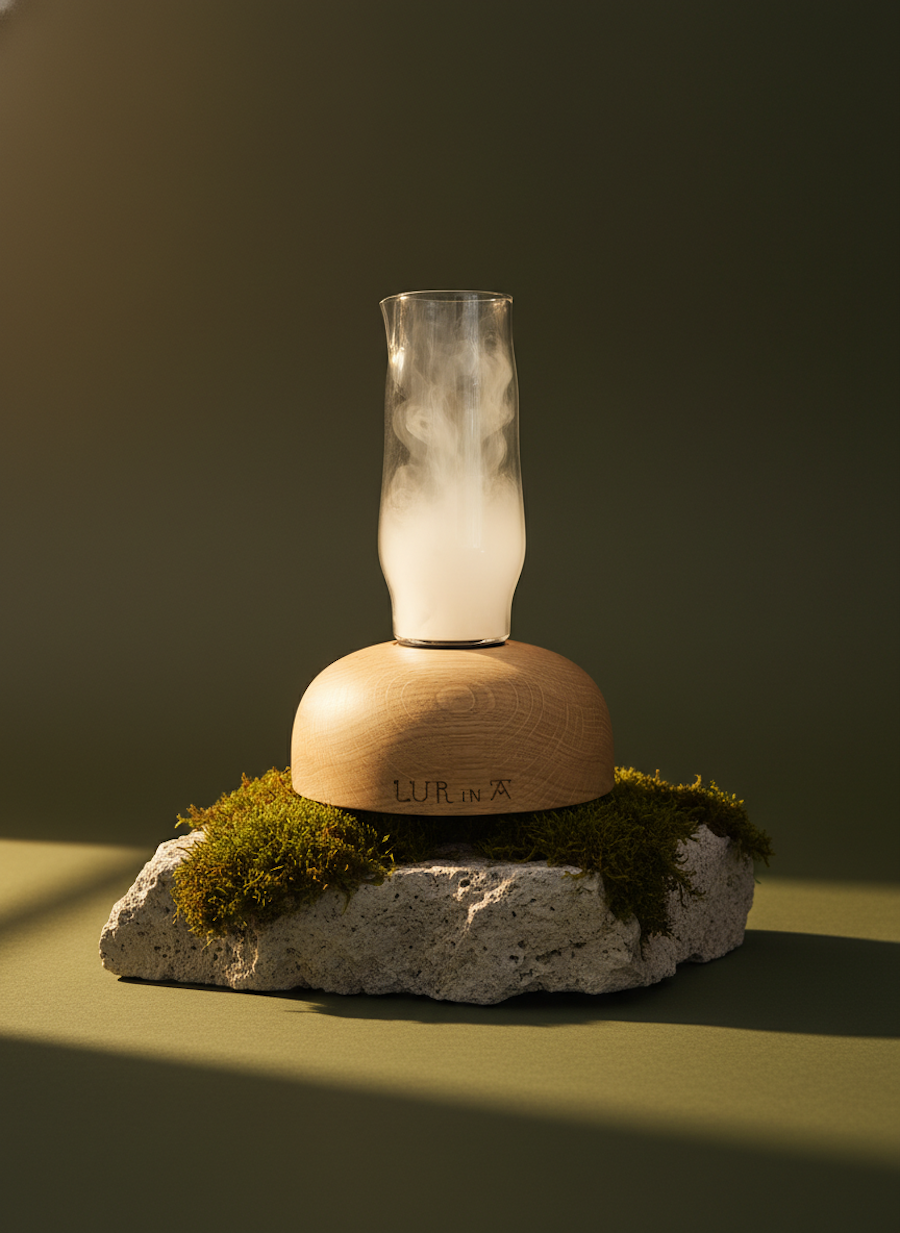
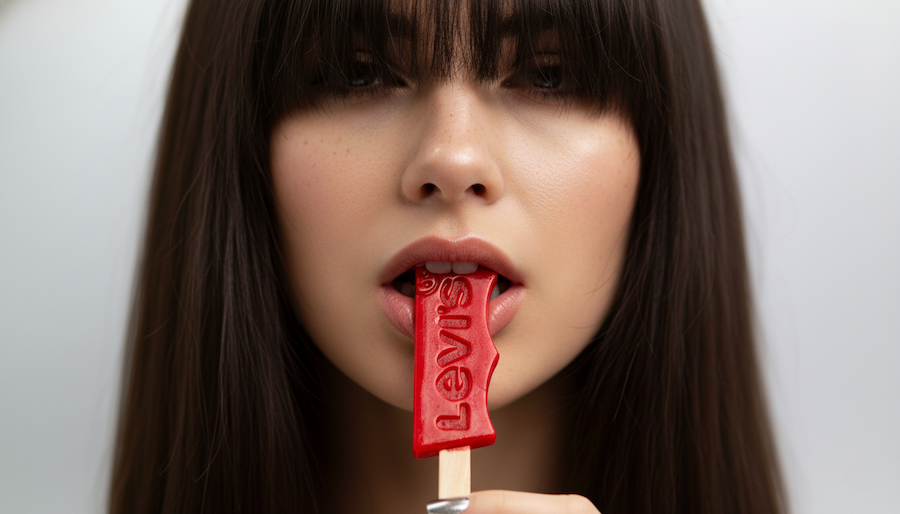
Walking into Makeat’s offices is to feel that same sensation again. In the reception area, an array of objects born from this innovation center sits on display. Coasters made from biomaterials that respond to the growing demand for sustainability. Stamps that can imprint any conceivable image onto the delicate surface of a bonbon. A lollipop that reproduces the Levi’s logo. The maquette of a monumental chocolate sculpture with which Catalan Master Chocolatier Lluc Crusellas won the World Cup in his discipline. Natural sweeteners without sugar. Supports that make a glass levitate. The reinvention of the iconic Martini coupe. The list is long and anything but obvious. Meanwhile, in an adjacent kitchen, stocks are being prepared in the traditional manner, a 3D printer is producing a new piece of tableware, and Umbert explains with his large, fixed eyes that at Makeat “we fuse design and technology with gastronomy, seeking to surprise, generate emotion and create a complete, immersive experience through new concepts, products and services.”
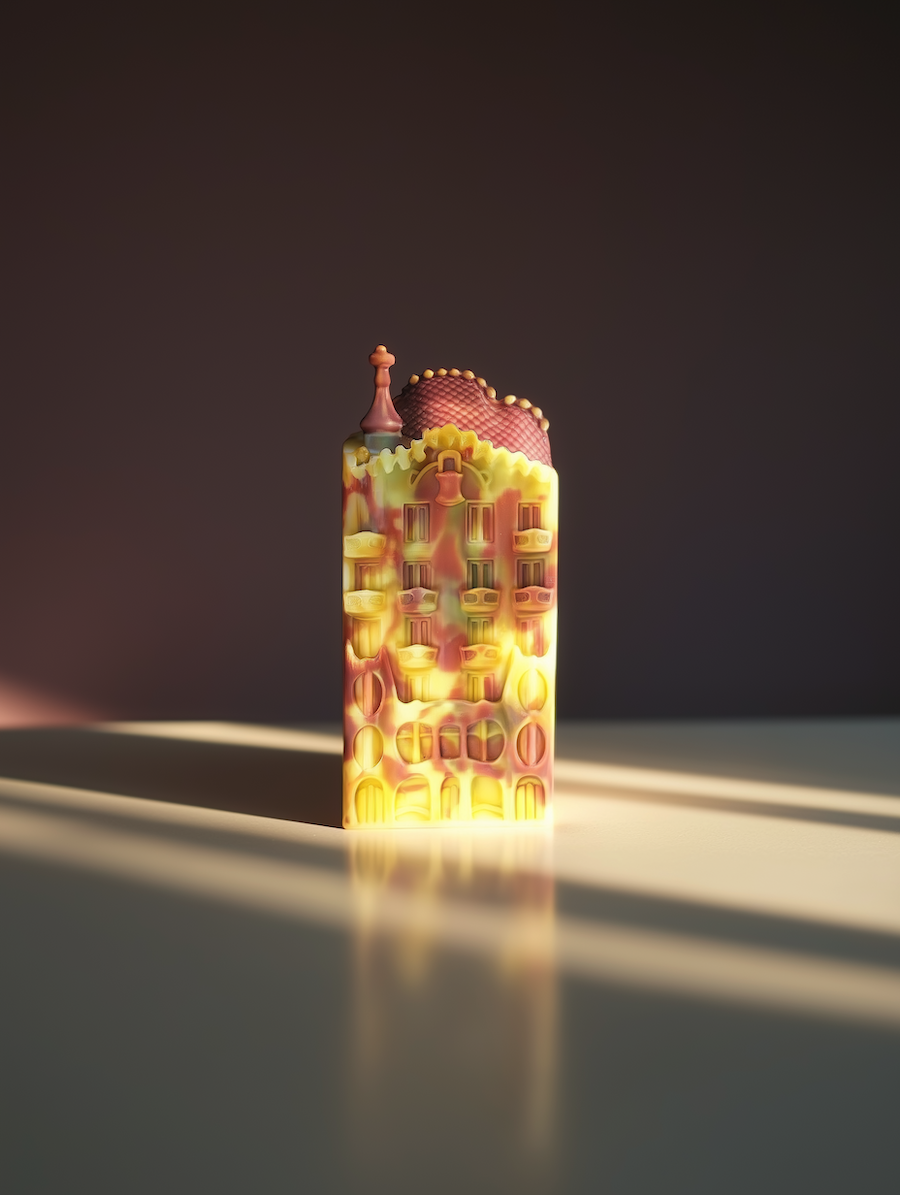
Makeat is, in essence, an innovation, design and product development center focused exclusively on the gastronomic sector. Founded in Barcelona by Colominas and Umbert, it began in a raw, unfinished warehouse that the two co-founders renovated with their own hands. Today, a twelve-person team spans roles that would seem unlikely under the same roof in any other industry: a CTO and co-founder who implants chips in his own body, a Head of Strategy, a Food I+D Consultant, product designers, a creative designer, a Head of Production, food consultants and a communications manager. The methodology they have developed, which they call Food Thinking, an evolution of Design Thinking adapted to the specific demands of gastronomy, moves through six phases: inspire, research, ideate, design and prototype, experiment, and analyze. It is a cycle designed never to end, because at Makeat, the conviction is that innovation thrives where courage meets curiosity.
The Il Milione Challenge
Il Milione is among the most ambitious projects in Makeat’s portfolio, and it reveals with precision how the studio operates. From the three Michelin-starred Lasarte, the first restaurant in Barcelona to achieve that distinction, in 2016, the project is defined as an exploration of the limits of culinary excellence. For Makeat, the challenge was to conceptualise an experience that combines theatrical techniques, lighting effects, olfactory landscapes, bespoke tableware and a soundtrack coordinated with each course. But the real test was achieving all of this without tipping into spectacle. Lasarte is a house that pursues elegance in every small detail, and that means staying far from gimmickry.
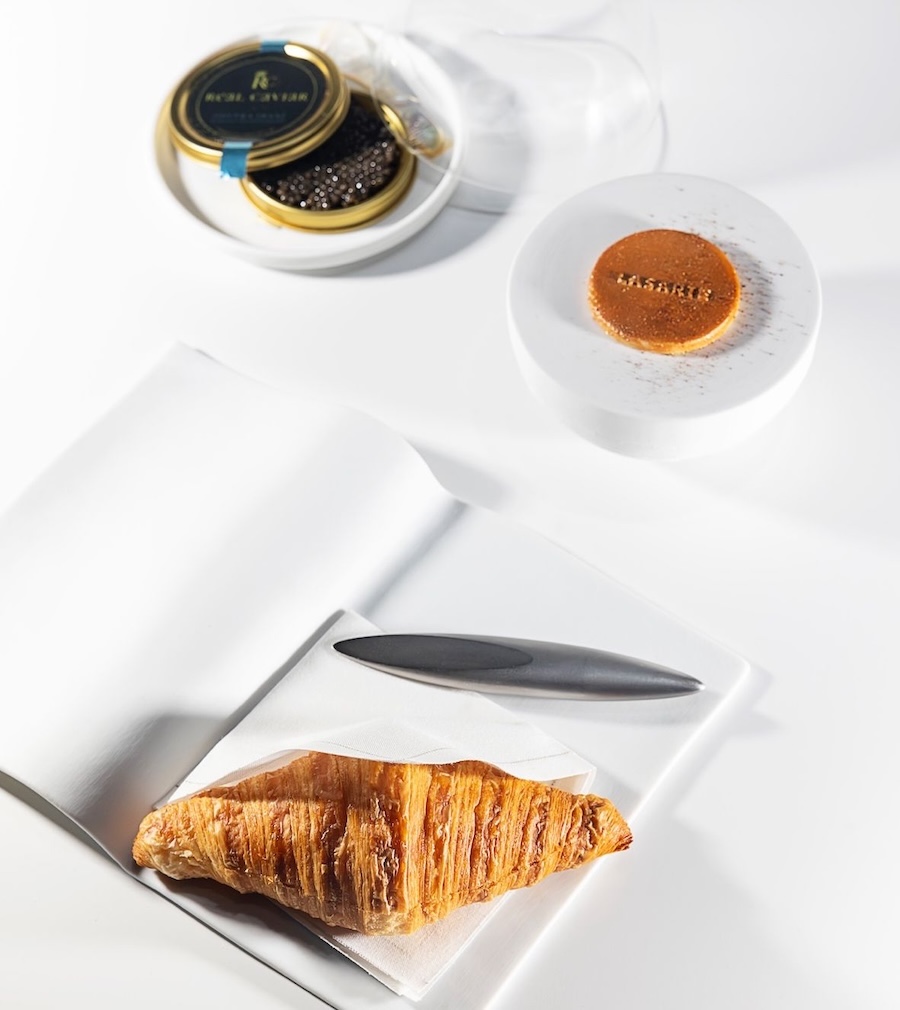
Over months of close collaboration with the restaurant’s team, Colominas, Umbert and their studio analyzed the diner’s experience, mapped experience curves, modelled impossible supports for snacks, developed palate-cleansing essences made from terpenes to be released between sequences of courses, worked with a composer to curate a soundtrack that accentuates each dish, and designed software to control the intensity and color temperature of the room’s lighting, all with the intention of amplifying what the diner feels without ever distracting from what is on the plate. Months later, Forbes included Il Milione among the ten essential gastronomic propositions of 2025.
An Elephant In The Room
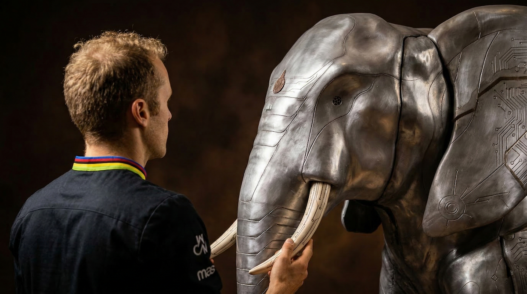
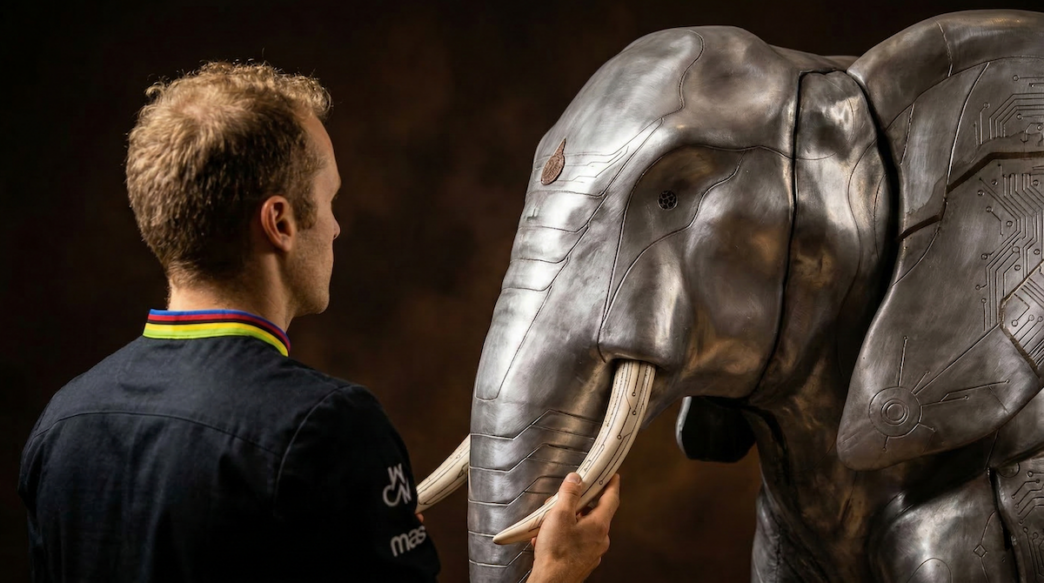
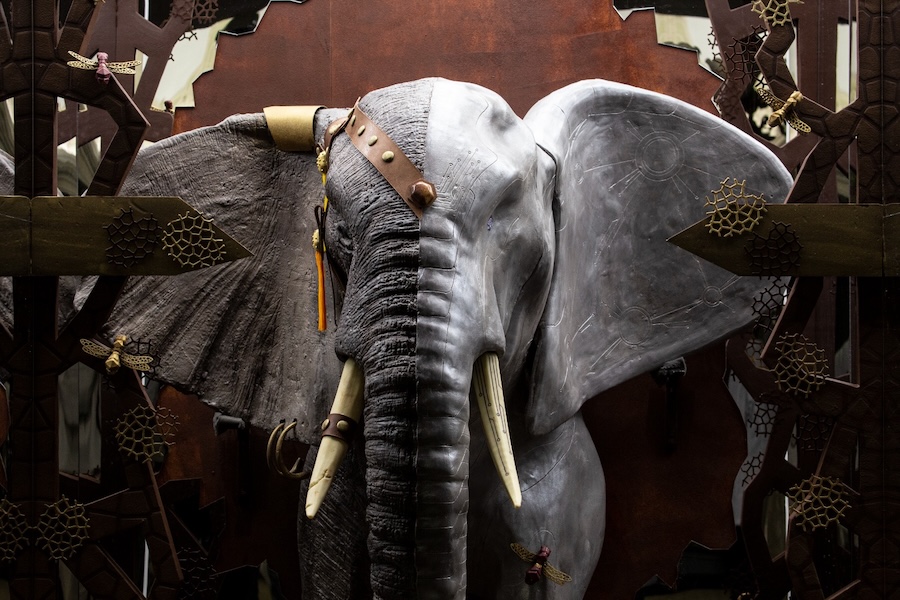
The chocolate elephant that opens this article is not a decorative object. It is a 1.5-meter, 170-kilogram sculpture that won Lluc Crusellas the title of World Chocolate Master in Paris in 2022, making him the youngest champion in the competition’s history at just twenty-six years old. It now sits in a climate-controlled vitrine at Barcelona’s Museu de la Xocolata, alongside works by legendary chocolatiers spanning nearly five decades, and after a stint in the windows of Harrods in London.
Makeat’s role in the project began during the Spanish semi-final in 2021, held at the Chocolate Academy in Barcelona. Colominas and Umbert’s studio worked with Crusellas on the design, development and engineering of the monumental piece; the maquette, the structural calculations, the compensation of weight and gravity that would allow a figure made entirely of chocolate to hold itself upright under the extreme conditions of an eight-hour live competition. The elephant was born from Crusellas’ desire to follow the motto he had set for himself at the Paris final: the simplicity of great things. “The simplest and greatest animal I know is the elephant,” he explained. Makeat gave that vision a skeleton.
But it was not only sculpture. Crusellas also presented a brioche made with zero sugar, using a scientifically developed enzyme, an innovation that took the jury by surprise. Head judge Amaury Guichon described the risks Crusellas took as adventurous but said they set him apart from the field. The public agreed, awarding him the #WOW prize alongside the championship title.
The collaboration between Makeat and Crusellas illustrates something essential about the studio’s way of working. It is not enough to design a beautiful object. The object must function structurally, emotionally and narratively. An elephant made of chocolate must stand. It must travel from Barcelona to Paris and back. It must survive three hours of installation and the crack of an ear under its own weight. And it must carry, within its mass, the story of a young Catalan pastry chef who believed that the greatest ideas in the world are at the reach of anyones hand if you are well surrounded of talented people.
An Ecosystem, Not A Silo
What makes Makeat singular is not any one project but the breadth of the ecosystem it inhabits. Its client list reads like a map of contemporary gastronomy and beyond: Lasarte, Disfrutar, SIPS, Aponiente, DiverXO, Martín Berasategui, The Langham London, Shangri-La, Four Seasons, Marriott, PepsiCo, Nespresso, Barry Callebaut, Bacardí, Moët & Chandon, Belvedere. It collaborates with universities, tech centers, startups and industrial partners, positioning itself at the intersection of science, design, technology and culinary creativity.
For The Langham London, Makeat designed chocolate amenities, a bear figure rendered in chocolate, complete with bespoke packaging that reproduces the hotel’s iconic entrance. For SIPS, Barcelona’s celebrated cocktail bar ranked among the world’s best, the studio has contributed to the design of vessels and experiences that blur the line between drinking and dining. For the World Chocolate Masters, it has provided design solutions that operate under the extreme pressure of international culinary championships (and won it). And across all of these projects, the same principle holds: the object, the experience and the emotion must be inseparable.
From Design Thinking To Food Thinking
Makeat’s intellectual framework rests on what they call FAC·U², a model that places Concept, Aesthetics, Functionality and User in a diamond formation, each influencing the others. Every product must be clear and clever, easy to understand and to explain. It must be beautiful and connected to the brand, chef or bartender. It must be practical, easy to use, to store and clean. And it must engage the user emotionally, creating memory through interaction, sensation and the activation of all five senses.
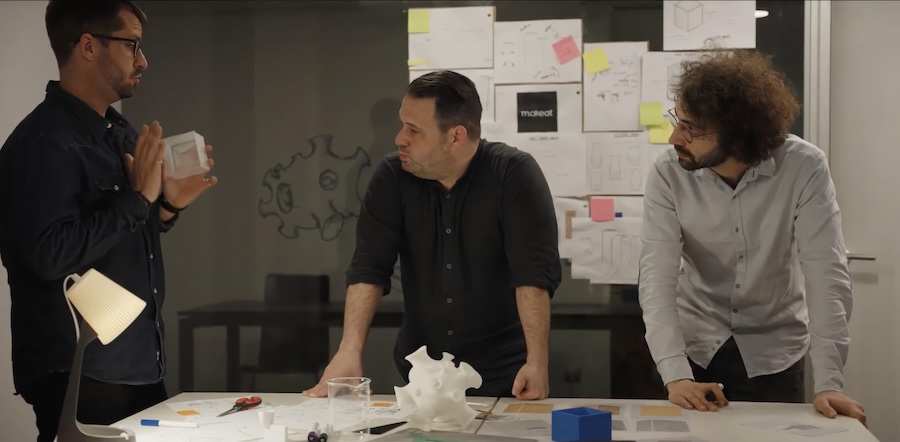
This is not theory for the sake of theory. It is the reason a Makeat-designed bonbon stamp can carry the identity of a luxury fashion house, a reason a levitating glass can transform a cocktail into a conversation, and the reason a 3D-printed piece of tableware can feel as considered as a hand-thrown ceramic. The studio’s work operates at the point where food, science, design and technology overlap, the space they have drawn, quite literally, as a Venn diagram with creativity as the gravitational field that holds it all together.
Awakening Gastronomy’s Potential
Colominas presses his forearm again. The lights glow. Umbert smiles. Somewhere in the adjacent kitchen, a stock reduces slowly, a 3D printer hums, and a new prototype takes shape that will end up on a table, in a hand, or in a mouth, in a Michelin-starred dining room, a luxury hotel or a street-food stall, carrying with it the conviction that gastronomy’s potential is vast, largely untapped, and waiting for those brave and curious enough to awaken it.
Makeat is not, of course, a restaurant. It is not a design agency in the conventional sense. It is not a food lab, though it contains one. It is something that did not have a name until Colominas and Umbert built it from a bare warehouse in Barcelona: a place where the question is never “what is possible?” but “what hasn’t been imagined yet?”. When they find that, they make it.
MAKEAT
Carrer de Ramon Turró, 5. Barcelona
www.makeat.tech



Un articulo ilusionante. La imaginación al poder
Absolutament genial! Imaginació, creativitat i convicció al límit. Enhorabona!!!
Such an innovative blend of fields!
Thought I’d bring up this concept in my design class. The mix of design and gastronomy really sparked some creative discussions among the students!
Ingenious concept!
This is pretty cool tbh, sounds like kind of a dream job.