
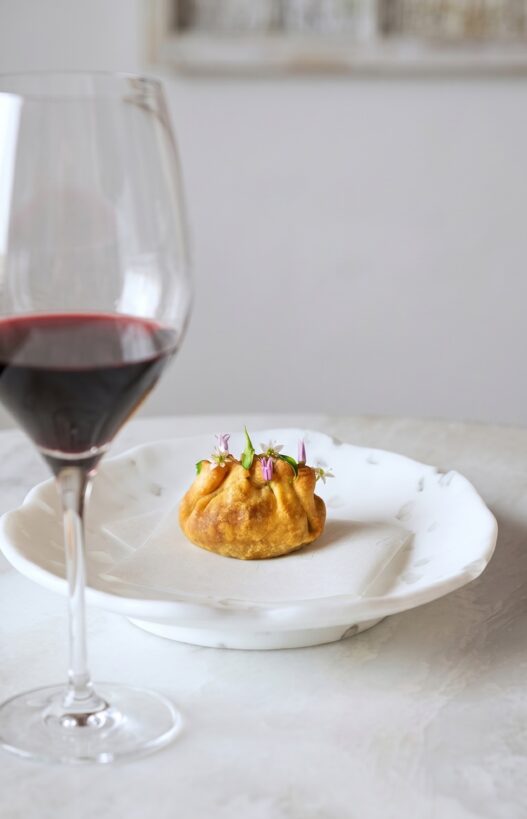
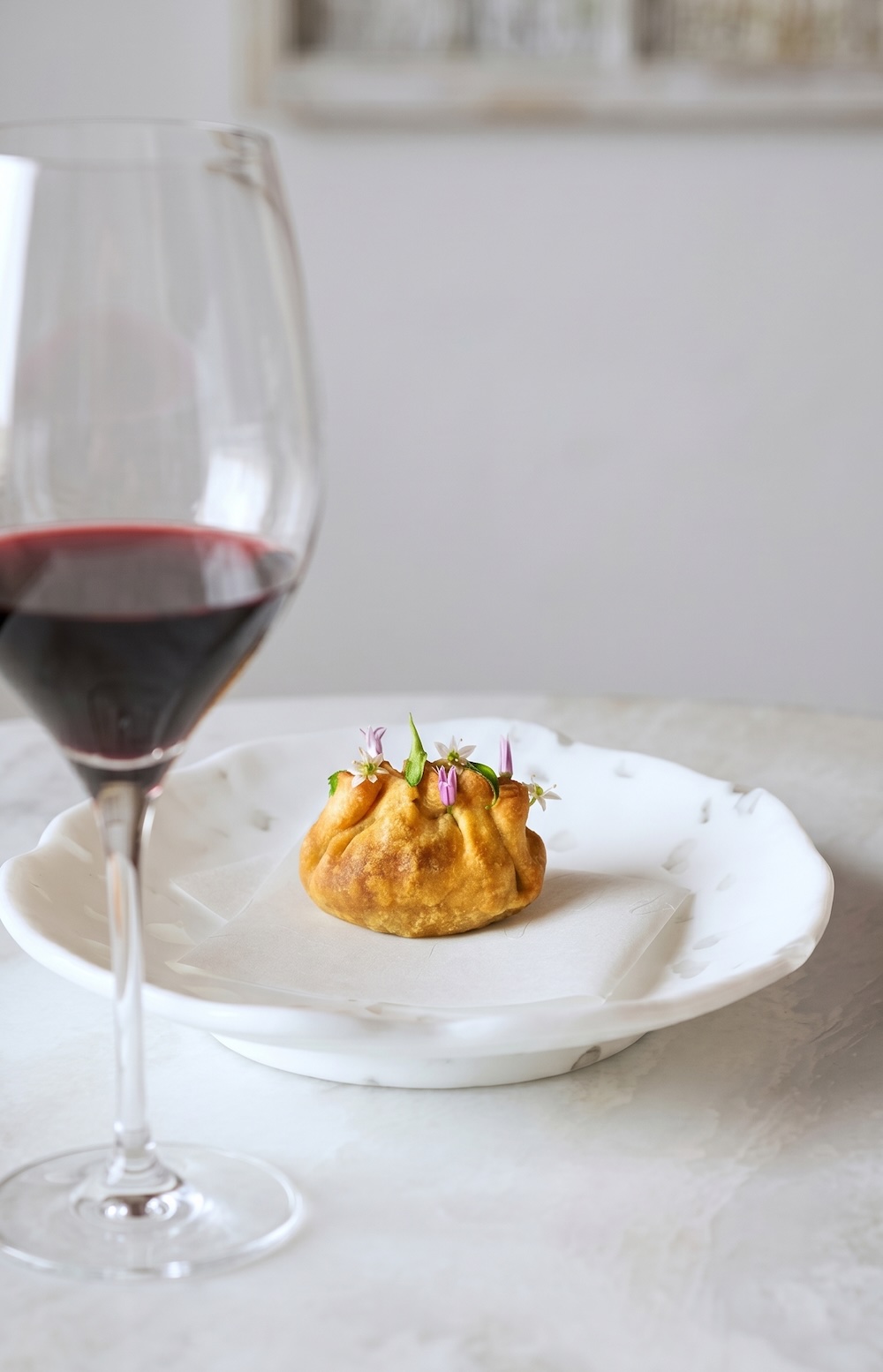
At restaurant Araya, Chilean chefs Francisco Araya and Fernanda Guerrero have built a Michelin-worthy cuisine that translates memory into something precise, contemporary, and emotional. Their work moves between Chile and Asia, but firmly anchored in identity and product. Today, they share one of the most beloved dishes in their culture and menu: a Chilean empanada so powerful, it has moved guests to tears.
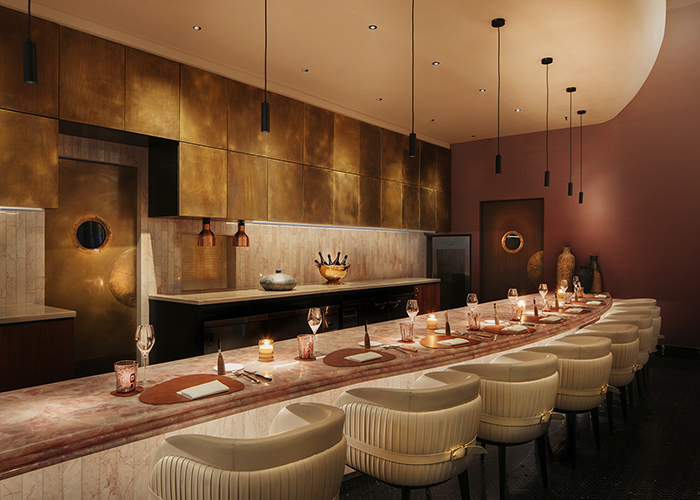
The empanada is one of those dishes that belongs to everyone and to no one at the same time. It’s something people across the world grow up believing is uniquely theirs, only to later discover its origins are diffuse, its forms countless, and its evolution shaped by migration and time.
But in its essence: what is an empanada? At its most fundamental level, it is a preparation of dough filled, folded, and cooked—either baked or fried. A format designed to be portable, adaptable, and deeply tied to everyday life. What changes is everything around it: the dough, the fillings, the technique, the cultural meaning. From wheat-based pastries to corn dough versions, from savory to sweet, the empanada is less a fixed recipe than a structure that different cultures have made their own.
At Araya, far from home, that universality becomes something more intimate.
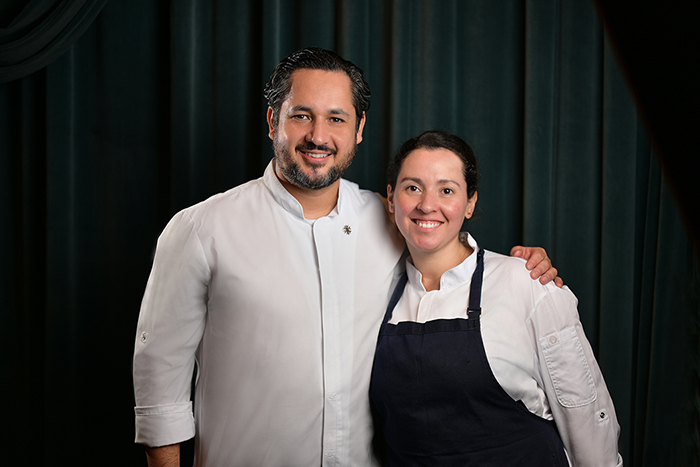
“In Singapore, our focus is on cooking the flavors of Chile, sometimes by reimagining recipes or including some of our most traditional ingredients, and other times by cooking dishes like ceviches or our empanada on the other side of the world,” says Fernanda Guerrero. “We serve a small Chilean empanada, and it has been a real pleasure to see how some of our Chilean guests are even brought to tears by them. It’s what we ultimately look for: connection,” says Fernando.
That reaction speaks to what the dish represents. In Chile, the empanada de pino is not simply traditional—it is foundational. A carefully balanced filling of beef, slow-cooked onions, spices, egg, olive, sometimes raisins, wrapped in dough and baked until golden. A dish tied to celebrations, to family tables, and to a shared cultural language.
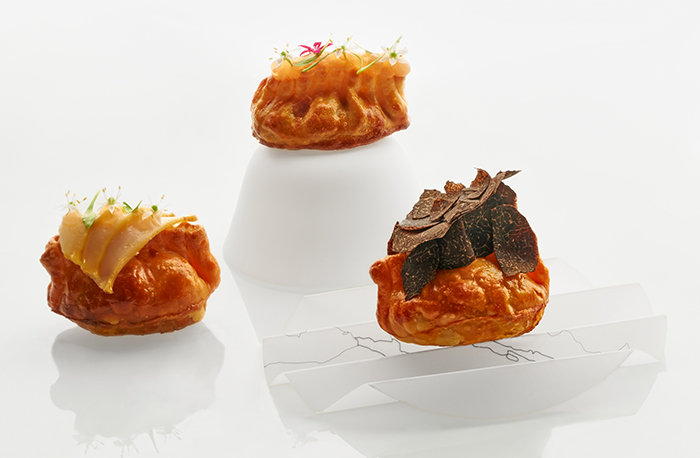
Another dish on the menu carries a similar emotional weight: ceviche. But while ceviche exists across Latin America in countless interpretations—each country shaping its own version—the empanada in Chile followed a different path. Rather than evolving into multiple forms, it became more defined, more precise. The empanada de pino stands as a singular reference point, refined over time into a dish that embodies national identity. That contrast between a format that adapts endlessly and one that is perfected within tradition reveals something essential about how Chile relates to its cuisine.
“At the other side of the world, being able to create something that triggers that kind of emotion is very special for us,” Francisco continues. “But at the same time, we want guests who are not from Chile to fall in love with our flavors. We don’t want anyone to leave Araya without understanding what they’ve just experienced.”
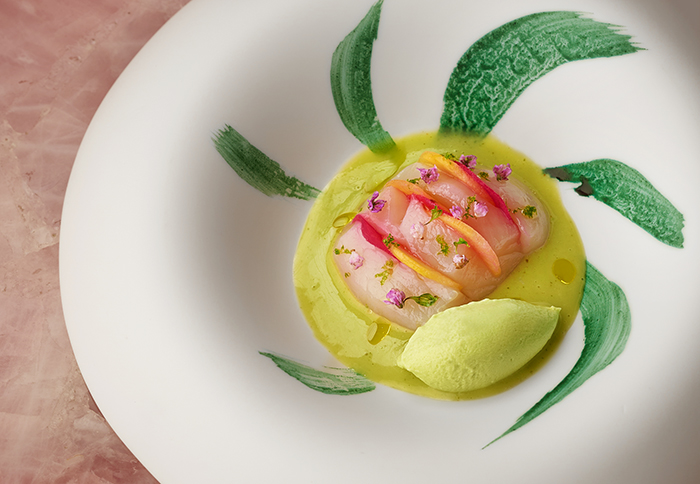
That balance—between nostalgia and discovery—is at the core of Araya’s cooking.
Chilean food writer Coni Acevedo adds to the subject of connection when talking about the beloved empanadas: “they are super typical for us and a very important part of our national holiday. Everyone has access to one and they are easy to find, cheap and perfect in any occasion. It goes deeper than that. Even yesterday I made empanadas with my entire family and the ritual is just as enjoyable as the finished delicacy. We made the filling together, the dough, and then waited in front of the oven with some great Chilean wine.”
Because while the empanada has traveled across continents and centuries, adapting to each place it touched, in Chile it became something exacting. Less about variation, more about execution. About getting the balance right. About respecting a form that carries meaning and about the ritual of making them.
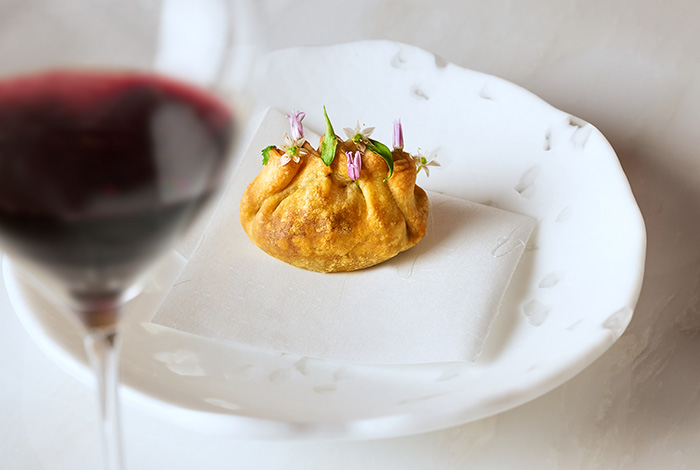
At Araya, that same philosophy applies. Technique is refined, presentation is elevated, but the intention remains intact: to tell a story that is clear, honest, and deeply connected to place.
Here’s how to make the best Chilean empanada you’ll ever have.
ARAYA
Duxton 83 Niel Road, Duxton Hl, #01-08, access via, Singapore 08981
www.arayarestaurant.com
Cook Like a Chef: Chilean Empanada by Francisco Araya
- Total Time: 1:15 hours appox.
- Yield: 20+ Empanadas
Description
At restaurant Araya, Chilean chefs Francisco Araya and Fernanda Guerrero have built a Michelin-worthy cuisine that translates memory into something precise, contemporary, and emotional. Their work moves between Chile and Asia, but firmly anchored in identity and product. Today, they share one of the most beloved dishes in their culture and menu: a Chilean empanada so powerful, it has moved guests to tears.
Ingredients
- 9 oz All-purpose flour, sifted
- 1/4 egg - note: beat 1 egg and use about 1 tbsp
- 0.9 oz Whole milk
- 3.3 oz Boiling water
- 1.2 oz Beef fat, warm (melted)
- Pinch of Salt
- 8.8 oz Yellow onion, brunoise
- 4.4 oz Beef trim, brunoise (finely chopped)
- 1/4 tsp Salt (to taste)
- 1/4 tsp Cumin powder
- 1/4 tsp Sweet paprika
- 1/4 tsp Dried oregano
- Grape seed oil as needed
- Water as needed
- All-purpose flour as needed (for thickening if needed)
- Beef fat as needed (optional enrichment)
- 5 1/2 lb tomatoes
- 1 cup of Tomato water
- 2 tbsp Raspberry vinegar
- 3/4 tsp Salt
- Tabasco to taste (a few dashes)
- Pebre Base
- Agar Agar
Instructions
For the Dough
- In a kitchen aid bowl with the hook attachment, stir the flour and salt on low speed.
- Add the egg into the moving kitchen aid. Scrape down the sides.
- Add the milk. Scrape down the sides.
- Mix the water and fat together. Add this to the moving kitchen aid.
- Turn the mixer up to speed 5 and beat the dough for 12 mins. Be Careful that the mixer doesn’t fall off the table.
- Remove the dough from the bowl and shape it into a large ball.
- Wrap in plastic and let it rest in the chiller for 1 hour.
- Portion into 20g and roll each one flat into a disc.
- Bag into 20 discs per bag. Layer the dough with parchment.
- Store in the freezer. Use as needed.
Note: make sure the water and fat are hot!
For the Pino filling
- Sweat yellow onion in a large rondeau till very tender and translucent.
- Season beef trim with salt, cumin, paprika and oregano. Mix well.
- Add the seasoned beef into the onions. Mix well.
- Check the seasoning and correct with more if needed.
- In a bowl, make a slurry with the flour and water. Use this to thicken the Pino as needed. Make sure to cook out the flour.
- Cool and portion into bags. Freeze.
Note: substitute button mushrooms for beef to make mushroom Pino.
For the Tomato Water
- Blend tomatoes in a vitamix.
- Bring blended tomatoes to a rolling boil. Turn down to a simmer. Simmer for 1 min.
- Slowly strain into chinois lined with lead paper.
- Store in bags and freeze.
For the Pebre Base
- Combine all ingredients and check seasoning.
- Store in bags and freeze.
For the Pebre Gel
- Combine all ingredients in a pot and bring to a boil.
- Strain into a container to cool and set.
- Once set, cut into small cubes and transfer to vitamix.
- Blend till smooth and strain.
- Store in piping bags.
Notes
To make the Empanadas:
- Fold a portion of Pino into the dough and pleat the top.
- Egg wash evenly and bake in a 175 C oven for 12 mins or until golden brown.
- Poke a hole into the side and squeeze a small amount of pebre inside.
- Squeeze more pebre over the pleats.
- Garnish with micro greens.
- Prep Time: 1 hour
- Cook Time: 15 mins
- Category: Appetizer



OMG these photos are gorgeous, looks absolutely incredible, not sure I’d nail this at home but bookmarking!
I honestly don’t know if I dare to try this, saving for when I have the courage.
Saving for a brave day!
Going to attempt this for my partner’s birthday next month and report back, this is serious stuff but worth the swing.
WOW just wow. Pinned this to my dream-dinners board and the photos have me sitting at the counter at Araya in my head. Thank you for sharing this kind of recipe.