
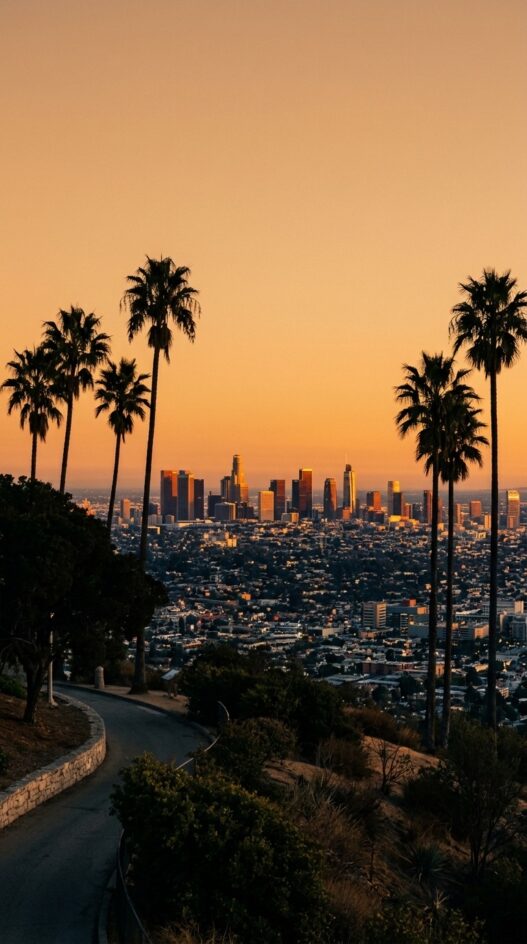
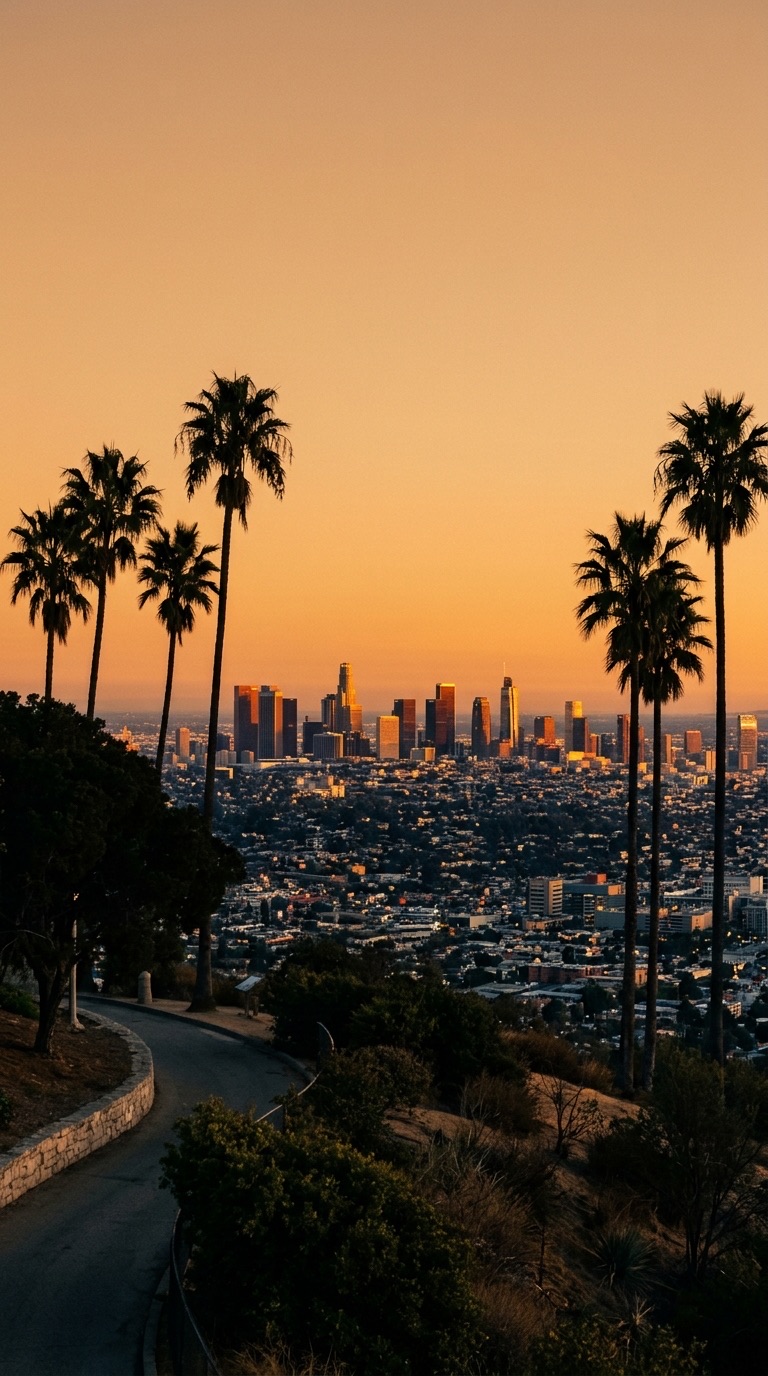
Los Angeles – my hometown for more than a decade – is what happens when wave after wave of immigration collides with a city that has always been too restless to settle on a single culinary identity. You can drive forty minutes and land in a neighborhood where the signage changes language, the spice level doubles, and the cooking technique traces back to a continent you haven’t visited yet. That sprawl is actually not a bug, but the design system that makes this place unique in America, if not the world. These five things to eat are not a checklist of tourist stops but a shorthand for understanding what makes this city one of the most interesting places to eat on the planet.
1 · Korean BBQ
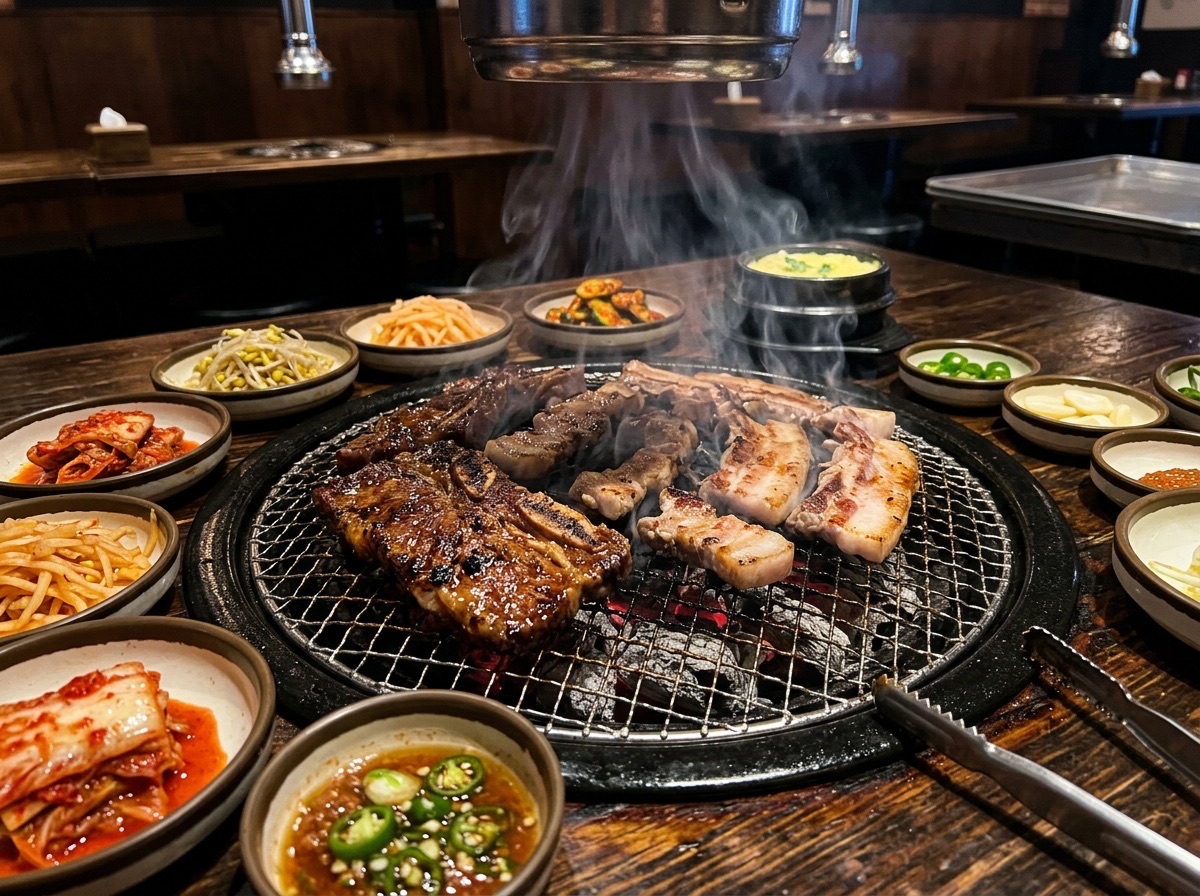
Koreatown sits just west of Downtown and is, by most counts, the largest Korean community outside Seoul itself, a fact that becomes viscerally obvious the moment you walk into any good Koreatown joint and find yourself in front of a live charcoal grill sunk into the table. Korean immigration to Los Angeles accelerated after the Hart-Celler Act of 1965 lifted the national-origins quota system, and by the 1980s Koreatown had its own banks, newspapers, and a restaurant culture of remarkable depth. The ritual at the table is as important as the food: marinated short ribs (kalbi) and pork belly (samgyeopsal) hit the grill, the smoke rises immediately, and a parade of small cold dishes (banchan) arrives unbidden, refilled for free as long as you are sitting there. A good samgyeopsal place will wrap the just-cooked pork in perilla leaf or lettuce with fermented soybean paste and raw garlic, and the combination of fat, acid, and pungency is one of the more convincing arguments for why this style of eating has spread to every city on Earth. Soju needs to flow freely; the bottles are small and the rounds should come fast. Go hungry, go with more than two people if you can, and surrender to the pace of it. This is one of the most incredible meals you will ever have.
Where to try it
2 · Tacos
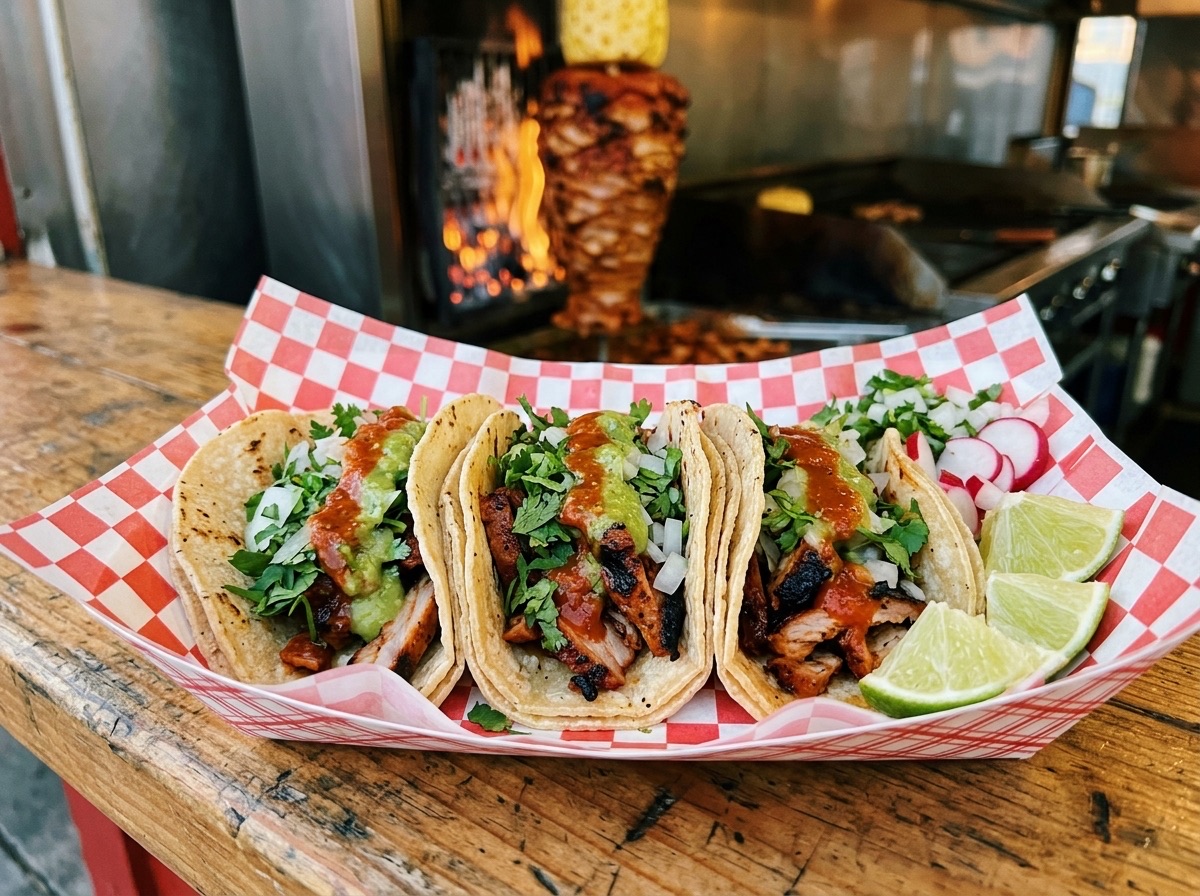
The al pastor taco is one of the more fascinating cross-cultural objects in the food world: Lebanese immigrants brought the vertical spit (shawarma) to Mexico City in the early twentieth century, pork replaced lamb, chiles and achiote replaced the Middle Eastern spice blend, and eventually the trompo (as the Mexican vertical rotisserie is called) migrated north with Mexican workers into Los Angeles. The taco truck as an institution in LA dates to at least the early 1970s, when loncheras began serving construction crews and factory workers across the city, and the scene has never stopped evolving since. At its best, an al pastor taco from a working trompo is a small perfect thing: a coin of pork carved from the rotating cone, a slice of pineapple from the top, soft corn tortillas doubled up, raw white onion, cilantro, and a few squeezes of lime. Beyond al pastor, any serious taco truck will offer suadero (slow-braised beef brisket that crisps on the griddle) and lengua (beef tongue, yielding and deeply savory), both worth ordering before you default to what is most familiar. The tortilla is a differentiator btw: look for trucks making them by hand or sourcing them fresh, because the gap between a fresh corn tortilla and a cold packaged one is the difference between a good taco and a great one. And don’t just look for trucks, look for the makeshift taco stands that pop up at night at major boulevards, where the prices are low and the quality amazing.
Where to try it
3 · Sushi
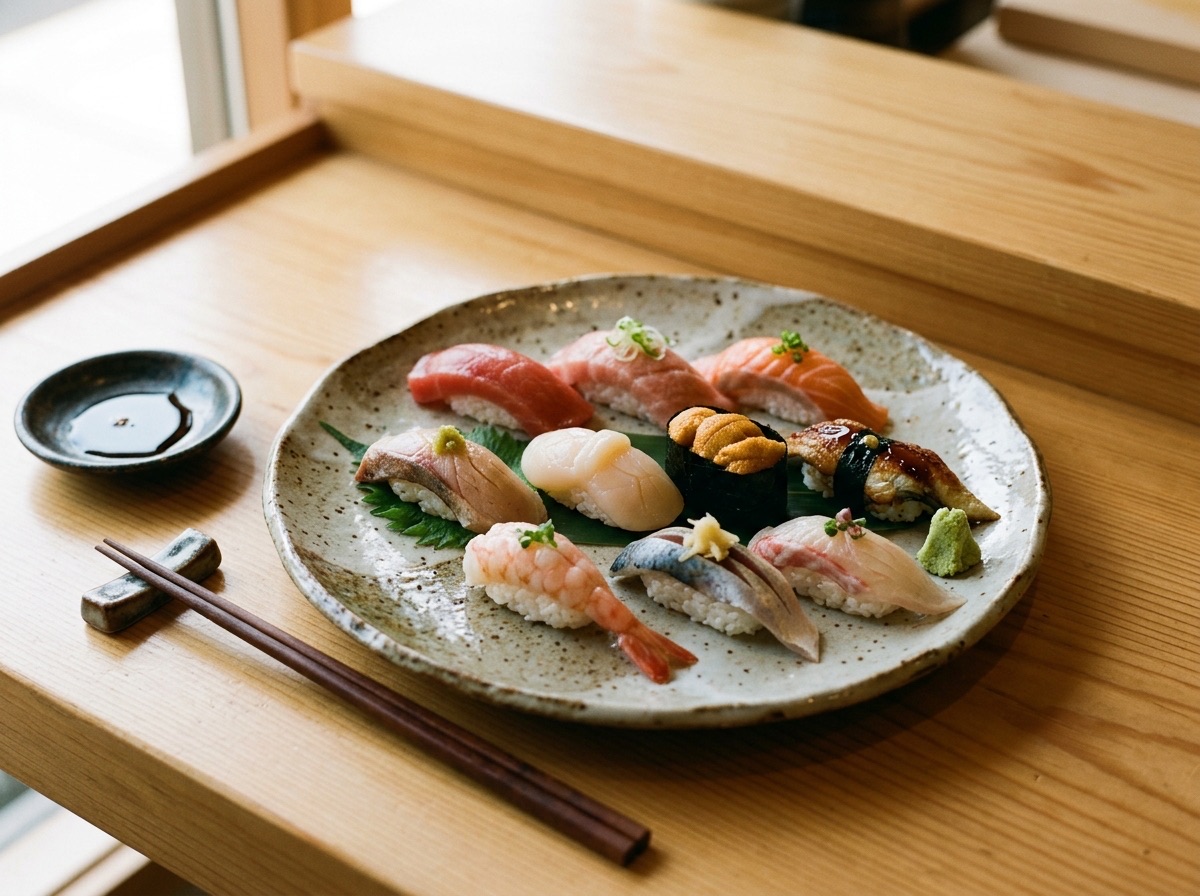
The case that Los Angeles is the most important sushi city in the United States outside Japan rests heavily on one man: Kazunori Nozawa, who opened Sushi Nozawa in Studio City in 1987 and ran it with a famously uncompromising counter style, refusing substitutions and telling customers to simply trust him. That posture, unusual enough in Tokyo and genuinely shocking in 1980s California, helped establish a culture of omakase seriousness in a city that had largely treated sushi as a casual delivery option. The legacy runs through the Westside and Little Tokyo alike, where you will find a density of technically serious sushi bars that rivals anything on the East Coast. What to look for at any good Westside or SGV omakase counter is rice temperature (it should be just above room temperature, never refrigerator-cold), the quality of the neta (fish), and whether the nigiri is formed to fall apart in a single bite rather than sit rigid on the tongue. Little Tokyo, centered around First and Second Streets in downtown, remains the historical anchor of Japanese Los Angeles and is worth an afternoon even if you are only grazing at the market stalls. The depth of the sushi bench here rewards more than one visit.
Where to try it
- Shunji — High end omakase, classic.
- Nozawa — The place that started it all.
- Sugarfish — Every Angelenos favorite everyday sushi. Multiple locations across the city.
4 · Szechuan
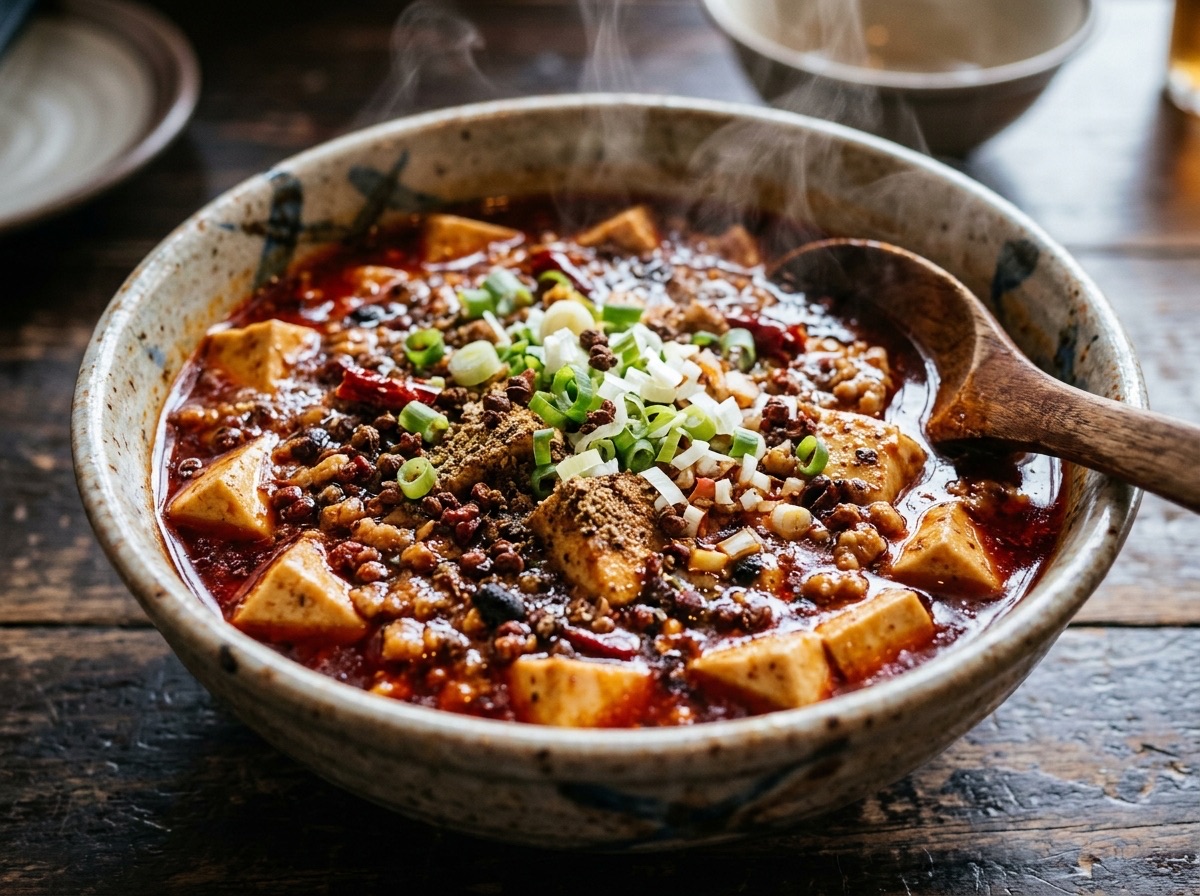
The San Gabriel Valley, a sprawl of suburbs east of downtown that began receiving waves of Taiwanese and then mainland Chinese immigration from the 1970s onward, now contains what many serious eaters consider the best Sichuan food outside of Chengdu. The mala flavor profile (numbing from Sichuan peppercorn, hot from dried chilies) is an acquired taste for some newcomers, but any SGV institution will let you calibrate: order the mapo tofu, which arrives in a pool of brick-red chili oil with silken tofu and minced pork, and you will understand quickly where you sit on the heat tolerance spectrum. Dan dan noodles, the street-food original of Chengdu, come in a sesame-and-chili sauce with ground pork and preserved vegetables and reward slow eating; the cold Sichuan noodles (liangpi or similar) are a better entry point if you want to feel the spice without being overwhelmed by it. Dry-fried green beans, their skins blistered and salted, sound simple and are quietly one of the best things on any of these menus. The SGV transformation from post-war suburb to one of the most culinarily complex regions in the country happened fast and is still accelerating, and the Sichuan restaurants here represent a level of regional specificity that would have been essentially inaccessible outside China twenty years ago.
Where to try it
5 · French Dip Sandwich
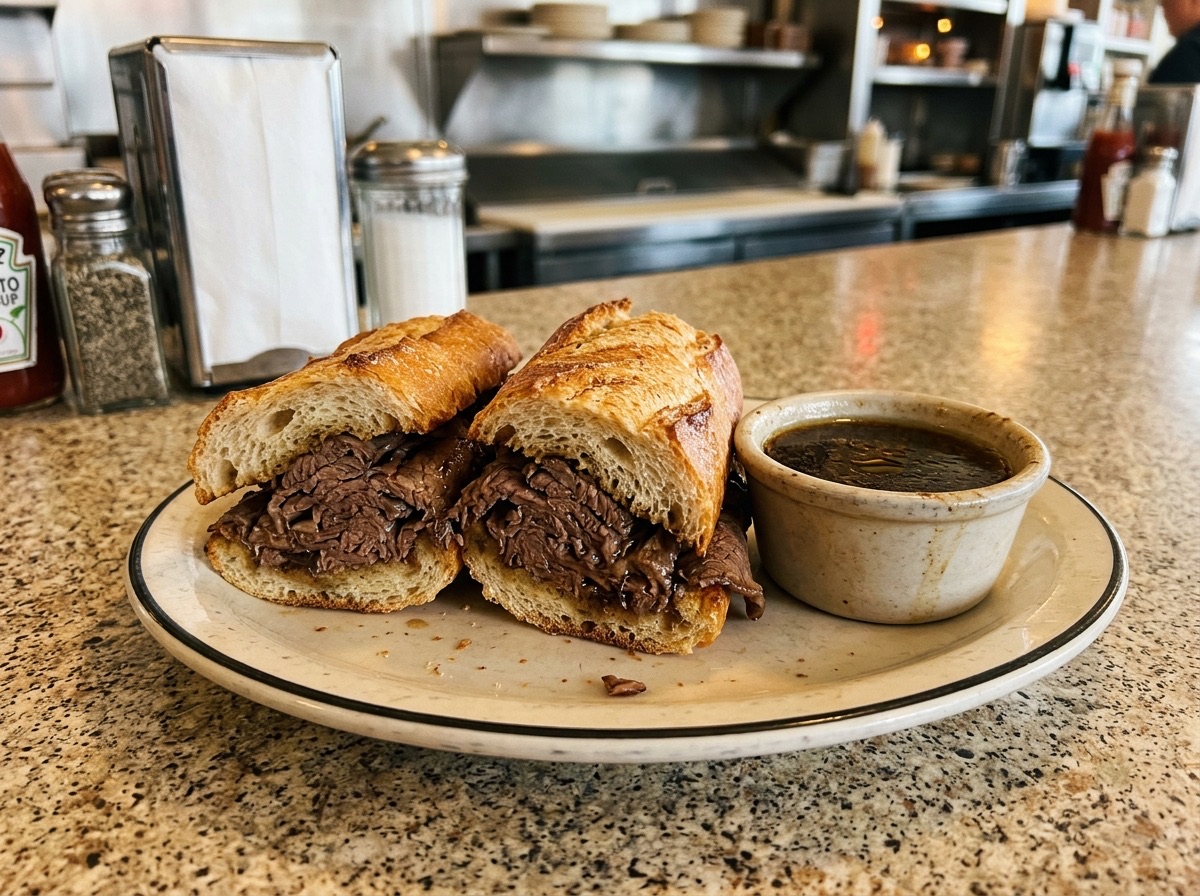
The French Dip is one of the few sandwiches in American food history with a reasonably well-documented origin and a genuine local rivalry about who gets credit for it. Both Philippe the Original (founded 1908, now on Alameda Street near Union Station) and Cole’s Pacific Electric Buffet (also 1908, in downtown’s historic Pacific Electric Building) claim to have invented the dish, and after more than a century the argument remains unresolved and cheerfully ongoing. The sandwich itself is straightforward: thin-sliced roast beef on a French roll, the roll dipped (or double-dipped) in the braising jus left over from cooking the meat, served with a small ramekin of jus on the side for additional dunking. What makes the original Philippe’s version worth the trip specifically is less about refinement and more about continuity: the sawdust on the floor, the communal tables, the nine-cent coffee (yes, still), and the sense that this particular institution has been feeding Los Angeles since before the freeways existed. Cole’s makes a strong case with a darker, more intensely flavored jus and a slightly different bread profile. The French Dip is not a complicated sandwich; it is a document, and eating it in downtown LA is eating a piece of 1908.
Where to try it
Los Angeles rewards the curious and punishes the incurious; it is not a city that hands you its best food through the hotel concierge. Get in a car, drive east to the SGV or south to a taco truck you have never been to, and let the city show you what it actually is. Enjoy.
Make these at home: recipes from this guide
Frequently Asked Questions
What is the most famous food in Los Angeles?
Los Angeles has no single most famous dish, but Korean BBQ in Koreatown and street tacos (especially al pastor from the trompo) are the two foods most closely associated with the city’s identity as an immigrant food capital.
Where did the French Dip sandwich originate?
The French Dip was invented in downtown Los Angeles in 1908. Both Philippe the Original, still open on Alameda Street near Union Station, and Cole’s Pacific Electric Buffet claim credit for the invention, and the rivalry has never been officially settled.
Is Los Angeles a good city for sushi?
Yes. Los Angeles is widely regarded as the best American city for sushi outside Japan. The omakase tradition in the US took root here in the 1980s at Sushi Nozawa in Studio City, and the current depth of serious sushi bars across the Westside and Little Tokyo is exceptional.
What is the San Gabriel Valley known for in terms of food?
The San Gabriel Valley (SGV) is home to what many food writers consider the best Sichuan food outside of China, along with outstanding Cantonese, Taiwanese, and other regional Chinese cuisines. The SGV’s transformation into a major Chinese-American food destination began with immigration waves in the 1970s and has continued since.
What makes LA’s al pastor tacos distinctive?
Al pastor in Los Angeles traces back to Lebanese immigrants who brought the vertical spit (shawarma) to Mexico City, where pork replaced lamb and Mexican spices replaced Middle Eastern ones. That tradition arrived in LA with Mexican workers from at least the early 1970s. The best al pastor is carved fresh off the trompo with a slice of pineapple, served on doubled corn tortillas with raw onion and cilantro.
What neighborhoods should I visit for the best food in Los Angeles?
For Korean BBQ, head to Koreatown just west of downtown. For Sichuan and other regional Chinese food, the San Gabriel Valley (SGV) is essential. Little Tokyo in downtown is the historical anchor for Japanese food including sushi. Street tacos are city-wide, with strong truck scenes in East LA and throughout the city.

Where would you send someone for tlayudas south of downtown if Boyle Heights is too far out?
I grew up in West Covina and the drive from Koreatown to a Oaxacan place in Mid-City to a Filipino lechon spot in Eagle Rock on a Saturday is exactly how I miss the city. Sending this to my brother who is moving back next month.
Park’s BBQ on Vermont at 7pm Saturday is EXACTLY the chaos this article describes, banchan refills until you tap out.
Visiting in June and trying to plan around your list. Have you found a good Oaxacan place for tlayudas?
I love how this list nails the immigration-and-food connection, that’s the whole thread that ties LA’s food culture together!
Visited LA for two weeks last fall, coming back soon and your list will be the spine of my itinerary, Korean barbecue in Koreatown the first night, breakfast burritos in the Valley the morning after, al pastor at Leo’s after a late-night Lakers game. Genuinely looking forward to a week of eating.
Koreatown-raised here, the line for kalbi at Park’s BBQ on a Saturday night is exactly the chaos this article describes. The banchan refills until you stop chewing and the smoke gets in your hair, you wear those clothes once and then they go straight in the laundry. Al pastor at Leo’s after midnight is a chapter you can’t skip either. The tacos arabes nod elsewhere on the list is overdue.