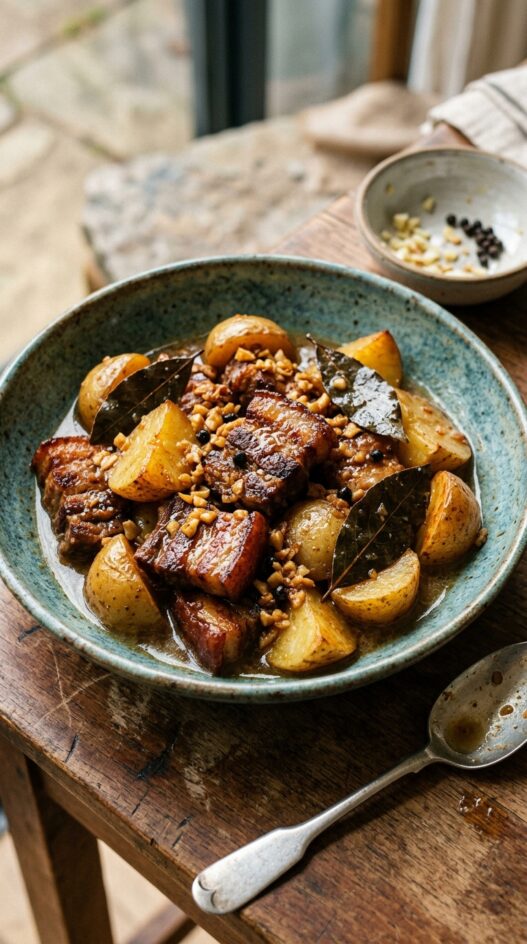
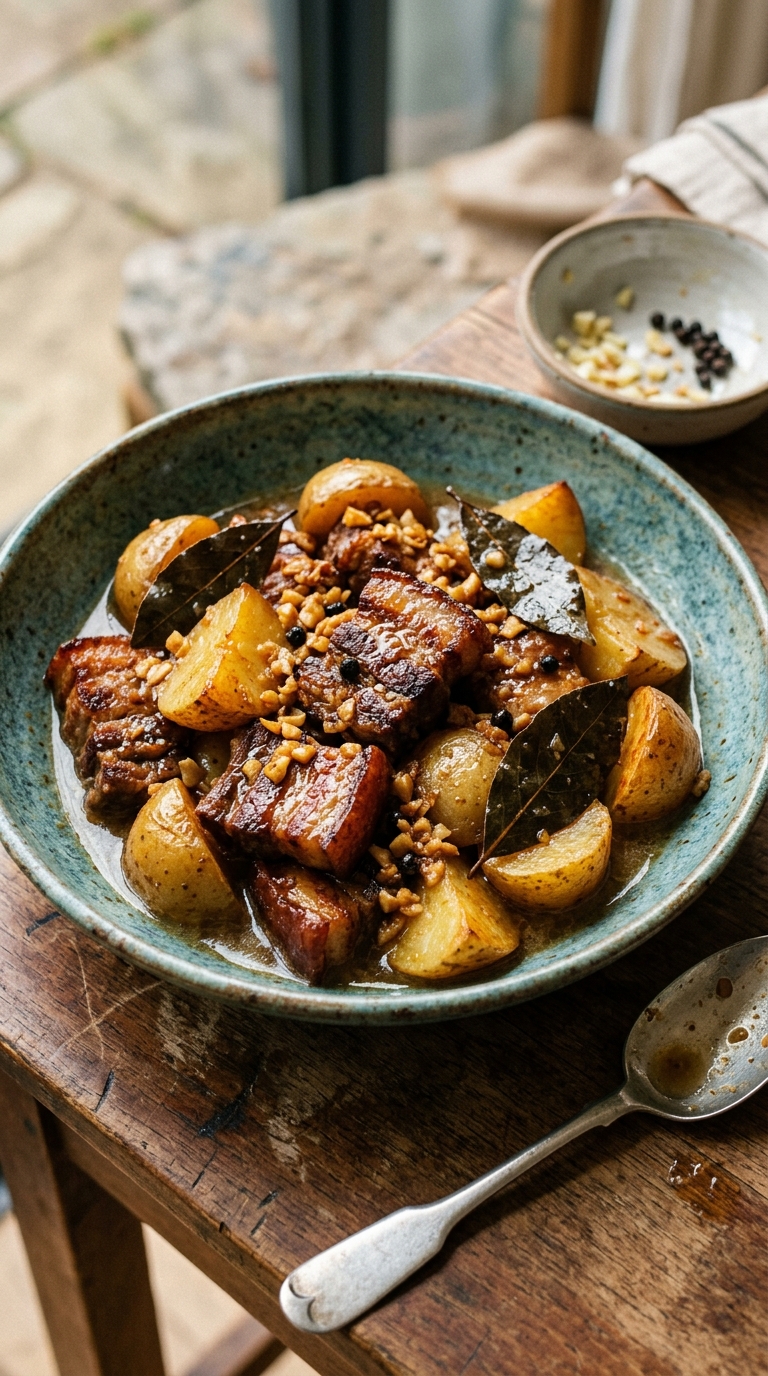
Adobo is a dish made out of four important ingredients namely the meat (pork or chicken), soy sauce, vinegar and loads of garlic, without one of them it cannot be called an adobo apart from one exception, this adobo sa puti. Basically adobo sa puti is a similar dish sans soy sauce, I am not sure about its origins but my wild guess is that this was created by someone who planned to make adobo and found out there was no soy sauce, instead of buying one to save money he used salt as a replacement.
The result is really quite the same as the flavour notes of an adobo dish is very sour and very salty which the replacement can also achieve.
Print
Filipino White Adobo: Adobo sa Puti
- Total Time: 55 minutes
- Yield: 5 servings
Description
A pork adobo without the typical soy sauce, but with a delicious sour and salted flavor.
Ingredients
- 1 3/4 lb (800g) Pork belly, cubed
- 3 medium potatoes (Agria) quartered
- 1 whole garlic, minced
- 1/2 cup (120 ml) Filipino Style cane vinegar
- 1 tbsp sugar
- 1 tbsp salt
- oil
- bay leaves
- whole pepper corns
- water
Instructions
- Season pork belly with salt then set it aside.
- Deep fry potatoes until golden brown. Remove from pan then set aside.
- In a separate pot sauté garlic in oil using low heat until golden brown. Remove from pot and set aside.
- Add pork belly and fry until browning occurs.
- Add 1/2 cup water, 1/2 cup vinegar, 2 tbsp peppercorn, 4 bay leaves and 1 tbsp sugar then bring to a boil and simmer for 25 minutes.
- Drain any remaining liquid and in a separate frying pan add oil and fry the drained meat in high heat browning the sides.
- Pour the drained liquid back in the pan together with the deep fried potatoes. Add more vinegar and water if it dries up.
- Simmer for additional 5 minutes, season with salt if needed then serve.
- Prep Time: 15 minutes
- Cook Time: 40 minutes
- Category: Main Course
- Cuisine: Asian
Nutrition
- Serving Size: 1 serving
- Calories: 520
Frequently Asked Questions
Can I use chicken instead of pork for this adobo sa puti?
Yes, you can substitute chicken for pork; just adjust the cooking time as chicken may cook faster.
What type of vinegar is best for making adobo sa puti?
Filipino style cane vinegar is used here, which gives the dish its characteristic tang. If it’s unavailable, white vinegar is a reasonable substitute, though the flavor will be slightly different.
How much garlic should I use in this recipe?
This calls for ‘loads of garlic’, so feel free to use a generous amount, such as 10-15 cloves, depending on your preference.
If You Liked This Recipe, You’ll Love These
- How to Make Filipino Chicken Adobo
- Chicken Khao Soi: Curry Noodle Soup
- Slow Cooker Chicken Enchilada Soup
- Crispy Chicken Thighs in Blueberry Sauce