
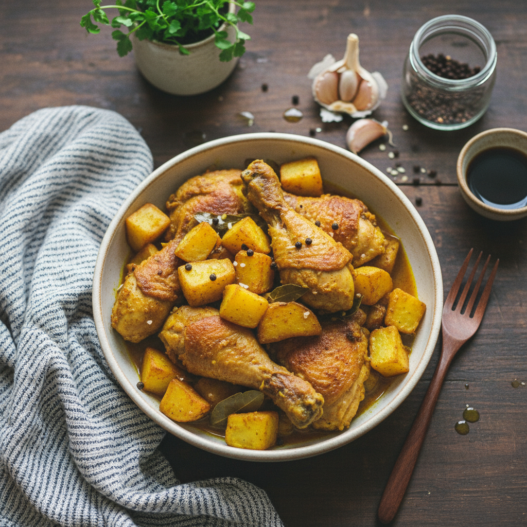
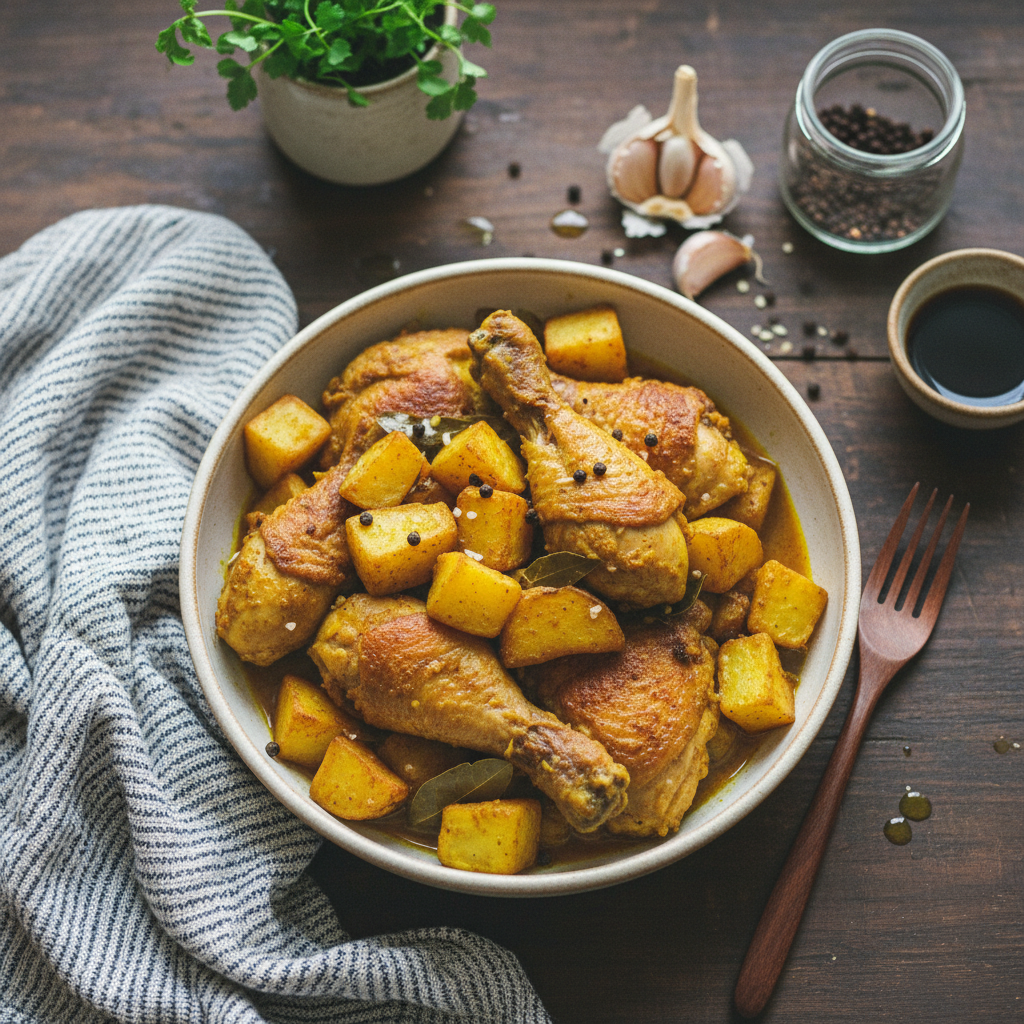
Adobo perhaps is Philippines most popular dish. In fact it is very popular it is our official national dish.
To start, Adobo is a dish where pork, chicken or combination of both is cooked in a mixture of vinegar and soy plus herbs and spices like black peppercorns, bay leaves and lots of garlic. This is the most common version of the dish but if we go back in time, adobo during the old days did not contain any soy sauce and is only cooked in vinegar and salt.
This recipes uses the old version without soy sauce and instead we will be making another version called Adobong dilaw or Yellow Adobo. Similar in concept with the usual adobo where it is cooked in vinegar but with an added ingredient that gives that colour, turmeric. This adobo might taste similar to the untrained palate but this version has that mildly aromatic scent nearly similar to a mix of orange or ginger plus it gives a little bit of that pungent bitter flavour.
Find more authentic recipes here.
Print
Filipino Adobong Dilaw Chicken
- Total Time: 55 minutes
- Yield: Serves 4
- Diet: Omnivore
Description
This vibrant yellow adobo features tender chicken and potatoes in a savory, tangy sauce. A simple yet flavorful Filipino classic.
Ingredients
- 2 lbs (907 g) chicken legs and thighs
- 1 knob turmeric
- 3 medium potatoes
- 1 whole garlic
- 1/2 cups (118 ml) Filipino Style cane vinegar
- 1 tbsp sugar
- 1 tbsp salt
- oil
- bay leaves
- whole pepper corns
- water
Instructions
- Season chicken with salt and set aside.
- Deep fry potatoes until golden brown, then set aside.
- In a separate pot, sauté garlic in oil over low heat until golden brown. Remove and set aside.
- Add turmeric and cook for 30 seconds.
- Add chicken and fry until browned.
- Add 1/2 cup water, 1/2 cup vinegar, 2 tbsp peppercorn, 4 bay leaves, and 1 tbsp sugar. Bring to a boil and simmer for 25 minutes.
- Drain any remaining liquid. In a separate frying pan, add oil and fry the drained meat over high heat, browning the sides.
- Pour the drained liquid back into the pan with the deep-fried potatoes. Add more vinegar and liquid if it dries up.
- Simmer for an additional 5 minutes. Season with salt if needed, then serve.
Notes
- For a richer flavor, use chicken thighs only.
- To prevent the adobo from becoming too sour, adjust the vinegar quantity to your preference; start with less and add more as needed.
- Leftovers can be stored in the refrigerator for up to 4 days and reheated gently on the stovetop or in the microwave.
- Prep Time: 15 minutes
- Cook Time: 40 minutes
- Category: Main Course
- Method: Braising
- Cuisine: Filipino
Nutrition
- Serving Size: 1.5 cups
- Calories: 400
- Sugar: 5
- Sodium: 600
- Fat: 20
- Saturated Fat: 5
- Unsaturated Fat: 10
- Carbohydrates: 35
- Fiber: 3
- Protein: 30
- Cholesterol: 150
Frequently Asked Questions
What is adobong dilaw and how does it differ from regular adobo?
Adobong dilaw uses fresh turmeric (dilaw means yellow in Filipino) instead of the usual soy sauce, giving it a golden color and a slightly more earthy, less salty flavor than classic adobo.
Can I use ground turmeric if I cannot find fresh turmeric?
Yes, use about half a teaspoon of ground turmeric in place of a knob of fresh. Fresh turmeric has a brighter, more aromatic quality, but ground turmeric produces a similar color and warmth.
What type of vinegar is best for this dish?
Filipino cane vinegar is the traditional choice and has a mild, slightly sweet acidity. White cane vinegar or coconut vinegar are close substitutes. Avoid strong vinegars like distilled white, which can overpower the dish.
Why are the potatoes deep-fried before adding to the pot?
Pre-frying the potatoes gives them a golden crust that holds their shape during the braise. Without this step, they tend to break down and become mushy in the sauce.
How long does this dish keep in the fridge?
Adobo keeps well for up to 4 days refrigerated. Like most adobo dishes, the flavor deepens after a day as the vinegar and spices continue to develop.
If You Liked This Recipe, You’ll Love These
- Spinach Artichoke Chicken Bake
- Milanesa de Pollo
- Thai Peanut Chicken Stir-Fry
- Chicken and Dumplings
- One-Pot Chicken Alfredo






Beautiful photography!
Thank you!