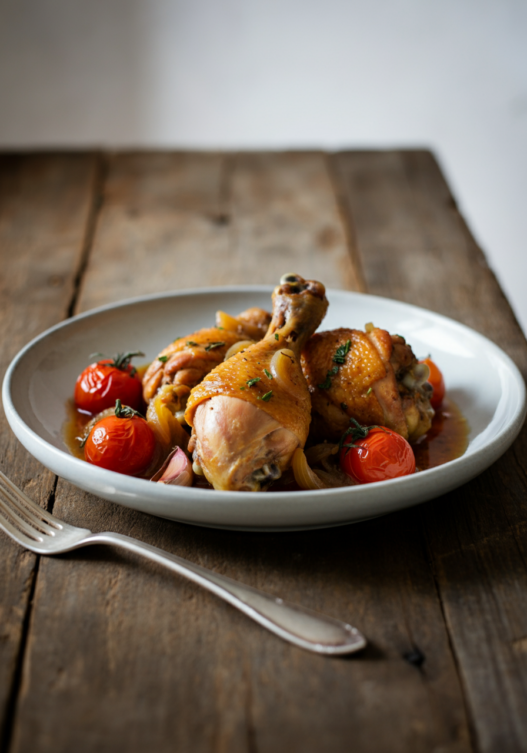
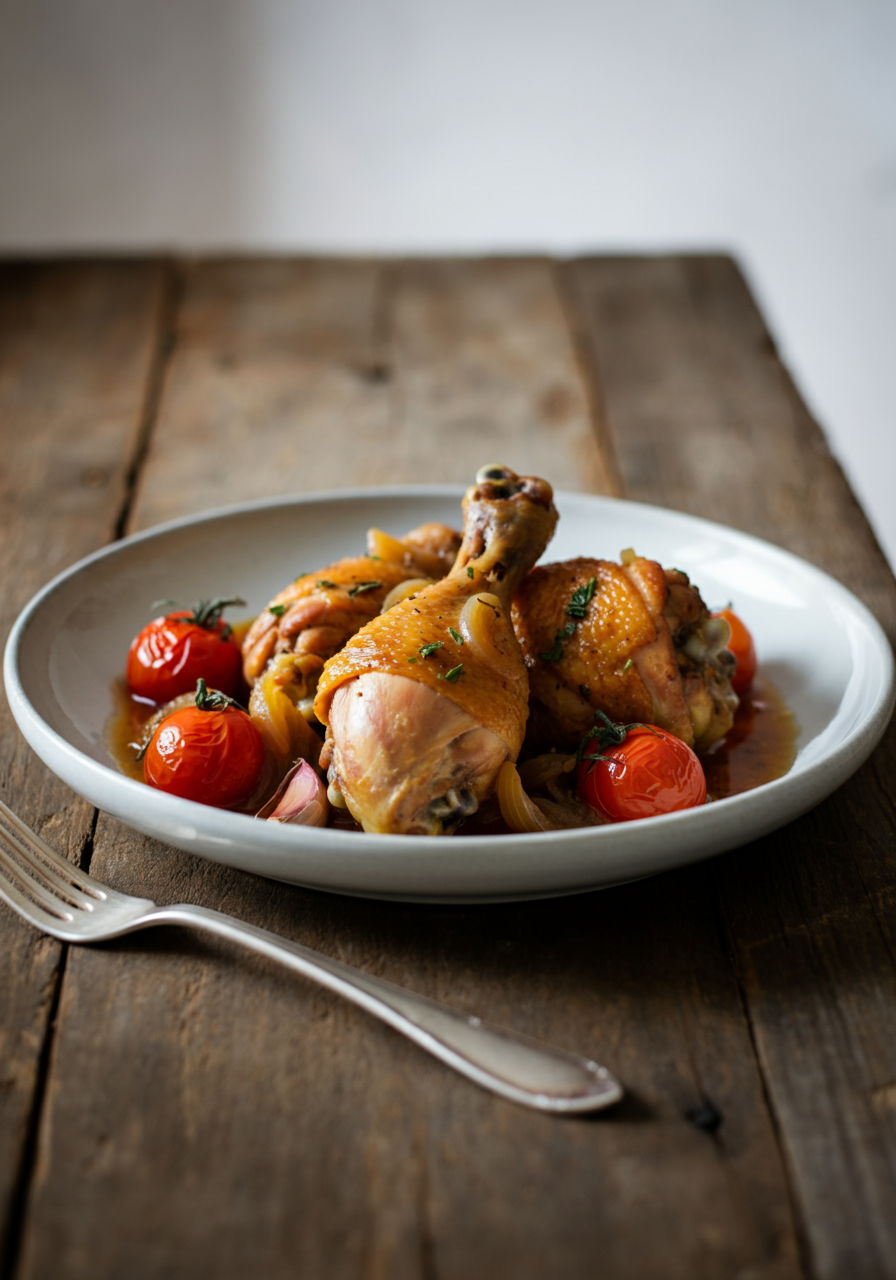
I found this recipe written in my grandmother’s handwriting on the back of an envelope, tucked inside a cookbook I hadn’t opened in a decade. No title, no source, just a list of ingredients and a note that said “cook until falling off the bone.” Brown ale, shallots, malt vinegar, fresh oregano. I made it on a Sunday when the weather had turned and I had nowhere to be. The kitchen smelled like a pub crossed with a garden. We ate it with bread and didn’t bother with sides. That was the right call. Brown ale in braises does something that wine doesn’t. Less acidity, more roundness. The shallots melt down and the caramelized edges flavor the whole sauce.
How to Make Chicken in Brown Ale
Browning the chicken
Brown the chicken in batches over high heat. Don’t crowd the pot. You want genuine color on the skin, not pale steamed chicken. That fond on the bottom of the pot is what gives the sauce its depth later.
The ale
Use a dark brown ale with noticeable malt character. A bland lager won’t give you much. Newcastle, Samuel Smith’s Nut Brown, or any local craft brown ale all work. Pour it in after the shallots and garlic have cooked down.
Low and slow
Once everything is in the pot, cover and keep the heat low. Ninety minutes minimum. The meat should pull from the bone without any effort. If you want a thicker sauce at the end, uncover for the last twenty minutes.
Chicken in Brown Ale
- Total Time: 120 minutes
- Yield: Serves 4
- Diet: Gluten-Free, Omnivore
Description
A hearty, flavorful chicken stew perfect for a cozy night in. Slow-cooked chicken with shallots and tomatoes in a rich brown ale sauce.
Ingredients
- Olive oil
- 1 chicken, cut up into pieces, bone-in and skin on
- 15 shallots, peeled
- 1 head of garlic, peeled and crushed
- salt and pepper
- 2 tbsp dark brown sugar
- 3/4 cups (175 ml) beer
- 4 tomatoes, diced
- 1 can of diced tomatoes
- 2 tbsp malt vinegar
- 3 sprigs of fresh oregano, roughly chopped
Instructions
- Brown the chicken parts on all sides in olive oil over high heat in a heavy-bottomed pot. Do not cook through; just brown the skin. Remove to a plate and set aside.
- Lower the heat to medium-high. Add the shallots and cook until browned, about 5 minutes, stirring occasionally but allowing some to caramelize.
- Add the garlic and cook for 30 seconds. Season with salt, pepper, and brown sugar. Stir for another 30 seconds.
- Deglaze the pan with beer.
- Lower the heat to medium. Add the remaining ingredients. Simmer uncovered for 10 minutes.
- Add the chicken back to the pot and simmer uncovered over low heat for approximately 90 minutes.
Notes
- For deeper flavor, use a good quality dark brown ale with noticeable malt notes.
- If you prefer a thicker sauce, simmer uncovered for a longer period, or mix 1 tbsp of cornstarch with 2 tbsp of cold water and stir into the stew during the last 15 minutes of cooking.
- Leftovers can be stored in the refrigerator for up to 4 days and are even more flavorful the next day.
- Prep Time: 20 minutes
- Cook Time: 100 minutes
- Category: Main Course
- Method: Braising
- Cuisine: British-Inspired
Nutrition
- Serving Size: 1.5 cups
- Calories: 450
- Sugar: 10
- Sodium: 600
- Fat: 25
- Saturated Fat: 8
- Unsaturated Fat: 15
- Carbohydrates: 30
- Fiber: 5
- Protein: 40
- Cholesterol: 150
Frequently Asked Questions
What type of beer works best for this recipe?
A brown ale or dark amber ale with malty sweetness is ideal. Avoid IPAs or overly hoppy beers, as the bitterness intensifies during braising. Stouts can work but may make the sauce heavier than intended.
Can I use boneless chicken pieces instead of bone-in?
Bone-in pieces are strongly recommended. The bones add body to the braising liquid over the 100-minute cook time, and the skin protects the meat from drying out. Boneless cuts would need a much shorter cook time and won’t give the same result.
Why use both fresh and canned tomatoes?
The canned tomatoes break down into the sauce and provide a consistent acidic base, while the fresh diced tomatoes hold their shape slightly and add texture. Together they give you more depth than either one alone.
If You Liked This Recipe, You’ll Love These
- Spinach Artichoke Chicken Bake
- Milanesa de Pollo
- Thai Peanut Chicken Stir-Fry
- Chicken and Dumplings
- One-Pot Chicken Alfredo