
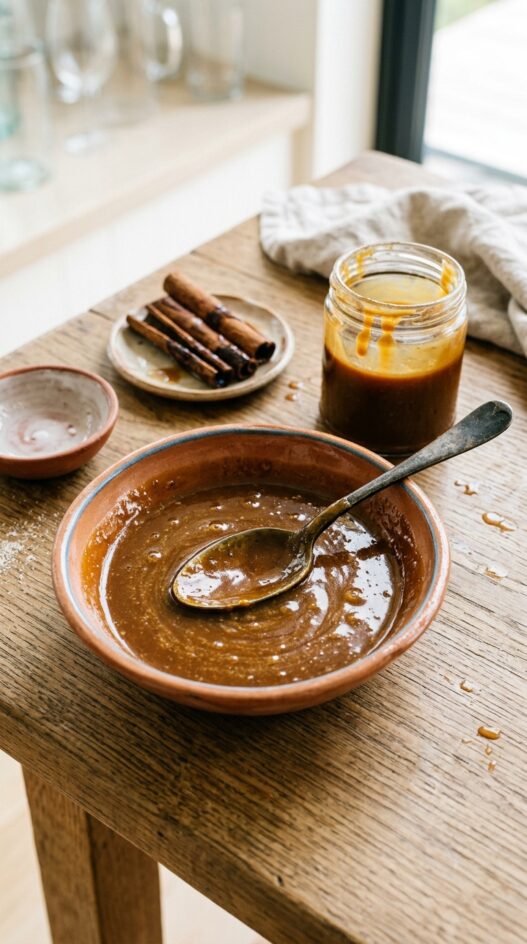
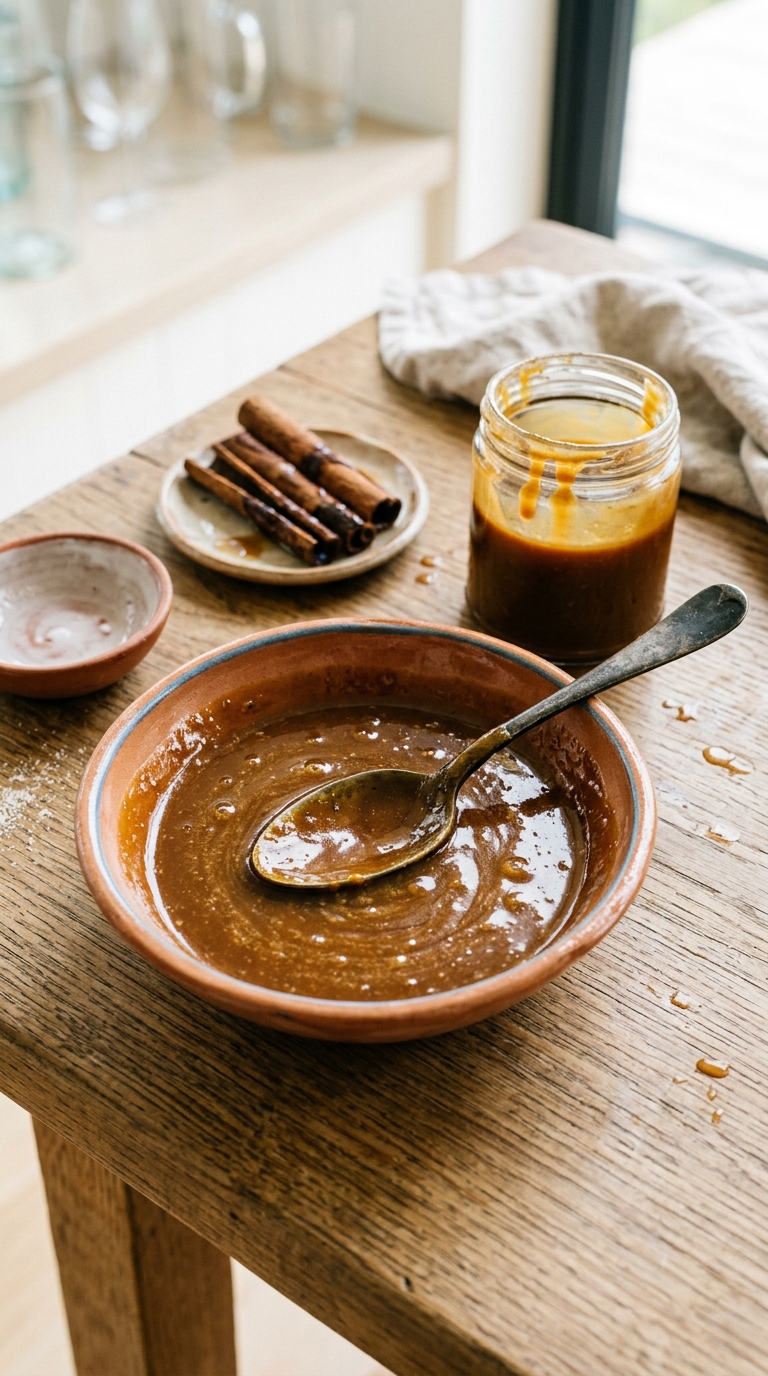
There’s nothing quite like freshly made caramel sauce. Sweet and smoky and maybe even a bit salty, velvety and chewy and perfect on top of a scoop of vanilla ice cream.
But do you know about cajeta?
Cajeta is Mexican caramel, made with slowly-cooked sweetened milk (traditionally and preferably goat’s milk) and infused with cinnamon, vanilla, or other spices and flavorings. The milk reduces and the sugar caramelizes very slowly, creating an ultra-smooth texture and a complex flavor that perfectly balances its sweetness. Velvety and creamy, like the best caramel sauce you’ve ever had, but with subtle hints of savory, spice, and tang. If you love caramel sauce but often find it too sweet, cajeta is your new best friend.
Cajeta adds a bit of exotic excitement to all the things you’d usually do with caramel – poured over ice cream, drizzled onto pound cakes, spread onto shortbread cookies – but is also fantastic for flavoring buttercream frosting (add up to 1/4 cup to a batch of your favorite buttercream), drizzling over fried plantains, spreading onto fruit … I’m sure you’ll find plenty of ways to use it, once you have a jar of it in your house.
Cajeta is a great thing to make while you’re doing other things in the kitchen, since it requires fairly frequent attention for upwards of 90 minutes. You don’t need to be working with it that entire time, but you want to be able to check in on it and give it a stir fairly often. In the last 15-25 minutes of the cooking process, it will need your almost-undivided attention as you stir constantly and bring it to the desired consistency without it scorching on the bottom of the pan. The photos below show the cajeta right after adding the dissolved baking soda, then again at the 15, 30, 45, 60, and 75 minute marks, so you can see how it proceeds.
And as it cools on the counter and you’re finally able to dip a finger in to get a taste, you’ll know all that time and stirring was absolutely worth it.
Print
Cajeta – Mexican goat’s milk caramel sauce
- Total Time: 95 minutes
- Yield: 1.5 cups
Description
Smoky, tangy caramel sauce made with goat’s milk, infused with cinnamon and vanilla for a complex, velvety treat.
Ingredients
- 1 qt (just about 1 liter) goat's milk
- 1 cup (200 g) sugar
- 2 tbsp. (30 mL) light corn syrup (optional)
- 1 cinnamon stick (I used 3 pieces of unrolled cinnamon bark, which is approximately the same thing) AND/OR 1/2 vanilla bean or 1 tbsp. vanilla extract
- 1/4 tsp. (1.2 g) baking soda dissolved in 1 tbsp. (4 mL) water
- 2 tbsp. (30 mL) rum, brandy, bourbon, or other similar liquor (optional)
Instructions
- Mix together the goat’s milk, sugar, corn syrup, and cinnamon stick in a large pot (at least 3 quarts). Bring to a simmer over medium-high heat, stirring so the sugar dissolves.
- Remove the pot from the heat and add the dissolved baking soda, stirring all the while. The mixture should froth, but if it doesn’t your goat’s milk just might not be very acidic (that’s okay). Stir it until most of the foam subsides.
- Return the pot to medium-high heat and bring to a brisk simmer. Cook for an hour or so, or until the mixture turns golden (see bottom lefthand photo on cooking photo collage, above). Stir every five minutes or so to make sure it isn’t scorching on the bottom of the pan.
- After the mixture turns pale golden, you’ll need to start stirring more frequently. The mixture will darken to a caramely-gold color and thicken to the consistency of maple syrup – it should easily coat the back of a spatula or spoon. This should take another 15 minutes or so, but you can continue to cook until it is the color and thickness of your liking.
- Strain the hot caramel mixture through a sieve into a container (preferably glass). Remove the cinnamon sticks from the sieve. (If you don’t have a sieve, it’s okay – you may find a lump or two in the finished caramel, and just make sure to remove the cinnamon sticks.)
- If you want to finish with liquor, pour into the warm caramel and stir.
- The cajeta will thicken as it cools, and will keep in the refrigerator in a covered container for at least one month. If it is thicker than desired when cool, you can add warm or hot water to thin.
Notes
- Cajeta is perfect for drizzling over ice cream, cakes, or cookies.
- It can also be used to flavor buttercream frosting.
- Store in the refrigerator for up to a month.
- Stir occasionally during cooking to prevent scorching, especially in the final stages.
- If you find the caramel too thick after cooling, gently reheat and stir in a bit of warm milk to adjust the consistency.
- Prep Time: 5 minutes
- Cook Time: 90 minutes
- Category: Condiment
- Cuisine: Mexican
Nutrition
- Serving Size: 1 tablespoon
- Calories: 90
- Sugar: 18
- Sodium: 30
- Fat: 2
- Carbohydrates: 18
- Fiber: 0
- Protein: 2
- Cholesterol: 5
Frequently Asked Questions
Can I use cow's milk instead of goat's milk for cajeta?
Cow's milk works fine and produces a delicious caramel, though the flavor is less complex — the distinctive savory, slightly sharp undertone of goat's milk is what separates cajeta from standard dulce de leche. If goat's milk is available, use it. A half-and-half blend of goat and cow's milk is a good middle ground.
Why did my cajeta scorch on the bottom of the pan?
Scorching almost always happens in the final 15-25 minutes when the mixture is thick and reducing rapidly. Switch to a lower heat at that stage and stir constantly — don't walk away. Using a heavy-bottomed pot distributes heat more evenly and gives you more margin before the bottom burns.
How long does the whole process take, and can I spread it across two sessions?
Plan for 75-90 minutes of active cooking. The first hour requires stirring every 5 minutes; the final stretch needs constant attention. You can't really split the session once the caramelization has started — stopping and restarting changes the texture. Set aside a full afternoon for your first batch.
My cajeta thickened too much in the refrigerator — how do I fix it?
Gently reheat the cajeta and stir in warm water, a tablespoon at a time, until it reaches the consistency you want. The cajeta will always thicken as it cools, so pull it from the heat when it's slightly thinner than your target — it will firm up in the jar.
If You Liked This Recipe, You’ll Love These
- Red Wine Caramel Sauce
- Caramel Apple Pretzel Bites
- Mini No-Bake Salted Caramel Cheesecakes
- Chocolate Bread Pudding with Crystalized Ginger, Caramel Drizzle, and Crème Fraîche




I made this twice and it was amazing. Ever since then, it either didn’t ever turn “shiny”, but remained thick and cloudy or it hardened, the latter I assume I cooked it too long. Wondering if you can tell what I’m doing wrong so I can get back to having the correct consistency of a sauce.
I think you mixed up Tbsp (Tablespoon) with tsp (teaspoon) as the quantities are inconsistent. A tablespoon is 15 mL and a teaspoon is 5 mL. I made the recipe using the mL mesures and it was delicious. Thank you very much
I’d like to make this in advance for Christmas gifts, how long will it keep?
Can this be “canned” for long-term storage? If so, how? Thank you! Such a great recipe!
This is awesome!
This is an amazing sauce one question though, I had the sauce on the stove for 2 hours, should I have been more generous with the temperature? It was bubbling slightly but seemed to take forever to get to the right consistency.
what an interesting sauce, never tried making it with goat’s milk!
This is amazing Bowen!
Thanks, Khalilah! It’s one of my favorites.