



What has always impressed me about Nordic cooking is the weight placed on using the best quality local or at hand ingredients. Scandinavian cooking, both in Michelin-rated restaurants and over home stovetops, demonstrates a sensitivity for meat raised on small-scale family farms, fish which is self-caught and game hunted sustainably, root vegetables brought into the kitchen from nearby plots of land, espresso brown, sticky dirt caked on their outer skin and a wild ingredients foraged by hand.
Items of this sort run from familiarities such as mulberries, lingonberries, ramps and wild greens, to the puzzling, like pine needles and moss. It is a cuisine based on what we in North America would think of as survival foods – plants and berries – but over the years has been elevated to dining rooms across the world with month-long (or more) waiting lists.
With this in mind I contacted my friend Hermann, an Icelander whom I met several years back while we were both working in television commercials, via panicked email asking him simply – What is the best Icelandic food? Hermann lives in Reykjavík, Iceland’s capital, and he responded saying, “In terms of food, Icelanders are proud of the quality of our products, rather than actual dishes. I am proud of the quality of the lamb and the availability of fresh fish and our (newfound) knowledge to treat it properly.” 
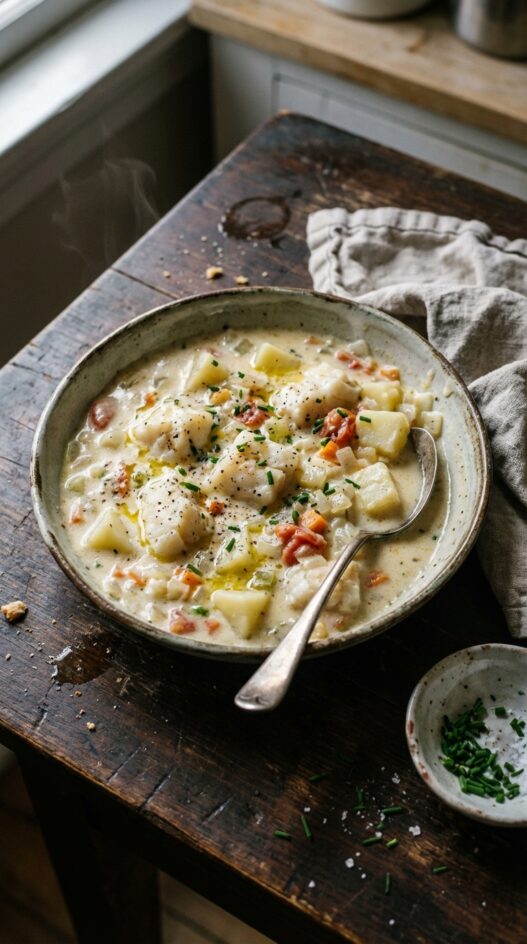
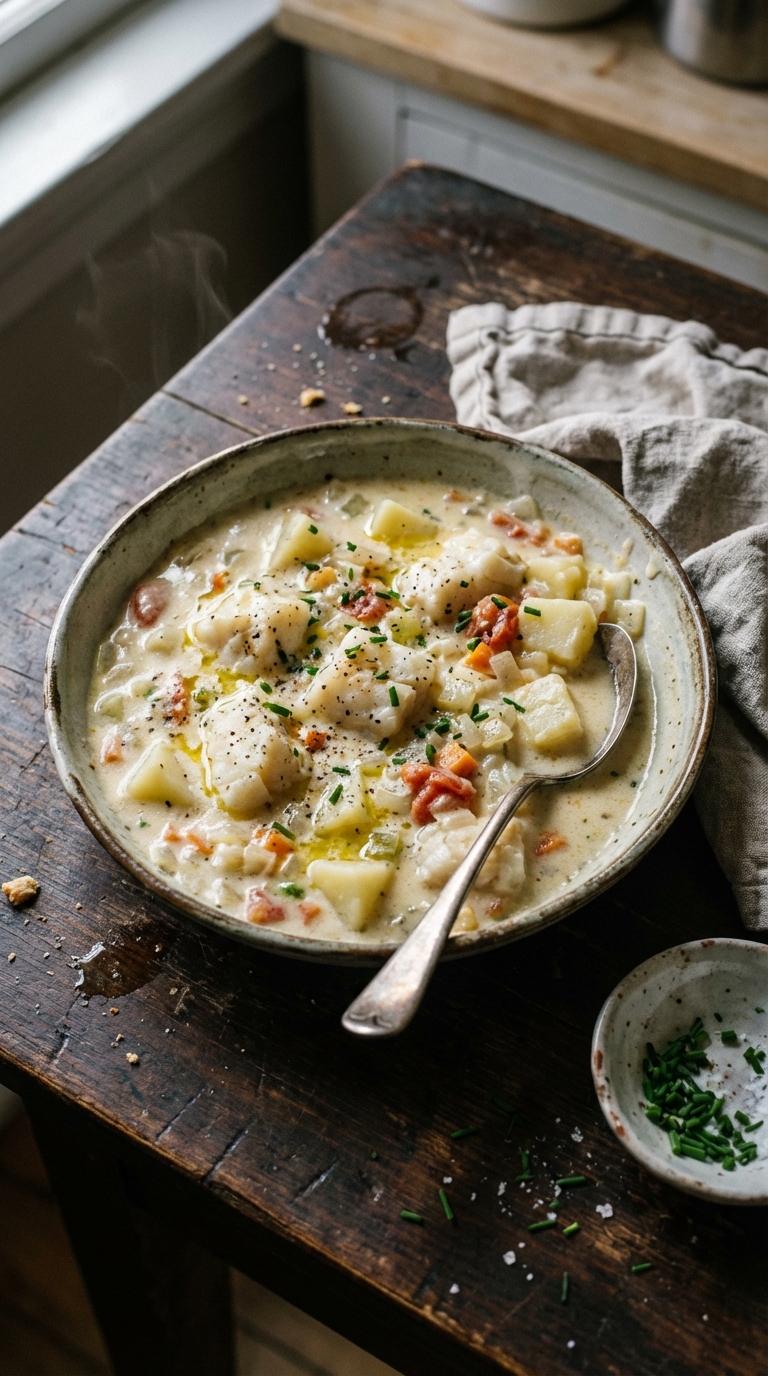
He then gave me his family recipe for Plokkfiskur, or Icelandic fish stew. Plokkfiskur, meaning “plucked” or “mashed fish,” is a traditional Icelandic dish rooted in history. Back in the days, it was a way to use leftover fish and potatoes and still today, it is served in both homes and high-end Icelandic restaurants. There are many different versions of Plokkfiskur in Iceland, some are very thick, almost to the point of becoming a dip – others are more like soups, which is where this recipe lands. It is the perfect cold weather stew.
How to Make Plokkfiskur: Traditional Icelandic Fish Stew
1. Prepare the Vegetables
- Peel and dice the onion, slice the celery, and dice the carrot finely.
- Cut the potatoes into halves or quarters, ensuring they are roughly the same size for even cooking.
2. Start the Base
- In a heavy-bottomed pot, melt the butter over medium heat.
- Add the diced onion, celery, and carrot. Stir and cook for about 6 minutes, or until the onions are translucent and fragrant. Avoid browning the vegetables as this is a delicate stew.
3. Add Wine and Reduce
- Pour in the white wine and bring the mixture to a gentle simmer.
- Cook for about 5 minutes, reducing the wine by half to concentrate the flavor.
4. Cook the Potatoes
- Add the stock and potatoes to the pot. Increase the heat to bring the mixture to a simmer.
- Cook for about 20 minutes, or until the potatoes are tender when pierced with a fork.
5. Add the Fish and Tomatoes
- Gently stir in the cubed fish and chopped tomato.
- Reduce the heat to medium-low and simmer for another 5 minutes. Avoid over-stirring to prevent the fish from breaking apart.
6. Incorporate the Cream
- Lower the heat to low and stir in the cream.
- Season with salt and pepper to taste.
- Heat gently until the stew is piping hot, but do not let it boil, as boiling can cause the cream to curdle.
7. Garnish and Serve
- Turn off the heat and stir in the minced chives.
- Serve immediately with hearty brown bread and butter on the side.
Tips for Success
- Fish Choice: Fresh haddock or cod is traditional, but any mild white fish works well. Avoid oily fish like salmon.
- Cream Handling: To avoid curdling, ensure the cream is at room temperature before adding and heat it gently.
- Consistency: For a thicker stew, mash some of the cooked potatoes before adding the fish.
- Accompaniments: Traditional Icelandic brown bread or any rye bread complements the dish beautifully.
Recipe Notes
- Leftovers can be stored in the fridge for up to 3 days. Reheat gently to avoid overcooking the fish.
- Add a pinch of smoked paprika or a squeeze of lemon for extra depth.
- If preferred, substitute the cream with coconut milk for a dairy-free option.
Plokkfiskur: Icelandic Fish Stew
- Total Time: 50 minutes
- Yield: Serves 6
- Diet: Pescatarian, Omnivore
Description
A comforting Icelandic fish stew, perfect for a cozy night in. Simple ingredients create a rich and flavorful broth.
Ingredients
- 2 tbsp butter
- 1 medium white onion, finely diced
- 2 celery stalks, finely sliced
- 1 small carrot, finely diced
- 3/4 cups (180 ml) white wine
- 1 lbs (450 g) small waxy potatoes, halved or quartered
- 6 1/3 cups (1.5 liters) chicken or vegetable stock
- 2 lbs (900 g) haddock, cod, or other white fish, cubed into 1-inch pieces
- 1 medium tomato, chopped
- 2 cups (480 ml) heavy cream
- Salt and pepper to taste
- 2-3 tbsp finely minced chives
Instructions
- Prepare the Vegetables
- Peel and dice the onion, slice the celery, and dice the carrot finely. Cut the potatoes into halves or quarters, ensuring they are roughly the same size for even cooking.
- Start the Base
- In a heavy-bottomed pot, melt the butter over medium heat. Add the diced onion, celery, and carrot. Stir and cook for about 6 minutes, or until the onions are translucent and fragrant. Avoid browning the vegetables.
- Add Wine and Reduce
- Pour in the white wine and bring the mixture to a gentle simmer. Cook for about 5 minutes, reducing the wine by half.
- Cook the Potatoes
- Add the stock and potatoes to the pot. Increase the heat to bring the mixture to a simmer. Cook for about 20 minutes, or until the potatoes are tender when pierced with a fork.
- Add the Fish and Tomatoes
- Gently stir in the cubed fish and chopped tomato. Reduce the heat to medium-low and simmer for another 5 minutes. Avoid over-stirring.
- Incorporate the Cream
- Lower the heat to low and stir in the cream. Season with salt and pepper to taste. Heat gently until the stew is piping hot, but do not let it boil.
- Garnish and Serve
- Turn off the heat and stir in the minced chives. Serve immediately.
Notes
- For a richer flavor, use a dry white wine like Sauvignon Blanc or Pinot Grigio.
- Leftover Plokkfiskur can be stored in the refrigerator for up to 3 days and reheated gently on the stovetop.
- If you don’t have heavy cream, you can substitute with full-fat coconut milk for a slightly different flavor profile.
- Prep Time: 15 minutes
- Cook Time: 35 minutes
- Category: Soup
- Method: Braising
- Cuisine: Icelandic
Nutrition
- Serving Size: 1.5 cups
- Calories: 450
- Sugar: 5
- Sodium: 600
- Fat: 25
- Saturated Fat: 15
- Unsaturated Fat: 8
- Trans Fat: 0g
- Carbohydrates: 40
- Fiber: 5
- Protein: 30
- Cholesterol: 100
Frequently Asked Questions
What type of fish is traditional in plokkfiskur?
Cod or haddock are the most traditional choices in Iceland. You want a firm, mild white fish that flakes well. Salt cod (soaked and desalted) is also commonly used and adds deeper flavor.
Can I make plokkfiskur ahead of time?
Yes, it reheats well the next day and the flavors meld together nicely. Store it in the fridge and reheat gently on the stovetop, adding a small splash of milk if it has thickened too much.
What do Icelanders typically serve with plokkfiskur?
Traditional accompaniments include dark rye bread and butter. Boiled potatoes are sometimes served alongside if they are not already mixed into the stew.


Looks delicious, but I grew up in Iceland and this is not an authentic recipe for Plokksifkur. There are no carrots, celery, wine or tomato’s in Plokkfiskur. Here is a link to an authentic recipe; https://yourfriendinreykjavik.com/traditional-food-in-iceland-plokkfiskur/ . Enjoy!
This Plokkfiskur recipe sounds amazing! I love how it captures the essence of Icelandic cuisine. Can’t wait to try making it at home and experience those comforting flavors! Thanks for sharing such a delightful dish!
This might not be the most authentic plokkfiskur recipe, but it is very very very good!!
This has become one of my favorite soups of all time. we have made it probably ten times since I first found the recipe and it is always a huge success. we change the fish depending on what is available at a good price, and we also even incorporate shrimp sometimes. thank you so much!!
What a lovely seafood stew, thanks for a great Icelandic recipe!
I have had this in Iceland, so delicious, this recipe looks perfect!
Talk about a gorgeous stew this made. really delicious.
This has become my favorite seafood stew lately, it is really easy to make and it tastes just lovely. Subtle, nourishing, filling and still fresh!
I have made this five times now, and it is always a huge success. Great great recipe.
This recipe is not how i make plokkfiskur more like fiskisupa (e. fish soup).
Plokkfiskur is made with boiled white fish and sauted onions in a bechamel sauce, which usually also contains cubed boild potatoes. If the plookfiskur itself does not contain potatoes it will instead be served with freshly boiled potatoes on the side. It’s almost always served with slices of rugbraud, a dark slightly sweet rye loaf, and plenty of butter for the bread.
Most Icelanders used to eat boiled fish several days a week in the “old days” when my patents where growing up and Plokkfiskur was a way to use up left over fish and potatoes from the week and make a nice meal out of it.
Having said that this is very delicious!
Do you know where I can find find Icelandic Leaf Bread?
Hi Natalie, I think this is more fiskisúpa–fish soup as opposed to Plokkfiskur which is more of a Mashed Potatoes and Fish dish (amazingly delicious) served on a plate. Your fiskisúpa sounds delicious as well!
This is very similar to how we make it in my home in Reykjavik, but a lot of people will probably say that this is more like a soup than plokkfiskur. Do not mind them!
Hi Natalie,
I just wanted to write to you to thank you for the recipe!
I have just come back from a trip to Iceland with my twin sister for our birthday. Upon returning I wanted to have a crack at cooking “plokkari” but unfortunately i couldn’t find any recipes in english! Which is how I stumbled upon your recipe!
I have just cooked it up and eaten it with my dad. It was delicious! And even he as a difficult-to-please eater really enjoyed it (don’t worry we didn’t eat the whole lot between two of us, we are saving the rest for tomorrow!)
So thank you very much. I now have another simple and healthy dish to add to my repertoire, with the added benefit of taking me back to my trip!
Many thanks (from a very full-up!)
Oliver