
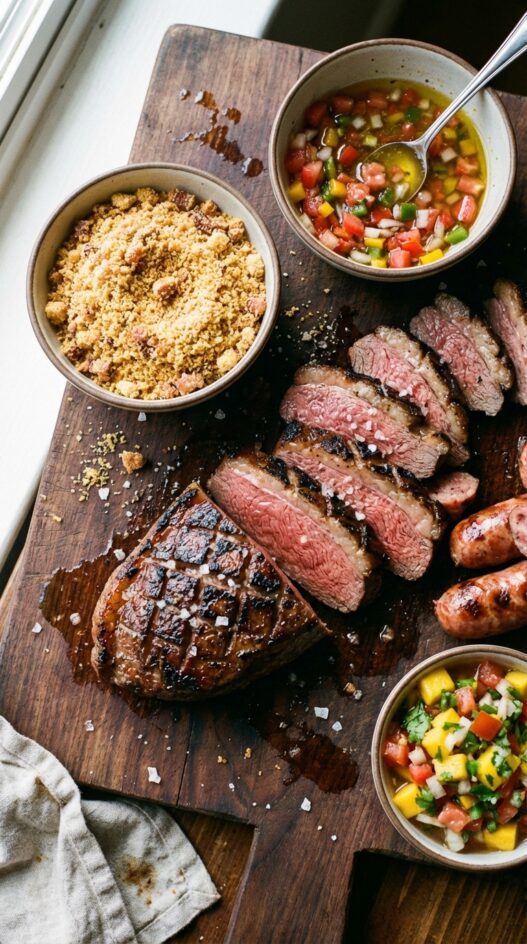
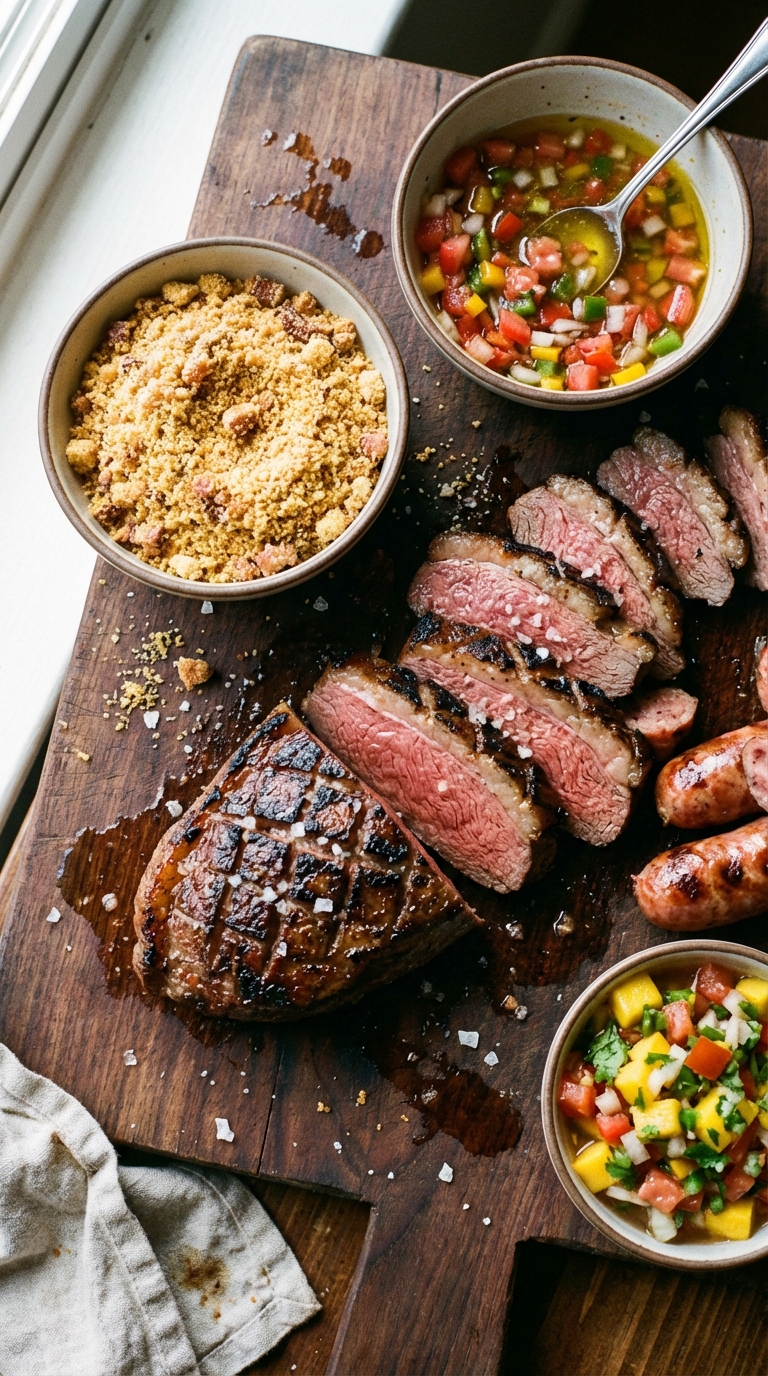
What is Picanha?
In American butcher-lingo, picanha is often called the “rump cap.” It is a triangular cut from the top of the rump region of the cow, and just like our rumps, it has a beautiful layer of fat. This cut remains tender because it is not a muscle that moves much during the animal’s life. The picanha’s blanket of fat lends the meat flavor and juiciness while protecting it during grilling. Because it is still little known in North America and Europe, picanha is a relatively cheap and plentiful national secret.
A Brief History of Picanha
When one thinks of churrasco, picanha often comes to mind. However, it is a relative newcomer to the tradition, only becoming popular in the 1960s when Hungarian butchers in São Paulo introduced it. They served it to immigrant workers at the Volkswagen plant who were looking to make tafelspitz. Once Brazilians discovered it, they naturally decided to grill it. By the 1970s, picanha became a sensation and the star of churrascarias, symbolizing “authentic” churrasco.
How to Grill Picanha: Tips and Techniques
Pronunciation
The best way to pronounce picanha is: pee-con-ya, with the emphasis on the “con.”
Choosing Your Picanha
- Aging: Choose an aged picanha if possible. Wet-aged cuts in vacuum packs are common in Brazil, Argentina, and Uruguay. In Spanish the picanha is called tapa de quadril.
- Weight: The ideal weight for a whole picanha is between 1.3kg and 1.5kg (2lb 13oz – 3lb 4oz). Anything larger likely includes a tougher part of the outer-thigh region. The wide end of the picanha is the thickest and the toughest part. The tip is heaven.
Preparing the Grill
- Charcoal: Use organic charcoal, which still looks like it came from a tree. Most Brazilians use reforested, eucalyptus charcoal lit with a couple of wads of newspaper and a good douse of clean-burning, sugar-cane alcohol. We don’t use briquettes or lighter fluid here.
- Wood Fire: If you feel like getting adventurous, make a wood fire with good tasting wood, ensuring the embers burn down to a glow before grilling.
- Gas Grill: The third alternative, and probably the easiest, is a gas grill. It won’t add any flavors, but it also won’t wreck any.
Starting the Fire
- Sausages: As we don’t use lighter fluid in Brazil, we prefer to get the fire going with some dripping pork fat. Fresh Brazilian pork sausage is made with the thigh meat and is very similar to fresh Italian sausage. These sausages are wide enough to take their time on the grill and drip enough fat to get the most timid fire raging. Think of them as a way to whet the appetite, yours and the fire’s.
Preparing the Picanha
Scoring the Fat
- Score the fatty blanket on the picanha by making crisscrossing cuts. This prevents the piece from curling and dis-forming while grilling and helps the fat to release its juices into the meat.
Cutting for the Skewer
- Against the Grain: If you’d like to serve it on a big skewer like they do in churrascaria restaurants,
- Bend these pieces into semicircles, fat-side out, and place them on a large oiled skewer. Rub the exposed surface with rock salt. This method allows you to slice off delicately tender pieces without having to remove the picanha from the skewer.
- You can then rub the exposed surface with more rock salt and grill it some more. Every slice will have that outer, salty, crusty grilled deliciousness of the first slice. This is how they do it in churrascaria restaurants.
Cutting for Steaks
- With the Grain: If you don’t have the large skewer, you need not fret. You can grill a picanha home-style in thick steaks. This way is not as flashy, but I think the results are superior.
- When dividing the whole picanha into steaks, cut the meat in the same directions as the fibers. When you slice the grilled steaks to serve you will be slicing across the fibers creating deliciously juicy morsels each with their own little fatty edge.
Grilling the Picanha
Seasoning
- Roll the pieces of picanha in rock salt. This seals in the juiciness and enhances the natural flavor. Rock salt reacts like a cooking surface on the meat, creating a lightly salty crust.
Grilling Steaks
- Fat-Side Up: Grill the steaks fat-side up for about 5 minutes until juice leaks out of the top.
- Turn and Grill: Turn the steaks onto their sides and grill for a few more minutes.
- Fat-Side Down: Finally, grill fat-side down, moving the steaks away from the hottest part of the fire to avoid over-cooking and reduce fire flares from the dripping fat.
Grilling Skewers
- Grill Both Sides: If you are grilling on the big skewer, both sides are the same, there is no fat-side. Just grill one side for about 5 minutes and then the other for about 5 minutes.
- Move Skewers away from the hottest part of the grill.
Finishing the Grilling
- Grill to your desired doneness, which will likely take another 10-15 minutes depending on how you like your meat cooked. I use the finger poke to know if the meat is done and try not to puncture the meat when grilling, but if you are using a thermometer – 120F is your target temperature for medium rare.
Resting and Serving
- Tap the finished meats with the side of a knife to knock off any extra salt rocks. Let the meat rest for 10 minutes before slicing.
Serving Picanha
- Don’t worry about serving the picanha all at once. Just as in the churrascaria restaurants, meats are served a little at a time, as they come off the grill. First serve the sausages sliced for everyone to enjoy a little at a time. Then serve the pieces of picannha as they finish cooking. There isn’t the idea of “that’s my steak, this one is yours” in churrasco. All the meat is sliced and served very socially. Guests can chose the slices that are more rare or more well done.
Special Tip
- The tip of the picanha cooks quicker than larger pieces. Either remove it early from the grill for yourself or save it to grill last.
The Magic of Churrasco
When talking about the flavors of churrasco, I think the real magic happens on the plate. With other types of cooking the magic happens perhaps in the mixer or the fry pan or the oven. A piece of superior quality meat, from a well-raised animal, grilled to perfection is a beautiful thing. But more than four bites of the same thing, even a beautiful thing, can get boring.
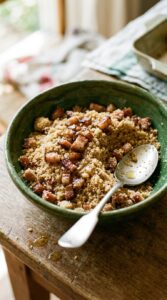
With churrasco, a piece of picanha or other cut grilled to reveal all its inner lusciousness, meets its best friends in the playground that is your plate. It finds farofa, the crunchy absorption master made of manioc meal toasted in bacon fat. Think crispy-nutty grits that nab runaway meat juices. Its other best friend is molho à campanha, a kind of vinegary salsa of tomatoes, onions and sometimes bell peppers, that adds freshness and its own tangy juiciness to the mix. These three make a beautiful mess in your plate. Meat slices become encrusted in the molho à campanha-soaked farofa, silverware is forgotten, fingers get licked.
This experience is what makes churrasco truly unique.
Print
How to Grill Picanha – Easy Step by Step Guide
- Total Time: 45 minutes
- Yield: Serves 6
- Diet: Omnivore
Description
Juicy picanha, grilled to perfection. Perfect for a Brazilian-style barbecue.
Ingredients
- 3 lbs (1361 g) picanha
- Rock salt
- 1 package fresh Brazilian pork sausage
- 4 tomatoes, chopped
- 1 mango, chopped
- 1 small onion, finely chopped
- 1/4 cups (59 ml) cilantro, chopped
- 2 limes Juice
- 1 jalapeño, finely chopped
- 2 cups (473 ml) manioc meal
- 2 tablespoons bacon fat or butter
- Salt
- 3 tomatoes, chopped
- 1 bell pepper, finely chopped
- 1/4 cups (59 ml) vinegar
- 1/4 cups (59 ml) olive oil
- Salt and pepper
Instructions
- Prepare the Fire: Use organic eucalyptus charcoal or make a wood fire. If using gas, preheat the grill to medium-high. Place sausages on the grill to start the fire and add flavor.
- Score the Fat: Crisscross score the fatty blanket on the picanha to prevent curling and help release juices.
- Cut the Picanha: Cut the picanha into 3 pieces against the grain. Bend these pieces into semicircles, fat-side out, and place on a large oiled skewer. Alternatively, cut the picanha into thick steaks with the grain.
- Season the Meat: Roll the pieces of picanha in rock salt.
- Grill the Picanha: Grill the steaks fat-side up for a few minutes until juice leaks out. Turn the steaks onto their sides and grill for a few more minutes. Grill fat-side down, moving away from the hottest part to avoid over-cooking.
- Rest and Slice: Tap the finished meats with the side of a knife to knock off extra salt rocks. Let the meat rest for a few minutes before slicing.
- Serve: Serve pieces of picanha as they finish cooking. Slice and serve.
- Optional Salsa: Mix chopped tomatoes, mango, onions, cilantro, lime juice, and jalapeños.
- Optional Farofa: Toast manioc meal in bacon fat or butter until golden. Season with salt.
- Optional Molho à Campanha: Mix chopped tomatoes, onion, bell pepper, vinegar, and olive oil. Season with salt and pepper.
Notes
- For even cooking, ensure your picanha pieces are relatively uniform in thickness before grilling.
- To prevent flare-ups, trim any excess fat from the picanha before scoring and grilling.
- Leftover picanha can be shredded and used in tacos or salads the next day.
- Prep Time: 15 minutes
- Cook Time: 30 minutes
- Category: Main Course
- Method: Grilling
- Cuisine: Brazilian
Nutrition
- Serving Size: 1 large steak
- Calories: 450
- Sugar: 5
- Sodium: 200
- Fat: 30
- Saturated Fat: 10
- Unsaturated Fat: 15
- Trans Fat: 0g
- Carbohydrates: 15
- Fiber: 2
- Protein: 40
- Cholesterol: 100
Frequently Asked Questions
What is picanha and where is the cut located on the cow?
Picanha is a triangular cut from the top of the rump cap, popular in Brazilian grilling. It has a thick layer of fat on one side that bastes the meat as it cooks, keeping it juicy and flavorful.
Should I trim the fat cap off picanha before grilling?
No, leave the fat cap on. It renders down during grilling, flavoring and moisturizing the meat. Score the fat in a crosshatch pattern so it renders more evenly and the slices do not curl on the grill.
How do you slice picanha for serving?
After resting the meat for about 10 minutes, slice it against the grain into strips roughly half an inch thick. In Brazilian churrasco tradition, it is often sliced in thin layers directly off the skewer as it cooks.



Grilled a picanha for the first time using this guide and nailed it. So good sliced thin over rice, thanks for walking through the whole thing!
Can I use a slow cooker for Picanha. Do you have to grill it? I like to use a crook pot/Slow cooker. Do you have a recipe for me? ?
Hey Jo Ann!
Great question! Traditional picanha is usually grilled or roasted to highlight that crisp fat cap and juicy interior, but if you prefer a slow cooker, you can adapt it, just with a different result. It won’t have the same charred exterior, but it’ll be super tender and flavorful, closer to a pot roast.
To try it in a slow cooker: season generously with salt (and garlic or herbs if you’d like), sear it first in a hot pan to lock in flavor, then place it fat-side up in the crockpot with a splash of beef broth or red wine. Cook on low for about 6–8 hours. Slice against the grain to serve.
It’s not classic churrasco-style picanha—but still delicious! Let us know how it turns out if you try it.
Thanks for a great guide, I had this cut of beef at a Brazilian restaurant a while back but have never cooked it myself until now. It is truly one of the best cuts ever!
I used the skewer method, and it felt just like dining at a churrascaria. So fun and delicious!