



Ever heard of creamed (or whipped) honey? Our family owns a beekeeping farm, and we use honey daily. Beekeeping is an all-consuming endeavor. Bees are industrious creatures, and to reap the rewards of their labor, you must be equally diligent. Our farm is eco-certified, which means we adhere to the strictest environmental standards. The hard work is demanding, but one look at honey, the pinnacle of natural products, makes it all worthwhile. Yes, it’s incredibly rewarding.
I enjoy honey in my coffee and tea and love using it in various sweet dishes.
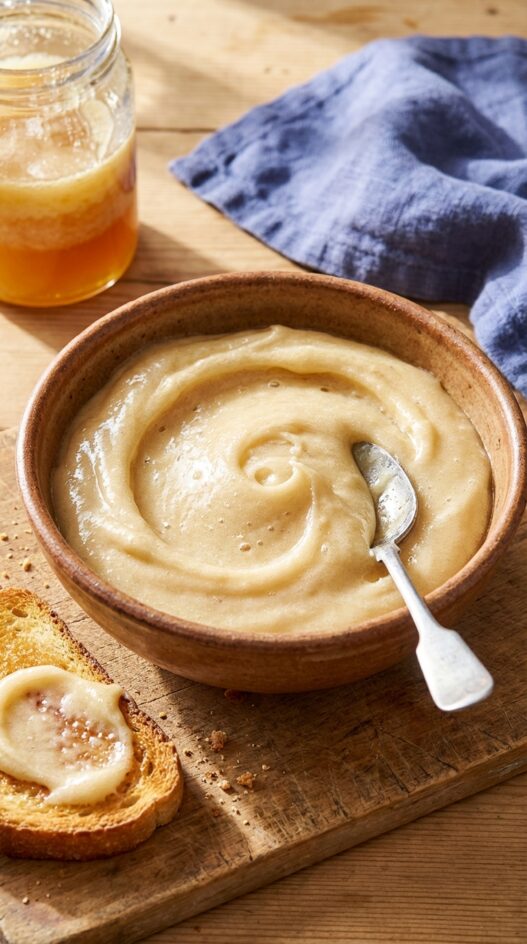
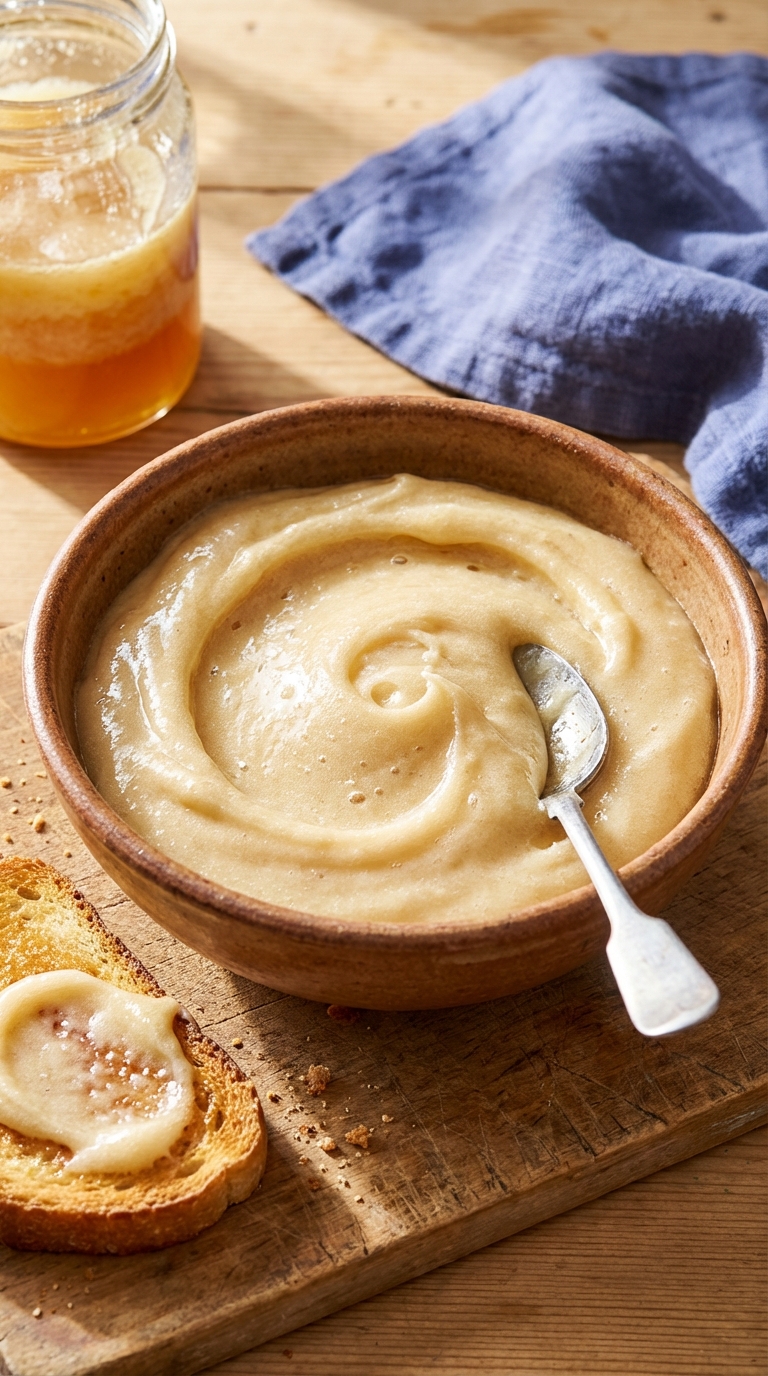
Over time, we’ve produced jar after jar of this creamy delight. Creamed honey, also known as whipped, spun, or churned honey, has always been made by my father, and it is definitely my favorite breakfast treat. This 100% natural honey contains no additives; it’s simply honey in a different “state.” 
The process is straightforward, and you can easily replicate it at home. Start with equal parts liquid honey and crystallized honey—though you can use slightly less crystallized honey if needed. Place it in your stand mixer on a low to medium setting and let it mix for about 20 minutes, pausing to mix it manually a few times. The more you mix, the creamier and more stable it becomes. The honey will turn pale and creamy, with a smooth, spreadable consistency. It’s perfect for spooning directly or spreading on homemade bread with a bit of butter, cinnamon, or your favorite jam. The flavor is extraordinary, elevating it far above regular honey.
Crystallization is a natural process where crystals form in raw honey over time. By whipping crystallized honey back into a liquid state, you break up the large crystals, creating a creamy, smooth texture. Continue whipping until all small crystals are gone. Store your whipped honey in a mason jar or any old honey jar at room temperature with a tight lid. For an extra twist, consider adding flavors like sage or rosemary to your mix.
If you don’t have a jar of already crystallized honey at home, you’ll need to start by getting that done. This process takes time, but there are ways you can speed it up.
Now, if you already have crystallized honey, skip this step!
Step 1: How to Create Crystallized Honey at Home
- Start with high-quality raw honey. Raw honey crystallizes faster because it contains natural impurities like pollen grains.
- Pour the honey into a clean, dry container. A glass jar works best for even crystallization.
- Let the honey stand at room temperature in a cool place away from sunlight.
- Over time, the honey will naturally begin to crystallize. To speed up the process, introduce a small amount of already crystallized honey to seed the crystallization.
- Stir the honey occasionally to encourage even crystal growth. This method allows you to control the crystallization process and achieve the texture you prefer for your whipped honey recipe.
Now that you have your crystallized honey – you’re ready for the next step!
Step 2: How to Make Whipped Honey
Gather Your Ingredients:
Crystallized Honey:
This is honey that has naturally solidified over time. The crystals act as a seeding agent to give our whipped honey its creamy consistency. If you want to make crystallized honey, you can take liquid honey and add a couple of teaspoons of water into it – and then put it in the fridge for 1-2 weeks.
Liquid Honey:
Fresh honey in its liquid state.
Equipment:
Ensure your blender or stand mixer and its attachments are clean and dry. If you’re using a stand mixer, a whisk attachment works best.
Blending Process:
Initial Blend:
Start by adding the crystallized honey and liquid honey to the blender or stand mixer bowl.
For the initial blend, mix the two types of honey on medium speed. This helps incorporate air into the mixture and begins the process of breaking down the crystallized honey’s structure.
Blend Duration:
Continue blending or mixing for about 20 minutes. This duration might sound long, but it’s essential for achieving that ultra-creamy texture.
Stop the mixer or blender occasionally to scrape down the sides, ensuring all honey is well-mixed.
Re-evaluate & Blend Again:
Once the initial 20 minutes is up, check the honey’s consistency. It should be thicker and creamier, but not quite at its final state.
Blend again, and as you do, consider adding a bit more liquid honey if you feel the mixture is too thick. The addition of liquid honey can help achieve that velvety whipped cream consistency.
Final Check:
The whipped honey is ready when it holds its shape and has a consistency similar to whipped cream. The color might be paler than the original honeys due to the inclusion of air.
Serving & Storing:
Serving Suggestions:
Your whipped honey is now ready to be slathered on toast, drizzled over pancakes, or stirred into warm beverages.
Storage:
Store your whipped honey in a sealed container at room temperature. It will maintain its creamy texture for weeks, and the crystallization process ensures it won’t return to a liquid state quickly.
Creamed Honey – The Perfect Breakfast Spread
- Total Time: 5 minutes
- Yield: Serves 2
- Diet: Omnivore
Description
Crystallized honey transformed into a luscious, smooth spread. Perfect for toast or pancakes!
Ingredients
- 1 cups (237 ml) crystallized honey
- 1 cups (237 ml) liquid honey
Instructions
- Blend a 1:1 ratio of crystallized and liquid honey in a blender or stand mixer for 20 minutes.
- Remove and blend again. Add more liquid honey if needed.
- Blend until the honey reaches a whipped cream-like consistency.
- Serve with toast or pancakes.
Notes
- For a smoother spread, use a high-speed blender and blend in intervals to prevent overheating.
- If your crystallized honey is very hard, gently warm it over low heat for a few minutes before blending.
- Store the creamed honey in an airtight container in the refrigerator for up to 2 weeks.
- Prep Time: 5 minutes
- Cook Time: 20 minutes
- Category: Breakfast
- Method: No-Cook
- Cuisine: American
Nutrition
- Serving Size: 1/2 cup
- Calories: 250
- Sugar: 60
- Sodium: 10
- Carbohydrates: 60
Frequently Asked Questions
What is creamed honey and how is it different from regular honey?
Creamed honey is honey that has been whipped and seeded with fine crystals so it sets into a smooth, spreadable texture. It tastes the same as liquid honey but holds its shape on toast or bread.
How long does it take for the honey to reach a creamed consistency?
After mixing in the seed honey, store it at a cool temperature and stir once daily. It typically takes 1 to 2 weeks to fully set into a thick, creamy spread.
What kind of honey works best for making creamed honey?
Raw, unfiltered honey works well because it crystallizes more readily. Avoid ultra-processed honey, which has had the natural pollen filtered out and may not set properly.


I just happened upon some local creamed honey at the farmers market this weekend and gave it a try this morning. How have I never heard of this stuff before! It is absolutely wonderful! It will now be a staple in my pantry. The only problem is I could easily eat way too much;)
How long does it keep in the jar after you cream it?
To crystallize honey place it in the fridge. I live in the states and I am also a bee keeper
How long does it take to crystallize honey in the fridge? Should I add a few drops of water or leave the lid off?
Creamed honey sounds like a great way to make my all natural facial mask. I’m going to try this. Thank you <3
Hi, I live in Sweden and I don’t know how to crystallize honey. Actually, they sell here honey in cream but it’s by far not the same.
Another question, can I use a beater or a hand blender for the process?
Thank you so much for your answer
hello, yes, you can heat it in warm water!
The creamed honey I bought has been left at room temperature but is too hard to spread on toast. Can I microwave it or heat it in warm water without killing off the beneficial stuff in the honey?
I live in the southwest(very dry) so don’t know if this is the reason it’s not creamy or if I should return the product to the store. Thanks!
Hi! This is such an awesome recipe! Nice, simple and incredibly original. I’ll be trying it soon. Thanks. Elvira
Can I use my vitamix to make this? Also, do we need to let the honey rest between mixing cycles?
thanks!
I would not use the VitaMix as it creates a lot of heat and will kill the enzymes in honey.
Rochelle, you will like it, I’m sure ;) It’s actually quite simple, just let your stand mixer do its job :)
I have to try this! We get raw honey from a relative and my husband loves anything with honey, so this is a must.
Yes, we have a beekeeping farm :) A lot of people have it here in my country, it’s much more usual that for example in the States.
We also heat honey to turn it back into liquid state, but this is another great way to use it, my personal favorite :)
You have a honey farm??!! Lucky girl! When my honey crystallises, I nuke it in the microwave to turn it back into liquid. Now you’ve given me an alternative, and intriguing, suggestion. Only problem is I don’t have stand mixer (yet). :-(
I have been told that if you nuke honey in a microwave it will kill off some of the benefiting properties. Try putting the honey in a pan of warm water, it will take a little longer but it works very well.
Microwaving honey definitely alters it! Not recommended. Place in a water bath but keep the heat low to medium, not too hot.
Another use that I have for honey is in making jams and jellies: substitute honey for the sugar!
When honey crystallizes you should NEVER put it in the microwave it kills the enzymes and loses all the beneficial properties to it, it no longer can cure allergies.. you cant put it on your wounds to make it heal faster…. It loses everything to it… it’s no longer healthy for you.
When raw honey crystallizes and you want to put it back into the liquid state; treat it like a baby bottle, just put a pot full of water on the stove and heat the water till its warm (not hot, but warm) then put the bottle with the crystallized honey in the water and check on it every once in a while so the water is not too hot.
You can tell the honey is no longer crystallized when the airbubble in the water can shoot up to the top in seconds when you turn the bottle over.
So I had to look it up to make sure nut you can microwave honey with out killing enzymes, you just need to keep the temp below 100. They recommend running it on low and stirring ever thirty seconds.
When you microwave honey, you remove all the beneficial qualities in the honey that help with allergy prevention, etc. Putting it in hot water to return it to its liquid state or setting it out in the sunshine keep the health properties in the honey preserved.
By crystallized honey I mean liquid honey that has become hard.
by “crystallized” honey do you mean raw honey? or does it have to be liquid honey that has become hard?
You need RAW honey to get crystallized honey.
Just buy raw honey from a local TRUSTED beekeeper, one pound of honey should be about $10-$20.
Make sure to ask the beekeeper if it is truly raw… it has not been heated or toyed with (they did not put anything in it), just filtered. so there is no beeswax in it.
DO NOT BUY HONEY FROM STORES SUCH AS PUBLIX.
Store bought honey is heated to such an extent that it kills all the enzymes ( the beneficial factor of honey)
Its also cannot be crystallized because at that point the honey is artificial.
Once you buy raw honey, just stick it in the fridge and overtime it should crystallize from the cold.
you can tell that its crystallized because over time it becomes a lighter color and the air bubble can no longer move.
Where does my source come from?
My family has a beekeeping business. We have over 2000 hives all over central Florida from frostproof to Miami.
We make our living off of beekeeping.
If any of my information is wrong (which it cant possibly because I was raised with the bees) then keep in mind that I’m fourteen and I am just telling you what I know as a daughter of a large beekeeping incorporation.
do you sell your honey on Hernando County, Fl? If so where? It is more beneficial to buy local products.
Where can I purchase your honey? I am in Tallahassee, but often travel to Tampa and Orlando.
The only correction I would make is that you strain your honey not filter it. Filtering is when they heat it and truly remove all the good stuff. Straining is usually done with no heating and the honey still contains pollen, propolis, honeycomb and live enzymes.
Another beekeeper: From a small business beekeeper, all good advice except that raw honey is not filtered either. It can be passed through sieves to remove large particles. Filtering removes pollen and the end product is no longer raw honey.