
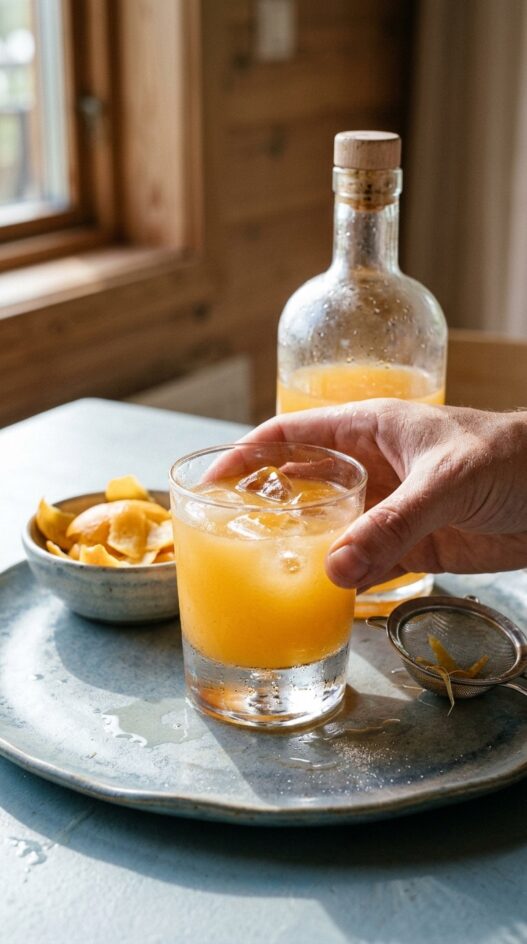
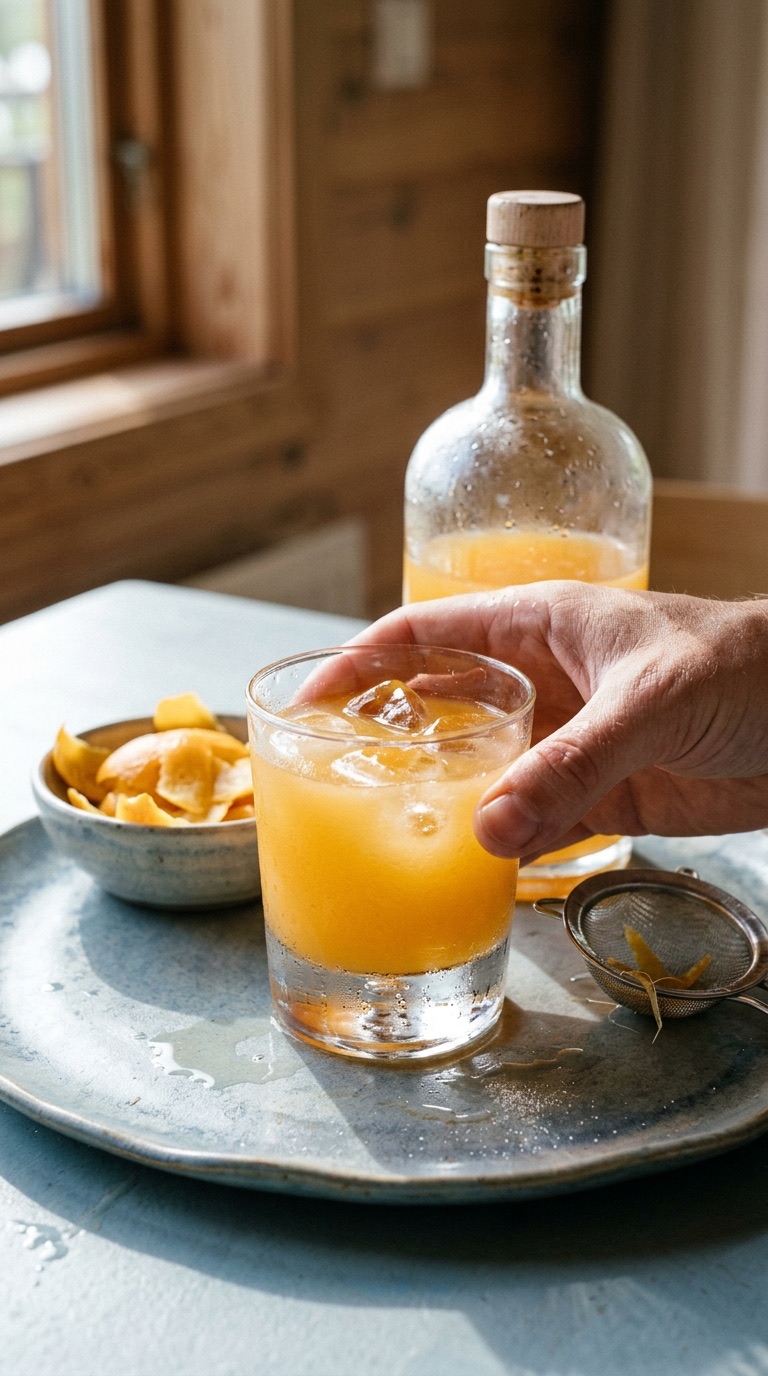
Toscana is not only one of the most beautiful Italy regions, it’s the temple of relax and Dolce Vita.
Every year I pick oranges and lemons from my trees (can be sure they’re not treated with chemical products!) and I start the preparation of this amazing liqueur so aromatic and digestive. In fact Arancello and Limoncello are like a symbol of Tuscany vacations when the protagonist is the food; a bit like the cypress trees for the walkers in Tuscan nature.
The method to make this fantastic liqueur is the same for both Arancello and Limoncello and the amount of ingredients as well.
Some important tips:
- Buy only organic Oranges or Lemons (the alchool will absorbe all the “essentials” of the zests; don’t risk to drink pesticides or chemical products)
- Choose (if you can) Oranges with a thick skin. You’ll not risk to cut the white part of the skin that’s very bitter and will give a bad flavor to your liqueur. Here in Italy they’re called “Arance da tavola” or table Oranges, to distinguish from “Arance da spremuta” Oranges for juice.
- Don’t keep the zests in alchool more than 5 days. It’s a mistake to leave them for a week or more. After 4 or 5 days in fact, the essential oils start to exit and separate from alchool. This will give to your liqueur a too much “spicy” flavor.
- This is the alcohol that we use here in Italy to make Arancello and Limoncello. We can buy to the supermarket the bottle that you see in the pictures.
Arancello (orange liqueur) or Limoncello (Lemon liqueur)
- Total Time: 20 minutes
- Yield: 3 bottles
Description
Orange peel steeped in grain alcohol for a week, then mixed with sugar syrup. The same process works with lemons for limoncello. Homemade versions are stronger and less sweet than store-bought.
Ingredients
- 5 organic oranges (or organic Lemons)
- 500 gr 2 cups Caster Sugar
- 500 ml 2 cups Water
- 500 ml 2 cups pure grain alcohol (you can use 100% pure vodka, but it won't taste the same)
Instructions
- Peel the Oranges (make sure you don’t get the white part)
- Place the orange skins in a big jar and pour in the grain (pure) alcohol
- Seal the jar and let it infuse for about 4 days in a dark place
- The fourth day make a simple syrup: pour the sugar in a pot with the water, let it dissolve and boil for about 5 minutes
- Let it cold
- The day after, using a strainer, add the “orange” alcohol to the syrup (so that orange skins don’t go into the arancello)
- Mix it well for a couple of minutes
- Fill up some glass empty bottles
- Arancello is now ready! Just drink it when is very cold, better if you put in freezer
- Serve it in small glasses
- Store in a dry and dark place the other bottles
- Prep Time: 15 minutes
- Cook Time: 5 minutes
- Category: Cocktail
- Cuisine: Italian
Frequently Asked Questions
Why do you insist on organic oranges?
The alcohol absorbs everything from those peels, including pesticides and chemical treatments. Since you are steeping the zest directly in 500 ml of pure grain alcohol, non-organic fruit is not worth the risk. I pick oranges from my own untreated trees every year before I start a new batch, which is the only way to be certain what goes into it.
How long should the orange zest steep before I mix it with the syrup?
Exactly 4 to 5 days, sealed in a jar in a dark place. After that the essential oils start to separate from the alcohol, and your liqueur picks up an unpleasant over-spiced flavor. I make the sugar syrup on day four and combine everything on day five.
Can I use vodka instead of pure grain alcohol?
You can use 100% pure vodka, but it will not taste the same. Grain alcohol is much higher proof and extracts the aromatic essential oils from the zest more efficiently, giving you a more intense, aromatic liqueur. Vodka produces a lighter result. If grain alcohol is unavailable in your area, the highest-proof vodka you can find is the next best option.
What kind of oranges give the best result?
Choose table oranges with thick skin, what we call Arance da tavola in Italy. They give you more margin when peeling because you can peel more generously without hitting the bitter white pith underneath. Avoid juice oranges. Thin-skinned fruit makes it very easy to accidentally cut into the pith, and even a little pith ruins the batch.
If You Liked This Recipe, You’ll Love These


I just made it and it tastes fantastic!
I made it with Vodka because I couldn’t get my hands on grain alcohol (I live in California). Should I try using higher proof white rum next time or stick with Vodka?
Gary, glad it worked! It’s the proof, grain alcohol is around 190 and pulls the oil out of the peel in a way vodka can’t. High proof rum works but brings its own flavor.
Great and easy to follow!
Furthermore, it’s amazing! Let me know and keep in touch