Nowadays many people are following the autoimmune paleo protocol (AIP). This restricted version of the paleo diet, in addition to prohibiting grains, legumes, and dairy, also excludes eggs, nuts, seeds (including seed-based spices) and nightshades (potatoes, peppers, eggplant, and tomatoes) in an effort to minimize – and in some cases to cure – leaky gut and many auto immune diseases.
You know how it is, we Italians love our tomato sauce ;) Tomatoes, especially when it comes to cooking Italian food, are a true staple. Pizza Margherita and Pasta Bolognese are not the same when made without marinara sauce.
Of course, when health issues are involved, matters of flavors are secondary and, with the right replacements, we can keep on enjoying all of our favorite dishes!!
Personally, I really enjoy the challenge of recreating traditional dishes with ingredients targeted for those with food allergies. I love the creativity that’s involved and the sensation of helping people who are struggling with serious diet limitations.
After a few attempts, I nailed a recipe for a tomato free marinara sauce that’s so good you’ll want to eat it even if you don’t have a nightshade intolerance!
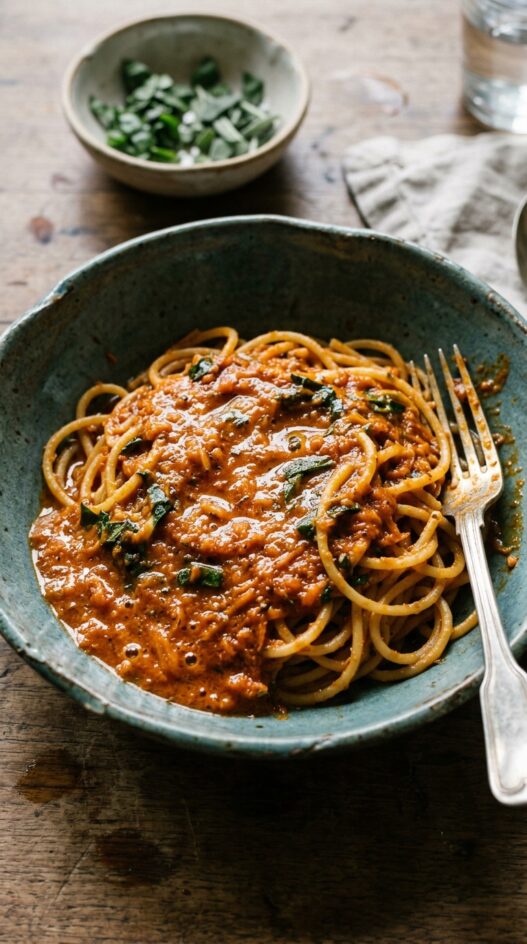
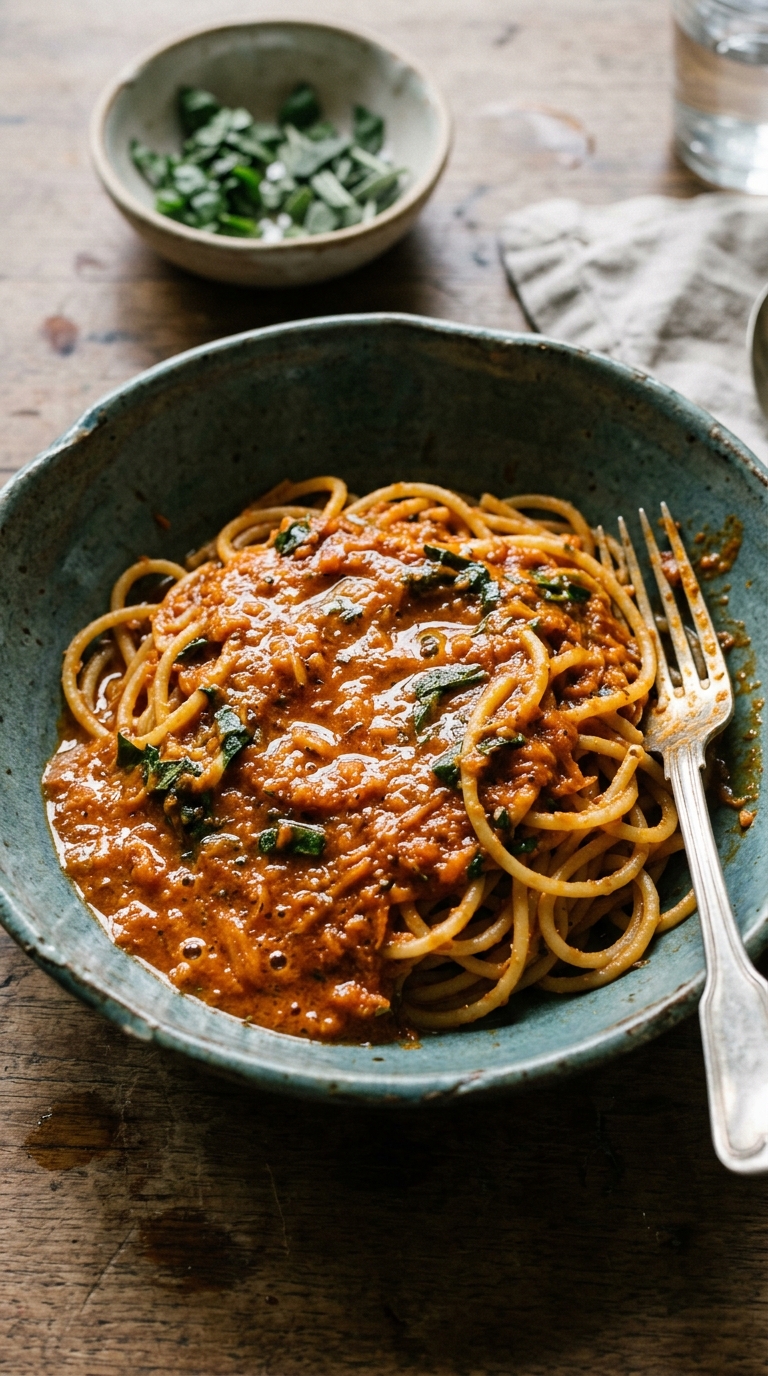
My goal with this recipe was to create a Nomato Sauce in which beet were not overpowering, the color was a bright scarlet red, and there was a hint of acidity and freshness that really recalled tomatoes.
I found that lemon and kabocha squash were the perfect addition to make my tomato-less marinara sauce taste real. Whether you are on the autoimmune paleo protocol or not, this is a great condiment for grain free pizzas, pastas or for zucchini noodles like you see in these pictures.
Print
Tomato-Less Pasta Sauce
- Total Time: 45 minutes
- Yield: 4 servings
Description
A vibrant and flavorful tomato-less pasta sauce made with beets, carrots, and squash, perfect for those following an autoimmune paleo diet or anyone looking for a delicious alternative to traditional marinara.
Ingredients
- 1/2 tablespoon olive oil
- 1/2 red beet, peeled and chopped
- 3 carrots, peeled and chopped
- 1/3 yellow onion, finely chopped
- 1 clove garlic, finely chopped
- 1/4 kabocha squash, peeled and chopped
- 1 tablespoon dried Italian herbs
- Himalayan salt, to taste
- 1/2 cup water
- 5 leaves fresh sage, finely chopped
- 5 leaves fresh basil, finely chopped
- 1/2 lemon, juiced
Instructions
- Peel all the vegetables and cut them into small pieces. Place them in a food processor and pulse until coarsely grated.
- Finely chop the sage, garlic, and onion.
- In a medium-sized saucepan, heat the olive oil over medium heat.
- Add the chopped onion and garlic to the saucepan and sauté for about 5 minutes, until the onion is soft and translucent.
- Add the grated vegetables, dried Italian herbs, and a pinch of Himalayan salt to the saucepan. Stir well to combine.
- Pour in the water and bring the mixture to a simmer. Cover and cook for about 20 minutes, stirring occasionally, until the vegetables are tender.
- Remove the saucepan from the heat and let it cool slightly. Use an immersion blender to puree the sauce until smooth.
- Stir in the chopped sage, basil, and lemon juice. Adjust seasoning with more salt if needed.
- Return the saucepan to low heat and cook for an additional 5 minutes to let the flavors meld together.
- Serve the sauce warm over your favorite pasta or as a base for other dishes.
Notes
This sauce can be used as a base for more complex dishes like ragout or arrabbiata. It pairs well with grain-free pizzas and pastas. Store leftovers in an airtight container in the refrigerator for up to 5 days. For a smoother texture, ensure all vegetables are finely grated before cooking.
- Prep Time: 15 minutes
- Cook Time: 30 minutes
- Category: Condiment
- Cuisine: Italian
Nutrition
- Serving Size: 1/2 cup
- Calories: 80
- Sugar: 6
- Sodium: 150
- Fat: 2
- Carbohydrates: 15
- Fiber: 4
- Protein: 2
- Cholesterol: 0
You can use this Nomato Sauce as the base to create more complex condiments, such ad ragout or arrabbiata, or you can simply use it plain. It has so much flavor that it doesn’t really need much else!
Hope you love this recipe as much as I do, and I will catch you next time with another delicious, healthy dish!
Un bacione!
Ambra
PS: If you are looking for cool desserts to enjoy after dinner, check out my Ebook “Healthy Italian Desserts Made Simple” where you can find over 75 sweet recipes that are all gluten, sugar and dairy free!
Frequently Asked Questions
How do I prevent the beets from overpowering the sauce?
To ensure the beets don’t dominate the flavor, balance them with equal parts of carrots and squash. This will help create a more harmonious taste.
What can I use to add acidity to the sauce since I can’t use tomatoes?
You can add a splash of apple cider vinegar or lemon juice to introduce acidity that mimics the brightness of tomatoes.
Can I substitute any of the vegetables in the sauce?
While the recipe is designed around beets, carrots, and squash, you could try adding parsnips or zucchini for a similar texture, but be mindful of their flavors.