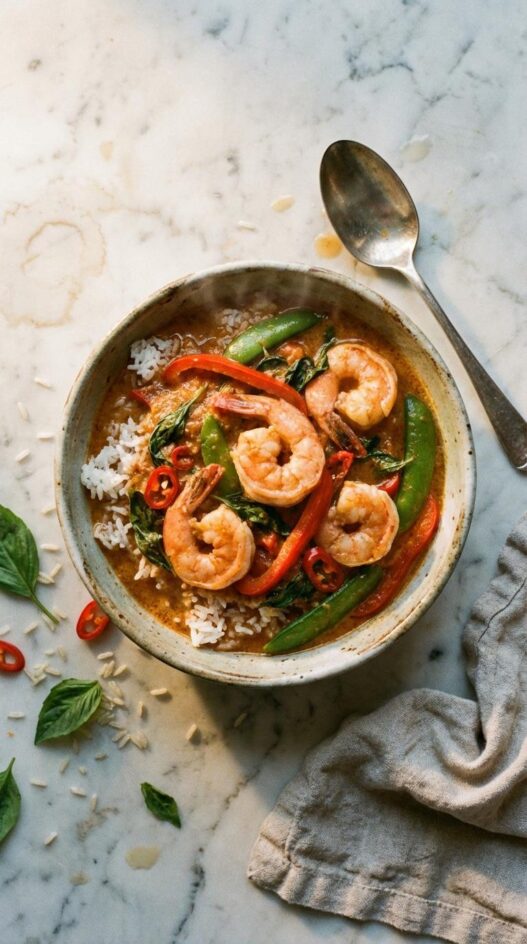
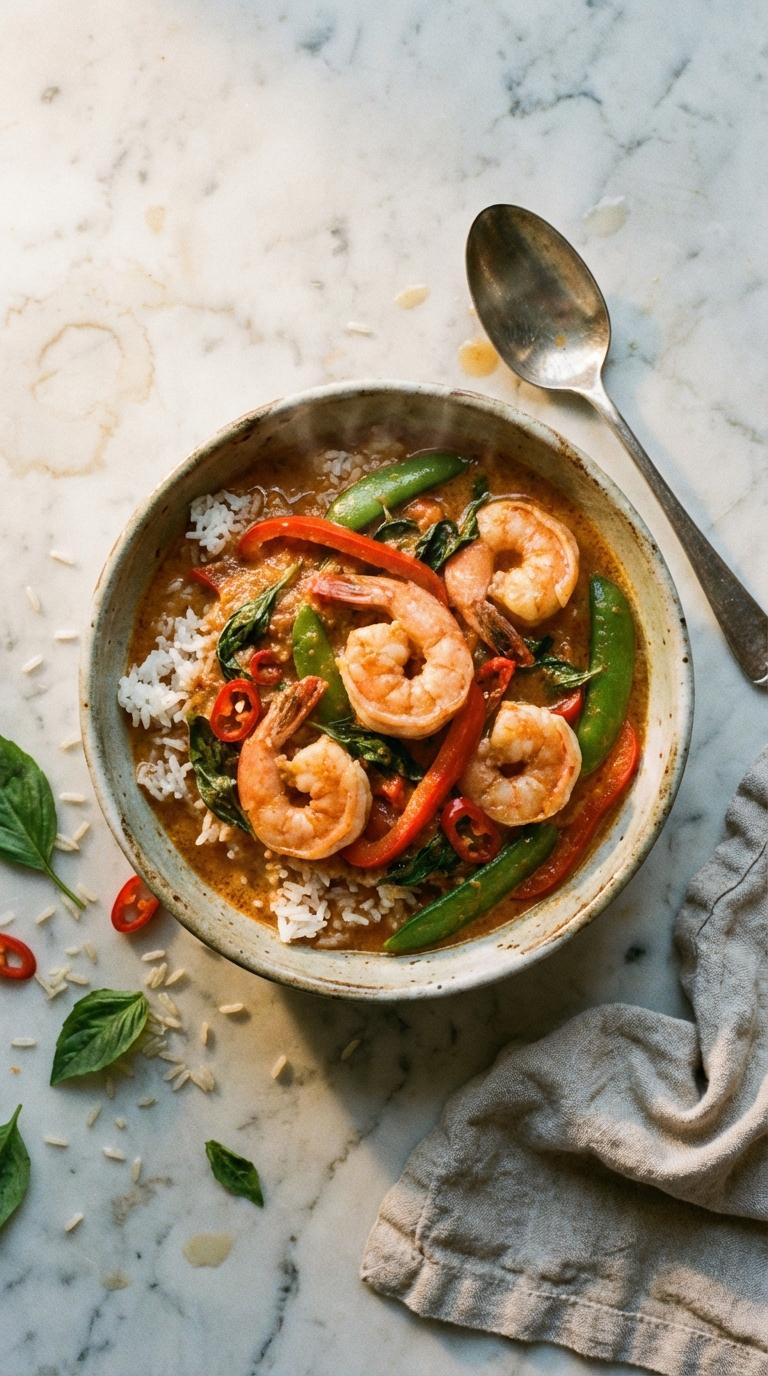
Thai red curry with shrimp is something that takes twenty minutes but tastes like it took an hour. The curry paste already has the lemongrass, galangal, chiles, and shrimp paste in it, so there is not much left for you to do. All you need is a can of full-fat coconut milk, a handful of vegetables. Some plump shrimp, and you are ten minutes away from something fragrant and deeply flavorful served over jasmine rice. The technique that separates a good curry from a great one is blooming the curry paste in the thick coconut cream that sits at the top of the can before adding the rest of the liquid.
That one step intensifies the flavor dramatically and gives the curry a richer, more developed taste. Snap peas and red bell pepper add color and crunch, and some fresh lime juice right at the end brightens everything up. Just remember that shrimp go from done to rubbery in about sixty seconds. So add them last and pull the pan from the heat the moment they curl and turn pink. This curry is best eaten fresh, not reheated, so plan your portions as a result.
Bloom the Curry Paste in Coconut Cream
Open the can of coconut milk without shaking it first. The thick cream will have separated to the top. Scoop out about three tablespoons of this cream and fry the curry paste in it over medium-high heat for one full minute. This technique, called blooming, wakes up the dried spices and aromatics in the paste and makes the final curry noticeably more fragrant. Only after the paste smells aggressively aromatic should you add the remaining coconut milk and other liquids.
Cook Vegetables Before Adding Shrimp
Add the bell peppers and snap peas to the simmering curry sauce and cook them for two minutes before the shrimp go in. This gives the vegetables a head start so everything finishes cooking at the same time. The snap peas should stay crisp-tender, not soft and mushy. The bell peppers add sweetness and body to the sauce, and their natural sugars help balance the heat from the curry paste.
Watch the Shrimp Carefully
Shrimp cook in three to four minutes once they hit the simmering sauce. They are done when they turn pink, curl into a C-shape, and feel firm to the touch. If they curl all the way into tight O-shapes, they are overcooked. Pull the pan off the heat as soon as they are just done, stir in the lime juice and Thai basil off heat, and serve immediately. The residual heat will wilt the basil without cooking it into mush.
Print
20-Minute Thai Red Curry with Shrimp
- Total Time: 20 minutes
- Yield: 4 servings
Description
Thai red curry with shrimp is a twenty-minute dinner that tastes like a vacation. Plump shrimp in a fragrant coconut-red curry sauce with snap peas, bell peppers, and fresh basil. Red curry paste does the heavy lifting — it is already packed with lemongrass, galangal, and chiles — so all you need to add is coconut milk and a few vegetables.
Ingredients
- 1 1/2 lbs large shrimp, peeled and deveined
- 1 can (14 ounces) full-fat coconut milk
- 3 tablespoons Thai red curry paste
- 1 tablespoon vegetable oil
- 1 red bell pepper, sliced
- 1 cup snap peas
- 1 tablespoon fish sauce
- 1 tablespoon brown sugar
- Juice of 1 lime
- 1 cup fresh Thai basil leaves
- 1 red Thai chile, sliced (optional)
- Steamed jasmine rice for serving
Instructions
- Heat oil in a wok over medium-high heat. Add the thick cream from the top of the coconut can. Fry the curry paste in the cream for 1 minute until fragrant.
- Add the bell pepper and snap peas. Cook 2 minutes.
- Pour in the remaining coconut milk, fish sauce, and brown sugar. Bring to a simmer.
- Add the shrimp and cook 3 to 4 minutes until pink and curled.
- Remove from heat. Stir in lime juice, Thai basil, and chile if using. Serve over jasmine rice.
Notes
- Bloom the curry paste in coconut cream before adding liquid — this intensifies the flavor by an order of magnitude.
- Shrimp cook fast. Add them last and watch them — overcooked shrimp are rubbery.
- This curry is best eaten immediately. The shrimp get tough on reheating.
- Prep Time: 5 minutes
- Cook Time: 15 minutes
Nutrition
- Serving Size: 1 serving
- Calories: 380
- Sugar: 8
- Sodium: 780
- Fat: 22
- Carbohydrates: 12
- Fiber: 2
- Protein: 30
- Cholesterol: 185
Frequently Asked Questions
Can I use a different protein instead of shrimp?
Yes. Chicken thighs cut into bite-sized pieces work well and need about eight minutes of simmering. Firm tofu cubed and seared before adding also works. Adjust cooking times based on the protein you choose.
How spicy is Thai red curry paste?
Red curry paste has moderate heat, less than green curry but more than yellow. Start with two tablespoons if you are heat-sensitive and taste before adding more. You can also serve with extra coconut milk on the side to cool it down.
Why does my curry taste flat?
You likely skipped blooming the curry paste in the coconut cream first. Frying the paste in fat before adding liquid is what activates the aromatics and builds depth. Also make sure to add the lime juice at the end for brightness.
If You Liked This Recipe, You’ll Love These
- Prawn Cakes with Green Curry Pea Puree
- Red Curry Shrimp
- Gaeng Khiao Wan Goong: Thai Green Curry Shrimp
- Shrimp Red Curry Idlis