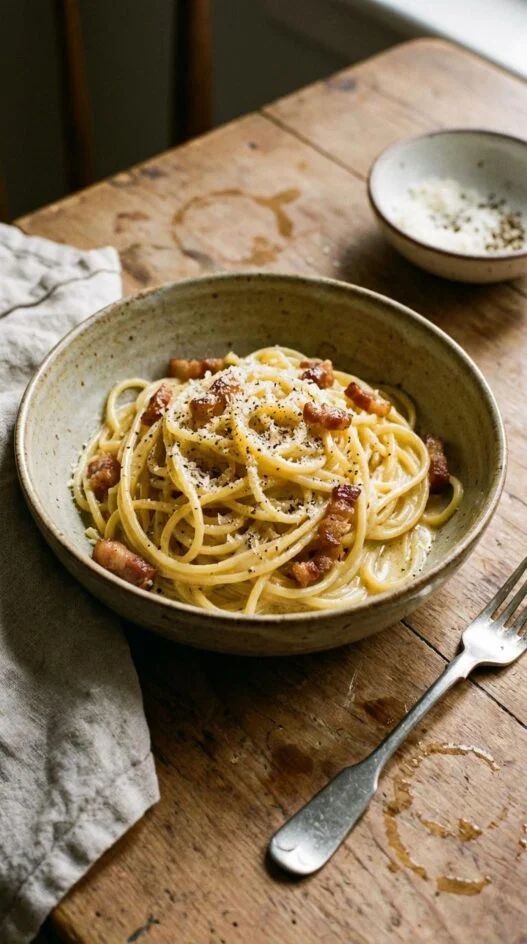
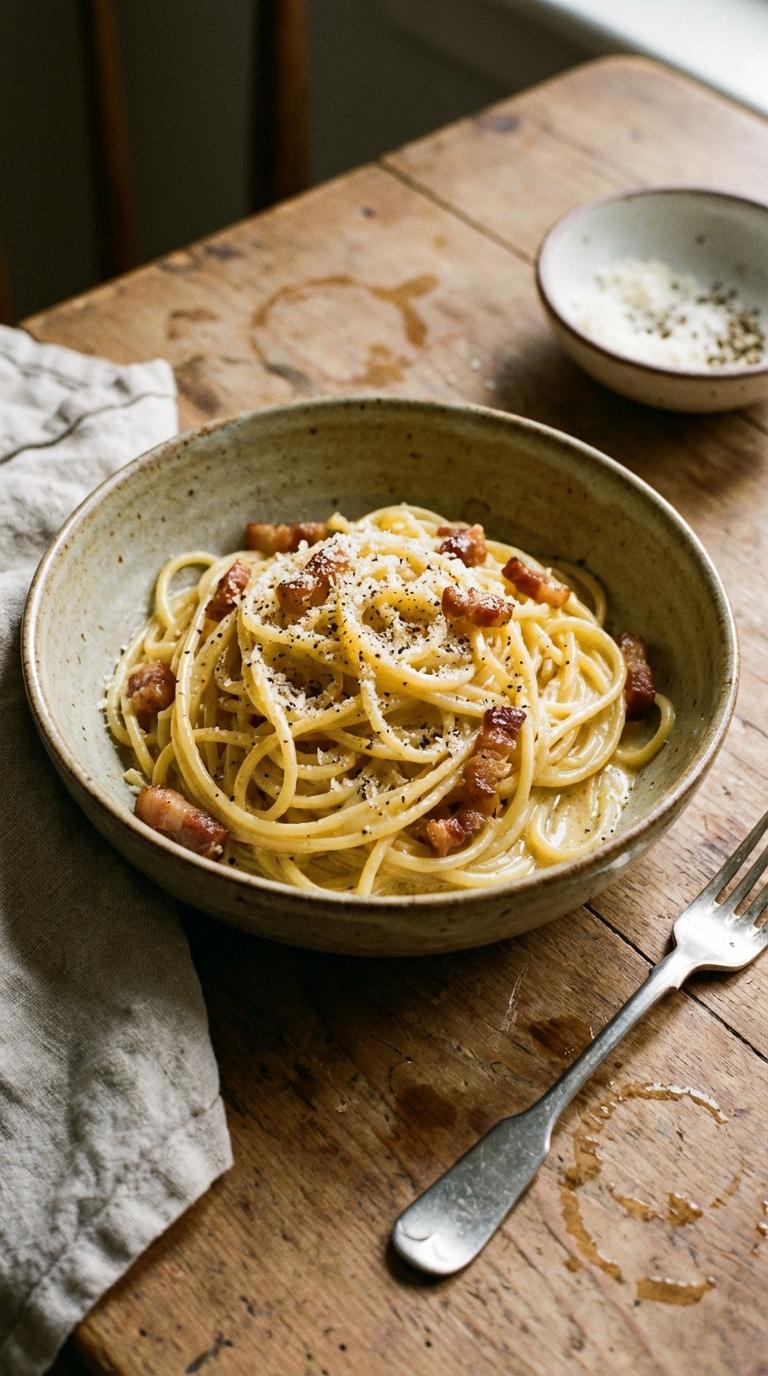
Real carbonara has five ingredients: spaghetti, guanciale, egg yolks, Pecorino Romano, and black pepper. No cream. No garlic. No peas. It is one of the simplest pasta dishes in Italian cooking, and that simplicity is exactly why it goes wrong so often. There is nowhere to hide. If your technique is off, you end up with scrambled eggs on pasta or a dry, clumpy mess. Quick win.
When it is right, carbonara is silky, rich, and deeply savory, a pasta so good it makes you close your eyes while you eat it. Simple as that. The technique that matters most is pulling the pan off the heat before you add the egg and cheese mixture. Solid. The residual heat from the pasta and the rendered guanciale fat is enough to cook the eggs into a creamy sauce without scrambling them. Toss constantly and add pasta water a splash at a time until the sauce coats every strand. Guanciale is fattier and more flavorful than pancetta or bacon, and it is worth tracking down at an Italian deli or ordering online. A mix of Pecorino Romano and Parmigiano-Reggiano gives you the best balance of sharp and nutty. Finish with a generous amount of coarsely cracked black pepper.
Render Guanciale and Cook Pasta
Place guanciale strips in a cold large skillet. Turn heat to medium and cook slowly, stirring occasionally, for eight to ten minutes until fat has rendered and guanciale is golden and crisp. Remove from heat. Cook spaghetti in generously salted boiling water until one minute short of al dente. Reserve one and a half cups pasta water before draining.
Prepare Egg Mixture
In a bowl, whisk together egg yolks, whole eggs, Pecorino Romano, Parmigiano-Reggiano if using, and very generous amount of freshly ground black pepper. The mixture should be thick like a paste. This combines with the pasta to create the sauce.
Combine and Create Sauce
With guanciale pan off the heat, add drained pasta and toss to coat in rendered fat. Let cool for about thirty seconds so pan is not screaming hot. Pour egg and cheese mixture over pasta and toss vigorously, adding splashes of reserved pasta water as needed. The residual heat will gently cook eggs into creamy, glossy sauce. Add more pasta water if tight. Serve immediately with extra Pecorino and black pepper.
Print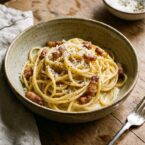
Classic: No-Cream Spaghetti Carbonara
- Total Time: 30 minutes
- Yield: 4 servings
Description
Carbonara is Rome’s most famous pasta, and also its most commonly butchered. There is no cream in a real carbonara — the silky sauce is created entirely by the emulsion of egg yolks, pecorino cheese, and starchy pasta water, bound together by the residual heat of the pasta. The dish originated in the mid-20th century, likely from the provisions of American GIs in postwar Italy. It has since become an untouchable Roman icon.
Ingredients
- 1 lb spaghetti or rigatoni
- 6 ounces guanciale (cured pork cheek), cut into small strips or cubes
- 4 large egg yolks plus 2 whole eggs
- 1 cup finely grated Pecorino Romano
- 1/2 cup finely grated Parmigiano-Reggiano (optional — purists use only Pecorino Romano)
- Freshly ground black pepper (generous amount)
- Kosher salt for the pasta water
Instructions
- Bring a large pot of generously salted water to a boil. Cook the spaghetti until 1 minute short of al dente — it will finish cooking in the pan.
- While the pasta cooks, place the guanciale in a cold large skillet. Turn the heat to medium and cook slowly, stirring occasionally, for 8-10 minutes until the fat has rendered and the guanciale is golden and crisp. Remove from heat.
- In a bowl, whisk together the egg yolks, whole eggs, Pecorino, Parmigiano-Reggiano, and a very generous amount of freshly ground black pepper. The mixture should be thick, like a paste.
- Reserve 1.5 cups of the starchy pasta cooking water before draining. Drain the spaghetti.
- With the guanciale pan OFF the heat, add the drained pasta and toss to coat in the rendered fat. Let it cool for about 30 seconds — the pan must not be screaming hot.
- Pour the egg and cheese mixture over the pasta and toss vigorously, adding splashes of the reserved pasta water as needed. The residual heat will gently cook the eggs into a creamy, glossy sauce that clings to every strand. Add more pasta water if it seems tight.
- Serve immediately with an extra grating of Pecorino and more black pepper on top. Carbonara waits for no one.
Notes
- Guanciale is the correct meat for carbonara — it is fattier and more flavorful than pancetta or bacon. If you cannot find it, pancetta is the next best option.
- The pan must be off the heat or very low when you add the egg mixture. If the pan is too hot, you will end up with scrambled eggs instead of a creamy sauce.
- Do not add cream. The creaminess in an authentic carbonara comes entirely from the emulsion of eggs, cheese, and starchy pasta water.
- Cuisine: Italian
Nutrition
- Serving Size: 1 serving
- Calories: 850
- Sugar: 3
- Sodium: 1000
- Fat: 42
- Carbohydrates: 82
- Fiber: 4
- Protein: 31
Frequently Asked Questions
Why no cream?
Cream is not part of authentic carbonara. The creaminess comes entirely from the emulsion of eggs, cheese, and starchy pasta water. Adding cream is an Americanization that dilutes the sharp, peppery flavor that defines the dish.
What if I cannot find guanciale?
Pancetta is the next best option, though it is less fatty and flavorful than guanciale. Thick-cut bacon can work in a pinch but will have a smokier flavor not present in authentic carbonara.
How do I prevent scrambled eggs?
Take the pan completely off the heat before adding the egg mixture. Let the pasta cool slightly after draining. The residual heat will gently cook the eggs into a sauce. If the pan is too hot, you get scrambled eggs.
If You Liked This Recipe, You’ll Love These
- A Fun Way to Serve Pasta: Baked in a Tomato
- Bolognese Sauce with Zucchini Noodles
- Arrabbiata Pasta Sauce
- Arrabiata Lasagna with Aged Havarti