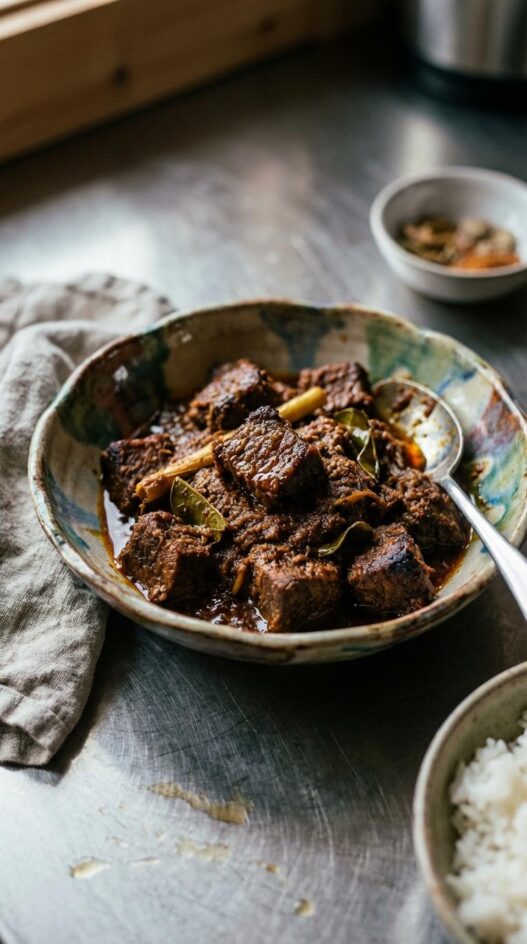
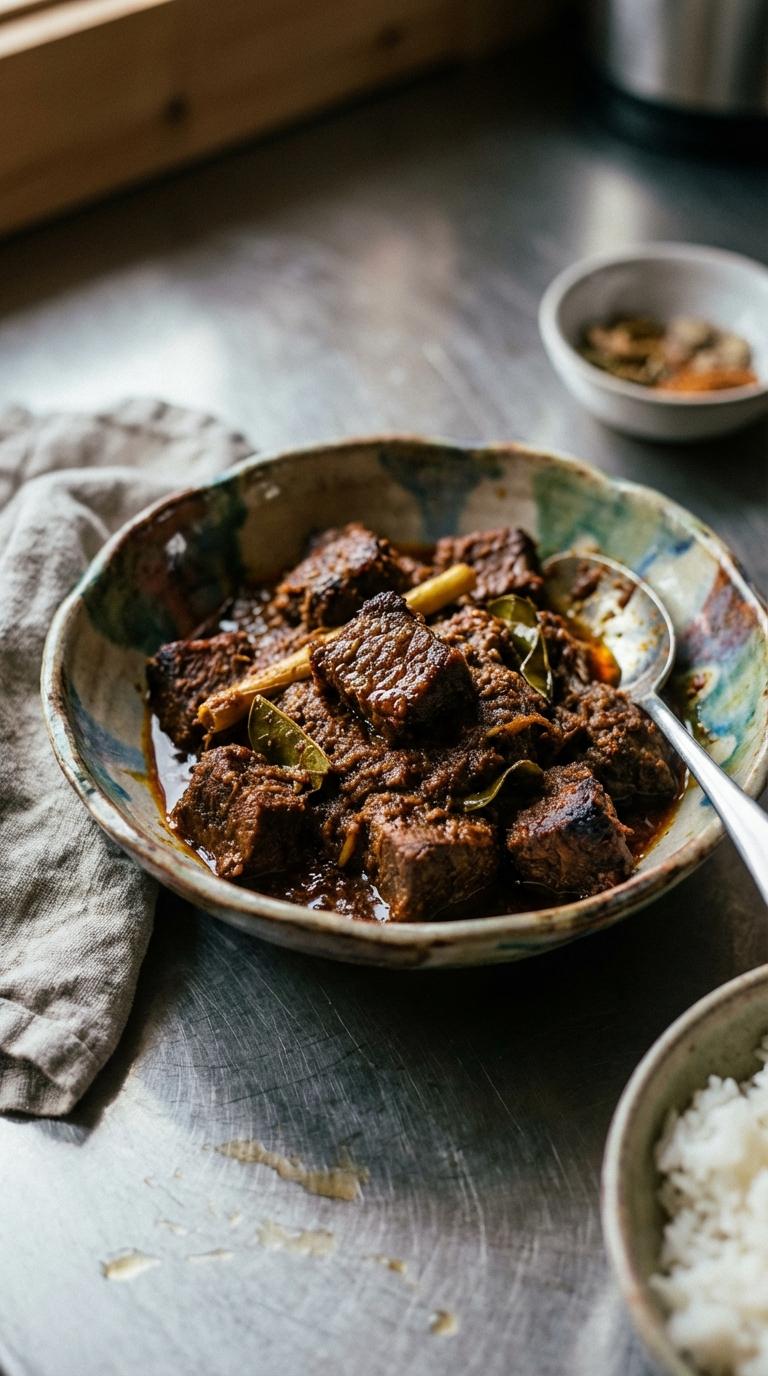
Rendang is not a curry. It is a dry-braised dish from the Minangkabau people of West Sumatra, and the distinction matters. Two pounds of beef chuck or brisket simmer in coconut milk and a spice paste for 2 to 2.5 hours while the liquid slowly evaporates, concentrating every flavor into a dark, caramelized coating on the meat. CNN readers once voted it the most delicious food in the world, and after making it properly, you understand why. The layers of lemongrass, galangal, fresh turmeric, and dried red chilies, all bound by rich coconut milk, build a depth of flavor that most dishes never approach.
Two details set this apart from simplified Western versions. First, the kerisik: desiccated coconut toasted in a dry skillet until golden brown, then ground to a powder. Most recipes skip this step, and they lose the nutty, toasty quality that thickens the sauce and gives rendang its signature richness. Second, patience. This is a 3-hour project. The coconut milk must reduce completely, the oil must separate, and the meat must end up coated in a dry, concentrated paste of spices with almost no liquid remaining. If your rendang still has sauce pooling at the bottom, it is not done. Keep cooking. The reward is a dish that keeps for a week in the fridge and only deepens while it sits. It was originally designed as a preservation method for long journeys, and that durability is built into the technique.
Toast the Coconut into Kerisik
Toast the desiccated coconut in a dry skillet over medium heat, stirring constantly, for 3-5 minutes until golden brown. Grind to a powder in a spice grinder or food processor. This is kerisik, it thickens the sauce and adds a nutty depth. Set aside.
Blend the Spice Paste
Make the spice paste: Drain the soaked chilies. Blend the chilies, shallots, garlic, galangal, ginger, turmeric, and lemongrass in a food processor or blender until a smooth paste forms. Add a tablespoon of water if needed to get it moving.
Simmer It Down Until the Oil Separates
Pour the coconut milk into a large, heavy-bottomed pot or Dutch oven. Add the spice paste, bruised lemongrass stalks, kaffir lime leaves, cinnamon stick, cloves, cardamom pods, and star anise. Bring to a simmer over medium heat, stirring frequently.
Print
Dry-Braised Beef Rendang with Kerisik
- Total Time: 180 minutes
- Yield: 6 servings
Description
Rendang is not a curry — it is a dry-braised dish from the Minangkabau people of West Sumatra, where beef is simmered for hours in coconut milk and a spice paste until the liquid evaporates completely and the meat is coated in a concentrated, caramelized layer of toasted coconut and spices. CNN named it the most delicious food in the world in a reader poll, and it is hard to argue. The complexity of flavor — layers of lemongrass, galangal, turmeric, and chili bound by rich coconut — is extraordinary.
Ingredients
- 2 pounds beef chuck or brisket, cut into 2-inch cubes
- 2 cans (13.5 ounces each) full-fat coconut milk
- 1 cup unsweetened desiccated coconut, toasted
- 2 stalks lemongrass, bottom 4 inches only, bruised
- 4 kaffir lime leaves, torn
- 1 turmeric leaf (optional)
- 1 tablespoon tamarind paste
- 1 tablespoon palm sugar or brown sugar
- 1 cinnamon stick
- 3 whole cloves
- 3 green cardamom pods
- 2 star anise
- 1 teaspoon kosher salt
- For the spice paste (rempah):
- 10 dried red chilies, soaked in hot water for 15 minutes
- 8 shallots, roughly chopped
- 6 cloves garlic
- 2-inch piece galangal, sliced
- 2-inch piece fresh ginger, sliced
- 2-inch piece fresh turmeric, sliced (or 1 teaspoon ground)
- 1 stalk lemongrass, bottom portion, sliced
Instructions
- Toast the desiccated coconut in a dry skillet over medium heat, stirring constantly, for 3-5 minutes until golden brown. Grind to a powder in a spice grinder or food processor. This is kerisik — it thickens the sauce and adds a nutty depth. Set aside.
- Make the spice paste: Drain the soaked chilies. Blend the chilies, shallots, garlic, galangal, ginger, turmeric, and lemongrass in a food processor or blender until a smooth paste forms, adding a tablespoon of water if needed to get it moving.
- Pour the coconut milk into a large, heavy-bottomed pot or Dutch oven. Add the spice paste, bruised lemongrass stalks, kaffir lime leaves, cinnamon stick, cloves, cardamom pods, and star anise. Bring to a simmer over medium heat, stirring frequently.
- Add the beef cubes, tamarind paste, palm sugar, and salt. The liquid should mostly cover the meat. Bring to a gentle boil, then reduce heat to medium-low.
- Simmer uncovered, stirring every 15-20 minutes, for about 2 to 2.5 hours. The coconut milk will gradually reduce, the oil will separate, and the sauce will darken. This slow reduction is the entire point of rendang.
- When the liquid has reduced to a thick, oily paste that clings to the meat, add the ground toasted coconut (kerisik). Continue cooking and stirring more frequently for another 20-30 minutes. The rendang is done when the meat is tender, dark brown, and coated in a dry, concentrated paste of spices and coconut. There should be almost no liquid remaining.
- Remove the lemongrass stalks and lime leaves. Serve with steamed rice. Rendang actually improves after a day or two in the refrigerator as the flavors continue to meld.
Notes
- Rendang is a dry dish, not a wet curry. The long, slow cook evaporates all the coconut milk and concentrates it into a rich coating on the meat. If your rendang still has liquid in the pan, keep cooking.
- Kerisik, toasted coconut ground to a paste, is the ingredient most Western versions leave out. It thickens the sauce and brings a toasty, nutty quality nothing else replaces.
- Rendang keeps exceptionally well. It began as a way to preserve meat for long journeys, and the flavor deepens over two or three days in the fridge.
Nutrition
- Serving Size: 1 serving
- Calories: 800
- Fat: 67 g
- Carbohydrates: 15 g
- Protein: 33 g
Frequently Asked Questions
What is important to know about making Beef Rendang?
Rendang is a dry dish, not a wet curry. The long, slow cooking process evaporates all the coconut milk, concentrating its flavor into an intensely rich coating on the meat. If your rendang still has liquid, keep cooking.
What technique matters most for Beef Rendang?
Kerisik: toasted coconut ground to a paste, the ingredient most Western recipes leave out entirely. It thickens the sauce and adds a toasty, nutty quality that nothing else replicates.
How should I serve Beef Rendang?
Steamed white rice is the standard, with something sharp and fresh on the side to cut the richness.