
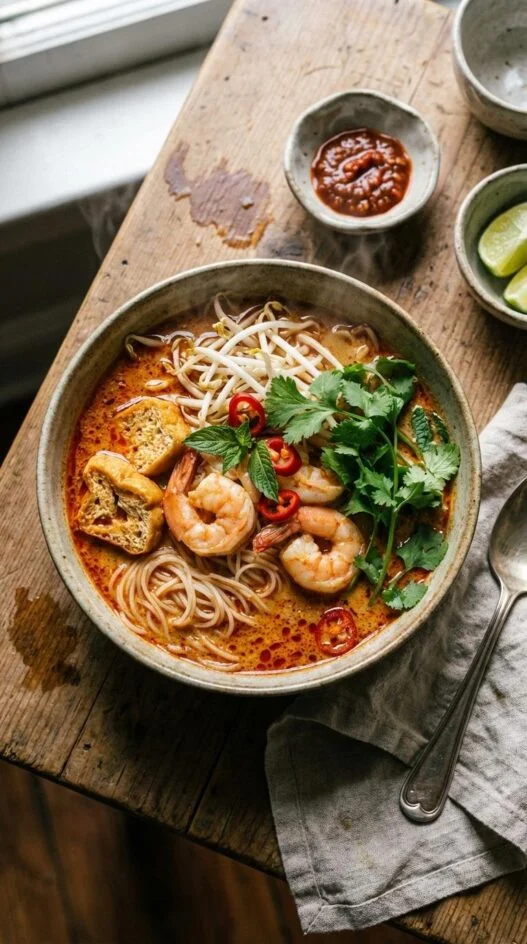
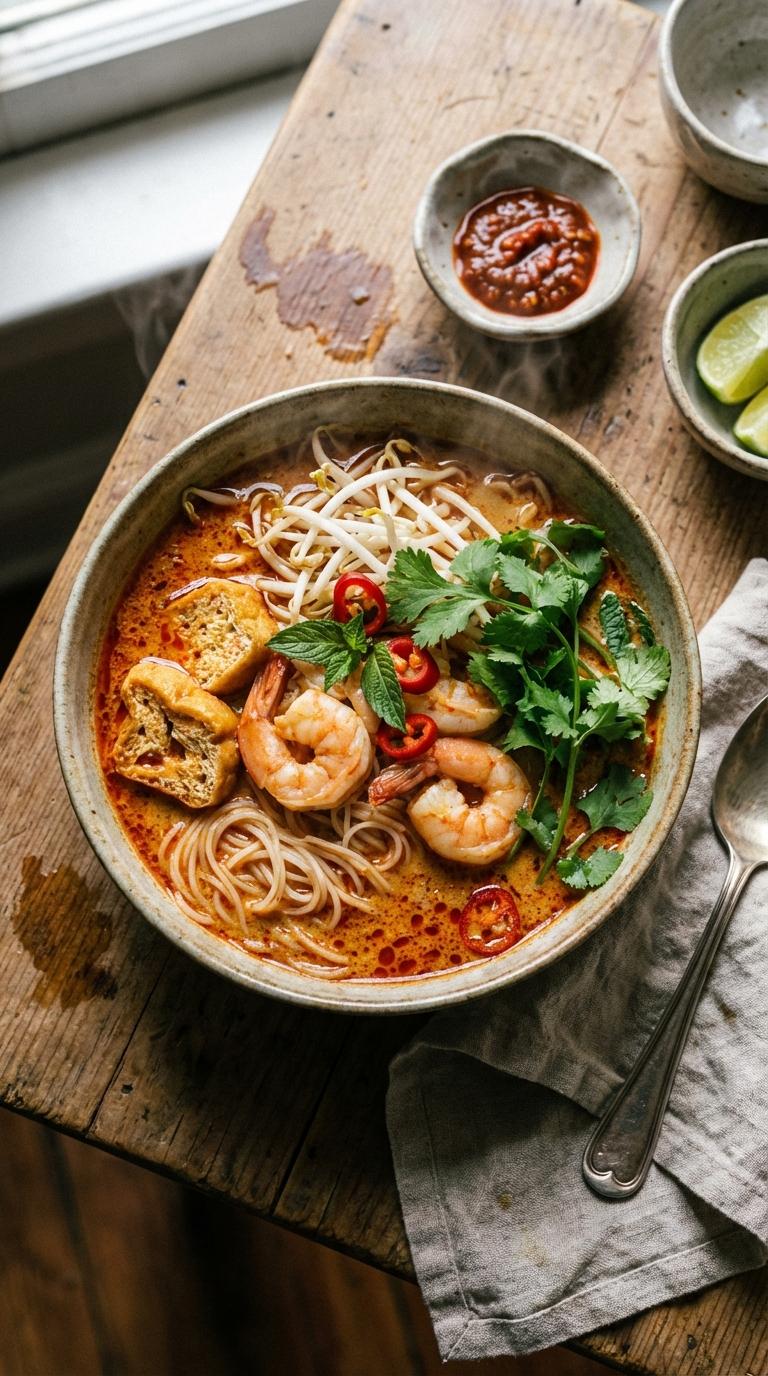
Laksa is a Malaysian noodle soup: a coconut curry broth poured over rice noodles, here with shrimp and tofu puffs. It starts with a paste pounded or blended from dried and fresh red chilies, shallots, garlic, lemongrass, galangal, turmeric, candlenuts, dried shrimp, and belacan, then fried in oil for five to seven minutes until the oil visibly separates from the solids. That separation is the signal that the raw edge is cooked out and the paste is ready for coconut milk and chicken stock. Skipping this step leaves the broth tasting harsh and one-dimensional.
Shrimp and tofu puffs poach in the finished broth for just three to four minutes, keeping the shrimp tender and the tofu spongy enough to soak up the spiced coconut liquid. The belacan, fermented shrimp paste, is essential; it provides a deep, funky umami layer that no amount of fish sauce alone can replicate. Candlenuts thicken the broth and give it body, though macadamias work as a substitute. Serve it over rice vermicelli with bean sprouts, fresh herbs, and sambal on the side. One hour from paste to bowl for four generous servings.
Pound and Fry the Laksa Paste
Combine soaked dried chilies, fresh chilies, shallots, garlic, lemongrass, galangal, turmeric, candlenuts, dried shrimp, and belacan in a food processor and blend to a fine paste. Heat vegetable oil in a large pot over medium heat. Fry the paste, stirring constantly, for 5 to 7 minutes until it darkens in color and the oil separates around the edges. Do not rush this, because raw paste tastes harsh and properly fried paste tastes deep and complex.
Simmer the Coconut Curry Broth
Pour in the coconut milk and chicken stock. Stir well to combine. Add fish sauce and palm sugar. Bring to a gentle simmer and cook for 15 minutes to let the flavors meld. The broth should be rich, creamy, and slightly spicy. Taste and adjust the fish sauce for salt and sugar for balance. Add the shrimp and tofu puffs and simmer for 3 to 4 minutes until the shrimp are just cooked through.
Assemble the Bowls with Rice Vermicelli
Divide cooked rice vermicelli among large bowls. Ladle the curry broth, shrimp, and tofu over the noodles. Top each bowl with bean sprouts, fresh herbs, and sliced red chili. Serve with sambal oelek and lime wedges on the side. Laksa should be rich enough that the broth clings to the noodles. If it looks thin, simmer it longer to reduce.
Print
Laksa
- Total Time: 60 minutes
- Yield: 4 servings
Description
Laksa is Southeast Asia’s great noodle soup, and the curry laksa of Malaysia and Singapore is the version that has conquered the world. It is a bowl of coconut curry broth that manages to be simultaneously rich and spicy, with rice noodles, shrimp, tofu puffs, and a tangle of bean sprouts and herbs. The heart of the dish is the laksa paste — a pounded blend of chilies, lemongrass, galangal, shrimp paste, and candlenuts that delivers a complexity no single spice can approach.
Ingredients
- For the laksa paste:
- 10 dried red chilies, soaked in hot water for 20 minutes, drained
- 4 fresh red chilies, roughly chopped
- 4 shallots, roughly chopped
- 6 cloves garlic
- 2 stalks lemongrass, bottom 4 inches only, sliced
- 1-inch piece galangal or ginger, sliced
- 1-inch piece fresh turmeric or 1 teaspoon ground turmeric
- 6 candlenuts or macadamia nuts
- 2 tablespoons dried shrimp, soaked in hot water for 15 minutes and drained
- 1 tablespoon belacan (Malaysian shrimp paste)
- For the soup:
- 2 tablespoons vegetable oil
- 2 cans (13.5 ounces each) full-fat coconut milk
- 3 cups chicken stock
- 2 tablespoons fish sauce
- 1 tablespoon palm sugar or brown sugar
- 12 ounces dried rice vermicelli, cooked according to package directions
- 1 pound large shrimp, peeled and deveined
- 8 ounces fried tofu puffs, halved
- 2 cups bean sprouts
- Fresh cilantro, Vietnamese mint, and sliced red chili for garnish
- Sambal oelek and lime wedges for serving
Instructions
- Make the laksa paste: combine all paste ingredients in a food processor or blender and process to a fine paste, scraping down the sides as needed. Add a tablespoon of water if necessary to help it blend. The paste should be smooth and fragrant.
- Heat the vegetable oil in a large pot over medium heat. Add the laksa paste and fry, stirring constantly, for 5-7 minutes until the paste darkens in color, the oil separates around the edges, and the raw smell gives way to a deep, toasted aroma. This step is critical for developing the flavor.
- Pour in the coconut milk and chicken stock. Stir well to combine. Add the fish sauce and palm sugar. Bring to a gentle simmer and cook for 15 minutes, allowing the flavors to meld.
- Add the shrimp and tofu puffs. Simmer for 3-4 minutes until the shrimp are pink and just cooked through.
- Divide the cooked rice vermicelli among large bowls. Ladle the curry broth, shrimp, and tofu over the noodles. Top each bowl with a handful of bean sprouts, fresh herbs, and sliced chili.
- Serve with sambal oelek and lime wedges on the side.
Notes
- Fry the laksa paste until the oil separates. Raw paste tastes harsh and one-dimensional; properly fried paste tastes deep and rounded.
- Use belacan, the fermented shrimp paste. It carries the funky umami backbone of the dish. It smells strong raw and transforms entirely once cooked.
- Candlenuts are traditional and add body to the paste. Macadamias are the closest substitute. Do not use cashews, which are too sweet.
Nutrition
- Serving Size: 1 serving
- Calories: 600
- Fat: 48 g
- Carbohydrates: 30 g
- Protein: 20 g
Frequently Asked Questions
What makes this Laksa authentic?
This recipe follows traditional Malaysian methods and ingredient proportions refined over generations. Using authentic techniques and quality ingredients ensures the dish tastes as it should, honoring cultural origins while being accessible to modern home cooks.
Can I make substitutions in this recipe?
While designed around specific ingredients, some substitutions are possible. However, key ingredients that define the dish should not be changed, as they provide authentic flavors and textures. Check recipe notes for acceptable alternatives that maintain character.
How should I serve Laksa?
Traditional accompaniments enhance the dish and provide balance. Follow serving suggestions in the recipe for authentic presentation. Laksa is often served with specific sides or beverages that complement flavors and complete the meal experience.




Better than my local.