
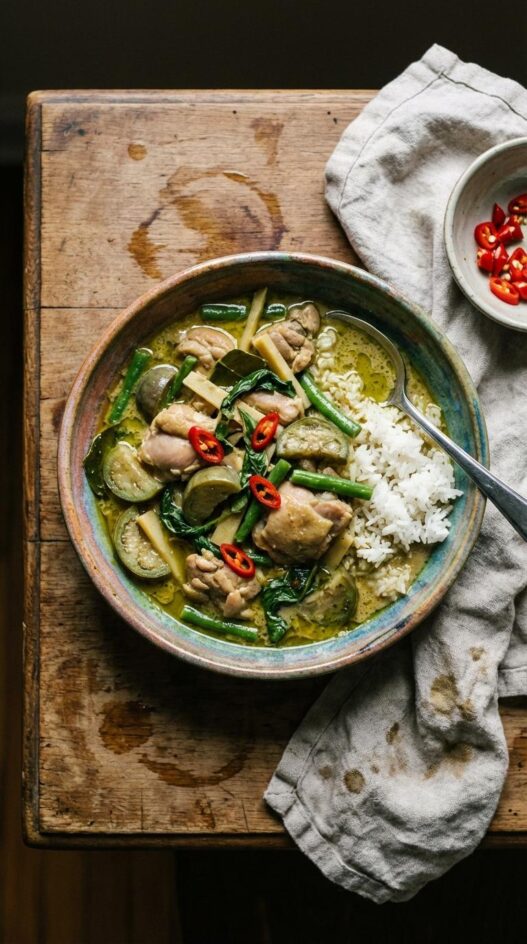
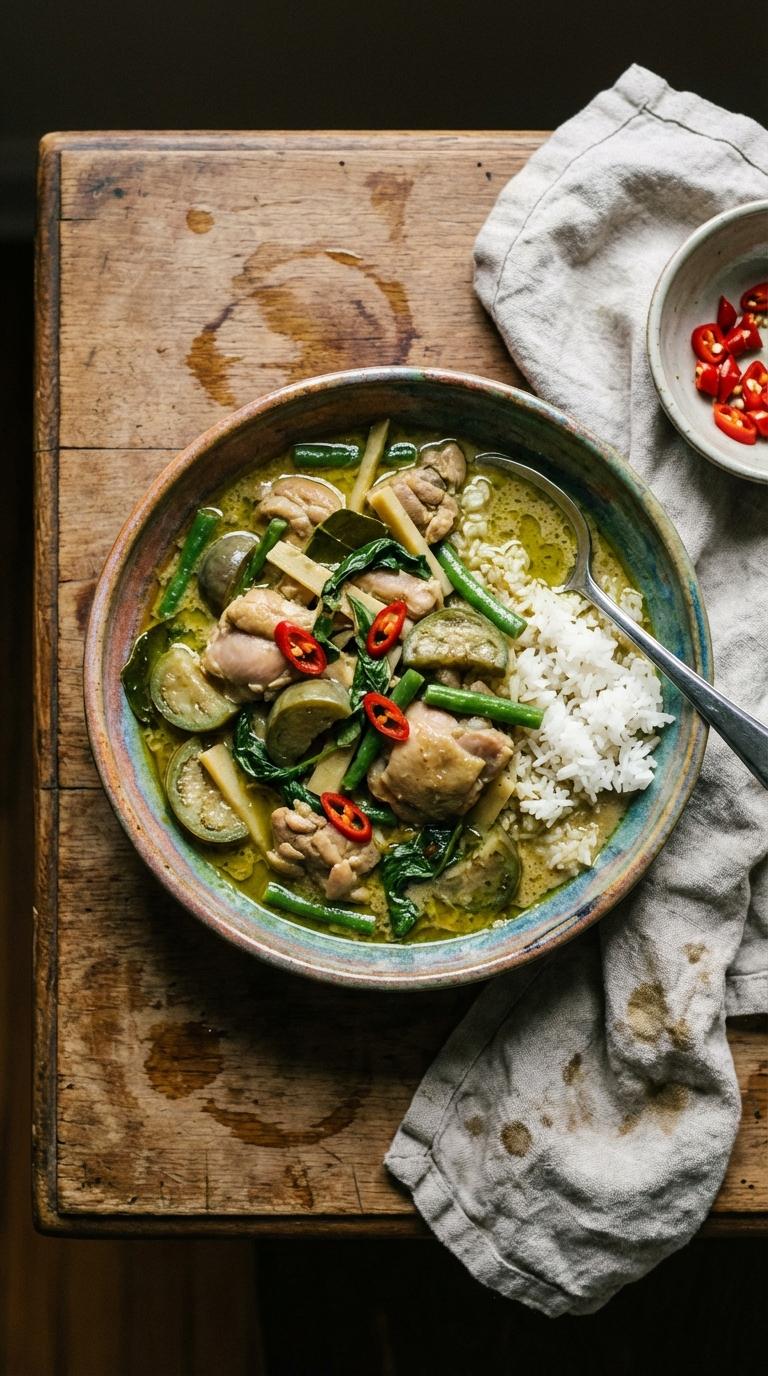
Thai green curry is one of the most fragrant things you can cook in under 45 minutes. The blend of fresh green chili paste, kaffir lime leaves, Thai basil, and lemongrass creates a layered aromatic profile that no other cuisine quite replicates. It should land as a balance of four things: rich from the coconut cream, salty from the fish sauce, hot from the chilies. Barely sweet from the palm sugar. If any one of those elements dominates, the curry is out of balance. The foundational technique here is cracking the coconut cream before adding the curry paste.
You open the can without shaking, scoop out the thick cream, and heat it until the oil visibly separates out. Then you fry the paste in that coconut oil, which blooms the aromatics far more effectively than just stirring it into liquid. Use full-fat coconut milk, always. Thai basil goes in at the very end because it wilts in seconds. The Asian eggplant and bamboo shoots add texture without muddying the clean flavors of the broth. Serve over jasmine rice with sliced red chili on top for heat and color.
Crack Coconut Cream
Open coconut milk can without shaking. Scoop thick cream from top into wok or large saucepan. Reserve thin liquid underneath separately. Heat coconut cream over medium-high heat, stirring occasionally, until it begins to separate and you can see oil breaking out. The surface will look slick and slightly curdled. This takes three to five minutes.
Fry Paste and Add Protein
Add curry paste to cracked coconut cream and fry, stirring constantly, for two minutes until paste is very fragrant and darkens slightly. This step blooms the aromatics in the paste. Add sliced chicken and stir to coat in paste. Cook for two minutes until outside of chicken turns white.
Simmer and Finish
Pour in reserved thin coconut liquid. Add eggplant, green beans, bamboo shoots, and kaffir lime leaves. Bring to simmer and cook for ten to twelve minutes until chicken is cooked through and vegetables are tender. Season with fish sauce and sugar. Taste and adjust for balance of rich, salty, sweet, and spicy. Stir in Thai basil leaves just before serving. They will wilt almost instantly. Ladle curry into bowls over steamed jasmine rice, garnished with sliced red chili.
Print
Green Curry
- Total Time: 40 minutes
- Yield: 4 servings
Description
Thai green curry — gaeng khiao wan — gets its color and heat from a paste of fresh green chilies, and its name literally translates to “sweet green curry.” It is the most fragrant of the Thai curries, with layers of basil, kaffir lime, and lemongrass that make it simultaneously fiery and aromatic. The curry should taste balanced: rich from the coconut cream, hot from the chilies, salty from the fish sauce, and just slightly sweet.
Ingredients
- 1 can (14 ounces) full-fat coconut milk (do not shake)
- 3 tablespoons Thai green curry paste (store-bought or homemade)
- 1 lb boneless, skinless chicken thighs, sliced into thin strips
- 1 medium Asian eggplant, sliced into rounds
- 1 cup Thai basil leaves
- 4 kaffir lime leaves, torn
- 1 tablespoon fish sauce
- 1 teaspoon palm sugar or brown sugar
- 1 red Thai chili, sliced (for garnish and extra heat)
- 1/2 cup bamboo shoots, drained
- 1/2 cup green beans, cut into 2-inch pieces
- Steamed jasmine rice for serving
Instructions
- Open the can of coconut milk without shaking. Scoop the thick cream from the top into a wok or large saucepan. Reserve the thin liquid underneath separately.
- Heat the coconut cream over medium-high heat, stirring occasionally, until it begins to separate and you can see the oil breaking out — the surface will look slick and slightly curdled. This takes 3-5 minutes.
- Add the curry paste to the cracked coconut cream and fry it, stirring constantly, for 2 minutes until the paste is very fragrant and darkens slightly. This step blooms the aromatics in the paste.
- Add the chicken and stir to coat in the paste. Cook for 2 minutes until the outside of the chicken turns white.
- Pour in the reserved thin coconut liquid. Add the eggplant, green beans, bamboo shoots, and kaffir lime leaves. Bring to a simmer and cook for 10-12 minutes until the chicken is cooked through and the vegetables are tender.
- Season with fish sauce and sugar. Taste and adjust — it should be a balance of rich, salty, sweet, and spicy.
- Stir in the Thai basil leaves just before serving (they will wilt almost instantly). Ladle the curry into bowls over steamed jasmine rice, garnished with sliced red chili.
Notes
- Cracking the coconut cream — heating it until the oil separates — before adding the curry paste is a foundational Thai technique. It fries the paste in coconut oil, blooming the aromatics and developing deeper flavor.
- Use full-fat coconut milk, never light. The fat is where the flavor and richness live.
- Thai basil has a distinctive anise-like flavor that regular basil lacks. It is worth seeking out at Asian grocery stores.
- Category: Main Course
- Cuisine: Thai
Nutrition
- Serving Size: 1 serving
- Calories: 415
- Fat: 30 g
- Carbohydrates: 9 g
- Protein: 23 g
Frequently Asked Questions
What does cracking coconut cream mean?
Cracking means heating the thick coconut cream until the oil separates and becomes visible on the surface. This released coconut oil is used to fry the curry paste, blooming the aromatics and developing deeper flavor. This is foundational Thai technique.
Can I use light coconut milk?
No. Full-fat coconut milk is essential. The fat is where the flavor and richness live. Light coconut milk produces thin, weak curry that lacks the characteristic creamy texture.
What is Thai basil?
Thai basil has distinctive anise-like flavor that regular Italian basil lacks. It is purple-stemmed with slightly serrated leaves. Worth seeking out at Asian grocery stores, as regular basil does not provide the same flavor.



So good!!