

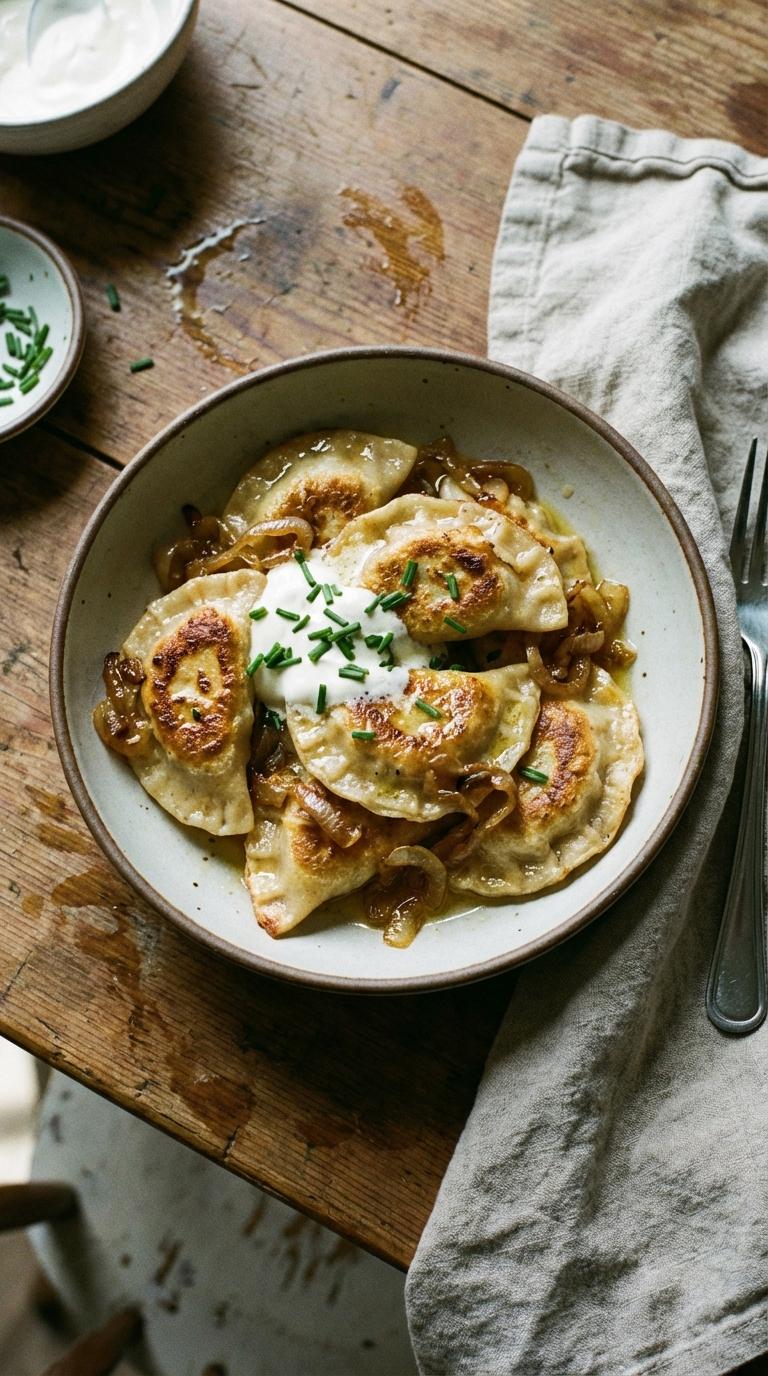
Pierogi are Polish dumplings, and these are filled with mashed potato and sharp cheddar. The dough is deceptively simple, flour, egg, sour cream, and warm water brought together into a smooth, pliable dough that needs a full thirty-minute rest before you try to roll it. That rest relaxes the gluten enough that the dough rolls thin without snapping back, and the sour cream keeps it tender after boiling. The filling is mashed potatoes folded with sharp cheddar while still hot, so the cheese melts into every crevice and you get a creamy, savory pocket that holds its shape when you seal the edges. It ruined every other pierogi for us.
Pinch the seams firmly and make sure no filling touches the edges, that’s the number-one reason pierogi blow open in the boiling water. Once they float, they’re done. From there, caramelize sliced onions in butter for a full twenty minutes until they’re deep amber and sweet, then pan-fry the boiled pierogi in the same buttery pan until the outsides go golden and slightly crispy. Top with a dollop of sour cream and a scatter of fresh chives. These freeze nicely on a sheet pan before the boiling step, spread them out so they don’t stick, freeze solid, then bag them for pierogi on demand any night of the week.
Make the Dough and the Potato-Cheddar Filling
Combine flour and salt, then mix in the egg, sour cream, and warm water until a shaggy dough forms. Knead on a floured surface for 5 minutes until smooth and elastic, then let it rest for 30 minutes. The resting relaxes the gluten and makes rolling much easier. While the dough rests, boil the potatoes until tender, drain, and mash with butter, sharp cheddar, salt, and pepper until smooth. Let the filling cool completely.
Shape the Pierogi and Boil Until They Float
Roll the dough to 1/8-inch thickness and cut 3-inch rounds. Place a tablespoon of filling in the center of each round, fold in half, and pinch the edges firmly. No filling should touch the seam or the pierogi will burst during boiling. Boil in batches in salted water for 3 to 4 minutes. They are done when they float to the surface.
Crisp in Butter with Caramelized Onions
Melt butter in a large skillet over medium-low heat. Add thinly sliced onions and a pinch of salt. Cook for 20 minutes, stirring occasionally, until the onions are deep golden and sweet. Increase the heat to medium, add the boiled pierogi, and cook 2 to 3 minutes per side until golden and crisp. Serve topped with sour cream and chives. Pierogi freeze well on a parchment-lined sheet. Boil from frozen and give them an extra minute.
Print
Pierogi with Caramelized Onions
- Total Time: 90 minutes
- Yield: 6 servings
Description
Pierogi are Eastern Europe’s answer to the question of what to do with potatoes, cheese, and dough — stuff them inside each other and pan-fry the result in butter. These potato-and-cheddar-filled dumplings get boiled until tender, then crisped in a skillet alongside deeply caramelized onions. Topped with sour cream, they are one of the most satisfying vegetarian dinners in any tradition.
Ingredients
- 3 cups all-purpose flour
- 1 teaspoon kosher salt
- 1 large egg
- 2 tablespoons sour cream
- 3/4 cup warm water
- 2 lbs russet potatoes, peeled and cubed
- 1 1/2 cups shredded sharp cheddar cheese
- 2 tablespoons unsalted butter
- 1 teaspoon kosher salt
- 1/2 teaspoon freshly ground black pepper
- 3 large yellow onions, thinly sliced
- 4 tablespoons unsalted butter
- 1 teaspoon kosher salt
- Sour cream for serving
- Fresh chives, chopped, for serving
Instructions
- Make the dough: combine flour and salt. Add egg, sour cream, and warm water. Mix until a shaggy dough forms, then knead on a floured surface for 5 minutes until smooth and elastic. Wrap in plastic and rest 30 minutes.
- Boil potatoes in salted water until tender, about 15 minutes. Drain and mash with butter, cheddar, salt, and pepper until smooth. Let cool.
- Roll the dough to 1/8-inch thickness on a floured surface. Cut 3-inch rounds with a biscuit cutter. Place a tablespoon of filling in the center of each round, fold in half, and pinch edges firmly to seal.
- Bring a large pot of salted water to a boil. Cook pierogi in batches for 3 to 4 minutes — they are done when they float to the surface. Remove with a slotted spoon.
- While pierogi boil, melt 4 tablespoons butter in a large skillet over medium-low heat. Add onions and salt. Cook 20 minutes, stirring occasionally, until deep golden and sweet.
- Increase heat to medium. Add boiled pierogi to the skillet with the onions and cook 2 to 3 minutes per side until golden and crisp.
- Serve topped with sour cream and chives.
Notes
- Resting the dough for 30 minutes relaxes the gluten and makes it much easier to roll thin without springing back.
- Pinch the edges firmly and ensure no filling touches the seam — any gap will open during boiling and the pierogi will fall apart.
- Pierogi freeze beautifully. Lay them on a parchment-lined sheet, freeze solid, then transfer to bags. Boil from frozen, adding 1 minute to the cook time.
- Prep Time: 40 minutes
- Cook Time: 50 minutes
- Category: Main Course
- Cuisine: Polish
Nutrition
- Serving Size: 1 serving
- Calories: 480
- Sugar: 4
- Sodium: 720
- Fat: 22
- Carbohydrates: 58
- Fiber: 3
- Protein: 14
- Cholesterol: 75
Frequently Asked Questions
Can I make substitutions to the ingredients?
You can make reasonable substitutions, but they will affect the final dish. Similar proteins usually work fine, and most vegetables can be swapped for others in the same family. Keep the onion, butter and black pepper as written, because that is where the flavor comes from.
Can this be made ahead of time?
This recipe works well for meal prep. You can make it ahead and store it in the fridge for 3-4 days. The flavors often improve after a day as they have time to meld. Reheat gently and add a small pour of liquid if needed.
Can I scale this recipe up or down?
It makes 6 servings, and scales in either direction if you adjust everything proportionally. If you are making a much larger batch, you may need to work in batches for any steps that involve browning or searing, as overcrowding the pan will cause steaming instead of proper caramelization.
If You Liked This Recipe, You’ll Love These
- Cheese and Potato Pierogi with Fried Leeks
- Loaded Potato Pierogis with Bacon Mushrooms
- Onion and Potato Pierogi
- Pierogi Quiche






Slicing three onions looked like far too much and twenty minutes felt long to stand there stirring, but they cook right down to almost nothing. I lost two in the water on my first batch, filling on the seam like it warns. Froze half on a tray before boiling and thats the part im most pleased about, pierogi on a wednesday with no work at all.