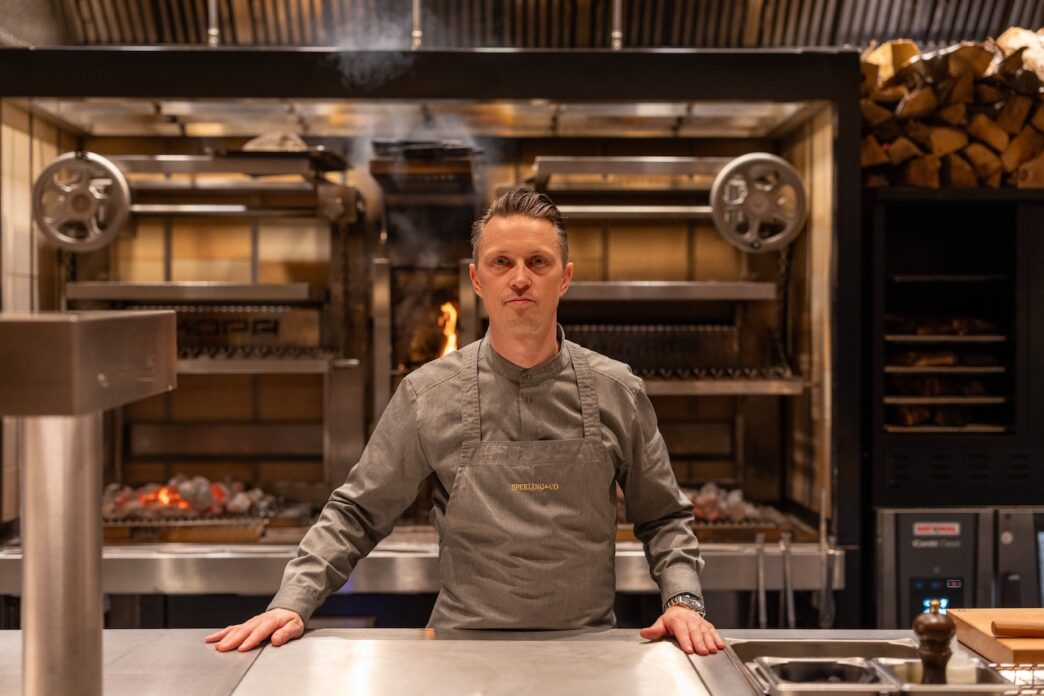
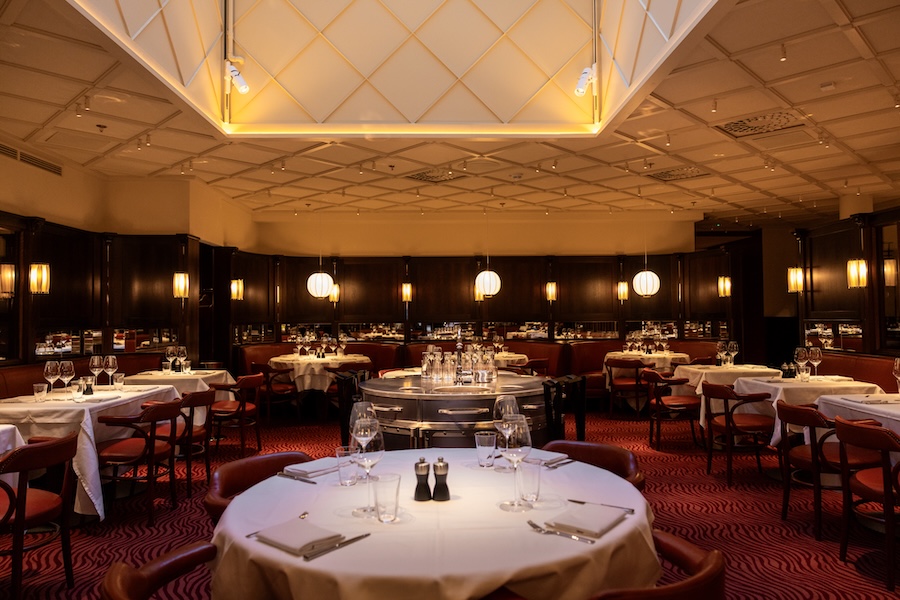
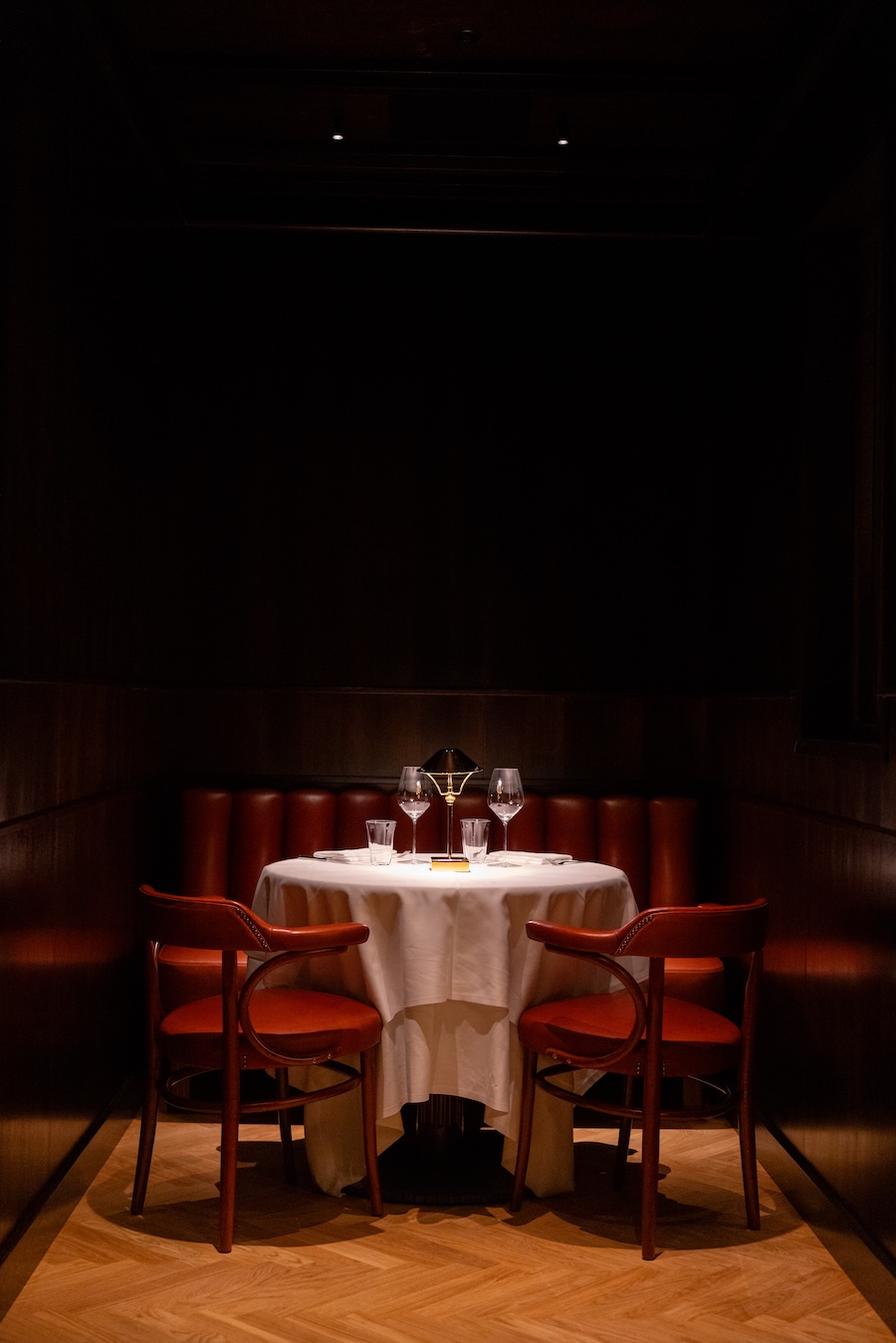
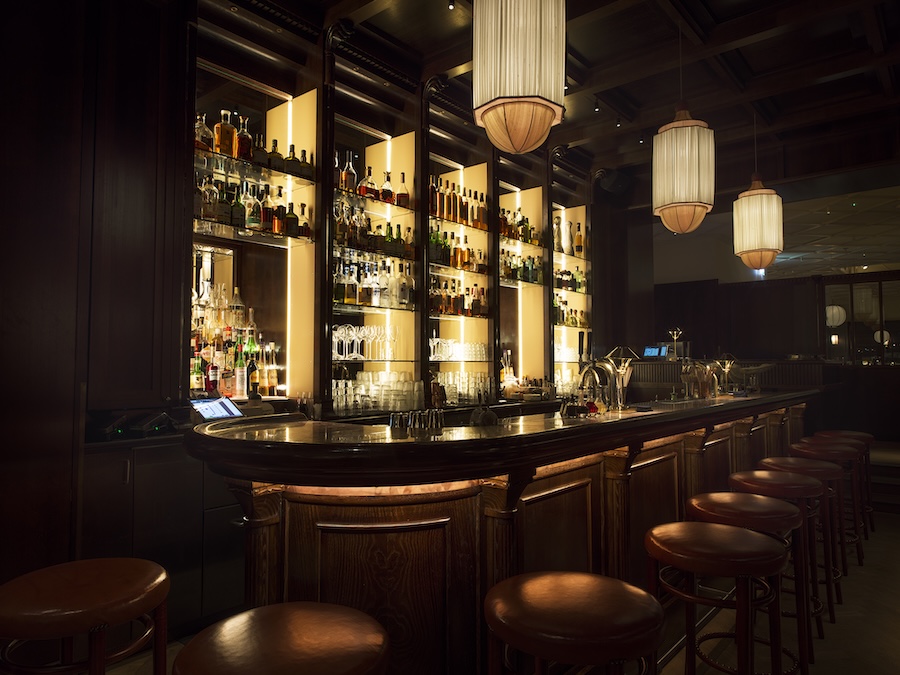
Stureplan is not merely a square. For decades it has been Stockholm’s symbol of wealth, momentum and status, a dense knot of nightclubs, bars and restaurants that forms the beating heart of the city after dark. It’s the kind of address where fortunes are spent and evenings begin, and it is almost strange that a restaurant like Sperling & Co did not exist here long before it did. When you step off the street and through its doors, something shifts. Stockholm stays outside. Inside, you have arrived somewhere that feels unmistakably like New York: wood-paneled walls, leather, starched linen, the glow of an open kitchen, and the particular electricity of a room full of people celebrating the fact of being alive.
At the center of it all stands a chef who reached the summit of one world and then, at the very moment of his triumph, chose to leap into another.
The Star, and the Leap
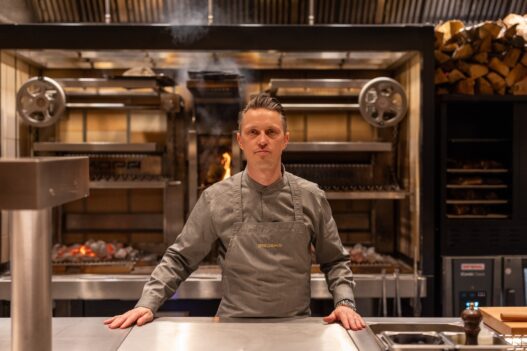
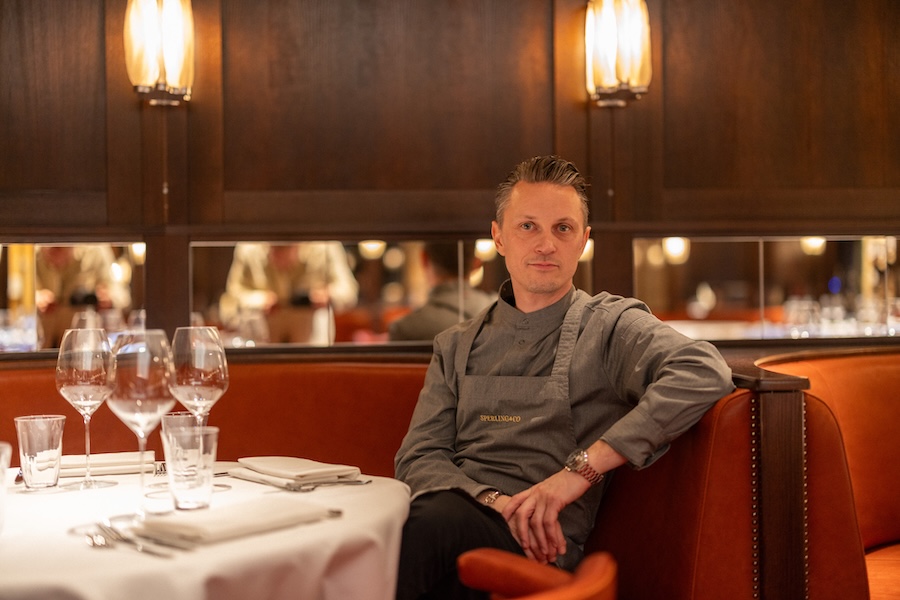
In 2024, Michael Andersson had the best year of his life, and it was chaos. At just thirty-six, he was helping steer Sweden’s representative through the Bocuse d’Or, coaching the junior culinary team, and, alongside his closest friend Ludwig Tjörnemo, building a Michelin-starred restaurant for a friend that earned its star inside ten months. In the middle of all this, half on a dare from that same friend, he entered the competition for Sweden’s Chef of the Year. He won. Årets Kock 2024, in his competition debut.
A chef who has just been crowned the best in his country does the expected thing: he consolidates, he opens his own fine-dining room, he chases the star that would be his and not someone else’s. Andersson did the opposite. Four months into his reign, someone asked whether he wanted to open a steakhouse. His friends thought he had lost his mind. No restaurant had ever survived in that location, they told him. A big room. Meat and fries and béarnaise. Guaranteed savaging from the critics. It was, they said, professional suicide.
He said yes without hesitation, and the reasoning is the key to the whole man. “Always do something you thought you’d never do,” he says. “You’ll learn so much, and you push your boundaries.” He had never worked with meat in this way. He had spent his life in love with Michelin. And precisely because it frightened him, he jumped into it. He traded the certainty of stars for the flying sparks of a birchwood grill but not to step down, but to find out how high he could lift a form that most chefs of his pedigree would consider beneath them.
The Long Road to the Fire
To understand why the gamble worked, you have to follow the road that led to it, because Andersson has cooked at every altitude there is.
He came to the kitchen late, at twenty, years behind the classmates who had started at sixteen, and he felt the deficit keenly. He began at Golden Peace, one of the oldest rooms in Stockholm, traditional Swedish cooking, where a head chef handed him not only technique but a whole philosophy of what a restaurant is: how you treat people, how hospitality carries everything, how loving the work is, in the end, the point. From there he chased Michelin with a convert’s zeal, into what was then the number one restaurant in Sweden: old-school, eighty to a hundred covers, lunch and dinner, short menu and long, a hard and beautiful school where he learned the mentality of the starred kitchen.
Then, one late night with a little too much wine in him, he fired off his CV to the three restaurants he dreamed of, Gordon Ramsay among them. Ramsay answered the next day. He moved to London knowing no one, lived in a hostel, and cooked at Royal Hospital Road under Clare Smyth, learning how hard a person can work and how fast. New York followed, two years running the kitchens of a Swedish café group across eighteen Manhattan sites, teaching Swedish cooking to cooks who had never encountered it, falling permanently in love with the city he still calls the best in the world. Home again, he cooked through the pandemic keeping a great old-school Stockholm institution alive with a skeleton crew, and then, against a lifelong vow never to compete, he spent two and a half years on the national culinary team, learning produce and technique at a ferocity he had never known, including a two-year collaboration with a farmer to raise a bigger, richer guinea fowl in time for the world final.
Bistros, cafés, Michelin rooms, competition kitchens, impossible kitchens. He has, by his own account, loved cooking in all of its forms: a sandwich in a café, a bolognese for friends, a steak over fire. It is a career that reads like a preparation, though he could not have known it, for a restaurant that would ask him to bring the highest discipline to the humblest pleasure.
Michelin in Its DNA
Sit in the dining room and you feel the inheritance immediately. When I dined there, what struck me was not spectacle but control: a kitchen moving with the calm of a starred brigade, everyone working hard and no one visibly stressed, the whole service running like choreography. “The sexiest restaurant there is,” Andersson tells his staff, “is the big place that works like a Michelin restaurant.” That is the standard he holds, and it’s why a steakhouse in a party neighbourhood carries the poise of somewhere far more rarefied.
He is candid that the star lives in him even here. “Michelin is very close to my heart,” he says, “and I cook in a specific kind of way.” But he is equally clear that he has deliberately set the level of surprise down, because the guest at a grill restaurant does not want fireworks from inside a chef’s head; they want the thing done, superbly, every time. He talks constantly about “the box”: not higher, never lower, always inside the same box, so that the guest receives the identical excellence on the tenth visit as on the first. It is a humbler ambition than the Michelin chase, and in some ways a harder one. Consistency, at this level, is its own kind of virtuosity.
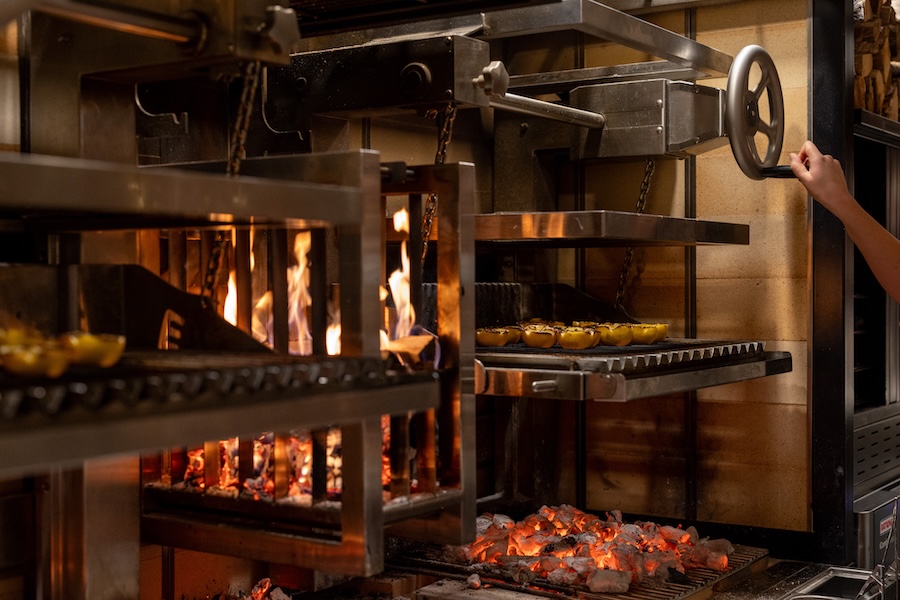
Fire, too, he approached with humility. He had never cooked meat this way, and rather than pretend otherwise he learned it alongside his cooks, all of them working out the method together before he began to turn and tweak: ease the oven fan so the meat rests more slowly at the same temperature, the thousand small adjustments a career of cooking in impossible kitchens had taught him. Fire here is not theatre for its own sake. It’s a tool of definition: crust, succulence, the integrity of the meat kept central.
Meat With a Pedigree
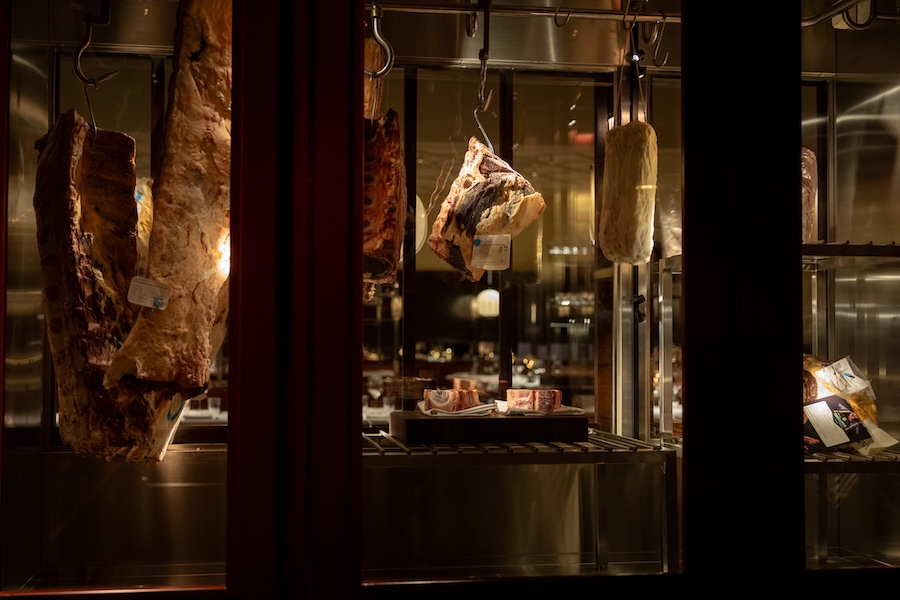
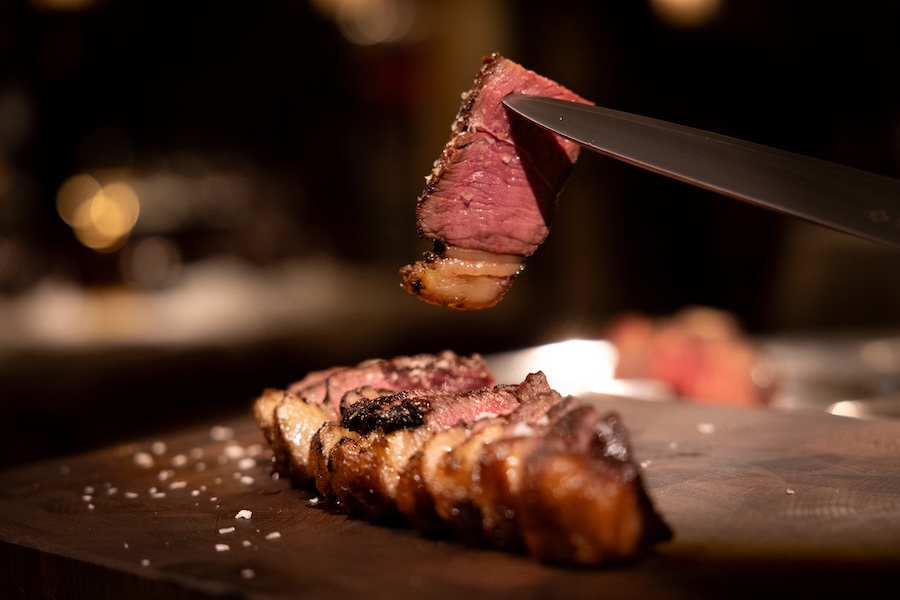
The seriousness begins with provenance. Sperling works with a chosen network of farms and producers, and every cut on the menu carries its papers: country, breed, days of dry-ageing, whether grass or grain. Nordic beef sits at the heart of it. Andersson’s own favorite, and many guests’, is the Swedish grass-fed entrecôte, but around it spreads a considered range that never becomes indiscriminate: presa from Iberico pigs raised on acorn, a Rubia Gallega chuletón dry-aged fifty days, a Black Angus club steak from Miguel Vergara, and the true jewels, a bone-in rib eye of Ito Kagoshima A5 Wagyu and a sirloin from Snake River in the United States. The cuts hang in glass cabinets facing the dining room like pieces of jewellery, a butcher’s answer to a Tiffany window.
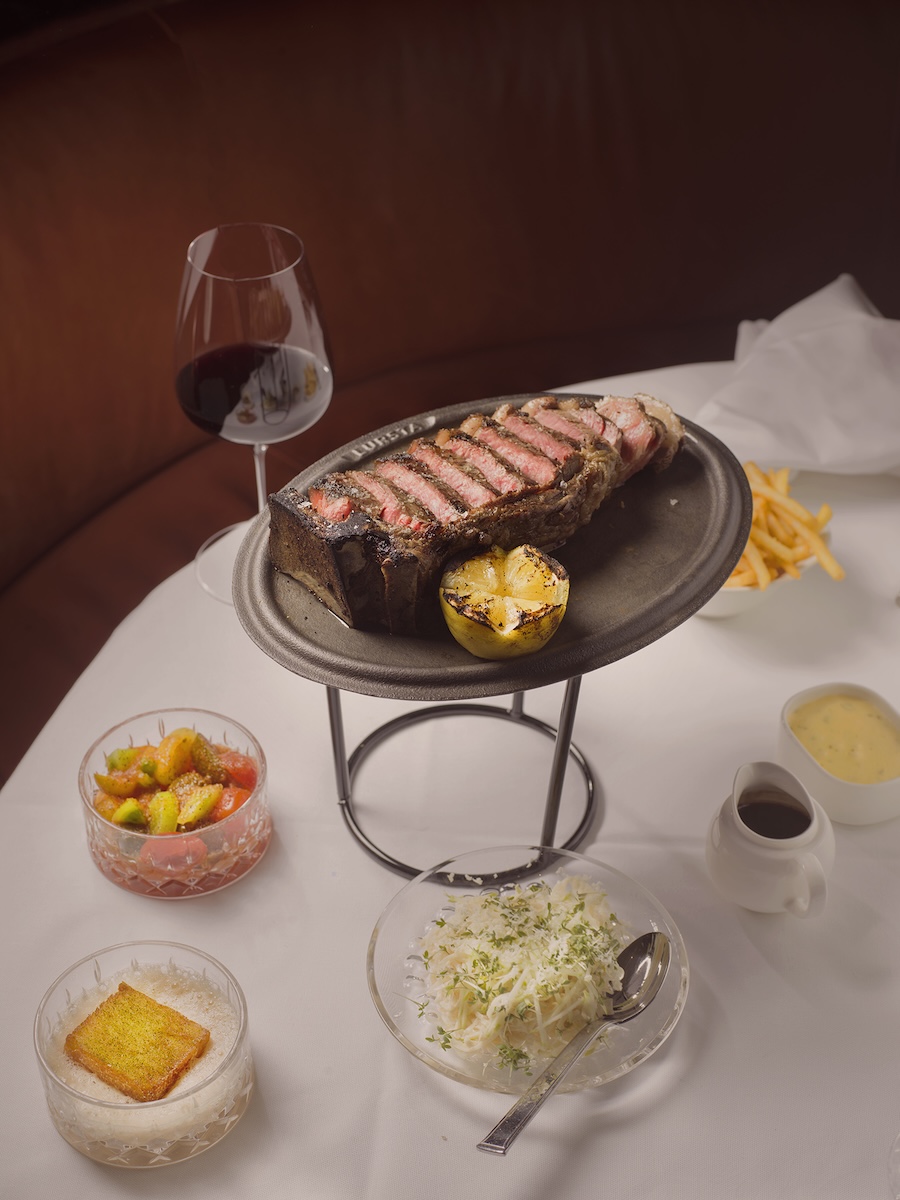
The grill is fed with burning logs of Swedish birch, and the beef is mostly dry-aged, treated with a discipline that lets depth and texture come forward on their own. The showpiece is Sperling’s own 900-gram T-bone, dry-aged twenty-eight days, served for two in two acts: first a lángos crowned with grilled beef tartare and wagyu cheek with caviar, then the steak itself grilled on the bone, with tallow-fried fries, green salad and béarnaise. It’s a piece of theatre with substance beneath it, and it points to a truth about this restaurant: Sperling is perhaps best enjoyed as a feast, in a group, which is why the kitchen has built its Butcher’s Choice and Noble Butcher’s Cut spreads for the table to share.
The Chef’s Hand, Everywhere
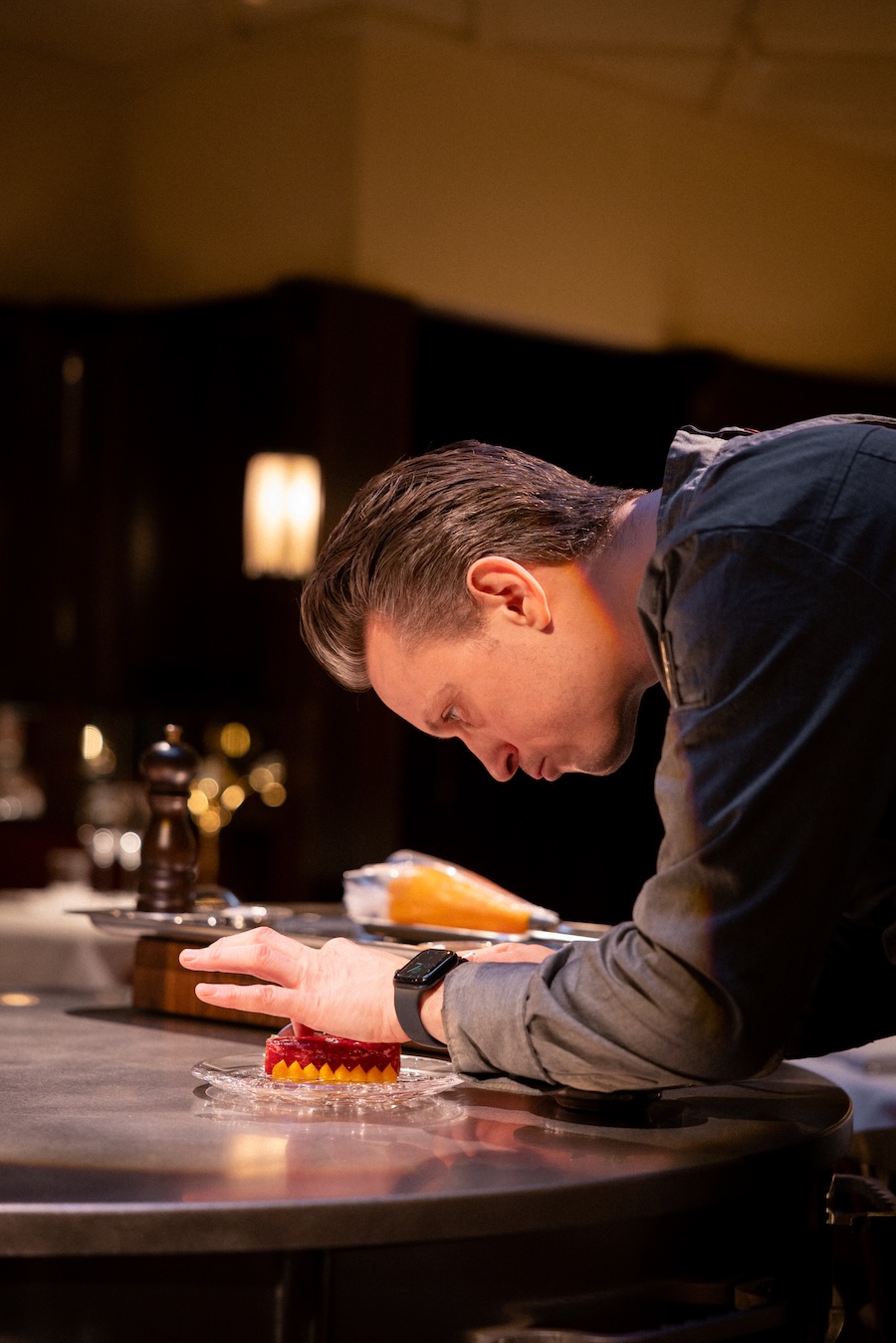
And yet the meat, for all its grandeur, is not where the Michelin hand shows most. It shows in the margins, in the parts a lesser steakhouse treats as an afterthought.
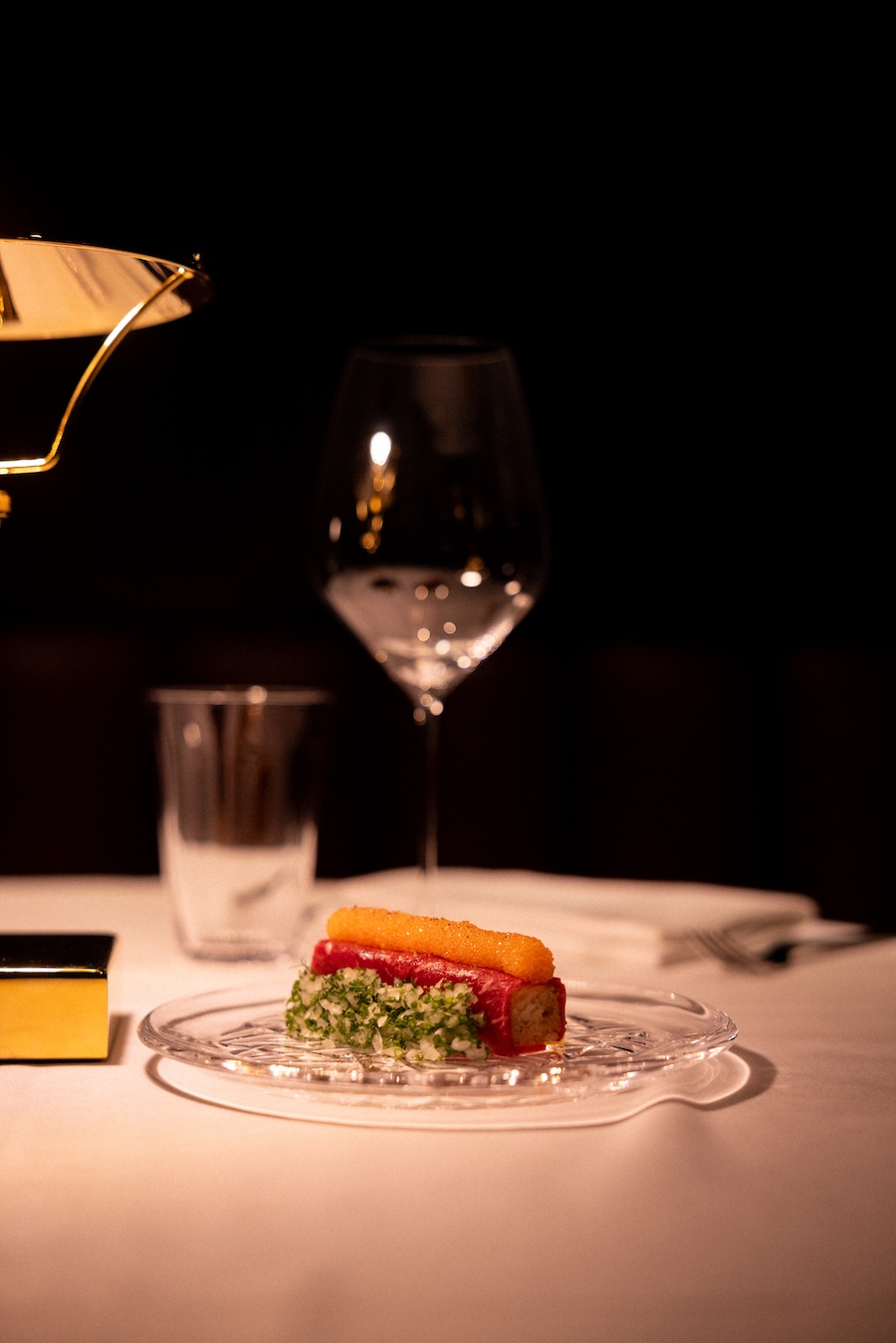
The starters are small marvels of restraint lifted by detail: a crudo of citrus-cured halibut with leche de tigre, cantaloupe and finger lime; a crab and lobster salad; the Beef Pelle Janzon with vendace roe, egg cream and butter-fried toast, a Swedish classic handled with real finesse. The side of lobster-and-harissa butter, Andersson’s own creation, built almost like a bouillabaisse, dreamed up after years of eyeing the lobster butters of New York steakhouses, is the kind of touch that makes you set down your fork and wonder whether you are, in fact, eating somewhere far above an ordinary grill. You are. Even the sauces are reduced to their essence, the vegetables treated with the same gravity as the steaks, the tallow fries and béarnaise executed as though they mattered as much as any Wagyu, because to this chef they do.
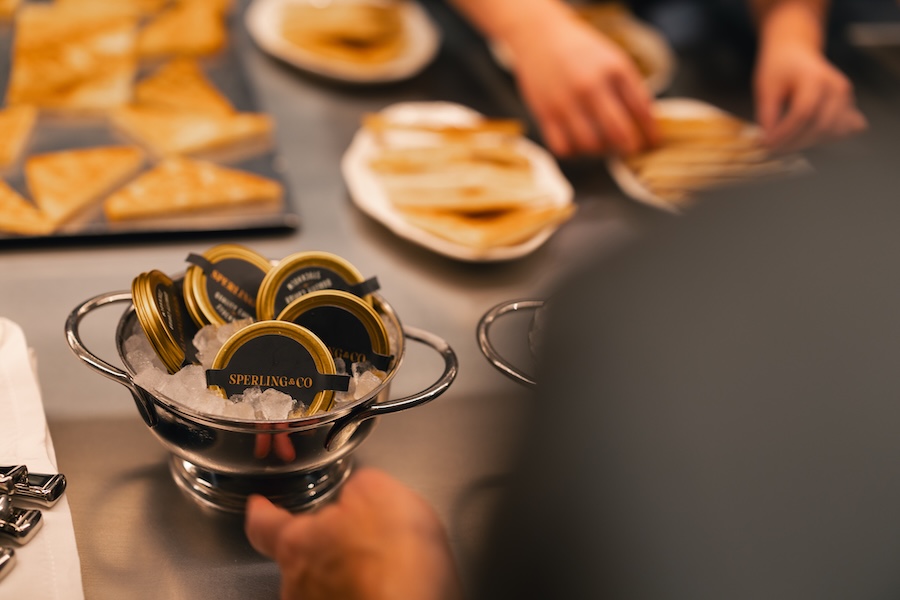
The desserts hold the line: A pavlova of real beauty, fresh and precise; a soufflé; a Coupe Colonel of Amalfi lemon sorbet and Absolut Elyx. The caviar service is generous, poured beside chilled vodka. And the wine is no accessory: the entrance corridor is lined with wine fridges, the list runs to nearly seventy pages, some thirty references by the glass, the iconic houses of Champagne, Bordeaux and Burgundy standing beside more personal, characterful bottles drawn from all over the world. Should you still want more when the plates are cleared, ask about the bar hidden behind a camouflaged door by the entrance, it’s a speakeasy in form, but a party in fact.
A New Institution, Already
The recognition came faster than he dared hope. Sperling opened in five months and, within weeks, entered The World’s 101 Best Steakhouses at No. 69. Andersson had quietly hoped merely to flirt with the top hundred a year later. The friends who called it suicide have gone silent; the room is full every night, thick with regulars who were already returning by the third week.
What he wanted, he says, was for Sperling to feel like an institution from the day it opened, as though it had already stood on Stureplan for ten years, and would stand for fifty more. His greatest fear is himself: that he will grow bored, or reach for something too radical, when the discipline of the concept demands he stay in the box. But he is not finished. “It doesn’t end here,” he says. “I have more I need to do.”
For now, what he has done is quietly radical in its own right. He took the finesse, the rigour and the obsession of the Michelin kitchen and poured them not into tweezered plates but into fire, fat, salt and beef, the most ancient and honest cooking there is. He gave up the stars, and kept everything the stars had taught him. And in doing so he proved that a steakhouse, in the right hands, can be as serious a temple as any tasting-menu room in the city.
He traded stars for sparks. On the evidence of Sperling & Co, he lost nothing in the exchange, and Stockholm gained a fire worth crossing town for.
Sperling & Co Sturegatan 6, Stureplan, Stockholm, Sweden