
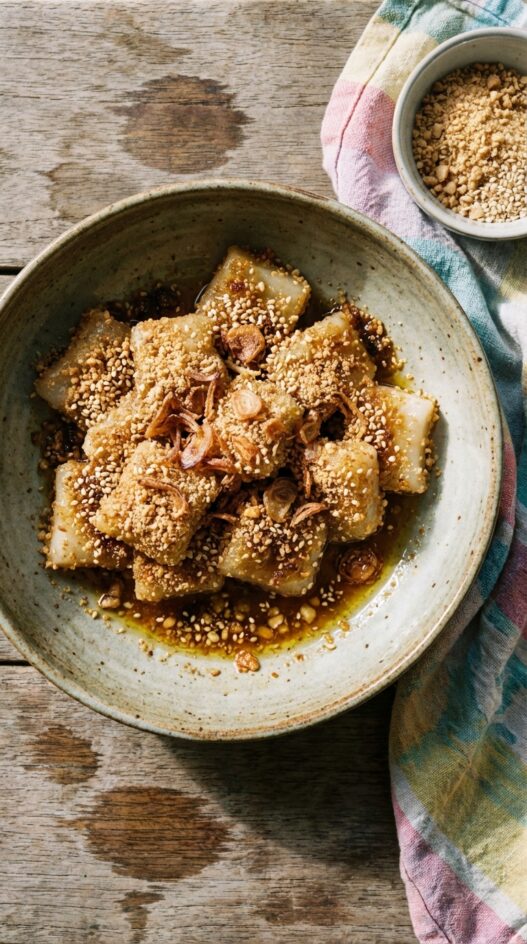
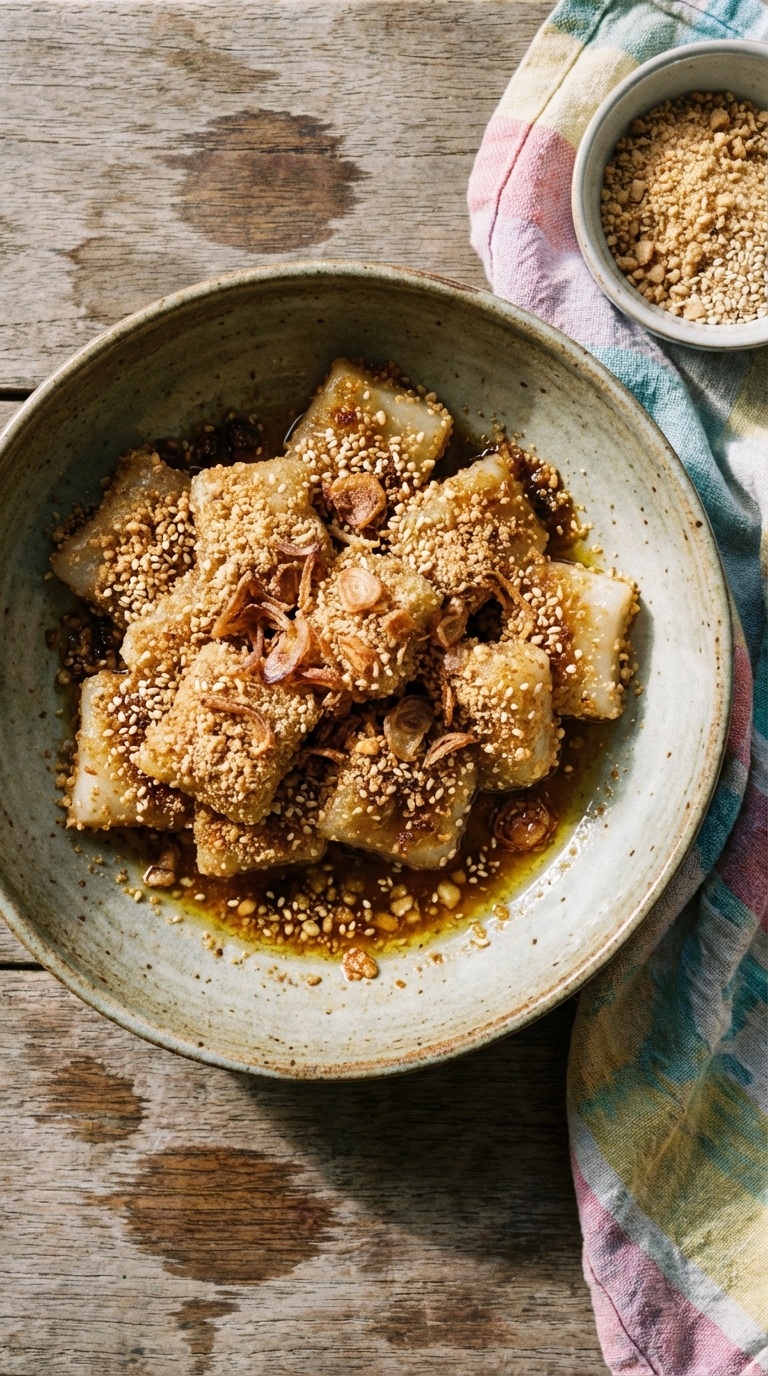
The first time I tried muar chee at a hawker stall in Penang, the vendor cut the steamed rice paste with scissors directly into a bowl of ground peanuts, palm sugar, sesame seeds, and butter. Each piece came out soft and stretchy on the inside, coated in a sweet, nutty crust. I ordered a second serving before I finished the first.
The paste starts as a batter of glutinous rice flour and tapioca flour mixed with water, poured into a greased tray, and steamed for ten minutes. When cooked, it is soft and very sticky. The shallots get fried in oil until crispy and go on top at the end.
Tips for Making Penang Muar Chee
Steam the batter until fully cooked through
Ten minutes over high heat. The batter should be translucent and firm when done. Undercooked batter is white in the center and gummy.
Grease the tray well with oil before pouring in the batter. The paste sticks to everything. Without oil, you will not get it out of the tray.
Prepare the peanut coating before steaming
Roast peanuts until fragrant, remove skins, and grind finely. Mix with palm sugar, toasted sesame seeds, and butter in a deep plate.
Have this ready before the rice paste is done. You need to cut and coat the pieces while the paste is still warm and sticky enough to hold the coating.
Penang Muar Chee: Sticky Rice Balls with Peanuts
- Total Time: 35 minutes
- Yield: Makes 12
- Diet: Omnivore, Gluten-Free
Description
Sticky rice balls coated in a sweet peanut mixture. A fun, unique Southeast Asian snack!
Ingredients
- 2 cups (270 g) Glutinous Rice Flour
- 2 tablespoons Tapioca Flour
- 1 1/2 cups (375 ml) Water
- Cooking Oil
- 1 Shallot
- 4 oz (100 g) Peanuts
- 2 tablespoons Pure Palm Sugar
- 1 tablespoon White Sesame Seeds
- 1 teaspoon Butter
Instructions
- Lightly dry roast sesame seeds and peanuts in a pan or oven until fragrant.
- Remove peanut skins and finely grind the peanuts using a food processor.
- Heat a wok with 1 tablespoon of oil over medium heat and fry shallots until crispy.
- Combine glutinous rice flour and tapioca flour with water to form a batter.
- Transfer the batter to a greased small tray or heatproof plate.
- Add water to the wok to steam the batter over high heat for 10 minutes, or until the glutinous rice paste is cooked through.
- In a deep plate, mix the ground roasted peanuts, sugar, sesame seeds, and butter.
- Cut a small piece of the rice paste, drop it into the peanut mixture, and cut into smaller pieces. Coat well with the mixture, and serve immediately with fried shallot crisps.
Notes
- For a smoother peanut mixture, use a high-powered blender or food processor.
- If the batter is too thick, add a tablespoon of water at a time until it reaches a pourable consistency.
- Store leftover Penang Muar Chee in an airtight container in the refrigerator for up to 2 days; it may become slightly less sticky.
- Prep Time: 20 minutes
- Cook Time: 15 minutes
- Category: Side Dish
- Method: Steaming
- Cuisine: Malaysian
Nutrition
- Serving Size: 3-4 balls
- Calories: 250
- Sugar: 15
- Sodium: 50
- Fat: 15
- Saturated Fat: 5
- Unsaturated Fat: 10
- Carbohydrates: 35
- Fiber: 2
- Protein: 5
- Cholesterol: 10
Frequently Asked Questions
What is glutinous rice flour?
Flour ground from sticky rice. It produces a chewy, stretchy texture when cooked, unlike regular rice flour which is more brittle. Available at Asian grocery stores. Do not substitute with regular rice flour.
What is palm sugar?
Unrefined sugar made from palm tree sap. It has a deep, caramel-like sweetness with a slight smokiness. Sold in discs, blocks, or granules at Asian grocery stores. Dark brown sugar is the closest substitute.
Can I make this ahead?
Muar chee is best eaten fresh and warm. It hardens as it cools and loses its stretchy texture. If you must, cover and store at room temperature for a few hours. Do not refrigerate.
If You Liked This Recipe, You’ll Love These
- Candy Corn and Salted Peanut Rice Krispie Treats
- Fudgy Peanut Butter Rice Krispie Treats
- Peanut Butter and Jelly Crispy Brown Rice Bars
- Spicy Peanut and Pumpkin Rice Noodle Soup


So addictive!
Where do you find glutinous rice flour for these?
Any Asian grocer, usually a green and white bag marked glutinous or sweet rice flour. It is not the same thing as ordinary rice flour, so check the label.
Mine turned sticky, less water next time. Thanks for the tip.