
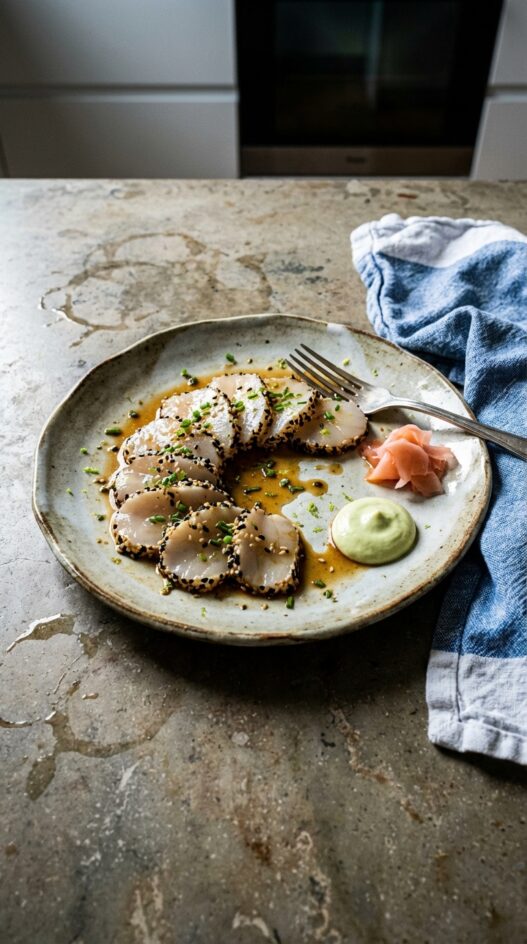
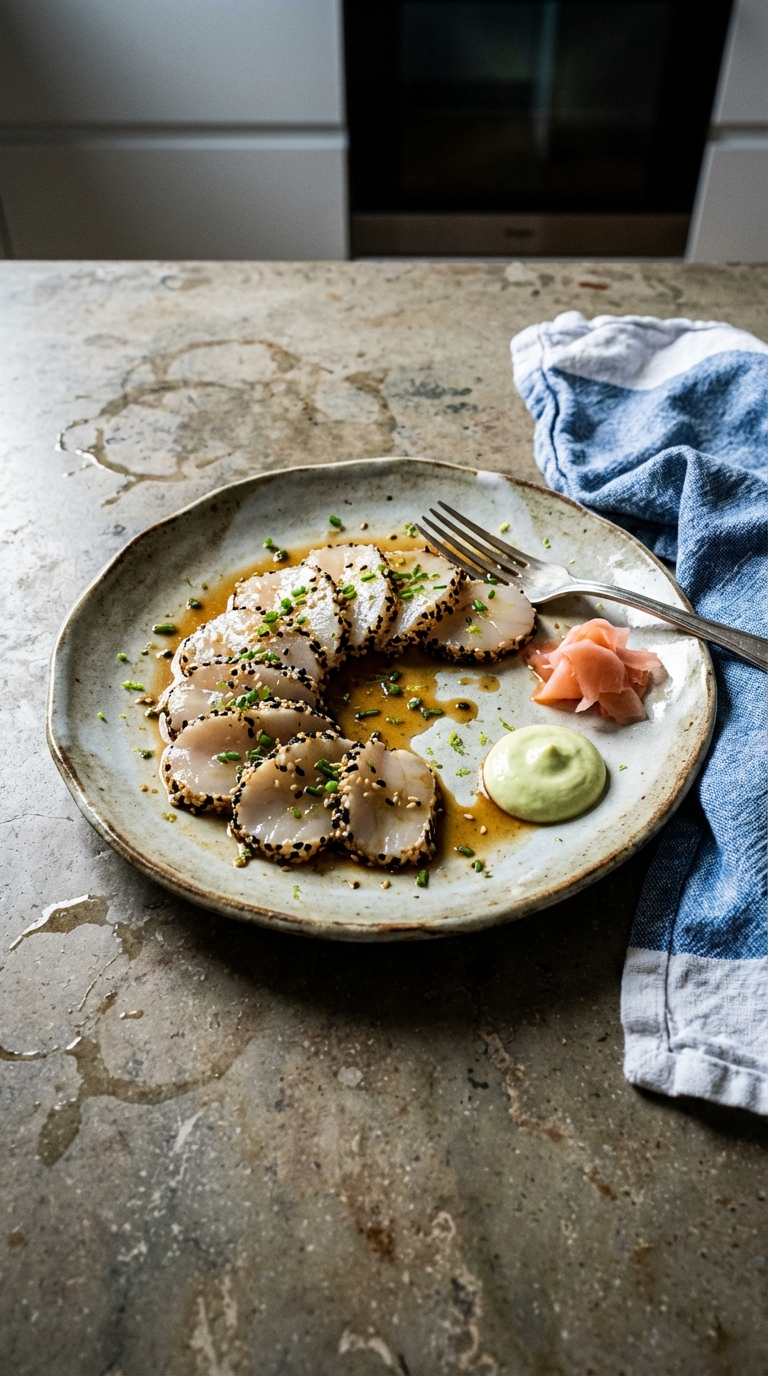
Scallop tataki is a dishes that looks genuinely impressive on a plate, and I love that about it. So good. The sesame crust, the nearly-raw center, the wasabi mayo dotted alongside pickled ginger: it photographs well and it tastes even better. Thirty seconds per side in a screaming hot pan is all you need. Get that part right and the rest is just assembly. Fresh large scallops are essential here; small ones overcook before the crust has time to form.
How to Make Scallop Tataki
Chill the scallops before searing
Wrapping each sesame-coated scallop tightly in clingfilm and refrigerating for 45 minutes firms them up so the sesame shell holds during searing. It also helps keep the center cool and nearly raw while the outside gets color fast.
The dipping sauce balance
Soy, lime juice, sugar, and sesame oil: taste it before serving and adjust the lime if needed. It should be sharp enough to cut from the the mayonnaise. Don’t make it too sweet; the wasabi mayo already carries some sweetness from the mayonnaise base.
Scallop Tataki
- Total Time: 17 minutes
- Yield: Serves 4
- Diet: Omnivore, Pescatarian
Description
Nearly raw scallops get a quick sear, then a flavorful sauce.
Perfect for a light appetizer or elegant starter.
Ingredients
- 6 large scallops (8 if you want to make it a bit more substantial)
- 3-4 tbsp sesame seeds (black and/or white)
- 2 tsp wasabi
- 6 tsp good mayonnaise
- 1 tbsp (15 ml) lime zest
- 1 tbsp (15 ml) chopped chives
- 1 tbsp (15 ml) soy sauce
- 1 tbsp (15 ml) lime juice
- 1 tbsp (15 ml) sugar
- 0.5 tsp sesame oil
- Pickled sushi ginger
- Sunflower or vegetable oil
Instructions
- Roll each scallop in the sesame seeds until coated.
- Wrap each scallop tightly in clingfilm and chill in the fridge for 45 minutes.
- Spray a frying pan with a little oil and put it on a high heat.
- Once the pan is very hot, cook each scallop for 30 seconds, turning it constantly with tongs to sear it all over on the outside while keeping it nearly raw inside.
- Put the scallops on a plate and put in the freezer for 15 minutes (to stop them cooking further).
- Mix the wasabi and mayonnaise together in a bowl.
- Mix the lime zest and chive together in a bowl.
- Mix the soy sauce, lime juice, sugar, and sesame oil together in a saucepan and heat gently on a low heat to combine.
- Slice each scallop into 4-6 thin circular slices.
- Divide the scallop slices between four plates, fanning them out.
- Drizzle a teaspoon or two of the soy-lime sauce over the scallop slices.
- Sprinkle the scallop slices with the mixed chive and lime zest, and serve with some sushi ginger and a dollop of the wasabi mayonnaise.
Notes
- For perfectly seared scallops, ensure your pan is screaming hot before adding them. Use high heat and tongs for even cooking.
- To adjust the spice level, reduce or increase the amount of wasabi in the mayonnaise mixture.
- Leftover scallops and sauce can be stored separately in airtight containers in the refrigerator for up to 2 days.
- Prep Time: 15 minutes
- Cook Time: 2 minutes
- Category: Appetizer
- Method: Searing
- Cuisine: Japanese
Nutrition
- Serving Size: 6 scallops
- Calories: 150
- Sugar: 5
- Sodium: 200
- Fat: 10
- Saturated Fat: 2
- Unsaturated Fat: 7
- Carbohydrates: 5
- Fiber: 1
- Protein: 15
- Cholesterol: 100
Frequently Asked Questions
Can I use frozen scallops for tataki?
You can, but thaw them slowly in the refrigerator overnight and pat them very dry before coating. Fresh scallops will give you a better texture since the center stays raw.
Why do the scallops go in the freezer after searing?
The freezer stops the residual heat from cooking the inside further. You want only a thin seared crust with a raw, cool center. Fifteen minutes is enough.
What can I substitute for wasabi in the mayo?
A small amount of prepared horseradish or hot mustard will give a similar sinus-clearing heat. Adjust the quantity to your taste and mix well with the mayonnaise.

Hi Jess,
I made this dish for dinner tonight. While the taste was quite nice (especially with the Mayo/Wasabi sauce) I found the scallops really awkward to sear with the sesame seeds covering them. Not only did they make it hard to cook the surface of the scallops, but a lot of them fell off onto the pan, burned, and popped all over the place, leaving quite a mess and a smoky kitchen. If you have any tips on how to avoid that situation in the future I would greatly appreciate it.
Above all, thank you for the recipe.