
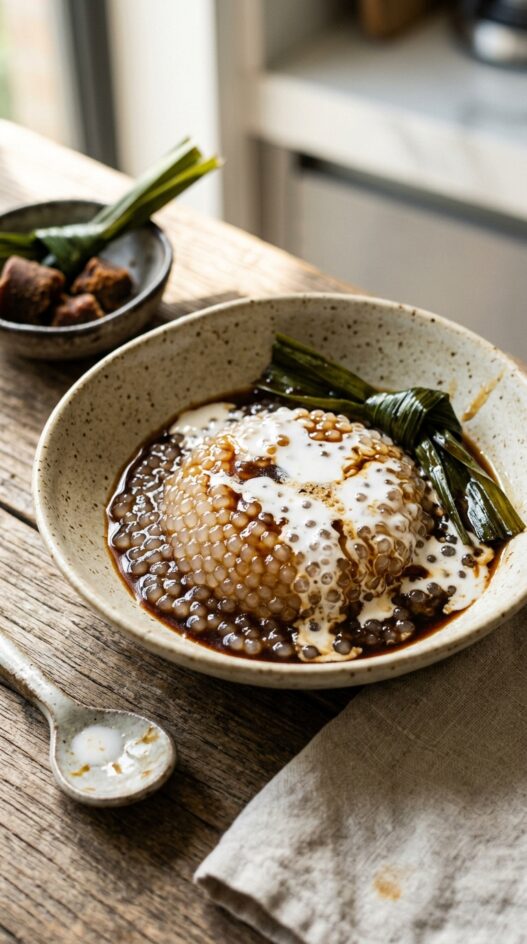
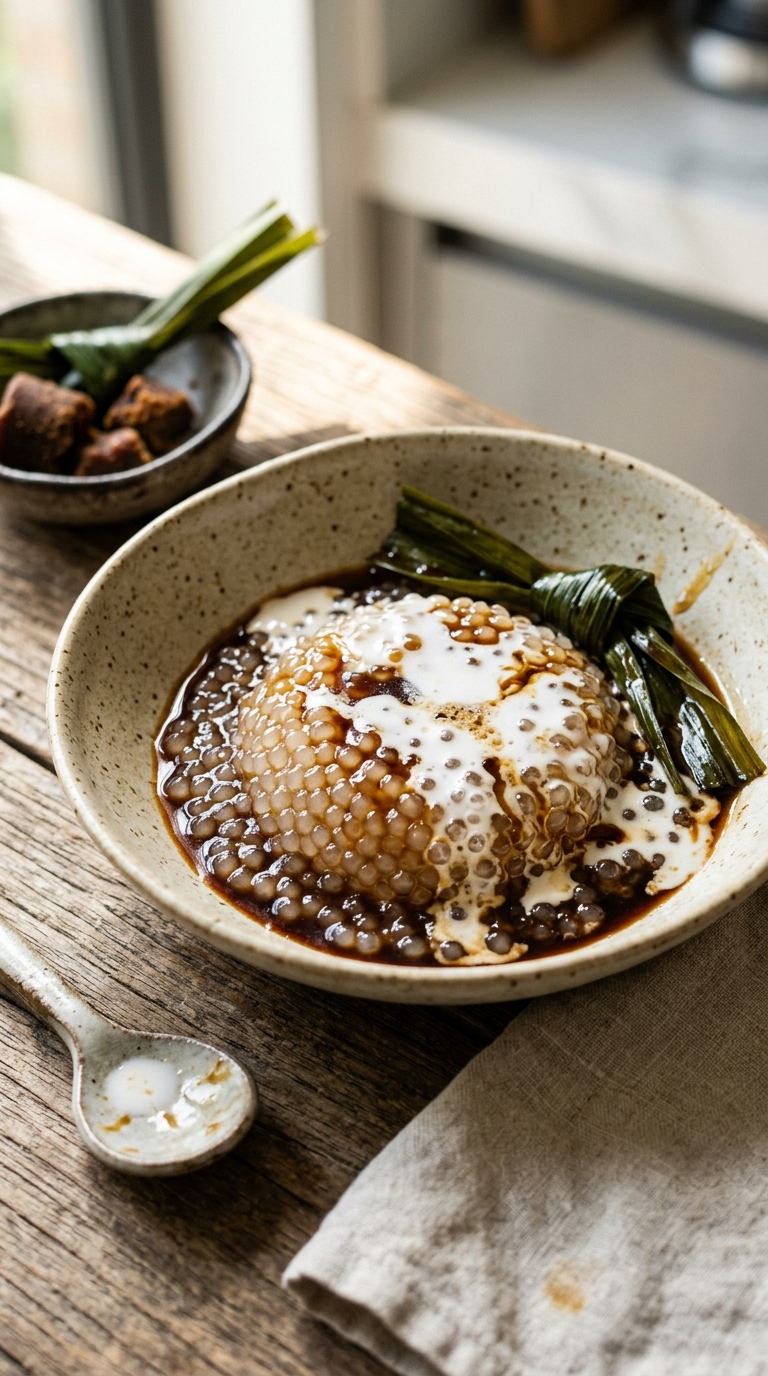
The insipid sago pearls when drenched with creamy coconut milk and rich sweet flavour of palm sugar syrup becomes a wonderfully rich dessert you want to tuck into over and over again.
Both sago pearls and gula melaka (palm sugar) are common ingredients in making Malaysian dessert. Sago is a form of starch extracted from the pith of sago palm stems which are commercially produced in the shape of ‘pearls’. These pearls take the form of dry opaque balls not more than 2 mm in diameter and are commonly used in desserts.
Gula Melaka is palm sugar which is extracted from the sap of the flower bud of a coconut tree which then boiled until thickened and packed into bamboo tubes forming its cylindrical shape. It has richer flavour and the colour is darker than Thai palm sugar and Indian palm jaggery.
Sago reminded me of my trip to Monsopiad Cultural Village, a traditional village of Kadazandusun people of Sabah Borneo. We were shown how to scrap the sago tree sap on nails to produce the sago powder. Besides sago, the tree produces another Kadazan delicacy.. Sago worms! These worms are nutritious protein supplements for the Kadazans, the worms are usually eaten alive or grilled. Eewwww factor to the max! No way I will try! As part of the Malaysian culture, how could I not share this story? :P
Now back to the dessert.. It’s handy to have a few glasses Sago Gula Melaka in the fridge during scorching days like this. Ah.. what a perfect sweet treat to cool myself down at the end of the day.
Print
Sago Gula Melaka (Sago Pudding with Palm Sugar)
- Total Time: 20 minutes
- Yield: 4 servings
Description
A wonderfully rich Malaysian dessert featuring sago pearls drenched in creamy coconut milk and sweet palm sugar syrup.
Ingredients
- 200g Sago Pearls
- 200g Gula Melaka (Palm Sugar)
- 250ml Coconut Milk
- 1 Pandan Leaf (Screwpine Leaf) - shred with a fork & tie into a knot
- 700ml + 2 tbsp Water
- A pinch of Salt
Instructions
- Bring 700ml of water to a boil in a medium pot. Add the sago pearls and cook for about 10 minutes, stirring constantly, until the sago pearls become translucent and there is no white dot in the middle.
- Once cooked, strain the sago pearls using a fine sieve and rinse under cold running water to remove excess starch. Set aside.
- In a separate pot, combine the palm sugar, pandan leaf, and 2 tbsp of water. Cook over low heat until the sugar is completely dissolved and the mixture thickens slightly. Remove the pandan leaf and set the syrup aside.
- In another pot, heat the coconut milk with a pinch of salt over low heat. Stir occasionally and do not let it boil. Remove from heat once warmed through.
- To serve, spoon the sago pearls into serving bowls, drizzle with palm sugar syrup, and top with warm coconut milk. Serve immediately.
Notes
- Sago Gula Melaka can be stored in the fridge for a few days, making it a convenient treat for hot days.
- Ensure the sago pearls are rinsed thoroughly to remove excess starch.
- If you can’t find pandan leaves, you can omit them, but they add a unique fragrance.
- Serve the dessert chilled or at room temperature for a refreshing treat.
- Prep Time: 5 minutes
- Cook Time: 15 minutes
- Category: Dessert
- Cuisine: Asian
Nutrition
- Serving Size: 1 serving
- Calories: 250
- Sugar: 30
- Sodium: 50
- Fat: 6
- Carbohydrates: 55
- Fiber: 1
- Protein: 2
- Cholesterol: 0
If You Liked This Recipe, You’ll Love These
- Plum and Sago Pots
- Dragon Fruit Jellies with Agar Agar
- Bubur Kacang Hijau
- Kuih Lapis – Malaysian Steamed Layer Cake
Frequently Asked Questions
What is gula melaka and how is it different from regular palm sugar?
Gula melaka is Malaysian palm sugar made from the sap of coconut tree flower buds, boiled until thick, and packed into bamboo tubes that give it its cylindrical shape. It has a richer flavor and darker color than Thai palm sugar and Indian palm jaggery.
How do you know when the sago pearls are fully cooked?
Cook the 200g of sago pearls in 700ml of boiling water for about 10 minutes, stirring constantly. They are ready when they turn completely translucent with no white dot remaining in the center. Rinse them under cold running water after straining to remove excess starch.
What does the pandan leaf do, and can it be skipped?
I tie the pandan leaf (screwpine leaf) into a knot and cook it with the gula melaka and water to infuse its distinctive fragrance into the palm sugar syrup. You can omit it if unavailable, but it adds a unique aroma that’s characteristic of traditional Malaysian desserts.
Can Sago Gula Melaka be made ahead and stored?
Yes — it keeps in the fridge for a few days, and I actually love having a few glasses in the fridge during scorching days. Serve it chilled or at room temperature.



This was my favorite dessert at a Malaysian restaurant where I used to live. I’d love to make it at home! How important is the pandan leaf? Not sure I can get one…
Thanks for the recipe. The pics are beautiful!
Pandan Leaf is optional, it adds a nice fragrant to the coconut milk. It might not be available at some Asian stores, so you can omit pandan leaf when heating the milk. Now you can enjoy this easy yet delicious sweet treat in the comfort of your home