
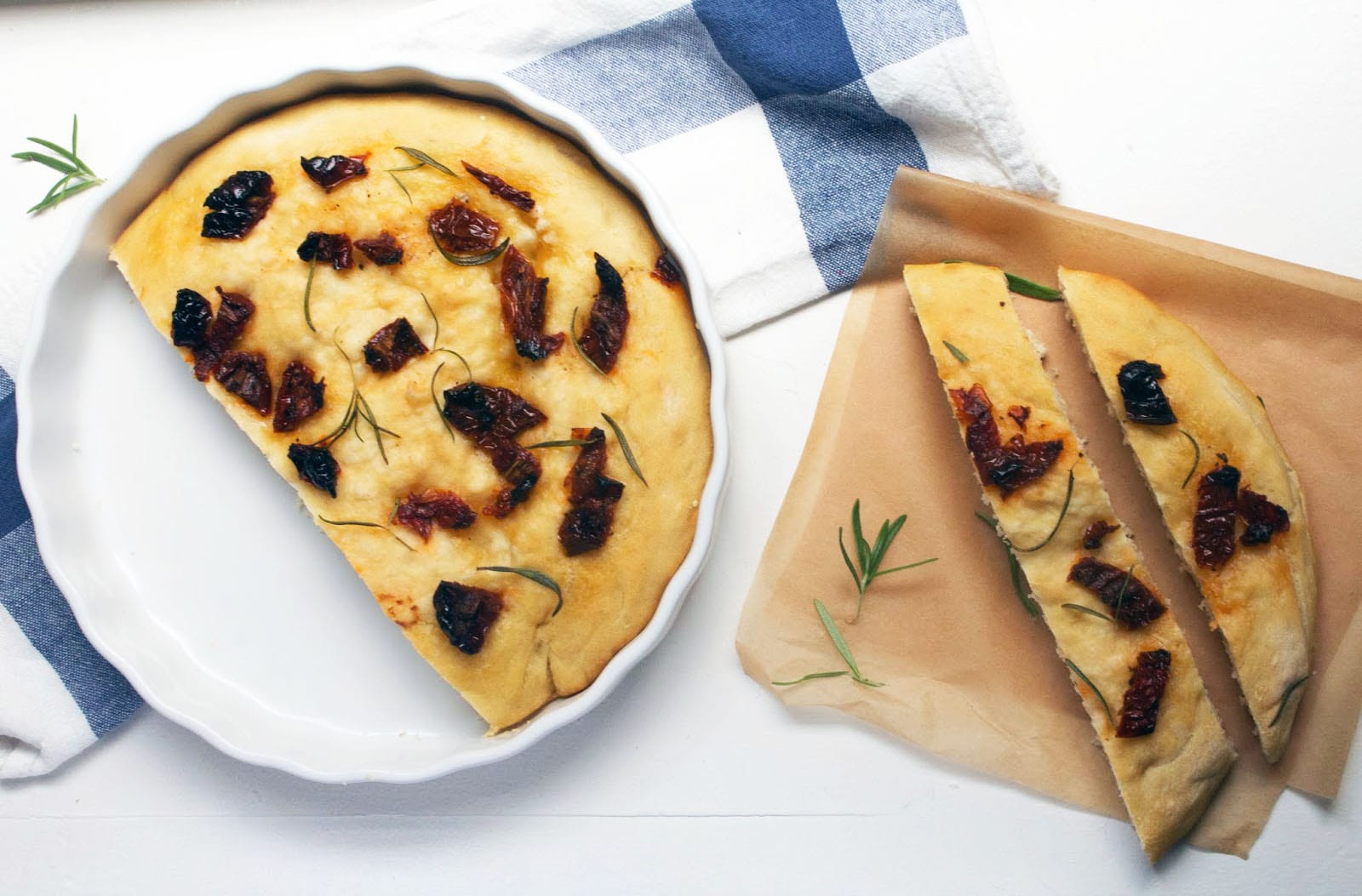

Rosemary and Sundried Tomato Focaccia
- Total Time: 1 hour 50 mins
- Yield: 2 focaccia
Description
The trick here, as with any focaccia, is to use the highest quality olive oil that you can find.
Ingredients
Units
- 500g flour
- 350ml warm water
- 7g dry yeast
- olive oil
- salt
- rosemary
- sundried tomatoe with olive oil
Instructions
- Whisk the flour, and salt. Add the dry yeast. Start pouring the water and a generous drizzle of olive oil, while constantly stirring with a fork.
- Place the dough to the floured working surface and start kneading for, at least, five minutes until it is soft, flexible and completely homogeneous.
- Let it raise for at least one hour and half or two hours, in a dry, warm place.
- Once risen, knead the douhg twice, just to relearse some of the air. Now, preheat the oven at 200º.
- Place the dough to the baking sheet or the recipient you have choosen. Flatten the dought to the baking sheet, pushing to the corners.
- Let it rise for 20 or 30 minutes, while the oven preheats. Before baking, push the dough with your fingers as if you wanted to make some holes but without breaking the dough, drizzle them with olive oil and sprinkle the sundried tomatoes and rosemary.
- Bake for 20 minutes, ur until golden brown. Enjoy!
- Prep Time: 1 hour 30 mins
- Cook Time: 20 mins
- Category: Baking
- Cuisine: Italian
Nutrition
- Serving Size: 1 slice
- Calories: 210
If You Liked This Recipe, You’ll Love These
- Rosemary Garlic Challah Bread
- Soft and Fluffy Sourdough Sandwich Loaf
- How to Make “Lussekatter”: Traditional Swedish Lucia Buns
- Jalapeño Cheddar Cornbread Recipe
Frequently Asked Questions
Why does the excerpt emphasize using the highest-quality olive oil?
Olive oil is the primary fat in this focaccia—it goes into the dough, coats the pan, and is drizzled over the top before baking. A fruity, high-quality extra-virgin olive oil contributes a pronounced flavor that budget oils lack, since the bread has no butter or other fat to mask it.
Why does the dough need two rises—one after kneading and one after shaping?
The first 1.5–2 hour bulk fermentation allows the yeast to fully develop and the gluten to relax. The second 20–30 minute rest after shaping onto the baking sheet lets the flattened dough recover before the dimpling and baking steps, resulting in a lighter, more open crumb.




Can you give recipe in cups ,tablespoons so I can make it? Thanks