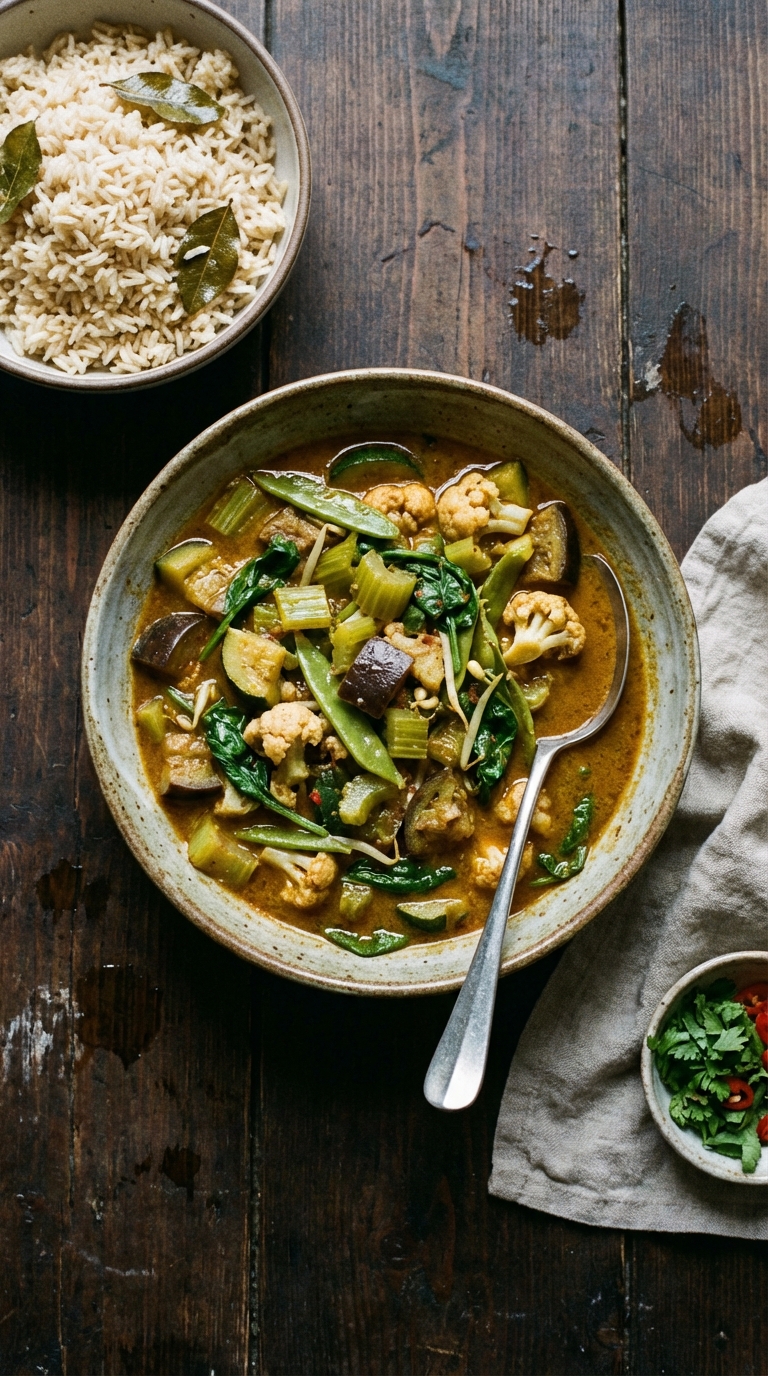
I owe this one to my mother, who repeated the recipe off the top of her head because she’s a bit of a pro in the kitchen! She has always loved cooking a variation of traditional cultural dishes and has friends from every continent in the world who have taught her their favourite meals from their country of origin and vice-versa. It’s these kinds of dishes that I love to indulge in because they really are the perfect example of where healthy meets delicious.
Aside from creating healthy and nourishing food, what excites my palette the most is the sharing and learning culture of food. There can never be a dull moment in the kitchen if what you create is always new – there are endless choices of different herbs and spices and combinations of flavours!
Don’t be put off by the long list of ingredients here, nor whether you have the exact same ingredients to match what the recipe calls for! The bulk of the list is just being added to your blender – and with regards to the ingredients, all you have to do is keep tasting along the way until your happy with your result, then add your coconut milk and your pretty much there!
Red Thai Vegetable Curry
- Total Time: 30 minutes
- Yield: 4 servings
- Diet: Vegan
Description
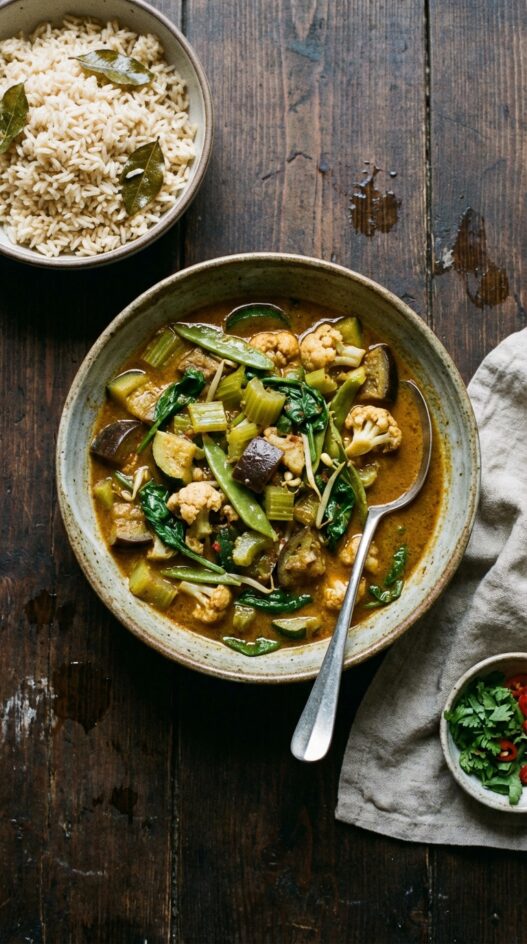
This vibrant and aromatic curry is packed with fresh vegetables and simmered in a rich, homemade coconut-chili paste. Serve over fluffy basmati rice for a comforting and wholesome meal.
Ingredients
- Brown basmati rice
- 5 dried lime leaves (optional)
- Pinch Himalayan salt
- 1 medium onion
- 2 garlic cloves
- 1 large red pepper
- 1 tablespoon (15ml) red tomato paste (or 200ml / 6.8 fl oz tinned tomato)
- 2 red chillies (or 7 pieces dried cayenne chillies)
- Bunch fresh coriander (or 15 stalks fresh dill)
- 1 inch (2.5cm) fresh lemongrass (or dried)
- 1 inch (2.5cm) fresh ginger
- 1 tablespoon (15ml) coconut sugar
- black pepper (to taste)
- Coconut milk (about 600ml / 20.3 fl oz or more)
- 1 tablespoon (15ml) coconut oil
Vegetables
- 1/2 large aubergine (250g / 8.8 oz)
- 1 courgette (250g / 8.8 oz)
- 1/2 celery stick
- 3 small cauliflower heads (360g / 12.7 oz)
- 5 long flat green bean sprouts
- 2 Handfuls spinach
Instructions
- Place your brown basmati rice in a saucepan with cold water, salt, and lime leaves. Fill water only a 1/2 inch (1.3 cm) above the rice.
- Bring to a boil.
- Lower the heat, cover the lid, and allow to simmer for 15 minutes.
- In the meantime, place all the ingredients for your curry paste (onion, garlic cloves, red pepper, red tomato paste or tinned tomato, red chillies or dried cayenne chillies, fresh coriander or fresh dill, fresh lemongrass or dried, fresh ginger, coconut sugar, black pepper) in your blender and process until smooth. Taste and adjust seasoning to your desire. You want the spice to be extra hot because once it’s heated on the stove with coconut milk, this will reduce.
- Chop all your vegetables (aubergine, courgette, celery stick, cauliflower heads, long flat green bean sprouts, spinach) into small chunks.
- Warm a large pan with your coconut oil.
- Add your curry paste and simmer until hot.
- Add your vegetables and stir.
- Add your coconut milk.
- Cover and simmer on a low heat for 5 minutes, allowing the vegetables to cook.
- Check rice, strain, and place in a serving bowl.
- Once your vegetables have cooked through in the sauce, take off the heat and serve in a large bowl.
- Enjoy!
Notes
- Fill the water only a 1/2 inch above the rice when cooking to ensure proper absorption and texture.
- Blend the curry paste ingredients until smooth and aim for an extra hot spice level, as the heat will reduce when cooked with coconut milk.
- Chop all vegetables into small chunks to ensure they cook evenly and are tender after simmering in the coconut milk for 5 minutes.
- Prep Time: 20 minutes
- Cook Time: 10 minutes
- Category: Main Course
- Method: Simmering
- Cuisine: Thai
Nutrition
- Serving Size: 500g
- Calories: 500
- Sugar: 10
- Sodium: 400
- Fat: 22
- Saturated Fat: 15
- Unsaturated Fat: 6
- Carbohydrates: 70
- Fiber: 10
- Protein: 12
Frequently Asked Questions
What type of coconut milk should I use for the Red Thai Vegetable Curry?
You should use full-fat coconut milk for a creamier texture, but light coconut milk can be used if you’re looking for a lower-fat option.
Can I substitute the vegetables in the curry with what I have on hand?
Absolutely! Feel free to swap in your favorite vegetables; just keep in mind that cooking times may vary for different types.
How do I adjust the spice level in the Red Thai Vegetable Curry?
You can control the heat by adding more or less red curry paste; taste as you go to find your preferred level of spiciness.