
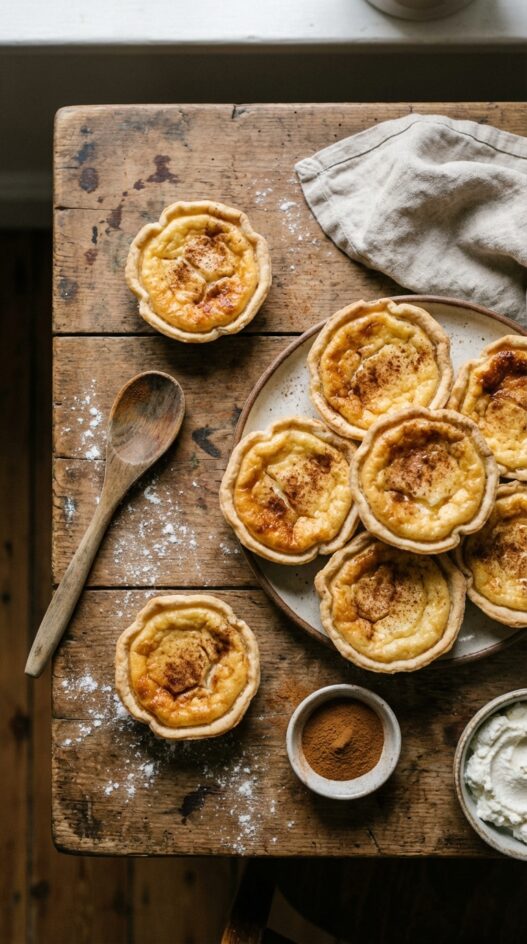
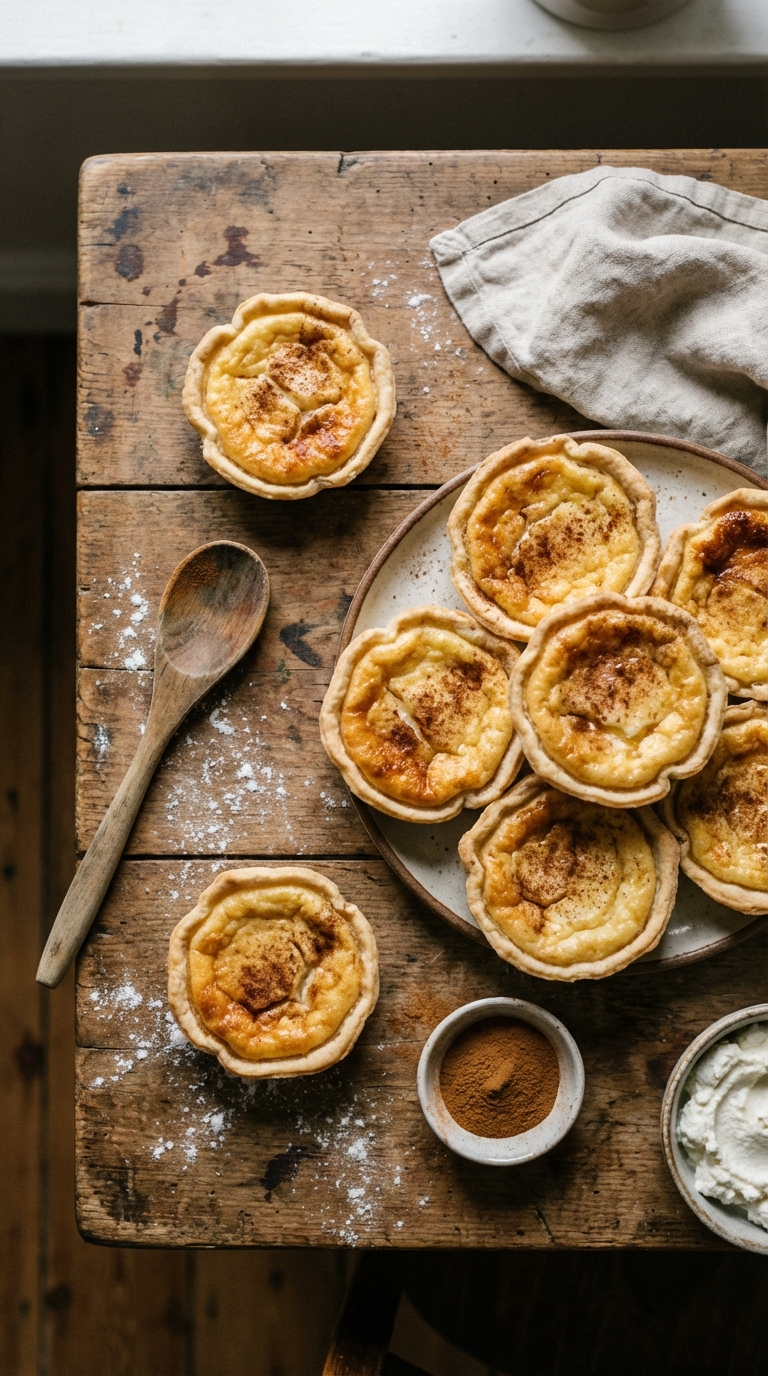
Pastelarias are found around nearly every corner here in Portugal. Espressos dot counter tops and tables, accompanied by delicious pastries of all kinds. Some filled with custards, some sprinkled with sweet powdery sugar, nearly all including eggs yolks. Some of the best though, have a creamy cheese filling and are called queijadas.
These queijadas use a thin, lean pastry shell rather than a buttery tart crust. The dough is closer to a firm wrapper, made with flour, water, salt, and a small amount of melted butter, then rolled thin before being filled.
In Sintra they have a famous queijada that is essentially a single serving cheesecake with a caramelized top. It is one of my favorites so far of all the sweet pastries that I’ve had.
Pop them in the oven until the tops turn golden, and you’ve got a warm dessert that’s simple, a little rustic, and deliciously satisfying.
How to Make Queijadas: Portuguese Cheesecake Tarts
1. Prepare the Pastry Dough
- In a medium bowl, combine the flour and salt, whisking to mix evenly.
- Make a well in the center of the flour and pour in the melted butter.
- Gradually add warm water, a few tablespoons at a time, mixing with a wooden spoon until the dough begins to pull together. Continue adding water until a firm, non-sticky dough ball forms.
- Wrap the dough in plastic wrap and refrigerate for at least 1 hour or up to overnight for easier rolling and better texture.
2. Make the Cheesecake Filling
- Preheat the oven to 350°F (180°C).
- In a large mixing bowl, beat together the ricotta cheese, cream goat cheese, and sugar using an electric mixer on medium speed until smooth and creamy.
- Add in the egg yolks, flour, and cinnamon, mixing until well incorporated and the batter is smooth. Set aside.
3. Roll Out and Cut the Pastry Dough
- Remove the chilled pastry dough from the refrigerator.
- On a lightly floured surface, roll out the dough to about 1/8-inch (3mm) thickness.
- Using a cookie cutter or glass, cut out rounds of dough that fit into your muffin tin molds. Gently press each round into a well-greased muffin tin to form the tart crusts.
4. Fill and Bake the Queijadas
- Spoon the cheese filling mixture into each prepared tart crust, filling about 3/4 of the way full to leave room for expansion as they bake.
- Place the muffin tin in the preheated oven and bake for 15-20 minutes, or until the tops turn a light golden brown and the filling is set.
- Remove from the oven and allow to cool for a few minutes before carefully removing each queijada from the tin.
5. Serve
- Serve the queijadas warm for the best texture, or let them cool to room temperature.
Recipe Notes
- Pastry Dough: Chilling the dough helps it roll out more easily and provides a flakier texture.
- Filling Consistency: Be sure to blend the cheeses and sugar until smooth for a creamy filling.
- Storage: Store leftover queijadas in an airtight container in the refrigerator for up to 3 days. Reheat slightly before serving.

Queijadas: Portuguese Cheesecake Tarts
- Total Time: 40 minutes
- Yield: Makes 12
- Diet: Omnivore
Description
Creamy, spiced cheese filling nestled in a flaky crust. Perfect warm, these little tarts are a delightful treat.
Ingredients
- 2 cups (473 ml) all-purpose flour
- 0.5 tsp salt
- 1 tbsp unsalted butter, melted
- 0.25 - 0.5 cups (60 - 120 ml) Warm water
- 1 cups (237 ml) ricotta cheese or dry cottage cheese
- 1 cups (237 ml) cream goat cheese
- 1.75 cups (414 ml) granulated sugar
- 4 large egg yolks
- 0.5 cups (118 ml) all-purpose flour
- 0.5 tsp ground cinnamon
Instructions
- Prepare the Pastry Dough
- In a medium bowl, combine the flour and salt, whisking to mix evenly. Make a well in the center of the flour and pour in the melted butter. Gradually add warm water, a few tablespoons at a time, mixing with a wooden spoon until the dough begins to pull together. Continue adding water until a firm, non-sticky dough ball forms. Wrap the dough in plastic wrap and refrigerate for at least 1 hour or up to overnight for easier rolling and better texture.
- Make the Cheesecake Filling
- Preheat the oven to 350°F (177°C). In a large mixing bowl, beat together the ricotta cheese, cream goat cheese, and sugar using an electric mixer on medium speed until smooth and creamy. Add in the egg yolks, flour, and cinnamon, mixing until well incorporated and the batter is smooth. Set aside.
- Roll Out and Cut the Pastry Dough
- Remove the chilled pastry dough from the refrigerator. On a lightly floured surface, roll out the dough to about 1/8-inch (3mm) thickness. Using a cookie cutter or glass, cut out rounds of dough that fit into your muffin tin molds. Gently press each round into a well-greased muffin tin to form the tart crusts.
- Fill and Bake the Queijadas
- Spoon the cheese filling mixture into each prepared tart crust, filling about 3/4 of the way full to leave room for expansion as they bake. Place the muffin tin in the preheated oven and bake for 15-20 minutes, or until the tops turn a light golden brown and the filling is set. Remove from the oven and allow to cool for a few minutes before carefully removing each queijada from the tin.
- Serve
- Serve the queijadas warm for the best texture, or let them cool to room temperature.
Notes
- For a richer flavor, use full-fat ricotta and goat cheese.
- Blind bake the tart shells for 10 minutes before adding the filling to prevent a soggy bottom.
- Store cooled queijadas in an airtight container at room temperature for up to 2 days or freeze for longer storage.
- The dough for Queijadas de Sintra is intentionally lean. It should not resemble pie dough or pâte brisée; it is rolled thin and acts more like a casing for the cheese filling.
- Prep Time: 20 minutes
- Cook Time: 20 minutes
- Category: Dessert
- Method: Baking
- Cuisine: Portuguese
Nutrition
- Serving Size: 1 tart
- Calories: 250
- Sugar: 25
- Sodium: 50
- Fat: 15
- Saturated Fat: 8
- Unsaturated Fat: 5
- Trans Fat: 0g
- Carbohydrates: 30
- Fiber: 1
- Protein: 5
- Cholesterol: 80
Frequently Asked Questions
What kind of cheese is used in queijadas?
Traditional queijadas use fresh cheese similar to ricotta or reqiuejao. If you can’t find Portuguese fresh cheese, whole milk ricotta that has been well drained makes a good substitute.
How do I keep the tart shells from getting soggy?
Make sure your pastry is rolled thin and pressed firmly into the tart molds. Baking at a high enough temperature helps set the crust quickly before the filling releases too much moisture.
How do I know when the queijadas are done baking?
Look for a golden brown top with some dark spots, which is traditional. The filling should be set but still have a slight jiggle in the center, as it will firm up as it cools.
Every pastelaria corner in Portugal ruined me for regular pastries, and queijadas were always my first stop. That creamy cheese custard, yes please. So happy to finally have a recipe, thank you!
I made these tarts. The filling was great. The crust-not so great. I find the ratio of flour to fat to be unusual. 1T butter for 2 cups of flour?
Hi Steven! Thanks for making them, and that’s a fair observation. The dough for this style of queijada is not meant to behave like a typical buttery tart crust or pie dough. In many Portuguese Queijadas de Sintra-style recipes, the shell is quite lean: mostly flour, water, salt, and a small amount of butter or lard. It’s rolled thin and works more like a firm casing for the cheese filling than a flaky pastry.
That said, the recipe could definitely make that clearer. We’ll update the wording so readers don’t expect a rich, shortcrust-style shell. Very glad to hear the filling worked well, and thanks again for pointing this out. We truly appreciate the feedback!!
hi there, this recipe would be so much easier to follow if you used grams for the measurements. what is a ‘cup?’
Hi there Neil! That’s a great point, especially for baking recipes. In the recipe, there’s a metric measurement button you can press, and it will show you the grams. Happy cooking!
I tried it again and added more water. It was better. I’m learning about different pastries.
The same thing happened to me the first time, and bumping the fat up a touch while chilling the dough before pressing it in really helped. A little more butter makes it tender instead of tough, and a cold rest keeps it from shrinking. Worth another go, the filling is too good to give up on!
Hotdamn, this was a-m-a-z-i-n-g!!!!
As a portuguese native, I can attest to the sheer awesomeness of this recipe. obrigado!
Turned out really well, great recipe.
I’ve tried many queijada recipes, and this one is a winner. The crust was flaky, the filling was creamy, and the cinnamon was the perfect touch. Wouldn’t change a thing!
First time making these—turned out sooooooo good!! Only thing is I ate about five of them in one sitting, oops! Guess I’ll be doubling the recipe next time. Thanks for this!
I didn’t know this existed, but I tried it and it was absolutely delicious. Thanks for a great new recipe!
Super delicious! Wow!
Tasted good but how does yours turn brown while mine is so pale? I baked it 350F, 375 F, and 400F and didn’t look anywhere near yours.
Glad you enjoyed the taste! Getting that golden color can be tricky with queijadas. The deep color usually comes from a combination of baking time and caramelization. Make sure to bake them on the middle rack so they get even heat from all sides. Also, sometimes an extra 5 minutes at 350°F can help without drying them out—keep an eye on them near the end. Another tip is to brush a tiny bit of melted butter on top before baking, as it encourages browning. Hopefully, these tips help you get that perfect golden color next time!
Very interesting recipe. I love queijadas. Of course, I never tasted the cheese queijadas. I had the other kinds of queijadas and they are very delicious.
Ah! Que saudades de comer uma queijada de Sintra!
Ah! How I miss eating a queijada de Sintra!
Soon, I’ll be able to try your recipe, in person! :0)