
One of the parts of our Italian road trip this summer (Click here for our favorite gluten free restaurants in Rome!) that I was most looking forward to was the homemade pasta class. I’ve made handmade pasta before, but never under nonna’s tutelage. More importantly, I’ve yet to perfect my gluten-free pasta skills, and our hosts promised that she could help me do just that.
Given their willingness to accommodate my needs with a gluten-free version, I expected that our villa came equipped with a serious teaching kitchen. Unfortunately, when we arrived, I saw that like generations of Italians before us, we’d simply be sitting around a dining room table as our pasta guide, Isabella, hand mixed 10 pounds of flour and two dozen eggs by hand.
Every package of flour that she ceremoniously dumped onto the table’s surface, made me feel like I was staring at the onset of Hiroshima’s mushroom cloud. I would say that Charlie was perceptive enough to catch my panic in the confined space. But I think most people noticed me double-wrapping my cotton scarf around my face as a makeshift gasmask. The wooden boards lined in front of us were caked in decades’ worth of paste-y pasta dough residue. And I knew immediately, that I would have to sit this experience out.
In a rare role reversal, Charlie was our kitchen hands, and I was the passive bystander. I stood in the doorway at a safe distance as the participants kneaded their dough and Isabella demonstrated how to turn it into long strands of pici.
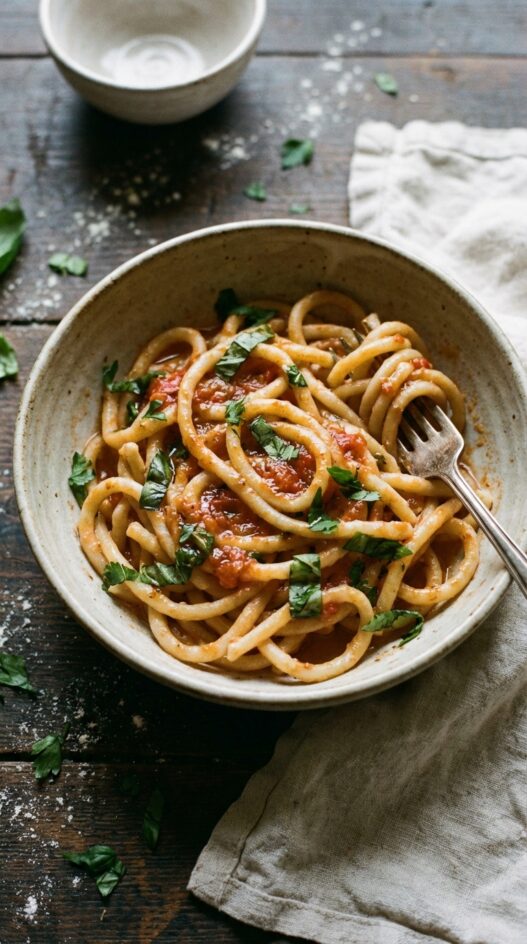
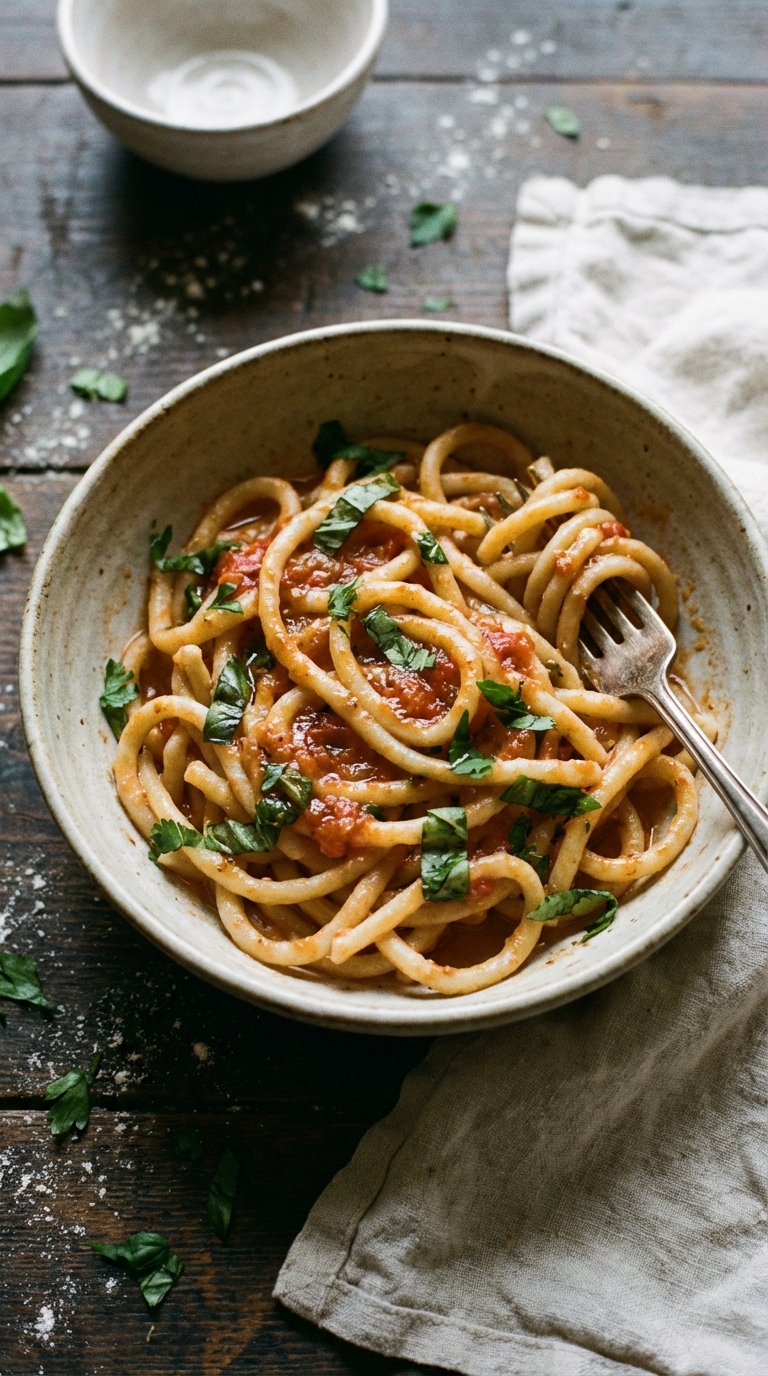
Every Italian region has its specialty, and the Tuscan brand of cucina povera revolves around this hand-rolled “fat spaghetti.” Most of the time on menus, you’ll find it tossed with a meat ragu. But at home, if you’re willing to break the rules, it can be tossed with any sauce you like.
The technique for rolling these strands is simple enough, but does require a good amount of dexterity and well-earned muscle memory. I watched as Charlie and many of the others struggled to develop even, thin strands, and I struggled harder trying not to micromanage him or throw caution to the flour-dusted wind and get in there myself.
It’s a motion you have to watch to understand (and one that I hope to eventually turn into a video for you!), but the most essential tactic is to hold the dough in your left hand and use your right for rolling (FYI I didn’t use a tripod in these pics, so don’t mimic my one-handed ways!). You keep your pressure even in the right working hand, and don’t continue down the line of dough until the piece you’re working on is sufficiently thin. Going back on your work usually causes the strands to break and leads to unevenness. The left hand is essential, as you must hold the dough with enough tension to slowly elongate the tube as you roll. A wooden cutting board and damp hands also help immensely.
I eventually got in on the action of pici making on a clean plastic cutting board at a picnic table outside. The brand of gluten-free flour they used was very light and delicate, so much so, that rolling was impossible. I had to slowly shape the strands using both hands and no pulling. What resulted was a thick choker compared to the others’ flapper-length multi-stranded necklaces. But once cooked and in the ragu, it tasted fantastic.
Never one to sit on the sidelines, I was determined upon returning home to figure out a gluten-free version of these homemade thick spaghetti noodles, and to perfect the technique of my Tuscan friends’ continuous roll. More importantly, I wanted to be able to have a recipe to share with you all. Apparently homemade pasta recipes don’t exist in the old country – you have to go on feel!
I’m proud to report that I nailed it on the first try by using Cup4Cup flour, which had a much better elasticity than the Schar I used in Italy. In the process, I became the Aziz Ansari of pici making. I’m very dedicated to my craft!
It might seem like a lot of work for a weeknight, but especially as the weather cools down, there’s no more fun indoor activity than teaching yourself the medatative art of pici. It reminded me a bit of making playdough necklaces in arts and crafts, but with the added benefit of getting to dip them in tomato sauce and call them dinner by the end.
Read on for this gluten-free pasta recipe for Tuscan fat spaghetti noodles, and if you feel like a fun project, I highly recommend slowing your roll and giving it a try.
Click here for instructions on cooking gluten free pasta.
Click here for a pesto or Bolognese recipe.
Print
How to Make Gluten Free Pici Pasta
- Total Time: 36 minutes
- Yield: Serves 4
- Diet: Gluten-Free
Description
Homemade gluten-free pasta, Tuscan style. A fun project with a simple, delicious result.
Ingredients
- 1 1/2 cups (355 ml) AP gluten-free flour
- 2 eggs
- 1/2 cups (118 ml) water
- Sea salt
- 2 cups (473 ml) Marinara sauce for serving
- 2 tablespoons chopped basil or parsley for serving
Instructions
- Place the flour in a large mixing bowl, creating a well in the center.
- Crack the eggs into the well and beat with a fork, slowly incorporating more flour.
- Add water, one tablespoon at a time, until the dough is moist and holds together (about 1/3 cup total).
- Knead the dough in the bowl until smooth.
- Place the dough ball on a clean work surface and cut into 8 equal pieces.
- Cover with a damp kitchen towel.
- Roll each piece into a thick, 5-inch cylinder.
- Holding the dough in your left hand, roll the rightmost portion into a thin strand with your right hand, using your left hand to create friction and elongate the log.
- Continue rolling, ensuring the dough is as thin as possible before proceeding.
- Reattach any broken pieces and roll together.
- Place the coiled noodle on a sheet pan and cover with a kitchen towel.
- Bring a large pot of water to a boil (212°F/100°C).
- Add salt (to taste) and return to a boil.
- Add the pasta strands and stir to separate.
- Cook for 4 to 6 minutes, stirring occasionally, until tender.
- Drain the pasta and toss with sauce.
- Enjoy immediately with basil or parsley.
Notes
- For a smoother dough, let it rest, covered, for at least 30 minutes before rolling.
- If the dough is too sticky, add a tablespoon or two more of gluten-free flour.
- To prevent sticking, lightly dust your work surface with gluten-free flour while rolling the pasta.
- Prep Time: 30 minutes
- Cook Time: 6 minutes
- Category: Main Course
- Method: Boiling
- Cuisine: Italian
Nutrition
- Serving Size: 1 cup
- Calories: 350
- Sugar: 5
- Sodium: 400
- Fat: 10
- Saturated Fat: 4
- Unsaturated Fat: 6
- Carbohydrates: 60
- Fiber: 4
- Protein: 10
- Cholesterol: 150
Frequently Asked Questions
What type of flour should I use to make gluten-free pici pasta?
For gluten-free pici pasta, you can use a gluten-free all-purpose flour blend that contains xanthan gum for better texture.
How do I achieve the right consistency for the pici dough?
The dough should be soft but not sticky; if it feels too dry, add a little water, and if it’s too wet, incorporate more flour.
What is the best way to shape the pici pasta by hand?
To shape the pici, take small pieces of dough and roll them into long, thin ropes using your hands, ensuring they are even in thickness.
If You Liked This Recipe, You’ll Love These
- How to Make Homemade Fresh Saffron Tagliatelle
- Spaghetti Al Nero Di Seppia: Squid Ink Calamari Pasta
- Casarecce Pasta with Lamb Sausage and Kale
- Angel Hair Stracchino and Tomato Pasta

Which GF flour?