
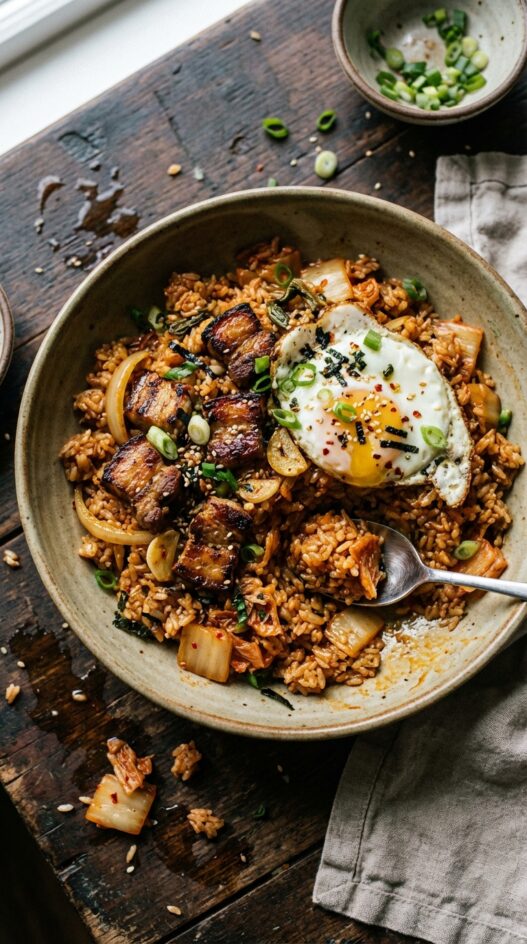
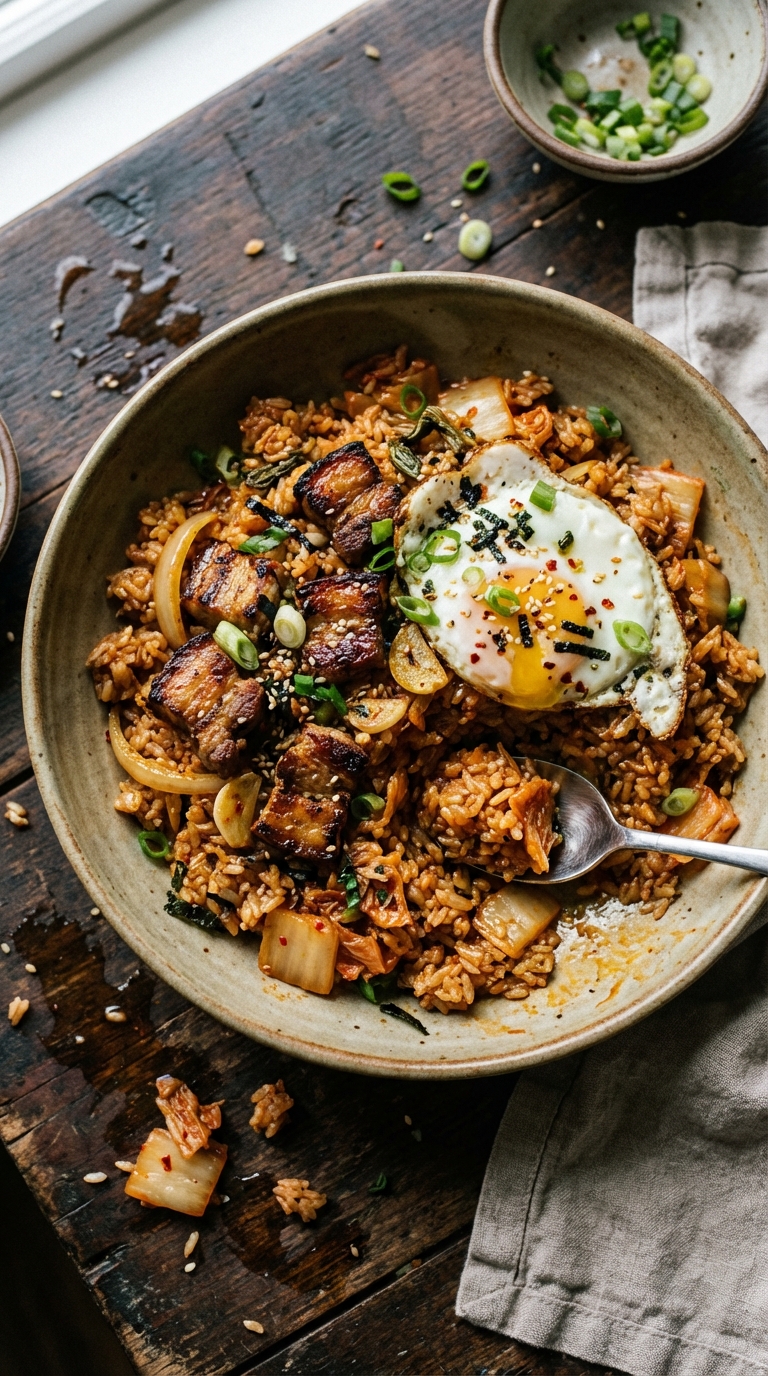
Fried rice with kimchi, pork belly, and gochujang, topped with a sunny-side-up egg. The pork gets seared until the edges crisp, then absorbs flavor from the kimchi and its juice before the rice goes in.
Gochujang adds heat and depth, and the runny yolk breaks over the rice and coats each bite. Oh my, that’s delicious!
This comes together in less than ten minutes if you have leftover rice ready. The key is high heat and quick cooking so the rice gets a little crispy at the edges without turning mushy. Day-old rice works best because it’s drier and won’t clump. Use as much or as little pork as you want. Some people like mostly rice with bits of meat scattered through, others want pork in every bite. Both work.
How to Make Kimchi & Pork Belly Fried Rice
Cook the Aromatics and Pork
Heat the oil in a wok or large pan over medium-high heat until almost smoking. Add the diced onions and fry until translucent. Add the garlic and cook until softened.
Push the onions and garlic to the side of the pan. Add the pork belly and sear on all sides until almost cooked through.
Add Kimchi and Flavor
Add the kimchi, kimchi juice, and soy sauce to the pan. Stir everything together so the pork absorbs the kimchi flavor.
Cook until the pork is fully cooked through.
Finish the Fried Rice
Add the cooked rice, gochujang, and a pinch of sugar. Fry, stirring constantly, until everything is well combined and the rice is heated through. Taste and add salt as needed.
Drizzle the sesame oil over the rice and give it one last stir.
Fry the Eggs and Serve
In a separate pan, fry the eggs sunny-side-up with runny yolks.
Divide the fried rice between two bowls. Top each with a fried egg. Garnish with sliced green onions, nori flakes, sesame seeds, and red pepper flakes if using.
Recipe Notes
Use day-old rice for the best texture. Freshly cooked rice is too moist and will turn mushy. If you only have fresh rice, spread it on a baking sheet and let it cool and dry out for 30 minutes before using.
Short grain Korean or Japanese rice is traditional, but jasmine rice works in a pinch.
Adjust the amount of pork based on preference. More pork makes it heartier, less makes it lighter.
Kimchi varies in spice level and saltiness. Taste the fried rice before adding salt, as the kimchi and soy sauce may provide enough.
Gochujang also varies in heat. Start with 1 tablespoon and add more if you want it spicier.
The kimchi juice is important. It adds tanginess and helps distribute the kimchi flavor throughout the rice.
High heat is essential. The rice should sizzle when it hits the pan and develop some crispy bits.
Sesame oil goes in at the very end. It burns easily and loses its nutty aroma if cooked too long.
The runny egg yolk is key. It acts as a sauce when you break it and mix it into the rice.
Customize with other proteins like tofu, beef, shrimp, or canned tuna.
Leftovers reheat well in a hot pan with a splash of water to loosen the rice.

Fried Rice with Kimchi and Pork Belly
- Total Time: 25 minutes
- Yield: Serves 2
- Diet: Omnivore
Description
Spicy kimchi and pork belly fried rice, ready before you know it. Topped with a perfectly runny egg.
Ingredients
- 2 tablespoons oil
- 1 small yellow onion, diced
- 3 garlic cloves, finely chopped
- 6-9 oz skinless pork belly, cut into 1/4-inch cubes (1 1/4-1 1/2 cups)
- 1-1 1/2 cups tightly packed chopped kimchi
- 1 tablespoon kimchi juice
- 1 teaspoon light soy sauce
- 3 cups cooked rice (short grain Korean or Japanese rice, or 1 cup uncooked)
- 1-2 tablespoons gochujang (Korean red chili paste)
- Pinch of sugar
- Salt to taste
- 1 teaspoon sesame oil
- 2 large eggs (for sunny-side-up)
- 2 green onions, sliced
- Nori flakes (roasted seaweed)
- White sesame seeds
- Red pepper flakes (optional)
Instructions
- Heat the oil in a wok or large pan over medium-high heat until almost smoking. Add the diced onions and fry until translucent. Add the garlic and cook until softened.
- Push the onions and garlic to the side of the pan. Add the pork belly and sear on all sides until almost cooked through.
- Add the kimchi, kimchi juice, and soy sauce to the pan. Stir everything together so the pork absorbs the kimchi flavor. Cook until the pork is fully cooked through.
- Add the cooked rice, gochujang, and a pinch of sugar. Fry, stirring constantly, until everything is well combined and the rice is heated through. Taste and add salt as needed.
- Drizzle the sesame oil over the rice and give it one last stir.
- In a separate pan, fry the eggs sunny-side-up with runny yolks.
- Divide the fried rice between two bowls. Top each with a fried egg. Garnish with sliced green onions, nori flakes, sesame seeds, and red pepper flakes if using.
Notes
- Use day-old rice for the best texture. Freshly cooked rice is too moist and will turn mushy. If you only have fresh rice, spread it on a baking sheet and let it cool and dry out for 30 minutes before using.
- Short grain Korean or Japanese rice is traditional, but jasmine rice works in a pinch.
- Adjust the amount of pork based on preference. More pork makes it heartier, less makes it lighter.
- Kimchi varies in spice level and saltiness. Taste the fried rice before adding salt, as the kimchi and soy sauce may provide enough.
- Gochujang also varies in heat. Start with 1 tablespoon and add more if you want it spicier.
- The kimchi juice is important. It adds tanginess and helps distribute the kimchi flavor throughout the rice.
- High heat is essential. The rice should sizzle when it hits the pan and develop some crispy bits.
- Sesame oil goes in at the very end. It burns easily and loses its nutty aroma if cooked too long.
- The runny egg yolk is key. It acts as a sauce when you break it and mix it into the rice.
- Customize with other proteins like tofu, beef, shrimp, or canned tuna.
- Leftovers reheat well in a hot pan with a splash of water to loosen the rice.
- Prep Time: 15 minutes
- Cook Time: 10 minutes
- Category: Main Course
- Method: Stir-Frying
- Cuisine: Korean
Nutrition
- Serving Size: 1 generous serving
- Calories: 500
- Sugar: 5
- Sodium: 600
- Fat: 25
- Saturated Fat: 10
- Unsaturated Fat: 10
- Carbohydrates: 60
- Fiber: 5
- Protein: 25
- Cholesterol: 150
If you liked this, you are going to love these favorite rice recipes:
Frequently Asked Questions
Why should I use day-old rice for this fried rice recipe?
Day-old rice is drier and less sticky, which helps prevent the fried rice from becoming mushy and allows it to crisp up nicely at the edges.
How can I adjust the spiciness of the dish?
You can control the heat by adjusting the amount of gochujang you add; start with a small amount and increase it to your taste.
What type of pan is best for making this fried rice?
A wok or a large pan is ideal because it allows for high heat and quick cooking, so the ingredients fry rather than steam.





New obsession acquired!
Same here :)
I love kimchi so much, this is an incredible recipe!
nom nom nom. Your meals look very inspiring and this bowl of kimchi and pork belly fried rice with egg looks like a real treat!