









In many parts of Scandinavia, but in Denmark in particular, rye bread is as close to religion as it comes. Everyone has a favorite type, and every family has their own secret recipe. Small wars have been fought over who has the best version, and friends have been blocking each other on social media over the ratio of dough to seeds.
During my many years of living in Denmark, the quest for the perfect rye bread recipe was an ongoing struggle. And the biggest hurdle for me was always that most are made with sourdough, but I don’t have the patience to nurture a starter. I’m sorry, I’m just not that person.
Which is why this recipe from my cookbook NORTH – Scandinavianish Cooking – is so perfect. 
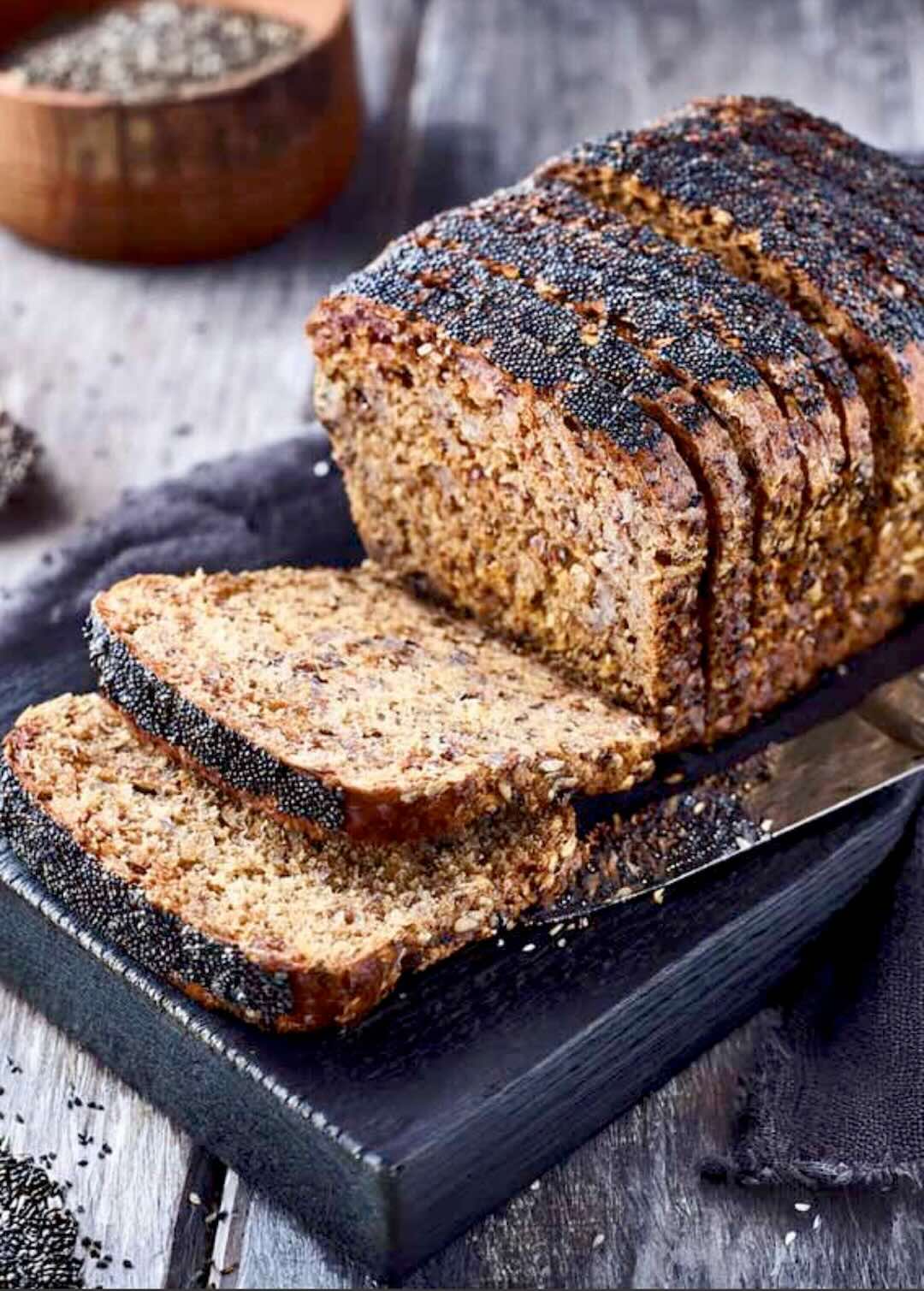
Here, the dough comes together with a mix of cold water, buttermilk, and a splash of dark beer to wake up the yeast. It’s packed with cracked rye kernels, sunflower seeds, and flaxseeds, then left to rise slowly in the refrigerator for a full day — the kind of time investment that requires no work at all, just a little patience. The loaf is baked after a gentle warm-up, developing a nutty crust from the poppy seeds that line the pan and sprinkle the top. It’s dense, hearty, and slices beautifully once cooled, the perfect foundation for an open-faced sandwich (pro tip: toast it before you top it!).
How to Make Danish Rye Bread without Sourdough:
Step 1 – Mix the liquid base
In a large bowl, combine the water, buttermilk, and beer. Crumble in the fresh yeast and stir until dissolved.
Step 2 – Add the dry ingredients
Stir in the molasses, salt, cracked rye kernels, flaxseeds, sunflower seeds, and rye flour. Mix thoroughly with a wooden spoon or in a stand mixer with a dough hook. Knead for about 10 minutes until sticky and uniform.
Step 3 – Prepare the pan
Lightly oil a large loaf pan. Coat the inside with poppy seeds, making sure to cover the sides. Reserve some seeds for topping.
Step 4 – Shape and rise
Transfer the dough to the prepared pan. Smooth the top with the back of a wet spoon, pressing it evenly. Sprinkle the reserved seeds on top. Cover with plastic wrap and refrigerate for at least 24 hours.
Step 5 – Final rise
After 24 hours, remove the pan from the refrigerator. Let it sit at room temperature for 2 hours to warm slightly and continue rising.
Step 6 – Bake
Preheat the oven to 375°F (190°C). Bake for 1 hour 20 minutes on the center rack. Remove from the pan and tap the bottom — if it sounds hollow, it’s done. If not, return for another 10 minutes.
Step 7 – Cool
Cool the bread on a wire rack before slicing.
Recipe Notes
Seeds and grains: Traditional loaves often include pumpkin seeds, rolled oats, or chia. Swap or add as you like.
Beer choice: A dark lager or stout adds richness, though a lighter beer works if you prefer a milder taste.
Storage: Wrap tightly in parchment or foil and store at room temperature for up to 5 days. Danish rye improves in flavor after the first day.
Serving: Slice thinly. It’s sturdy enough for smørrebrød with fish, meats, or cheese.
FAQ – Danish Rye Bread Making
Can I use dry yeast instead of fresh yeast?
Yes. Replace with 7 g (1 packet) active dry yeast, dissolving it in the liquid mixture.
What if I don’t have buttermilk?
Mix regular milk with 1 teaspoon lemon juice or vinegar as a substitute.
Do I really need to let it rise for 24 hours?
Yes. The slow, cold rise develops flavor and prevents the bread from being too dense.
Can I freeze the bread?
Yes. Slice it first, then freeze in a bag for up to 2 months. Toast straight from frozen.
Why is my loaf dense?
Danish rye is naturally dense, but under-kneading or skipping the long rise can make it heavy. Stick to the process for best results.
How to Make Danish Rye Bread (No Sourdough)
- Total Time: 27 hours 40 minutes
- Yield: 1 loaf 1x
Description
Bake traditional Danish rye bread without sourdough. Made with rye kernels, sunflower seeds, flaxseeds, dark beer, and yeast, this hearty loaf is perfect for smørrebrød and keeps well for days.
Ingredients
1 1/2 cups (360 ml) cold water
3/4 cup (180 ml) buttermilk
1/2 cup (120 ml) dark beer
1 tablespoon (20 g) fresh yeast
1 tablespoon molasses or dark syrup
1 tablespoon (20 g) coarse salt
1 cup (150 g) cracked rye kernels
1/3 cup (50 g) flaxseeds
3/4 cup (100 g) sunflower seeds
3 cups (400 g) whole-grain rye flour
2 tablespoons neutral oil (for greasing pan)
3 tablespoons poppy seeds (or sesame seeds)
Instructions
In a large bowl, combine the water, buttermilk, and beer. Crumble in the fresh yeast and stir until dissolved.
Stir in the molasses, salt, cracked rye kernels, flaxseeds, sunflower seeds, and rye flour. Mix thoroughly with a wooden spoon or in a stand mixer with a dough hook. Knead for about 10 minutes until sticky and uniform.
Lightly oil a large loaf pan. Coat the inside with poppy seeds, making sure to cover the sides. Reserve some seeds for topping.
Transfer the dough to the prepared pan. Smooth the top with the back of a wet spoon, pressing it evenly. Sprinkle the reserved seeds on top. Cover with plastic wrap and refrigerate for at least 24 hours.
After 24 hours, remove the pan from the refrigerator. Let it sit at room temperature for 2 hours to warm slightly and continue rising.
Preheat the oven to 375°F (190°C). Bake for 1 hour 20 minutes on the center rack. Remove from the pan and tap the bottom — if it sounds hollow, it’s done. If not, return for another 10 minutes.
Cool the bread on a wire rack before slicing.
Notes
Seeds and grains: Traditional loaves often include pumpkin seeds, rolled oats, or chia. Swap or add as you like.
Beer choice: A dark lager or stout adds richness, though a lighter beer works if you prefer a milder taste.
Storage: Wrap tightly in parchment or foil and store at room temperature for up to 5 days. Danish rye improves in flavor after the first day.
Serving: Slice thinly. It’s sturdy enough for smørrebrød with fish, meats, or cheese.
- Prep Time: 20 mins
- Rising Time: 26 hours
- Cook Time: 80 mins
- Category: Baking
- Method: Baking
- Cuisine: Danish
Nutrition
- Serving Size: 1 slice
- Calories: 180
- Sugar: 2g
- Sodium: 300mg
- Fat: 7g
- Saturated Fat: 1g
- Unsaturated Fat: 6g
- Trans Fat: 0g
- Carbohydrates: 26g
- Fiber: 5g
- Protein: 6g
- Cholesterol: 0g
If you liked this, you are going to love these favorite Danish recipes:
Danish Hakkebøf Recipe: Beef Patties with Caramelized Onions
How to Make Flæskesteg: Danish Pork Roast with Crispy Crackling
Brunede Kartofler – Danish Caramelized Christmas Potatoes
Mrs Bergman’s Danish Curry Herring
Frequently Asked Questions
What kind of beer should I use in this rye bread recipe?
A dark beer is recommended to enhance the flavor of the rye bread, but you can use any beer you prefer as long as it’s not overly bitter.
How long should I let the dough rise in the refrigerator?
The dough should be left to rise slowly in the refrigerator for a full day to develop its flavor and texture.
Can I substitute the cracked rye kernels with another grain?
While cracked rye kernels provide a unique texture and flavor, you can substitute them with other whole grains, but the result may differ in taste and density.








Love Danish rye.
Using dark beer as the liquid gives the bread a nutty depth—really rounds out the flavor. Just make sure it’s at room temp before adding it in.
Took a loaf of this rye bread to my baking club meeting, and it disappeared sooooo fast!
So satisfying to make rye bread with no sourdough involved.
Tried it out yesterday, and while the texture is great, I found it slightly underbaked with the given time. Baked for an extra 10 minutes, and it was just right.
I have now made this a few times. Love it as I love adding the different extras, sesame, sunflower, oat germ and flaxseeds. I just stick to the 150 g and use less sunflower seeds. In the oven now.
Hello Marian Bridget! So glad to hear that, what’s your favorite version??
Great for those avoiding wheat or refined carbs.
You can transfer it to any container for the fridge rest — just be sure it’s well covered so it doesn’t dry out. Shape it in the loaf tin the next morning when you’re ready to bake. Works totally fine.
Hi, this recipe looks so good, can’t wait to try it. I don’t have much space in my fridge to leave a long loaf tin overnight. Can I fit it in another container and transfer to the loaf tin the next day?
Yes, that works fine. You can let the dough rise overnight in another container — just make sure it’s covered and large enough for the dough to expand a bit. The next day, transfer it to the loaf tin, smooth the top, and let it rest at room temperature for about 1–2 hours before baking so it can settle back in and finish rising. :D
I mean min don’t look quite as pretty as the photo, but damn it was good!!
Looks are unimportant, glad it tasted great!!
Hi anyway I can substitute the beer with something else.
Hi Faeeza!
In Denmark, the usual alternative to beer is simply to use more buttermilk or just water. Both are traditional and will give you a proper rugbrød, with the buttermilk adding a little extra tang. Just do a 1:1 sub.
Happy baking!
Buttermilk works well as a replacement. If you want a closer match to the beer’s flavor profile, strong black coffee with a splash of apple cider vinegar gets you in the neighborhood. The beer adds some malty depth and slight acidity that this approximates reasonably.
Really good. Easy to succeed with, I used some almonds in there too and it was great.
Hi Kalle, my oven is fan forced – do I need to turn down temp to 170C or just keep it at 190C
Hi Naz! Yeah, the rule of thumb is about 20C lower, so 170C should work. This might need a little tweaking, but it’s probably the right starting point. Good luck! :)
As a Danish person I can confirm that this recipe is for real. Great way to bake danish rye without sour dough.
finnaly!!! i love rugbrød so much, but only had it at amanns in Copenhagen a few years back and I have been wanting to make it myself. Turned out so well! thank you.
Frick yeah, this is exactly what I had been looking for after trying the Danish rubrod at a great nordic bakery in Minneaplois. Not sure if that is super authentic, but this definitely was just as good!!