I came home, after a two week vacation, to an astounding sight; my herb garden had turned into an herb jungle.
Before I left, I’d been trying to constrain myself, as the herbs were young and tender and didn’t really appreciate my herbaceous gusto. I love to use fresh herbs quite liberally, not only for flavor, but as garnishes; splashes of vibrancy to make my food look delicious and appealing.
I’m happy to say this restraint issue is not a problem anymore – after two weeks of my absense, these fragrant, lovely herbs have gone crazy and are now at that wonderful, lush growing stage where the more they are pruned, the faster and more vigorously they grow. I knew I would have to make something delightful and fresh this weekend with my newly acquired treasure trove of herbs……….. chimichurri!
If you’re not familiar with chimichurri you’ll be thrilled with this new friend. Chimichurri is a sauce that’s frequently served with grilled meat in Argentina. The traditional ingredients are garlic, parsley, oregano, lemon, olive oil and wine vinegar. There are many legends regarding the origins of this delicious sauce, but no one seems to know for sure how it got it’s funny name. I like to think of it as the Argentinian version of pesto.
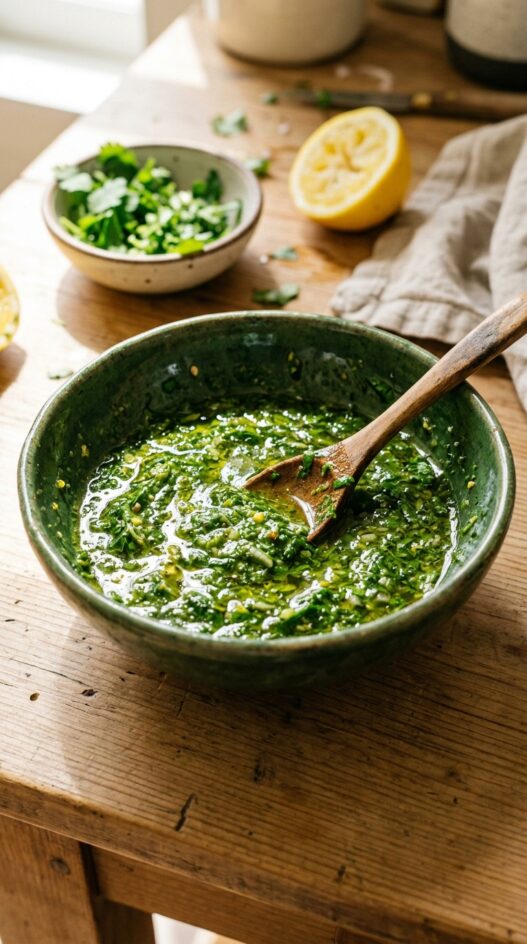
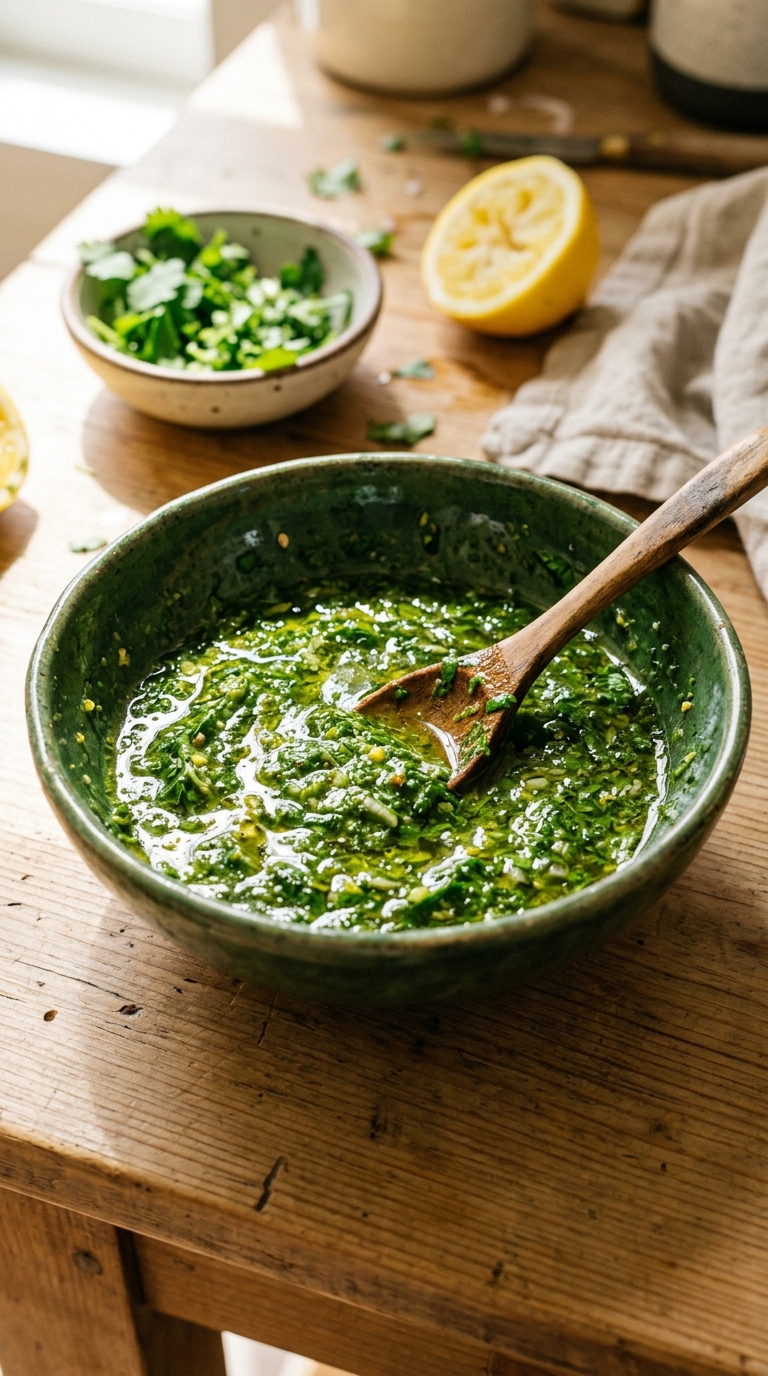
I decided to take a bit of liberty with the traditional recipe and combine a variety of my bountiful herbs. I used basil, cilantro, parsley and mint along with fresh lemon zest and juice plus a bit of white balsamic vinegar.
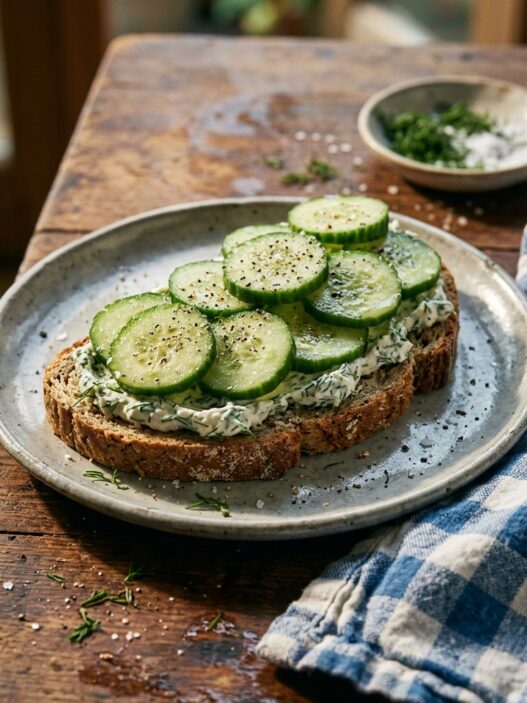
We loved the final results. It’s fantastic on grilled meats, adding a zesty freshness AND it makes a lovely and delicious appetizer. I spread crostini (you could use any type of cracker) with goat cheese (cream cheese would also be wonderful) and drizzled it with the vibrant chimichurri. You could also serve it as a dipping sauce for warm bread, steamed shrimp or with crudités (raw veggies).The gorgeous bright green color adds visual appeal to everything you serve it with. I think you’ll be getting requests for this one again and again!
Print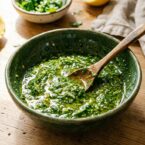
Fresh Herb Chimichurri Sauce
- Total Time: 10 minutes
- Yield: 1 cup
Description
This vibrant chimichurri sauce combines fresh herbs like basil, cilantro, parsley, and mint with lemon and white balsamic vinegar for a zesty accompaniment to grilled meats or as a flavorful dip.
Ingredients
- 1 tbsp white balsamic vinegar
- 2 tbsp fresh lemon juice
- Zest of 1 lemon
- 3 medium garlic cloves, peeled
- 2 medium shallots, peeled
- 1 cup (240 ml) fresh basil, packed
- 1 cup (240 ml) fresh cilantro, packed
- 1 cup (240 ml) fresh parsley, packed
- 1/2 cup (120 ml) fresh mint, packed
- 1/2 cup (120 ml) olive oil
- Salt and pepper to taste
Instructions
- Combine all ingredients in a food processor and puree until combined and fairly smooth, leaving just a bit of texture.
- Transfer the chimichurri to a storage container and keep cold until ready to use.
- Before serving, remove from the refrigerator to allow it to come to room temperature for optimal flavor.
Notes
- This chimichurri is perfect for grilled meats and can also be used as a dip for bread or vegetables.
- It pairs well with goat cheese on crostini.
- Store in the refrigerator and use within a week for best flavor.
- Adjust the amount of garlic and vinegar to taste.
- Prep Time: 10 minutes
- Cook Time: 0 minutes
- Category: Condiment
- Cuisine: Argentinian
Nutrition
- Serving Size: 1 tablespoon
- Calories: 80
- Sugar: 0
- Sodium: 1
- Fat: 9
- Carbohydrates: 1
- Fiber: 0
- Protein: 0
- Cholesterol: 0
If You Liked This Recipe, You’ll Love These
- Roasted Carrots with Chimichurri
- How to Make Chimichurri Sauce
- Lemony Garlic Shrimp with Cherry Tomatoes and Fresh Herbs
- Cauliflower with Chimichurri and Tahini
Frequently Asked Questions
How is this chimichurri different from a traditional Argentinian version?
Traditional chimichurri uses parsley, oregano, garlic, lemon, olive oil, and wine vinegar. This version deliberately adds basil, cilantro, and mint alongside the parsley, and swaps in white balsamic vinegar instead of wine vinegar, creating a broader, sweeter herb profile.
What can I serve this chimichurri with besides grilled meat?
Try spreading it on crostini with goat cheese (or cream cheese) as an appetizer, using it as a dipping sauce for warm bread, serving it with steamed shrimp, or pairing it with crudités. Its bright green color makes it visually appealing for any of these uses.
How long does the chimichurri keep?
Store it covered in the refrigerator and use within a week for best flavor. Let it come back to room temperature before serving, since the olive oil will solidify slightly when chilled.
Should I puree it completely smooth or leave some texture?
Puree it “until combined and fairly smooth, leaving just a bit of texture” — a fully smooth puree loses the rustic character of the sauce, while a rough chop can make it hard to drizzle. A food processor run for about 15–20 seconds achieves the right consistency.