
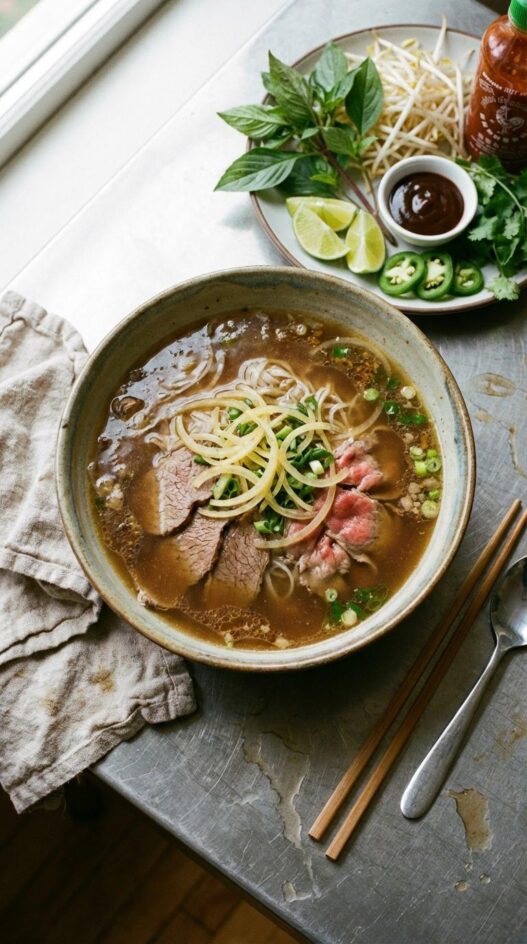
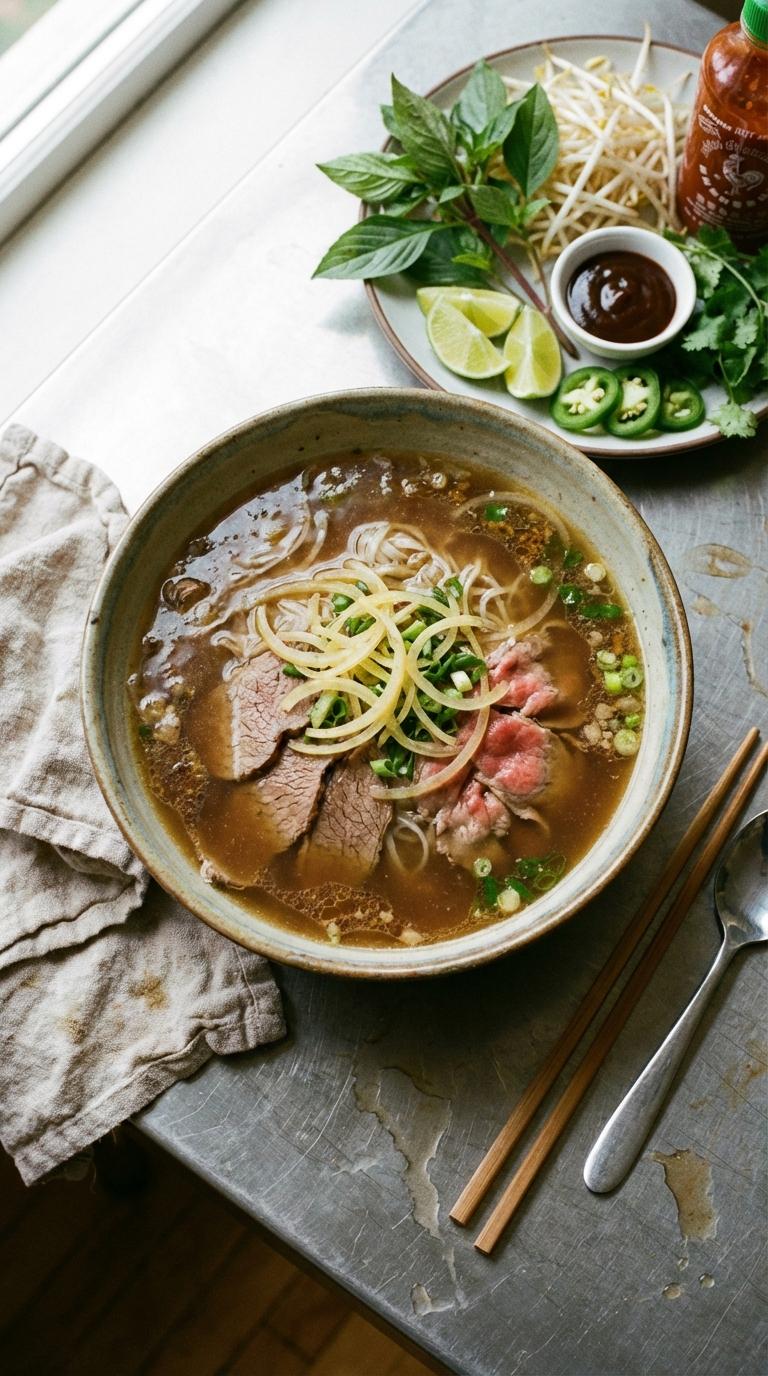
Pho is a broth project. The bones roast first, then simmer with charred onion, ginger, star anise, cloves, and cinnamon for 3 to 4 hours. You can’t shortcut this, the depth of flavor comes from time. Skim the surface regularly; a clear broth is part of the point.
Everything else is assembly: rice noodles cooked separately, thin-sliced raw beef that cooks from the heat of the ladled broth, and a plate of fresh herbs, bean sprouts, lime, and sliced chili on the side. The garnishes aren’t optional. They’re what makes each bite different from the last.
Parboil Bones and Char Aromatics
Bring large pot of water to boil. Add beef bones and oxtail. Boil vigorously for five minutes to purge impurities.
Drain, rinse bones under cold water, and scrub pot clean. This is the single most important step for clear broth.
While bones parboil, char onion and ginger directly over gas flame or under broiler until deeply blackened on all sides, about five to seven minutes.
Toast star anise, cloves, cinnamon, coriander, fennel seeds, and black cardamom in dry skillet for two to three minutes until fragrant. Place in spice bag.
Simmer Broth Low and Slow
Return cleaned bones to clean pot with four quarts fresh cold water.
Add charred onion and ginger and spice pouch. Bring to boil, then immediately reduce to gentlest possible simmer, barely a bubble. Simmer uncovered for at least three hours, preferably four.
Skim surface regularly and diligently, removing any fat or scum. The more carefully you skim, the clearer your broth will be.
After simmering, strain broth through fine-mesh strainer lined with cheesecloth. Season with fish sauce, sugar, and salt.
Classic: Pho Bo
- Total Time: 240 minutes
- Yield: 6 servings
Description
Pho is the soul of Vietnamese cooking — a fragrant, crystal-clear beef broth ladled over rice noodles and thinly sliced beef, served with a mountain of fresh herbs and condiments on the side. It originated in northern Vietnam in the early 20th century and has since become the country’s most recognizable dish. The broth, which simmers for hours with charred onion, ginger, and whole spices, is the entire point. A bowl of pho is only as good as the broth beneath it.
Ingredients
- For the broth: 3 lbs beef marrow bones
- 2 lbs beef oxtail or knuckle bones
- 1 large yellow onion, halved
- 4-inch piece fresh ginger, halved lengthwise
- 3 whole star anise
- 6 whole cloves
- 1 cinnamon stick
- 1 tablespoon coriander seeds
- 1 tablespoon fennel seeds
- 1-2 black cardamom pods (thao qua — not green cardamom)
- 3 tablespoons fish sauce
- 1 tablespoon sugar
- 1 tablespoon kosher salt
- 4 quarts water
- For serving: 1 lb dried flat rice noodles (banh pho)
- 8 ounces eye of round or sirloin, sliced paper-thin
- 1/2 lb brisket or flank (cooked in the broth, sliced thin)
- Fresh accompaniments: Thai basil, bean sprouts, cilantro, lime wedges, sliced jalapeños, hoisin sauce, sriracha
- Thinly sliced yellow onion and scallion greens
Instructions
- Bring a large pot of water to a boil. Add the beef bones and oxtail. Boil vigorously for 5 minutes to purge impurities. Drain, rinse the bones under cold water, and scrub the pot clean. This is the single most important step for a clear broth.
- While the bones parboil, char the onion and ginger directly over a gas flame or under a broiler until deeply blackened on all sides. This takes about 5-7 minutes. The charring adds smokiness and sweetness to the broth.
- Toast the star anise, cloves, cinnamon, coriander, fennel seeds, and black cardamom in a dry skillet over medium heat for 2-3 minutes until fragrant. Place them in a spice bag or cheesecloth pouch.
- Return the cleaned bones to the clean pot with 4 quarts of fresh cold water. Add the charred onion and ginger and the spice pouch. Bring to a boil, then immediately reduce to the gentlest possible simmer — barely a bubble.
- Simmer uncovered for at least 3 hours, preferably 4. Skim the surface regularly and diligently, removing any fat or scum. The more carefully you skim, the clearer your broth will be.
- After simmering, strain the broth through a fine-mesh strainer lined with cheesecloth. Season with fish sauce, sugar, and salt. The broth should taste deeply beefy, aromatic, and slightly sweet. If you simmered brisket or flank in the broth, remove it now and slice thin.
- Cook the rice noodles according to the package directions. Drain and divide among large soup bowls.
- Top the noodles with the sliced cooked brisket and the raw sliced eye of round. Ladle the boiling-hot broth directly over the raw beef — the heat will cook it instantly. Top with sliced onion and scallion greens. Serve immediately with a plate of fresh herbs, bean sprouts, lime wedges, jalapeños, hoisin, and sriracha on the side.
Notes
- Parboiling and rinsing the bones is the non-negotiable first step. It removes blood, marrow fragments, and impurities that would cloud the broth. Skipping it means murky pho.
- Char the onion and ginger until truly blackened — do not just lightly toast them. The deep char provides smokiness that defines the broth.
- The broth must barely simmer, never boil. A rolling boil emulsifies the fat and produces a cloudy, greasy broth. A gentle simmer with diligent skimming produces the crystal-clear broth that defines great pho.
- Black cardamom (thao qua) has a smoky, menthol-like quality that many consider the signature pho spice — it is not interchangeable with green cardamom, which would taste wrong here.
- Category: Main Course
- Cuisine: Vietnamese
Nutrition
- Serving Size: 1 serving
Frequently Asked Questions
Why is it important to parboil the bones before making the broth?
Parboiling the bones purges impurities, which is crucial for achieving a clear broth. This step helps remove excess fat and scum that can cloud the final product.
How do I properly char the onion and ginger for the broth?
Char the onion and ginger directly over a gas flame or under a broiler until they are deeply blackened on all sides, which should take about five to seven minutes.
What should I do if my broth is cloudy after simmering?
If your broth is cloudy, make sure you are skimming the surface regularly and diligently to remove any fat or scum that forms during the simmering process.




This is real pho. Most recipes online skip the parboil and you end up with cloudy broth. Thank you for doing it right.
Agree!! Thank you Wei!
Needed more fish sauce than the recipe suggested, at least for my taste. I also couldn’t find rock sugar so I used regular sugar and it was fine.
Mrs Jimenez, yeah if you want a deeper fish-sauce flavor you can absolutely add more. A lot of people find it overpowering though, so we chose to keep it light.
Three hours felt like a long simmer but worth it. I parboiled the bones twice actually because the first rinse was pretty murky still. Fish sauce at the end brought everything together.
Charring the onion and ginger and roasting the star anise and coriander before adding them to the pot really brought out the aroma. Thanks for that tip!