
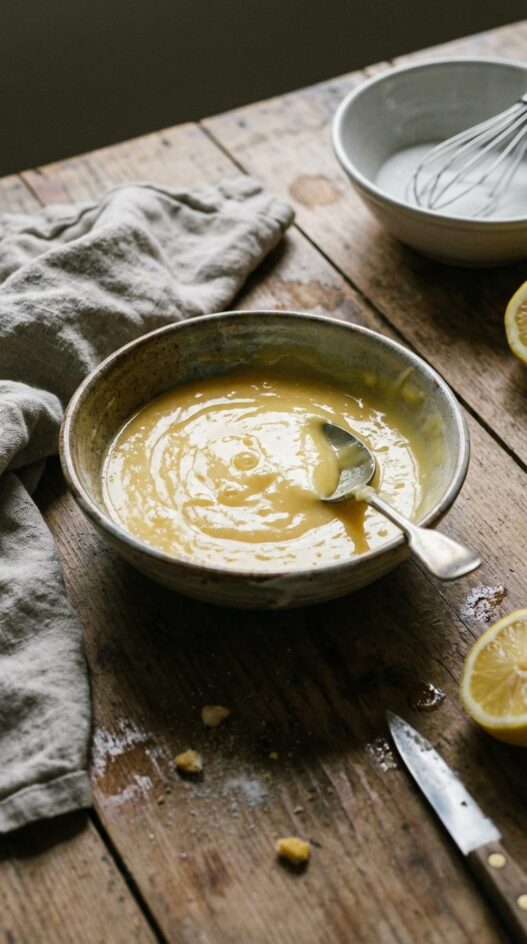
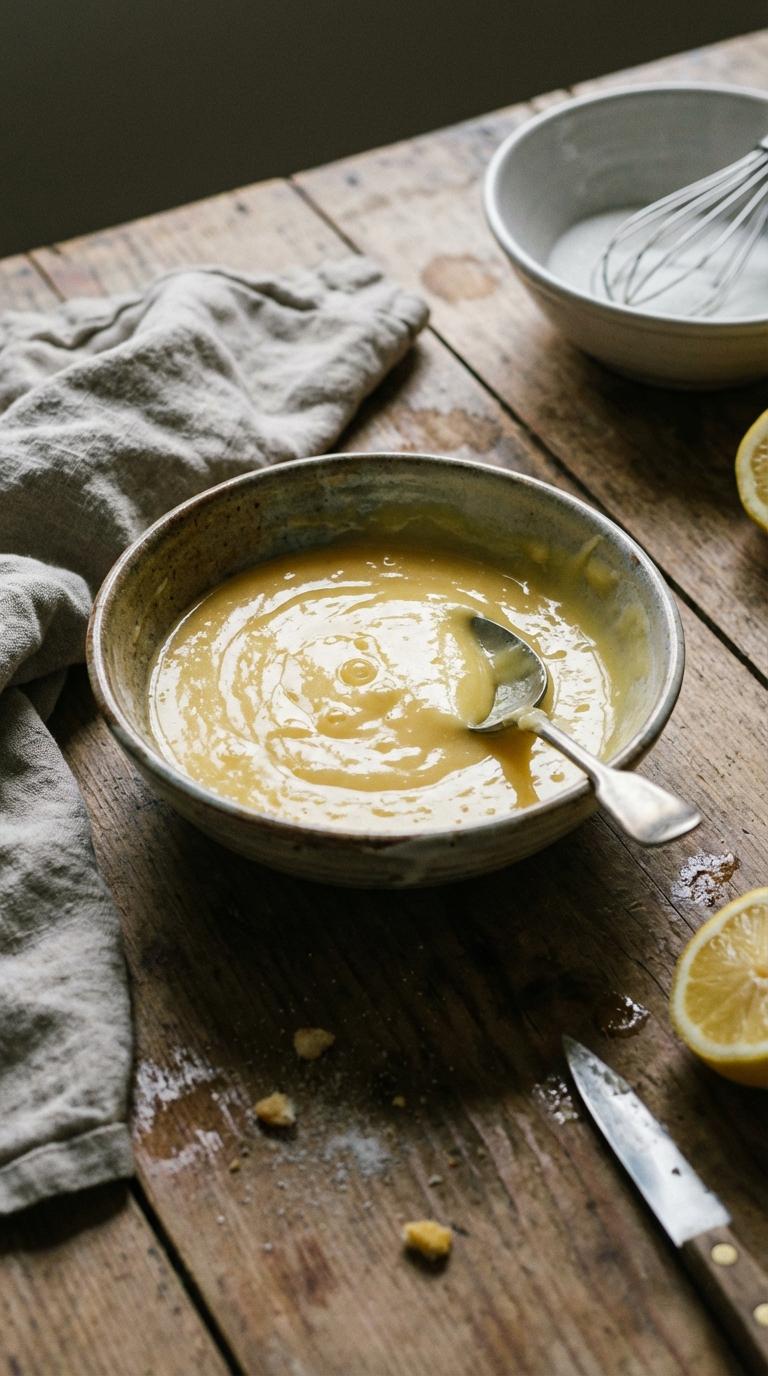
Oh, don’t we all love lemon curd? Here at Honest Cooking, we certainly do. So let’s take a look at how to make it! Lemon curd is egg yolks, sugar, lemon juice, lemon zest, and butter cooked over gentle heat until it thickens enough to coat the back of a spoon. The key is patience, keep the heat low and stir constantly so the eggs don’t scramble. It takes about 8 to 10 minutes of steady whisking.
Strain it through a fine mesh sieve to catch any bits, then stir in the cold butter until it melts and makes the curd glossy and silky. It thickens further as it cools. Use it on toast, in tarts, between cake layers, or eat it straight from the jar with a spoon. It keeps for about a week in the fridge.
How to Make Basic Lemon Curd
Combine Ingredients
In heatproof bowl, whisk lemon juice, zest, sugar, eggs, salt until smooth. Add butter pieces. Set over simmering water.
Cook Stir Constantly
Cook, whisking constantly, 8-12 min until thick enough to coat spoon and reaches 170°F. Don’t stop stirring.
Strain Chill
Immediately strain through fine-mesh strainer into clean bowl. Press plastic onto surface. Refrigerate until thick, at least 2 hours.
Basic: Lemon Curd
- Total Time: 20 minutes
- Yield: 1.5 cups
Description
Lemon curd is a luscious, intensely lemony spread that balances bright citrus acidity with rich egg yolks and butter. It is a building block of British baking, used to fill tarts, layer cakes, and pavlovas, or simply spread on scones and toast. Making it from scratch takes 20 minutes and the result is worlds better than any jar.
Ingredients
- 4 large egg yolks
- 1/2 cup granulated sugar
- 1/3 cup fresh lemon juice (about 3 lemons)
- 1 tablespoon finely grated lemon zest (about 2 lemons)
- Pinch of kosher salt
- 4 tablespoons cold unsalted butter, cut into small pieces
Instructions
- Whisk the egg yolks and sugar together in a medium saucepan (off the heat) until pale and well combined, about 1 minute.
- Add the lemon juice, lemon zest, and salt. Whisk until smooth.
- Place the saucepan over medium-low heat. Cook, whisking constantly, for 8-10 minutes. The curd will slowly thicken — it is ready when it coats the back of a spoon and registers 170°F on an instant-read thermometer. Do not let it boil or the eggs will curdle.
- Remove from heat immediately. Add the cold butter pieces one at a time, whisking each piece in until fully melted and incorporated. The butter enriches the curd and gives it a glossy, silky finish.
- Strain the curd through a fine-mesh sieve into a clean jar or bowl to remove the zest and any small lumps, pressing it through with a spatula.
- Press plastic wrap directly onto the surface of the curd to prevent a skin from forming. Refrigerate until cold and set, at least 2 hours. The curd will thicken considerably as it chills.
Notes
- Use fresh lemon juice only — bottled juice lacks the brightness and complexity of fresh.
- Zest the lemons before juicing them — it’s much easier.
- The curd thickens significantly as it cools, so don’t cook it until it’s as thick as you want the final product.
- Lemon curd keeps refrigerated for up to 2 weeks and freezes for up to 2 months.
- This technique works with any citrus — try lime, grapefruit, or blood orange curd.
- Category: Main Course
- Cuisine: British
Nutrition
- Serving Size: 1 serving
Frequently Asked Questions
What should I do if my lemon curd turns out grainy?
Graininess usually occurs if the eggs scramble due to too much heat or insufficient stirring. Make sure to cook over a gentle simmer, stir constantly, and strain the curd through a fine mesh sieve.
How can I tell when the lemon curd is thick enough?
To check if the curd is thick enough, dip a spoon into the mixture and run your finger across the back; if the line holds and doesn’t run, it’s ready.
Can I use other types of citrus juice for this lemon curd recipe?
Yes, you can substitute lemon juice with lime, orange, or grapefruit juice, but be sure to adjust the sugar according to the tartness of the fruit.




DAYUM, homemade lemon curd > any jar!!
Meyer lemons from a friend’s tree made my curd taste like candy. I skipped zest on the first batch and the curd tasted dull even with plenty of juice. Zest is the detail I wouldn’t skip next round. Keeps five days in a jar in my fridge; we eat it faster than that.
Great on scones.
Perfect!
Has anyone tried freezing the curd? I made a double batch and I’m wondering how long it keeps in the freezer.
Yes, lemon curd freezes quite well.
Let it cool completely first, then transfer it to an airtight container, leaving a little space at the top for expansion. It can be frozen for about 2–3 months. When you’re ready to use it, thaw it overnight in the refrigerator and give it a good stir to smooth it out again.
Mine came out kind of thin even after chilling overnight. I stirred the full 10 minutes and it coated the spoon but in the jar it’s more like a sauce than a curd. What am I doing wrong? Could my heat have been too low?
Hi Gloversam!
It does sound like the heat may have been a bit too low. Lemon curd thickens when the eggs gently cook, so the mixture needs to get warm enough for that to happen. “Coating the spoon” is a good sign, but it should feel noticeably thicker before chilling.
Another possibility is that it simply needed a little more time on the heat—sometimes it takes a few extra minutes depending on the stove. If it ever seems thin like a sauce after chilling, you can return it to the saucepan and cook it again over gentle heat, stirring constantly, until it thickens more.
The good news is that lemon curd is pretty forgiving, so it’s usually easy to bring it back to the right consistency.
I had your exact problem the first time, gloversam. What fixed it for me was watching the temperature, 170°F on a thermometer is the real marker rather than the spoon-coating trick. Keep whisking past the point where it looks done; the residual heat finishes the thickening once you pull it off. Also try extra-yolk variants. I use 5 yolks now and the set is much more reliable.
So smooth and tangy. I used Meyer lemons from my tree and it was like sunshine in a jar. Only change — I added a tiny pinch of salt at the end which really brought out the lemon flavor.
That’s a great addition tbh!