
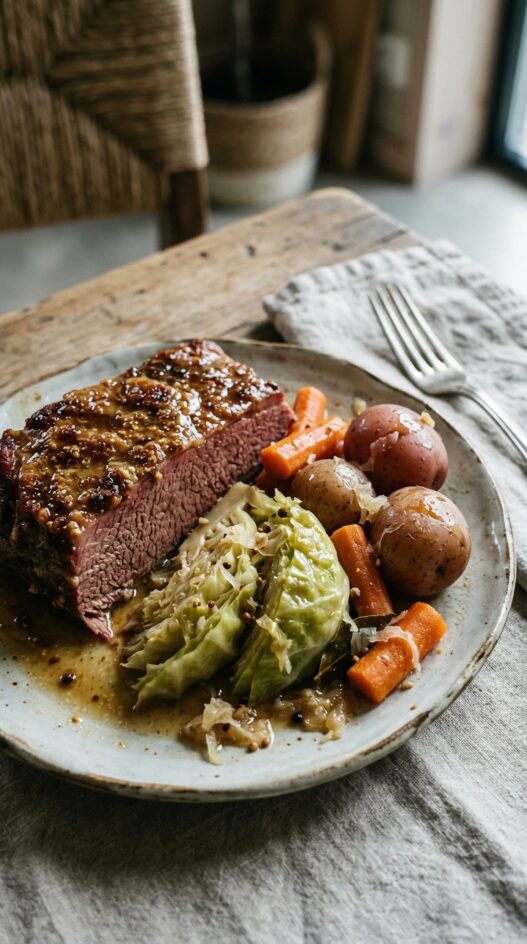
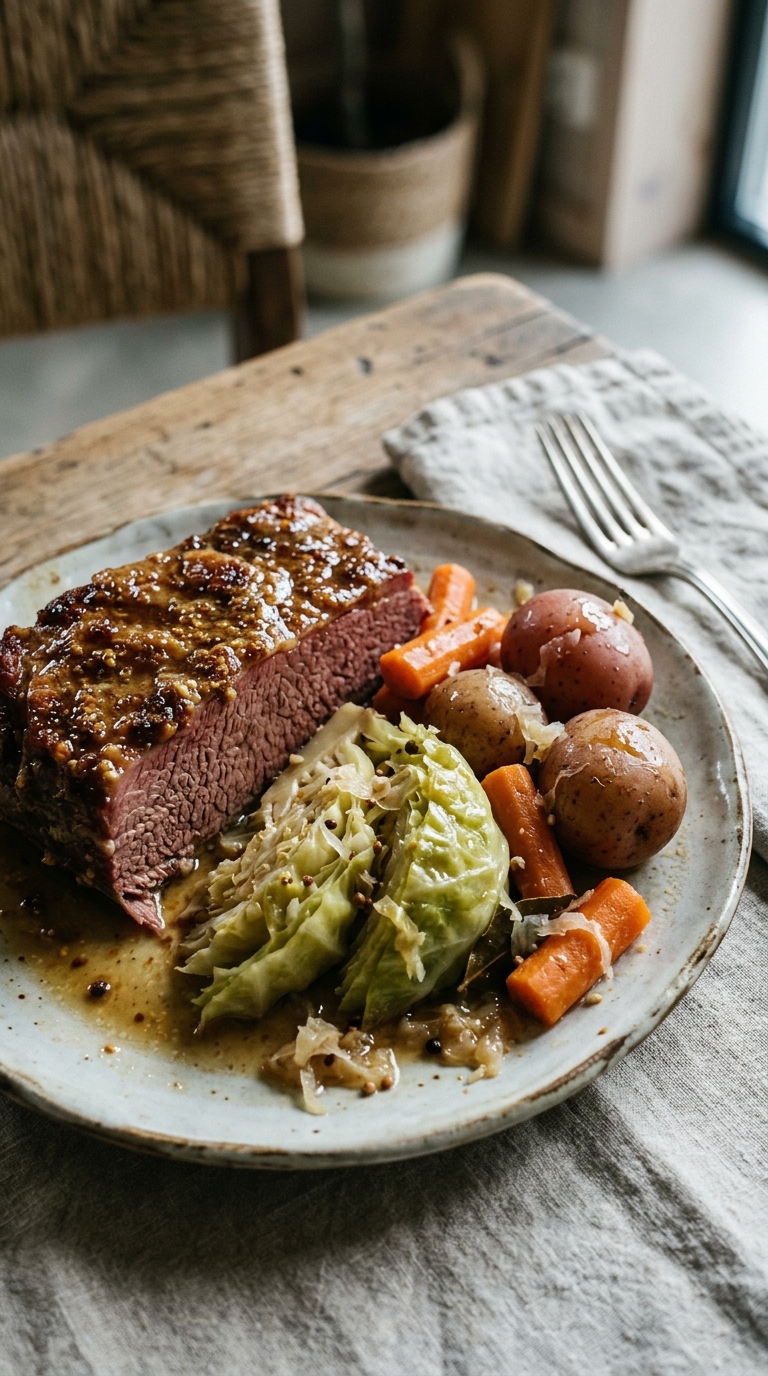
As someone who is constantly testing, tweaking, and altering recipes, Brown Sugar and Dijon Glazed Corned Beef and Cabbage with Red Potatoes is one recipe that I dare not change. My Irish husband requests that I do not tamper with his favorite meal from his homeland. Not that his homeland is Ireland; he is actually from the suburbs of Chicago. But he is Irish all the same.
I typically thought that the traditional Irish dinner of boiled corned beef, cabbage, red potatoes, and carrots lacked flavor. Over the last 20 years, my recipe has evolved, and I inject flavor by adding sauerkraut to the simmering corned beef and adding a sweet and spicy glaze on top. With the addition of a loaf of Spotted Dog, dinner is complete.
And there are usually leftovers which make my Irish husband very, very happy.
Print
Brown Sugar and Dijon Glazed Corned Beef and Cabbage with Red Potatoes
- Total Time: 4 hours 35 minutes
- Yield: 5 servings
Description
A sweet and spicy brown sugar and Dijon glaze elevates this corned beef and cabbage dish, perfect for a flavorful St. Patrick’s Day dinner.
Ingredients
- 4 lbs (1.8 kg) corned beef
- 1 (28 oz / 795 g) can sauerkraut
- 1 1/2 lb (680 g) small red potatoes
- 1 lb (450 g) green cabbage, cut into 5 wedges
- 6 carrots, peeled and cut into 2-inch pieces
- 1/3 cup (65 g) brown sugar
- 3 tbsp (45 ml) Dijon mustard
- Pickling spices (if included with corned beef)
Instructions
- Place the corned beef, fat side up, in a large stock pot and cover with water. Add the pickling spices if they were included with the corned beef, along with the sauerkraut.
- Cover and simmer over low heat for about 4 hours, or until the beef is tender.
- Preheat your oven to 350°F (175°C).
- In a small bowl, mix together the brown sugar and Dijon mustard to form a glaze.
- Remove the corned beef from the pot and place it in a roasting pan. Spread the glaze evenly over the top of the beef.
- Roast in the preheated oven for 30 minutes, or until the glaze is bubbly and caramelized.
- While the beef is roasting, add the red potatoes, cabbage wedges, and carrots to the pot with the cooking liquid. Simmer for about 20-25 minutes, or until the vegetables are tender.
- Slice the corned beef against the grain and serve with the cooked vegetables.
Notes
- Leftovers make for a delicious next-day meal.
- Serve with a loaf of Spotted Dog for a complete Irish dinner.
- The sauerkraut adds a unique flavor to the simmering beef.
- Adjust the glaze to taste by adding more mustard for extra spice.
- Prep Time: 5 minutes
- Cook Time: 4 hours 30 minutes
- Category: Main Course
- Cuisine: Irish
Nutrition
- Serving Size: 1 serving
- Calories: 650
- Sugar: 12
- Sodium: 1800
- Fat: 30
- Carbohydrates: 50
- Fiber: 8
- Protein: 45
- Cholesterol: 120
If You Liked This Recipe, You’ll Love These
- Irish Potato and Corned Beef Chowder
- Dijon Honey Glazed Pork Tenderloin
- Stuffed Cabbage Rolls
- Balsamic Glazed Chicken and Bacon Skewers
Frequently Asked Questions
Why does this recipe add sauerkraut to the simmering liquid?
I add a full 28 oz can of sauerkraut to the pot specifically to inject flavor into the traditionally bland boiled corned beef. The acidity of the sauerkraut permeates the beef during the 4-hour simmer, adding a tangy depth that plain water cannot provide.
Can I adjust the glaze if I want it spicier or sweeter?
Yes — add more Dijon mustard for extra spice, or reduce it for a sweeter finish. The base glaze is 1/3 cup brown sugar mixed with 3 tbsp Dijon mustard, so you can tip the ratio in either direction.
Why is the corned beef sliced against the grain?
Corned beef is a muscle-dense cut that becomes very fibrous after its long braise. Slicing against the grain shortens those fibers, making each slice noticeably more tender and easier to chew.








Totally converted, i always thought corned beef was bland. Left out the sauerkraut since my wife cant stand it.
A bit salty for me even after soaking the brisket, but the brown sugar and dijon glaze really saved it. Id rinse it more next time and make it again.
So where does the maple come into the picture?
Can’t wait to try this recipe!
I hope you enjoy the recipe Carrie. I love to make a loaf of soda bread to go along with this Irish feast. Here is my favorite recipe ~~ http://amycaseycooks.com/irish-soda-bread-2/
Made this for St Patricks and it came out so good and fall apart tender, i will make it every year now. Loved the brown sugar and dijon glaze, thanks!