




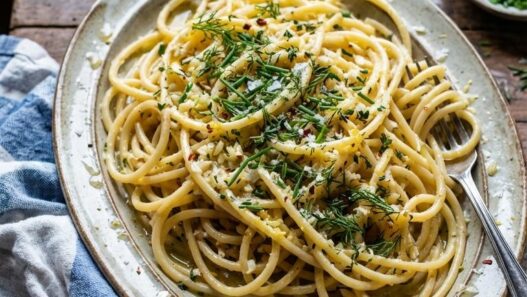

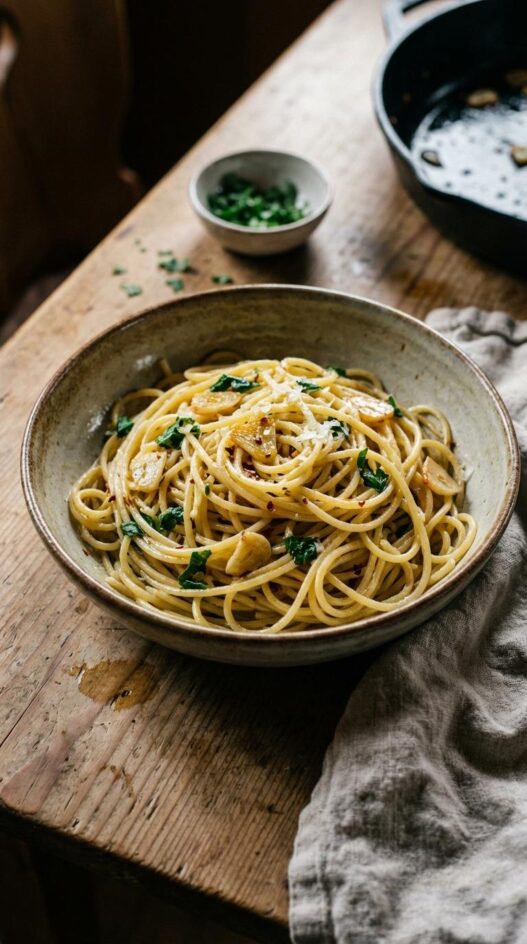
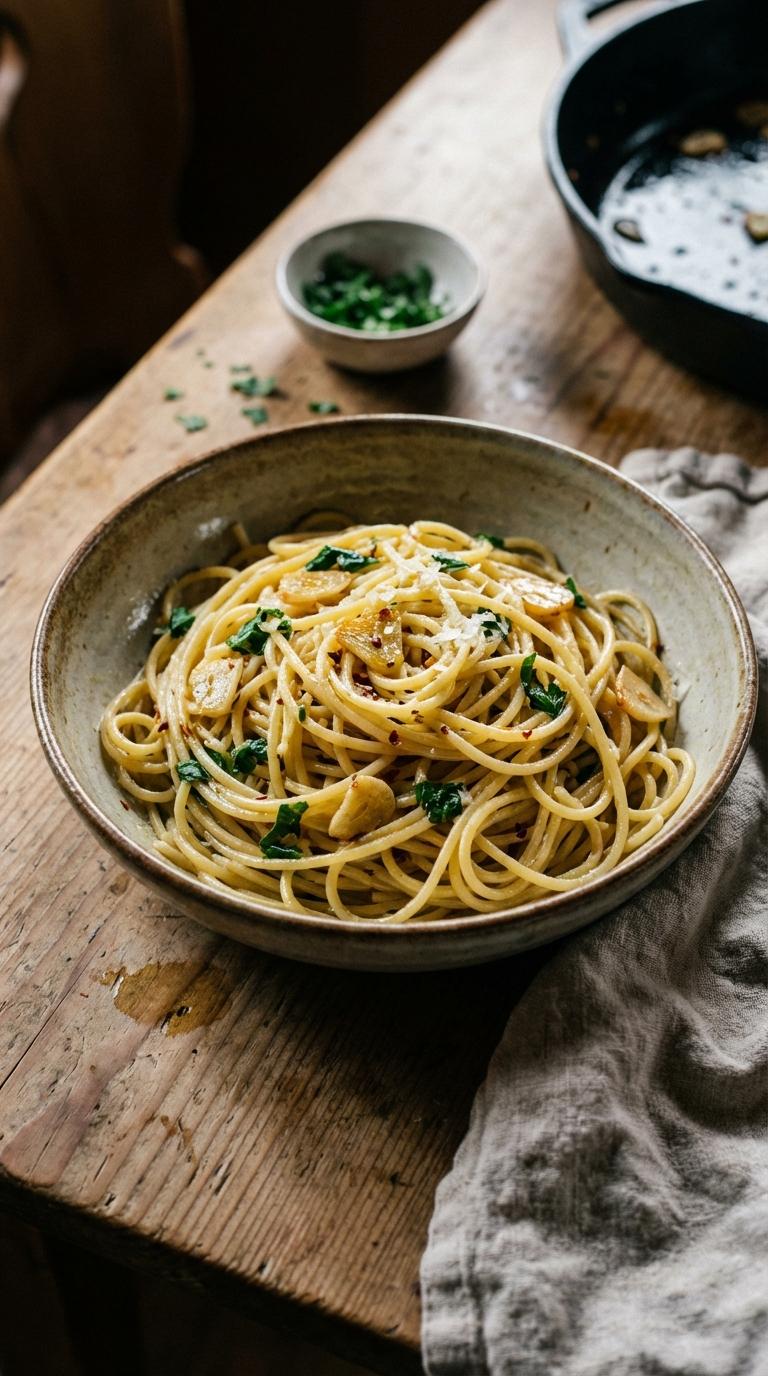
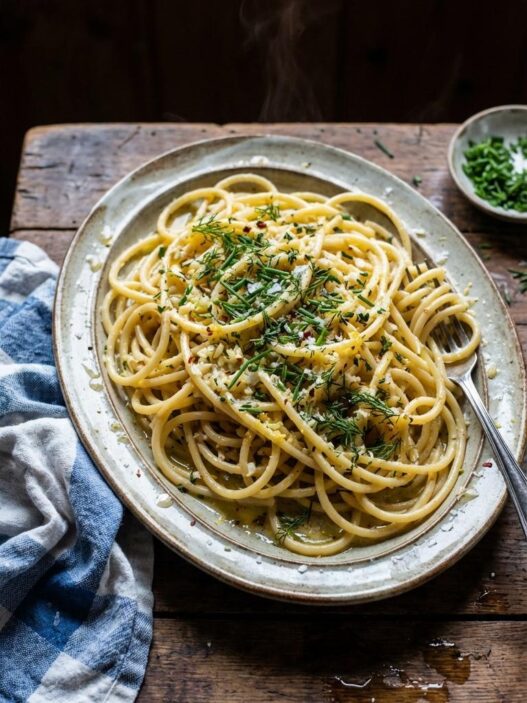
In my humble opinion, Aglio e olio is the dish that once and for all proves you do not need a long ingredient list to make something great. Spaghetti, garlic, olive oil, red pepper flakes, and a drizzle of starchy pasta water.
That is the entire recipe.
It originated as late-night food in Rome, the kind of thing you throw together when the fridge is empty and you are hungry. It holds up. But do not mistake simplicity for ease. With so few ingredients, every one of them is exposed, and your technique has to be right. The garlic needs to be sliced thin and toasted slowly until golden, not burned. The pasta water needs to be starchy enough to emulsify with the oil into a glossy sauce that coats every strand. 
Use good olive oil please, not the cheap stuff you keep for high-heat cooking. You will taste it in every bite, so spend the extra few dollars on something with flavor. Slice the garlic rather than mincing it, because thin slices toast more evenly and are less likely to burn. Cook it over medium-low heat, stirring often, and pull the pan off the heat as soon as the garlic turns golden. It goes from toasted to bitter in seconds.
Toss the pasta in the pan with reserved cooking water, shaking and turning it until the oil and water come together into a silky, creamy coating. A handful of chopped parsley at the end. Some people add Parmigiano, which is not traditional but is not wrong either. This cooks in twenty minutes and costs almost nothing, which makes it one of the most useful recipes you can learn.
How to Make Spaghetti Aglio e Olio
Cook Garlic Low and Slow
While the pasta cooks, heat olive oil in a large skillet over medium-low heat. Add thinly sliced garlic and cook slowly, stirring often, until the garlic turns evenly golden, about four to five minutes. Do not rush this or use high heat. Garlic burns easily and turns bitter. The goal is sweet, mellow garlic flavor. When the garlic is golden, add red pepper flakes, stir for fifteen seconds, and immediately remove from heat.
Reserve Pasta Water
Cook spaghetti in generously salted boiling water until one minute before al dente. Before draining, ladle out at least one cup of the starchy pasta cooking water. This water is essential for creating the sauce. The starch it contains is what allows the oil and water to emulsify into a creamy coating instead of separating.
Emulsify in the Pan
Transfer the drained pasta directly into the skillet with the garlic oil. Return to medium heat. Add about one-third cup of the reserved pasta water and toss vigorously with tongs while shaking the pan for one to two minutes. The oil and water should emulsify into a glossy, creamy coating on every strand. If it looks dry, add more pasta water a tablespoon at a time. If it looks watery, keep tossing over heat until it reduces. Remove from heat, toss with parsley, and serve immediately.
Basic: Aglio e Olio
- Total Time: 20 minutes
- Yield: 4 servings 1x
Description
Spaghetti tossed with golden garlic, fruity olive oil, red pepper flakes, and a splash of pasta water to create a silky, emulsified sauce. This Roman pantry classic proves that great pasta does not require elaborate ingredients, just a little bit technique. It teaches the essential skill of building a sauce in the pan with starchy pasta water.
Ingredients
- 12 ounces (340g) spaghetti
- 1/3 cup extra-virgin olive oil (use a good one — you'll taste it)
- 6 large cloves garlic, thinly sliced
- 1/2 teaspoon red pepper flakes, or to taste
- Fine sea salt
- 1/3 cup reserved pasta cooking water
- 2 tablespoons fresh flat-leaf parsley, finely chopped
- Freshly grated Parmigiano-Reggiano (optional, not traditional)
Instructions
- Bring a large pot of generously salted water to a boil (it should taste like the sea). Cook the spaghetti according to package directions, but pull it out 1 minute before al dente. Before draining, ladle out at least 1 cup of starchy pasta water and set aside.
- While the pasta cooks, heat the olive oil in a large skillet over medium-low heat. Add the sliced garlic and cook slowly, stirring often, until the garlic is evenly golden — about 4-5 minutes. Do not rush this step or use high heat, which will burn the garlic and turn it bitter.
- When the garlic is golden, add the red pepper flakes and stir for 15 seconds until fragrant. Immediately remove the pan from the heat to stop the cooking.
- Transfer the drained pasta directly into the skillet. Return to medium heat. Add about 1/3 cup of the reserved pasta water and toss vigorously, shaking the pan and turning the pasta with tongs for 1-2 minutes.
- The starchy water and olive oil should emulsify into a glossy, creamy coating on every strand. If it looks dry, add more pasta water a tablespoon at a time. If it looks watery, keep tossing over the heat until it reduces.
- Remove from heat, add the parsley, toss once more, and serve immediately. Top with Parmigiano if desired.
Notes
- Use a quality extra-virgin olive oil — it is the primary flavor of this dish.
- Slice the garlic thin and even for consistent cooking. Minced garlic burns too easily for this recipe.
- The pasta water is the secret ingredient. Its starch emulsifies with the oil to create a silky sauce rather than a greasy one.
- Purists omit the cheese, but a small amount of Parmigiano is delicious if you prefer it.
- Category: Main Course
- Cuisine: Italian
Nutrition
- Serving Size: 1 serving
Frequently Asked Questions
Why does my aglio e olio look greasy instead of creamy?
The oil and water did not emulsify. Toss the pasta more vigorously while shaking the pan and make sure the pasta is hot. The starch in the pasta water needs heat and movement to bind with the oil.
Why did my garlic turn dark and bitter?
The heat was too high. Cook garlic slowly over medium-low heat so it turns golden evenly without burning. Burnt garlic cannot be saved and ruins the entire dish.
Do Italians really put cheese on aglio e olio?
Traditionally, no. The dish is all about the purity of garlic and olive oil. But some people like a small amount of Parmigiano-Reggiano on top. It’s not authentic, but it tastes good.

If you warm up your serving plates before tossing the pasta, it’ll keep everything nice and hot for longer. Little touch but makes a difference.
this is my 11pm dinner when I get home late. garlic, chili, olive oil are always in the pantry and the water boils while I pour wine. don’t need anything else.
Is it better to use fresh or dried parsley here, or would either do the trick?
Fresh by a mile. Dried parsley basically disappears in the oil and loses the raw herbal note you want on top. If only dried is available I’d honestly just skip it.
Fresh parsley is better, if you don’t have it, better to leave it out than using dried.
Simple and hits the spot every time!
I swapped in whole wheat spaghetti instead, just to add a bit more fiber. Worked great, and the nutty taste was pretty nice too!
I’m glad you liked it David!! Cool name btw!
Tried this out and it was good, but I felt the garlic needed a bit more time to cook to mellow out the sharpness.
Yeah Mark, this is a little bit of a garlicky dish and giving it more time to cook will definitely make it milder.
Made this spaghetti aglio e olio for my sister’s baby shower last weekend, and everyone loved it!
Simple and so tasty!