
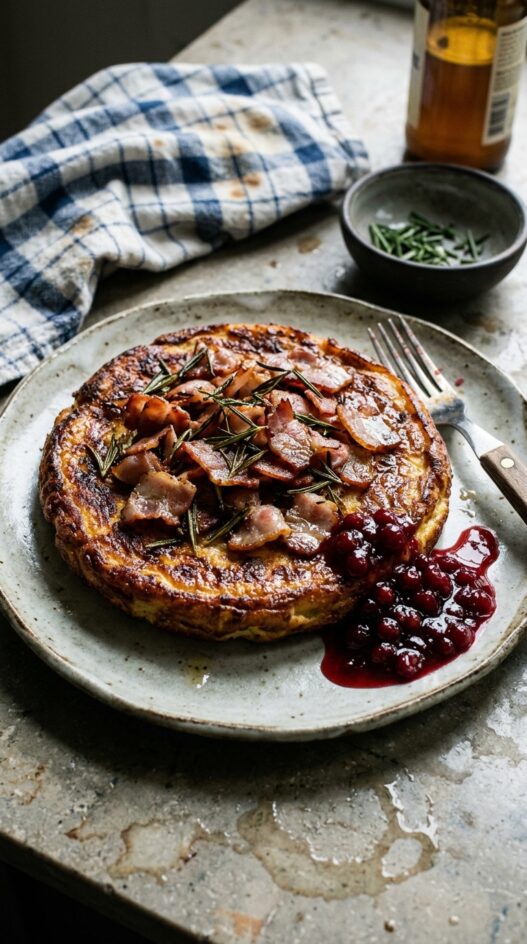
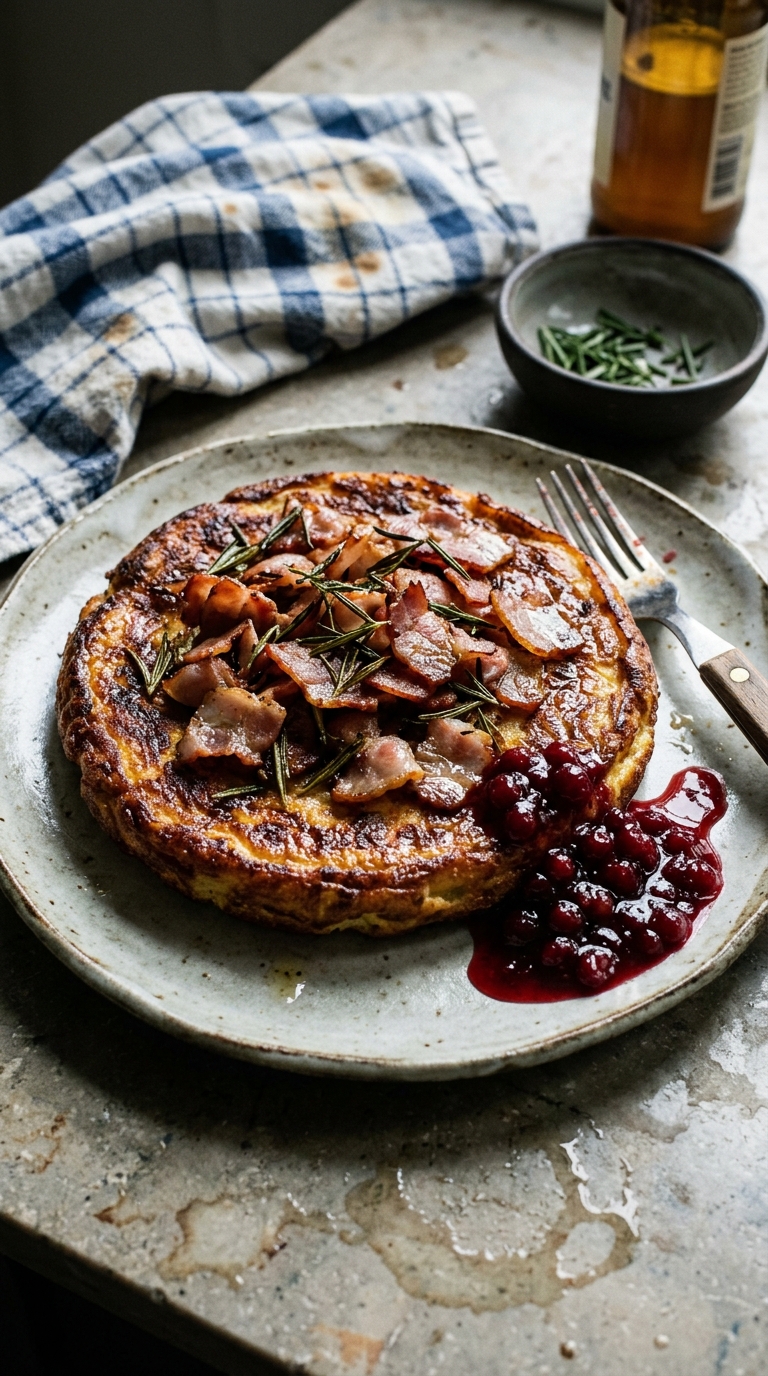
My version is made with an addition of fresh rosemary and brown sugar is used instead of regular white sugar. The rosemary works really well with smoked bacon and adds a nice touch to this old traditional dish.
Print
Ägga Kaga (Eggy Cake)
- Total Time: 30 minutes
- Yield: 2 servings
Description
Äggakaga is a rich, South Swedish thick pancake cooked on the stove, featuring eggs, butter, and pork fat, served with smoked bacon and lingonberry jam.
Ingredients
- 4 eggs
- 1 2/3 cup (400 ml) milk
- 1 1/2 cups (175 ml) regular flour
- 1 1/2 tbsp brown sugar
- 1 tsp salt
- Freshly milled pepper, to taste
- Plenty of butter for frying
- 1/2 lb (250 g) smoked bacon, sliced
- 2 sprigs fresh rosemary
- Lingonberry jam, for serving
Instructions
- Crack the eggs in a bowl and whisk them together with the milk.
- Add salt, pepper and sugar.
- Sift the flour into the batter little by little to avoid lumps. The mixture is done when all is well mixed and has become a smooth batter.
- Let it rest on the counter while you fry the smoked bacon. Add the rosemary to the bacon when its almost done.
- Set the bacon aside and reserve the fat, as that will be use when cooking the pancake.
- The pancake should be about 1- 1 1/2” thick so a regular frying pan (about 10″-11″ wide) that can fit the whole batter will work perfectly. Heat up the pan and melt a large lump of butter.
- Lower the heat to medium and pour in the batter. With a spatula, scrape the bottom and move the firm batter into the middle of the pan to prevent the mixture being burnt. Continue until all batter is firm.
- Turn the cake by covering the pan with a plate before turning.
- Add some more butter if necessary before sliding the cake onto the pan again, raise the temperature slightly and cook until the cake has browned underneath.
- Turn one more time. This time add the bacon fat before sliding the cake onto the pan.
- The cake is done when it’s golden brown on both sides.
- Top the cake with the fried Rosemary bacon and enjoy with lingonberry or cranberry jam. Best served with either milk or beer.
Notes
- This dish is traditionally served with smoked bacon and lingonberry jam, which complements the savory and sweet flavors.
- For a brunch twist, pair it with ale instead of mimosas.
- The addition of rosemary enhances the flavor of the bacon.
- Store leftovers in the refrigerator and reheat gently in a pan.
- Prep Time: 15 minutes
- Cook Time: 15 minutes
- Category: Breakfast
- Cuisine: Scandinavian
Nutrition
- Serving Size: 1 serving
- Calories: 450
- Sugar: 8
- Sodium: 900
- Fat: 25
- Carbohydrates: 35
- Fiber: 2
- Protein: 20
- Cholesterol: 220
If You Liked This Recipe, You’ll Love These
- How to Make Swedish Meatballs
- Savory Dutch Baby Pancake with Sausage and Mushrooms
- Fried Chicken, Bacon and Hot Honey Biscuits
- Baked Sweet Potato and Chorizo Hash with Fried Eggs
Frequently Asked Questions
How do I flip this thick stovetop cake without breaking it?
Cover the pan with a plate, then invert the cake onto the plate, and slide it back into the pan (adding more butter if needed). Raise the temperature slightly and cook the second side until golden brown, then flip once more — this time adding the reserved bacon fat before sliding the cake back in for its final color.
Why does the recipe use the reserved bacon fat in the final cooking stage?
After frying the smoked bacon with rosemary, set the bacon aside and reserve its rendered fat. Add that fat to the pan in the very last flip — cooking the cake’s underside in savory, smoky pork fat deepens the flavor and creates a richer crust than butter alone would.
What do I serve with Äggakaga if I can’t find lingonberry jam?
Äggakaga is traditionally served with plenty of smoked bacon and lingonberry jam. If lingonberry jam is unavailable, cranberry jam is the closest substitute — tart, berry-based, and similar enough in flavor. I also suggest pairing it with milk or beer rather than the usual brunch mimosa.

Hi Rusty,
It should be 1/2 a pound! Thanks, will correct it!
Um, so is it a pound (lb) of bacon or 250 grams? 250 gms.=0.55 lbs.
You are right and it is still wrong, half a pound is 227g. Go with the 250 and enjoy the extra rasher, nobody in Skane has ever complained about too much bacon.