








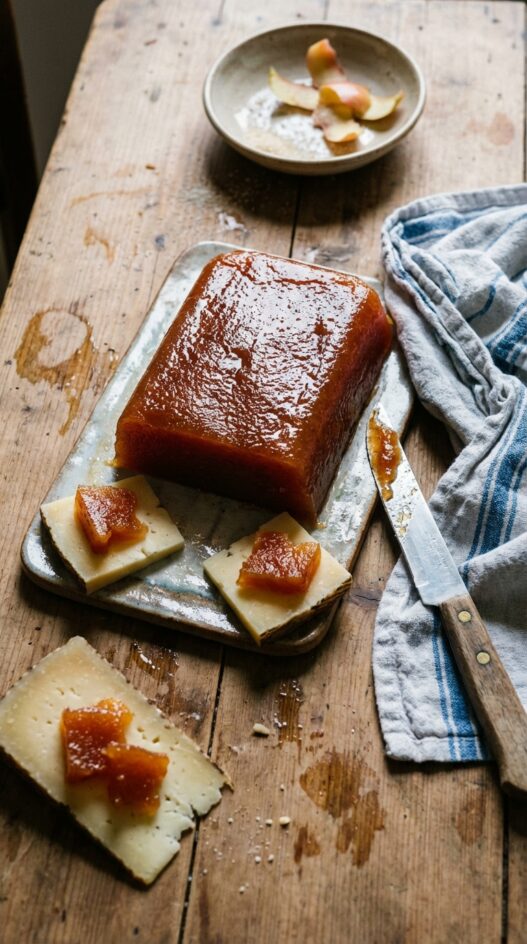
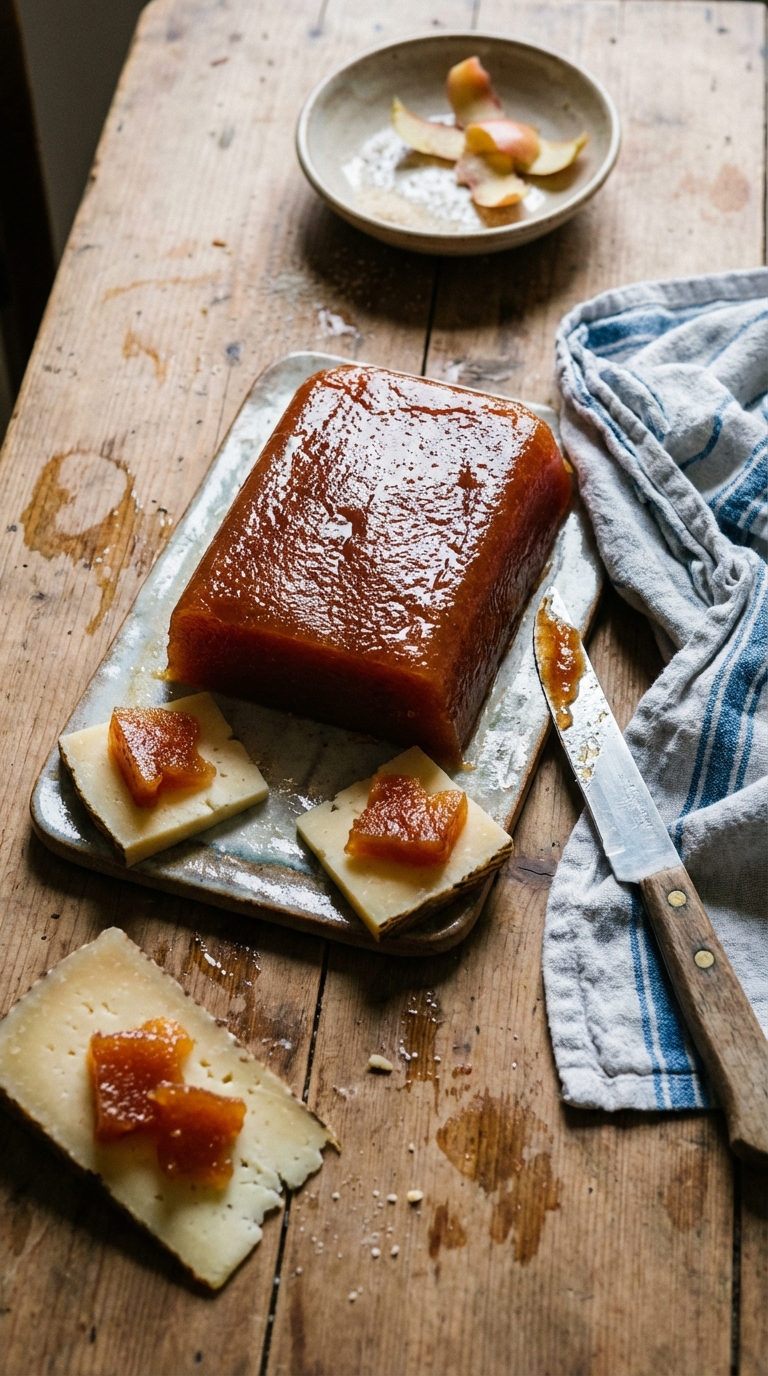
This apple paste or dulce de manzana is a typical recipe from the northern part of Spain, especially Asturias. Asturias is a humid, lusciously green apple-growing region, best known for its delicious cider, brewed all over the place by large and small apple growers. It is also known for its strong and amazing blue cheeses, like Cabrales. This apple paste is similar to the famous quince paste, dulce de membrillo, a true staple food in many Spanish regions. Similarly apple paste and strong cheeses go together like a horse and a carriage. Here I have paired dulce de manzana with a hearty Manchego cheese. An easy tapa not to be missed.
Here’s the recipe for the apple paste. No, I won’t give you the recipe for Manchego cheese, it’s a state secret.
Step by Step Guide to Making Dulce de Manzana – Spanish Apple Paste
Prepare the Apples:
- Peel and core the apples.
- Slice them into large chunks.
- Drizzle with lemon juice to prevent browning.
- A few things can affect the outcome: the type of apple is key here. If the apples were too sweet or low in pectin (like Red Delicious or Fuji), the paste might never firm up, even with extended cooking. Tangy, high-pectin varieties like Granny Smith or Reinette really help it gel.
Create the Mixture:
- To the apple chunks, add cider and sugar.
- Blend the apple mixture using a food processor or blender until a smooth consistency is achieved.
Cook the Puree:
- Transfer the apple puree to a heavy saucepan.
- Set the heat to low and let the mixture simmer for 35-40 minutes, uncovered. Ensure you stir frequently.
Check for Doneness:
- Once the puree attains a deep reddish-golden hue, test its readiness:
- Drop a teaspoon of the mixture onto a plate and let it cool.
- If the drop solidifies (more so than jam) and can be pushed in one piece, it’s ready.
- If not, continue simmering for an additional 2-5 minutes, checking for consistency.
Setting the Paste:
- Transfer the finished puree into a shallow container. Ensure the thickness resembles that of the images provided.
- If using a loaf pan, line it with plastic wrap for easy removal.
- Always cover the paste, unless you plan on consuming it immediately, to prevent drying.
Serve and Enjoy:
- Slice your preferred cheese and cut similar-sized pieces of the apple paste.
- Top the cheese slices with the Dulce de Manzana.
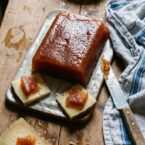
Dulce de Manzana – Spanish Apple Paste
- Total Time: 55 minutes
- Yield: Serves 2
- Diet: Omnivore
Description
A classic Spanish apple paste, perfect for a simple yet elegant tapa. Serve with Manchego cheese for a delightful contrast.
Ingredients
- 1 lbs (600 g) tangy apples, like Reinette
- 1 lemon
- 1/2 cup cider
- 1 lbs (500 g) sugar
Instructions
- Prepare the Apples:
- Peel and core the apples, slice them into large chunks, and drizzle with lemon juice to prevent browning.
- Create the Mixture:
- To the apple chunks, add cider and sugar. Blend the apple mixture using a food processor or blender until smooth.
- Cook the Puree:
- Transfer the apple puree to a heavy saucepan. Set the heat to low and simmer uncovered for 35-40 minutes, stirring frequently.
- Check for Doneness:
- Once the puree is a deep reddish-golden hue, drop a teaspoon onto a plate and let it cool. If the drop solidifies (more so than jam) and can be pushed in one piece, it’s ready. If not, continue simmering for 2-5 minutes, checking frequently.
- Setting the Paste:
- Transfer the finished puree into a shallow container. If using a loaf pan, line it with plastic wrap for easy removal. Cover the paste to prevent drying unless consuming immediately.
- Serve and Enjoy:
- Slice your preferred cheese and cut similar-sized pieces of the apple paste. Top the cheese slices with the Dulce de Manzana.
Notes
- For a smoother paste, strain the cooked puree through a fine-mesh sieve after simmering.
- To adjust sweetness, reduce the sugar by up to 100g, depending on the apple’s tartness.
- Store leftover Dulce de Manzana in the refrigerator for up to 2 weeks; cover tightly to prevent drying.
- Prep Time: 15 minutes
- Cook Time: 40 minutes
- Category: Dessert
- Method: Simmering
- Cuisine: Spanish
Nutrition
- Serving Size: 1/2 cup
- Calories: 250
- Sugar: 50
- Sodium: 10
- Fat: 2
- Saturated Fat: 1
- Unsaturated Fat: 1
- Trans Fat: 0g
- Carbohydrates: 60
- Fiber: 4
- Protein: 1
- Cholesterol: 0mg
And let me add a last tip: dulce de manzana goes really well with all kinds of meat or liver terrines and foie…
Try another great Spanish recipe – Padron Peppers – here.
Frequently Asked Questions
How do I know when the apple paste has reached the right consistency?
The paste is ready when it pulls away from the sides of the pot cleanly and holds a firm shape when a spoonful is dropped onto a cold plate. This usually takes 45 to 60 minutes of stirring over low heat.
What type of apple works best for dulce de manzana?
High-pectin apples like Granny Smith or a firm local variety give a paste that sets well. Sweeter, lower-pectin apples may need a longer cooking time to firm up.
How should I store the finished apple paste?
Pour it into a lightly oiled mold or pan and let it set at room temperature, then wrap tightly and refrigerate. It keeps for several weeks in the fridge or can be stored in a cool pantry if properly set.
Didn’t set at all. Followed the recipe exactly and simmered forever and a day…. at no point throughout that time did it do the setting-on-a-plate thing. Bit sad about the waste of apples ?
Oh no, that’s definitely frustrating. So sorry it didn’t set! A few things can affect the outcome: the type of apple is key here. If the apples were too sweet or low in pectin (like Red Delicious or Fuji), the paste might never firm up, even with extended cooking. Tangy, high-pectin varieties like Granny Smith or Reinette really help it gel.
Also, it can take quite a while to thicken—sometimes up to an hour—and it needs to reduce slowly with constant stirring toward the end. If you ever try again, you could add a little lemon zest or a small spoonful of lemon juice with natural pectin as backup.
Any substitute besides cider cos i don’t consume alcohol
I would have thought that you would include the Apple cores when cooking as they contain the pectin!
I was wondering the same thing! Including the cores sounds smart, especially if you’re relying on natural pectin.
El limón solo lo añades en gotas?0 también hay que añadirle la pulpa?
Aurelia, you only use the lemon use. Thank you for the question, we will clarify this.
Seems like the lemon ought to go in the purée, I’m guessing the pectin in the lemon was needed to set the membrillo so it’s firm enough..?
What happens to the lems? Are they cooked with the apples & suguar?