
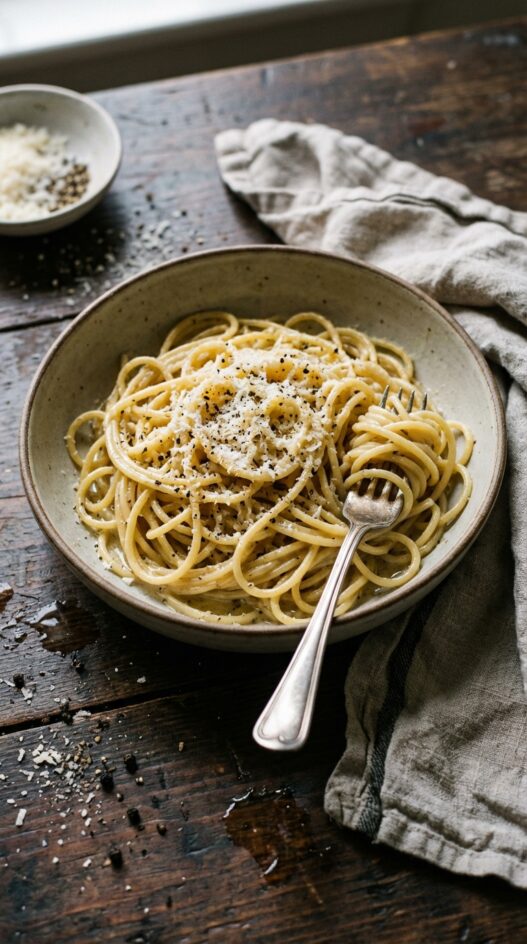
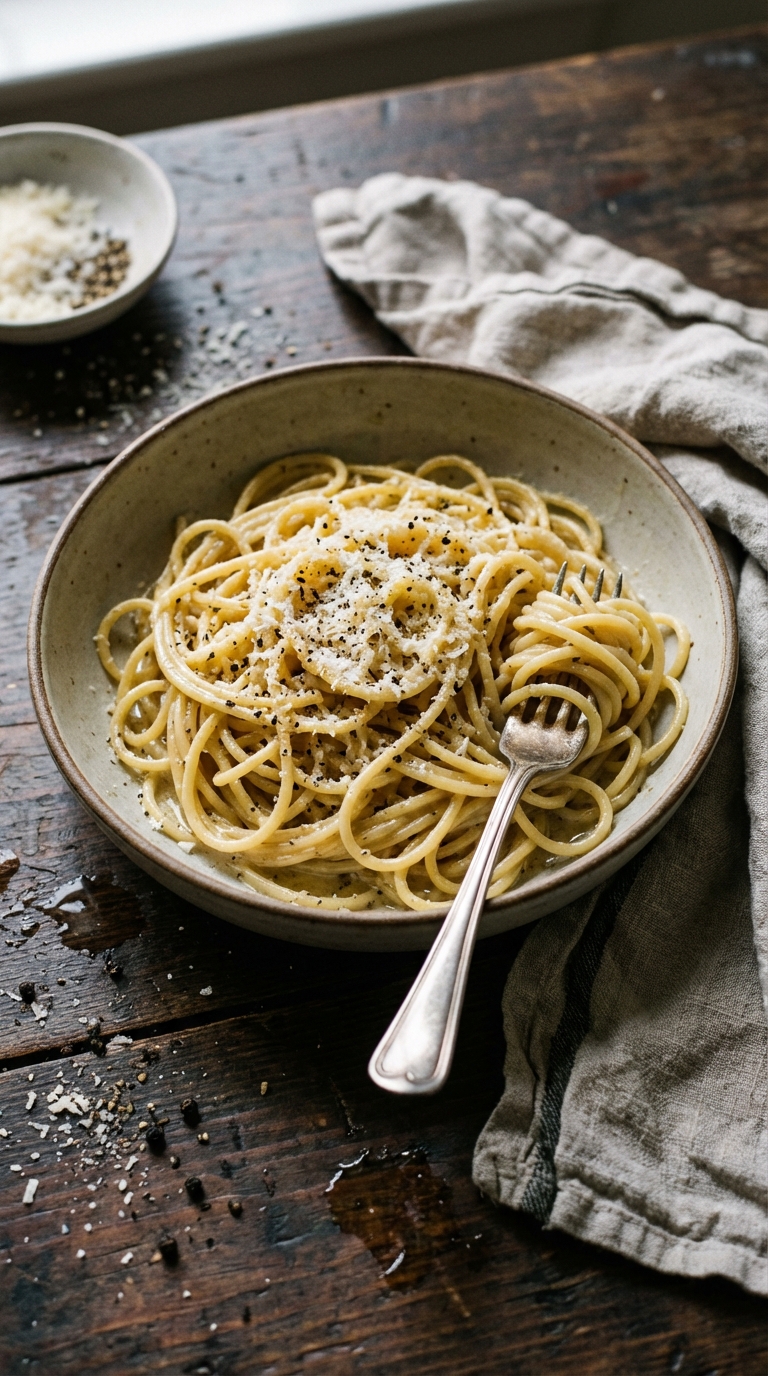
Cacio e pepe is a quick and tasty Roman dish. The origin of this recipe is very ancient. The secret of cacio e pepe is the creamy sauce, obtained by combining best quality Pecorino Romano and a few spoons of the water used to cook the pasta. The cheese and the starch in the cooking water are the only ingredients to make the original cacio e pepe sauce, forget butter or cream!
The cacio e pepe recipe is one of the most ancient dish of the Italian cuisine. For centuries, cacio e pepe has been the perfect meal of the Roman shepherds. Dried pasta, aged pecorino and black peppers are easy-to-carry ingredients and hard to spoil. Despite what many people think, cacio e pepe recipe does not needs any oil, cream or butter. The starch inside the spaghetti and the grated pecorino, combined in the right way, are enough to create the cacio e pepe sauce. As in many Roman recipes, the pepper has to be very abundant.
Print
Cacio e Pepe
- Total Time: 17
- Yield: 4 servings
Description
A Roman classic of spaghetti, Pecorino Romano, and abundant black pepper — bound together with starchy pasta water, no butter or cream.
Ingredients
- 1 lb (450 g) spaghetti
- 2 cups (180 g) Pecorino Romano, finely grated
- 2 tsp whole black peppercorns, coarsely cracked
- Salt for pasta water
Instructions
- Bring a large pot of lightly salted water to a boil. Add spaghetti and cook until just al dente, about 9-10 minutes, reserving 1 1/2 cups (360 ml) of the starchy cooking water before draining.
- While the pasta cooks, toast the cracked black pepper in a large, dry skillet over medium heat for 1-2 minutes, until fragrant. Remove from heat.
- Add 1/2 cup (120 ml) of the reserved pasta water to the skillet with the toasted pepper. Bring to a gentle simmer over medium-low heat.
- Add the drained spaghetti to the skillet and toss to coat, adding more pasta water a splash at a time to keep the pasta moist.
- Remove the skillet from heat. Add the finely grated Pecorino Romano in two or three additions, tossing vigorously and adding small amounts of pasta water as needed to create a creamy, smooth sauce. The cheese must melt into the water without clumping — keep the pan off direct heat to avoid scrambling the cheese.
- Taste and adjust salt if needed. Divide among warmed bowls, finish each plate with a crack of fresh black pepper, and serve immediately.
Notes
- Use the best-quality aged Pecorino Romano you can find, and grate it very finely just before using. Pre-grated cheese contains anti-caking agents that prevent proper emulsification.
- The pasta water is the only sauce binder — no butter, oil, or cream. Undercooking the pasta slightly (pulling it 1 minute early) lets it finish in the skillet and release more starch.
- Keep the heat off or very low when adding the cheese. High heat will cause the Pecorino to seize and turn grainy rather than creamy.
- Prep Time: 5
- Cook Time: 12
- Category: Main Course
- Cuisine: Italian
Nutrition
- Serving Size: 1 plate
Frequently Asked Questions
What type of pasta works best for Cacio e Pepe?
Spaghetti is traditionally used for Cacio e Pepe, as its shape allows the creamy sauce to cling well.
How do I achieve the creamy sauce without using cream or butter?
The creamy sauce is created by combining high-quality Pecorino Romano with a few spoons of the starchy pasta cooking water, which helps emulsify the cheese.
Why is it important to use abundant black pepper in this recipe?
Abundant black pepper enhances the flavor profile of Cacio e Pepe and is a key characteristic of this classic Roman dish.









Sounds great.