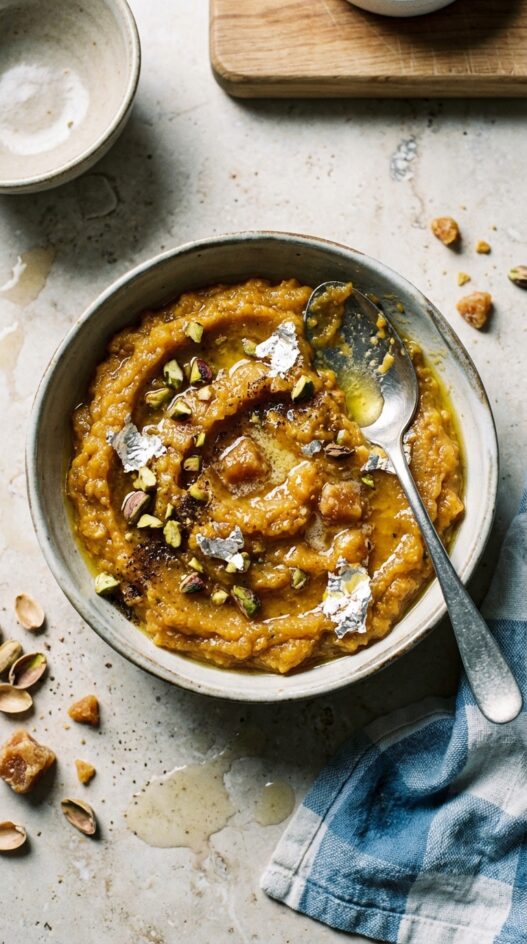
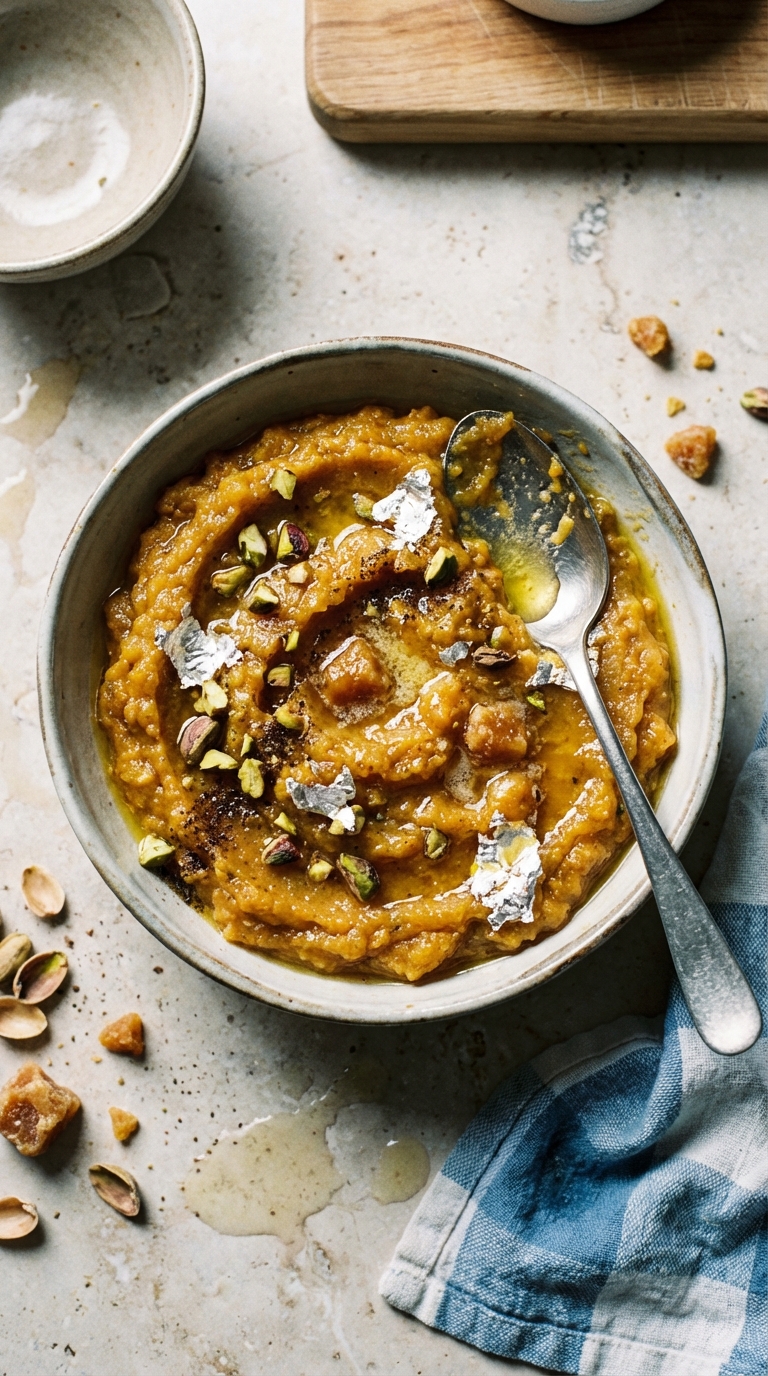
‘Navratri’ means the ‘nine nights’. ‘Nava’ means ‘nine’, and ‘ratri’ means ‘night’.During the nine nights and ten days of Navratri, the three forms of the Devi (Durga, Lakshmi, and Saraswati) are invoked. On this occasion I decided to make sweet potato halwa.
The first three days of Navratri celebrate the Devi in the form of Durga. In the presence of Durga Shakti, negative forces fade away. She transforms negativity into positivity.
The next three days of Navratri honor the Devine in the form of Lakshmi. Lakshmi is the goddess of wealth and prosperity. Wealth is a vital ingredient bestowed upon us for the maintenance and progress in our life. It is much more than just having money. It means abundance in knowledge, skills and talents. Lakshmi is the energy that manifests as the complete spiritual and material well-being of a person.
The final three days of Navratri are dedicated to Saraswati.
Saraswati is the goddess of knowledge – the one who gives the essence (Saara) Self (Swa). She is often depicted as being seated on a rock. Knowledge, like a rock, is a steadfast support. It stays with us at all times.
Devotees fast for 9 days and this recipe is quick dessert recipe consumed during fast.
Print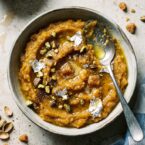
Sweet Potato Halwa: A North Indian Navratri Fasting Sweet
- Total Time: 20 minutes
- Yield: Serves 2
- Diet: Vegetarian
Description
A fragrant and subtly sweet halwa, perfect for festivals or a comforting treat. Simple to make with readily available ingredients.
Ingredients
- 2 sweet potatoes
- 2 tbsp ghee
- 4 tbsp jaggery
- 1 tsp cardamom powder
- pistachios
- Silver Warkh
Instructions
- Peel the sweet potatoes, cut them into chunks, and boil in a pot of water over high heat until fork-tender, about 12 to 15 minutes.
- Drain the sweet potatoes well and mash them until smooth using a potato masher or the back of a fork.
- Heat the ghee in a heavy-bottomed pan or kadai over medium heat until it shimmers.
- Add the mashed sweet potatoes to the ghee and stir continuously to combine.
- Crumble in the jaggery and continue stirring over medium heat as it melts and blends into the sweet potato mixture, about 3 to 4 minutes.
- Add the ground cardamom and mix well.
- Keep cooking and stirring for another 3 to 5 minutes until the halwa pulls away from the sides of the pan and has a glossy, thick consistency.
- Fold in most of the chopped pistachios, reserving some for garnish.
- Transfer the halwa to a serving dish, garnish with the remaining pistachios and silver warkh if using, and serve warm.
Notes
- For a richer flavor, use homemade ghee.
- If jaggery is unavailable, you can substitute with brown sugar, adjusting the quantity to your preferred sweetness.
- Store leftover halwa in an airtight container in the refrigerator for up to 3 days.
- Prep Time: 15 minutes
- Cook Time: 5 minutes
- Category: Dessert
- Method: Simmering
- Cuisine: Indian
Nutrition
- Serving Size: 1 cup
- Calories: 300
- Sugar: 25
- Sodium: 5
- Fat: 15
- Saturated Fat: 10
- Unsaturated Fat: 5
- Carbohydrates: 45
- Fiber: 5
- Protein: 5
- Cholesterol: 10
Frequently Asked Questions
What type of sweet potatoes should I use for the halwa?
You should use starchy varieties like orange-fleshed sweet potatoes, as they provide the best texture and sweetness for the halwa.
How do I ensure the halwa has the right consistency?
Make sure to cook the sweet potatoes until they are soft and mashable, then stir them into the hot ghee and keep cooking with the jaggery and cardamom until the mixture pulls away from the sides of the pan and turns glossy and thick.
Can I use a different sweetener instead of sugar in this recipe?
This halwa is already sweetened with jaggery rather than sugar. If jaggery isn’t available, you can substitute brown sugar, adjusting the amount to your preferred sweetness.
If You Liked This Recipe, You’ll Love These
- How to Make Mandarin Marmalade
- Flourless Persimmon Spice Cake with Date Caramel
- Apfel Kuchen: Traditional German Apple Cake
- Medjool Dates Stuffed with Ricotta