
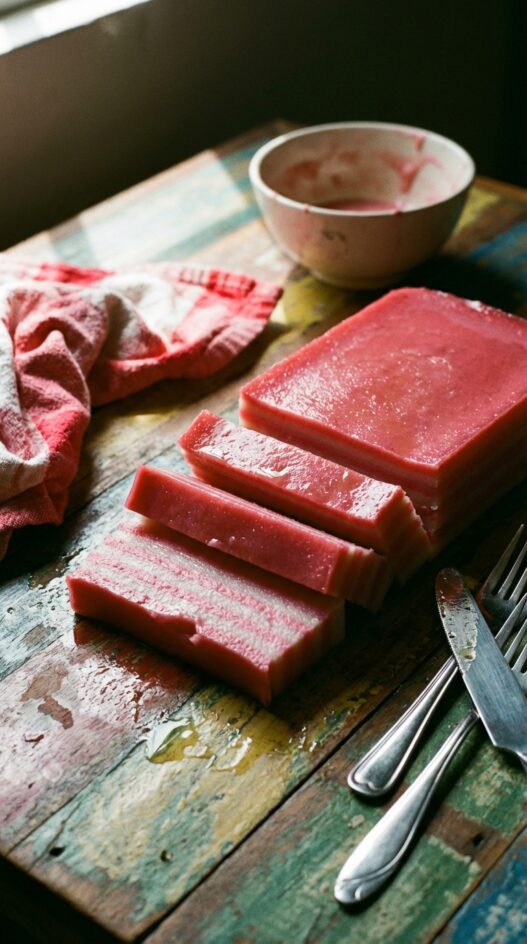
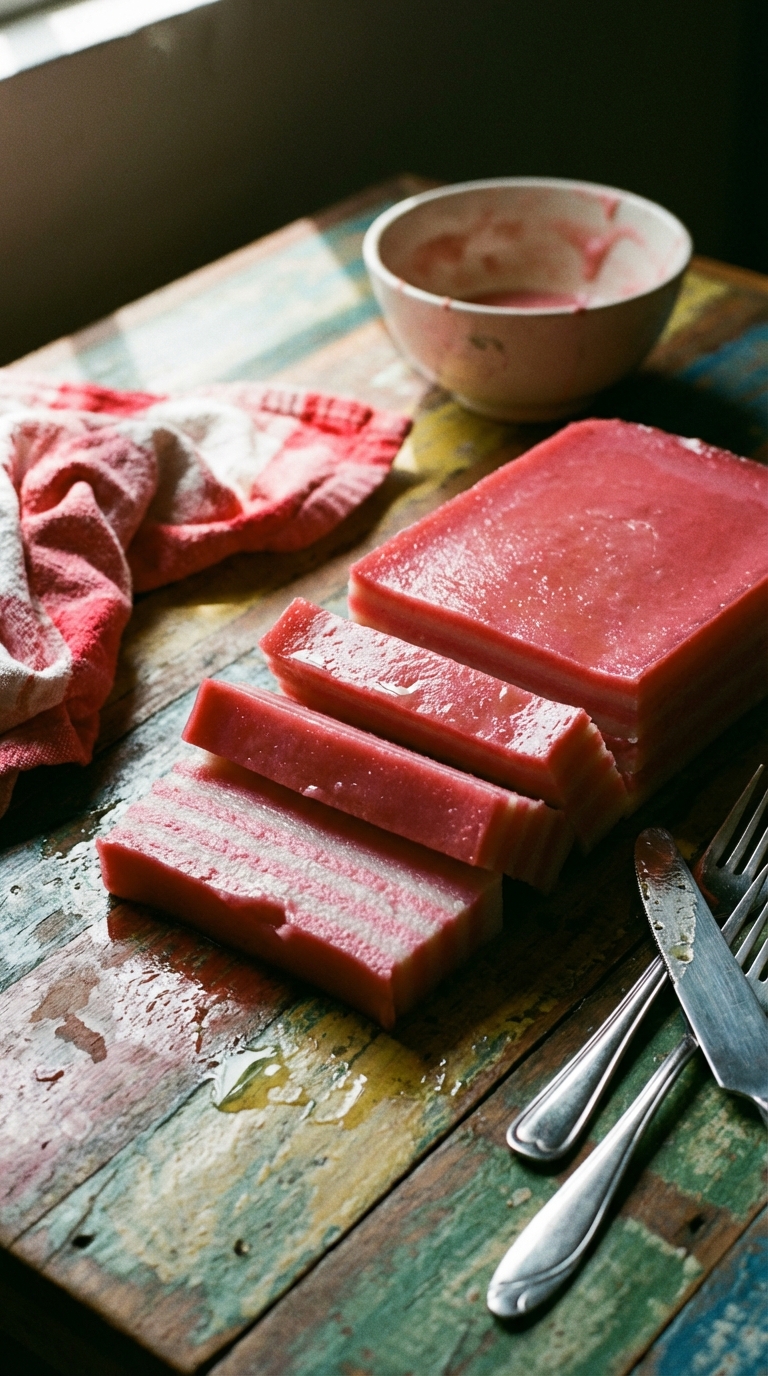
Growing up in Malaysia, I loved sitting at the table and peeling apart the colorful layers one by one, enjoying each piece slowly. There was something so satisfying about the soft, chewy texture and the subtle sweetness paired with coconut flavor—it’s a dessert that feels as playful as it is delicious.
This recipe is made with six layers instead of the traditional nine, because I personally think the effort / output doesn’t really warrant a full nine layer cake. However, if you use a smaller pan, the layers will look even taller. Also, while the alternating pink and white layers are festive, you could easily switch it up with more colors if you’re feeling creative.
For me and many other Malaysians, Kuih Lapis is a a little taste of my childhood. Whether you like to peel the layers apart like I do or just dive in and enjoy the whole thing, I hope this recipe brings some joy and a bit of tradition to your kitchen.
How to Make Kuih Lapis – Malaysian Steamed Layer Cake
Prepare the Coconut Mixture:
- Boil the liquids:
- In a medium pot, combine water, sugar, and pandan leaves. Bring to a boil, stirring until the sugar dissolves.
- Turn off the heat, remove pandan leaves, and stir in the coconut milk. Let the mixture cool completely.
- Mix the flours:
- In a large bowl, whisk together tapioca flour and rice flour. Gradually add the cooled coconut mixture, whisking continuously until smooth.
- Strain the batter through a sieve to remove lumps.
- Divide and color:
- Divide the batter into two equal portions. Add rose pink coloring to one portion, leaving the other portion white. Stir each batter well before using.
Steam the Layers:
- Prepare the pan:
- Grease a 7-inch (18 cm) square or round cake pan with a little oil. Place the pan in a steamer and preheat for a few minutes over high heat.
- Steam the layers:
- Pour about ½ cup of the white batter into the heated pan. Steam for 4 minutes, or until set.
- Add ½ cup of the pink batter on top of the white layer. Steam for another 4 minutes.
- Repeat the process, alternating layers, until all batter is used. Stir the batter each time before pouring.
- Create a final vibrant layer:
- For the last layer, add an extra drop of pink coloring to deepen the shade. Steam for an additional 6 minutes.
Cool and Serve:
- Cool completely:
- Allow the kuih to cool completely in the pan. Invert the pan to release the cake.
- Brush a little oil over the surface for a glossy finish, if desired.
- Slice neatly:
- Grease a knife with a little oil to prevent sticking while cutting. Serve at room temperature.
101 Guide to Succeeding with Kuih Lapis
About Kuih Lapis:
- Kuih Lapis is a traditional Southeast Asian dessert, particularly popular in Malaysia, Indonesia, and Singapore. The name translates to “layered cake,” and its vibrant layers and chewy texture are iconic in festive occasions.
Key Tips:
- Smooth Batter:
- Straining the batter ensures a lump-free, silky consistency.
- Even Layers:
- Use a ladle or measuring cup for consistent layer thickness.
- Color Mixing:
- Stir the batter before each pour to prevent the flours from settling.
- Cooling Time:
- Allow the kuih to cool completely before slicing to ensure clean cuts.
- Pan Preparation:
- Grease the pan lightly to prevent sticking but avoid over-greasing to keep the layers intact.
Kuih Lapis – Malaysian Steamed Layer Cake Snack
- Total Time: 45 minutes
- Yield: Serves 8
- Diet: Vegetarian
Description
Striking pink and white layers of this Southeast Asian dessert are created by steaming a delicate coconut batter. A beautiful and delicious treat!
Ingredients
- 1 1/2 cups (350 g) tapioca flour
- 2/3 cups (100 g) rice flour
- 2 cups (500 ml) water
- 1 cup (200 g) sugar
- 2 cups (500 ml) thick coconut milk
- 4 pandan leaves
- Rose pink coloring
- pinch salt
Instructions
Prepare the Coconut Mixture
- In a medium pot, combine water, sugar, and pandan leaves. Bring to a boil, stirring until the sugar dissolves. Turn off the heat, remove pandan leaves, and stir in the coconut milk. Let the mixture cool completely.
- Mix the flours:
- In a large bowl, whisk together tapioca flour and rice flour. Gradually add the cooled coconut mixture, whisking continuously until smooth. Strain the batter through a sieve to remove lumps.
Divide and color
- Divide the batter into two equal portions. Add rose pink coloring to one portion, leaving the other portion white. Stir each batter well before using.
Steam the Layers
- Grease a 7-inch (18 cm) square or round cake pan with a little oil. Place the pan in a steamer and preheat for a few minutes over high heat.
- Pour about 1/2 cup of the white batter into the heated pan. Steam for 4 minutes, or until set. Add 1/2 cup of the pink batter on top of the white layer. Steam for another 4 minutes. Repeat the process, alternating layers, until all batter is used. Stir the batter each time before pouring.
- For the last layer, add an extra drop of pink coloring to deepen the shade. Steam for an additional 6 minutes.
Cool and Serve
- Allow the kuih to cool completely in the pan. Invert the pan to release the cake. Brush a little oil over the surface for a glossy finish, if desired.
- Grease a knife with a little oil to prevent sticking while cutting. Serve at room temperature.
Notes
- For a smoother batter, use a fine-mesh sieve to strain the batter twice after combining the flours and coconut mixture.
- To achieve even layers, use a measuring cup to pour consistent amounts of batter into the pan for each layer.
- Store leftover Kuih Lapis in an airtight container in the refrigerator for up to 3 days; it’s best served at room temperature.
- Prep Time: 15 minutes
- Cook Time: 30 minutes
- Category: Dessert
- Method: Steaming
- Cuisine: Malaysian
Nutrition
- Serving Size: 1 slice
- Calories: 250
- Sugar: 25
- Sodium: 50
- Fat: 10
- Saturated Fat: 5
- Unsaturated Fat: 5
- Trans Fat: 0g
- Carbohydrates: 45
- Fiber: 2
- Protein: 2
- Cholesterol: 15mg
Frequently Asked Questions
What gives Kuih Lapis its distinctive layered appearance?
Each layer is individually poured and steamed before the next one is added. Alternating colors, usually from pandan extract and food coloring, create the striped look. Patience is essential since each layer takes several minutes to set.
Why is my Kuih Lapis rubbery or too dense?
Over-steaming individual layers or using too much tapioca starch can make the cake tough. Each layer should steam just until set, about 3 to 5 minutes. The batter consistency should be pourable, not thick.
Can I make Kuih Lapis without a steamer?
You need consistent, even steam for the layers to set properly, so a steamer is strongly recommended. In a pinch, you can use a large pot with a rack inside and a tight-fitting lid, making sure the water stays at a steady boil throughout.
If You Liked This Recipe, You’ll Love These
- Apfel Kuchen: Traditional German Apple Cake
- Malaysian Potato and Chicken Curry
- Crispy Baked Beet Chips
- Indian Lamb and Chickpea Fritters


Hi Mary,
This is the first time that I heard this layer cake cracks. Sounds strange to me. Anyway make sure you stir the mixture well before adding the new layer before steaming.
Hello! I’m wondering how do u stop the top from cracking when it is cooling down?
Thanks!!
Hi Clareb, Yes, tapioca starch and tapioca flour are the same thing.
Hi Diane C, So happy to hear that your kids loved this kueh. Thank you for trying my recipe :)
Happy New Year to you and your family!
Hello! I’m wondering is tapioca starch and tapioca flour the same thing?
Thanks!! :) happy new year !
Thank you very much for sharing your recipe. My kids loves the kueh a lot. They said that its very chewy and yummy….better than those we brought from the market… I am so glad that i found your site. Thank you very much and Merry Christmas to you :-)
Hi Azilrenur,
Sorry for the late reply to your question.
The steaming of the first layer of the lapis is very important. You must make sure it is fully cooked before adding the next layer. You may steam the first layer a little longer and it is firm to touch.
Hi, I tried making this kuih lapis. 5 minutes for evergy layer but the end result was a disaster. I thought it was overcooked but apprently it was undercooked. You could still taste the dough. My Q is, how do you know if the layer is cooked before putting another layer. I did touch the layer before putting new one, but I messed up nway.
Hi Iowan,
You can use corn flour but not 350g.
Put it the other way round
350g rice flour and 100g corn flour.
I have rice flour, but no tapioca flour. Can I use corn flour? Will it work?
Hi Nomi,
The pandan leaves give a nice fragrance flavour. Without that you will only get the taste of the coconut milk.
Thank you for trying. So glad to hear your kids enjoyed it :)
Sorry is answer to Jacy not Fong.
Hi Fong,
Sorry for the late reply.
Yes you can use coconut powder with water according to the package instruction.
Hi there I tried these …. made by others. I love the colour & taste but wanted to know is pandan leaf a must in the mixture? Does it give a diff flavor coz I have never made it & I really want to :)