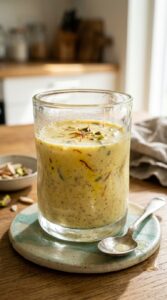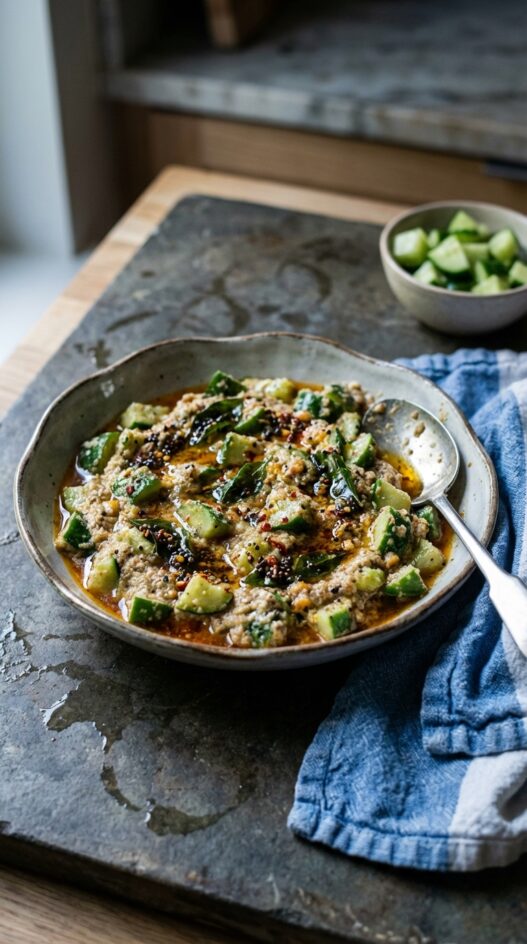
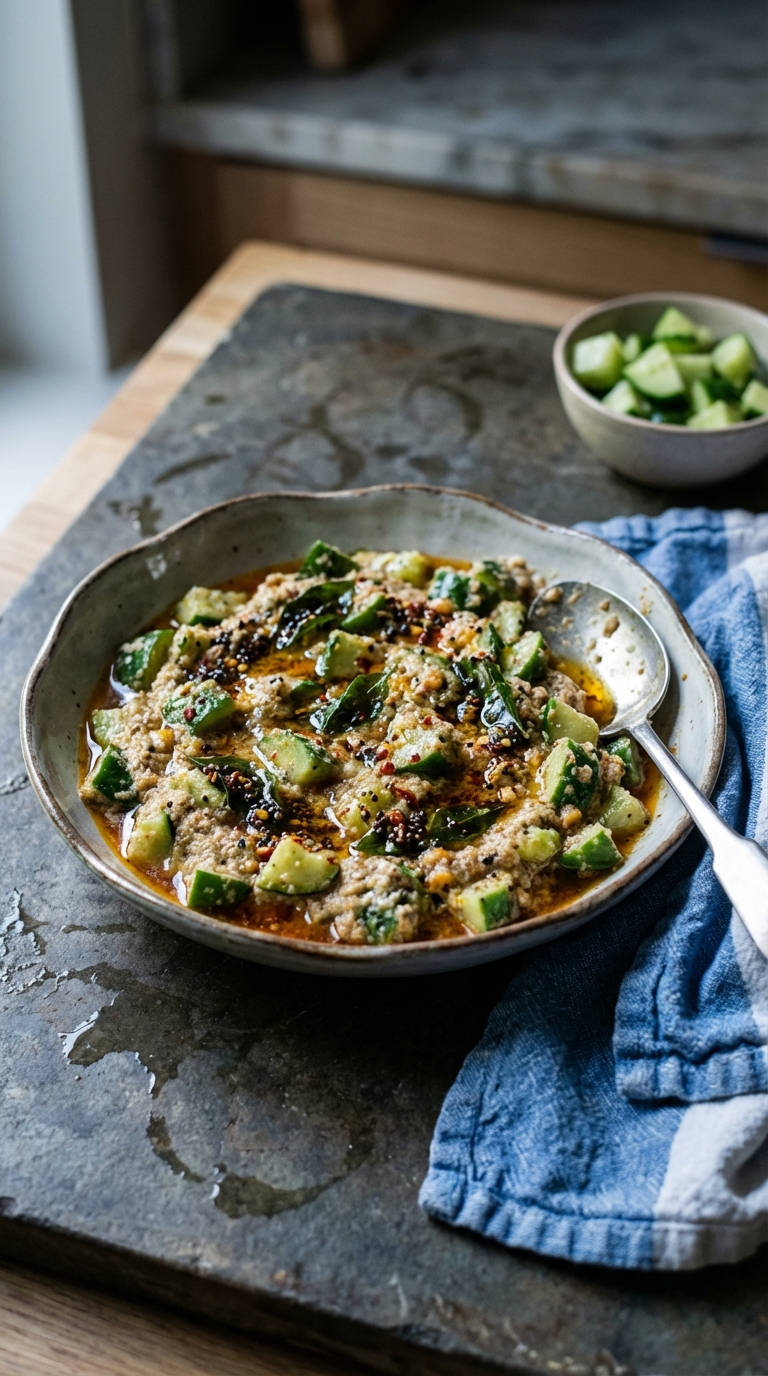
Gojju gets ignored in most Indian cooking discussions because it doesn’t photograph dramatically and doesn’t fit neatly into the curry-or-dal framework most people default to. That’s their loss. Southekayi Hasi Gojju is a Karnataka side dish built around raw cucumber in a coarsely ground coconut paste, balanced with tamarind, jaggery, and tempered spices. It’s got more going on texturally than most cooked preparations twice as involved. You eat it with rice, rasam, and nothing else, and that’s a meal. The tempering matters: mustard seeds, curry leaves, asafetida. Don’t skip the pop and sizzle before you pull it off the heat. Good immediately or the cucumber loses its bite within an hour. This is not a make-ahead dish and it’s not trying to be. It’s fresh, sharp, and deliberately simple. Leftovers are fine the next day but they’re not the point.
How to Make Southekayi Hasi Gojju – Cucumber in Coconut Sauce
Blending to the right texture
Coarse, not smooth. You want texture from the coconut and roasted gram. Pulse instead of blending continuously. If you seed the cucumber first, the paste holds its consistency better without going watery.
Tamarind and jaggery balance
Extract the tamarind properly by soaking in warm water and pressing through a sieve. The jaggery rounds the sourness without making it sweet. Too much tamarind and the whole dish tips acidic. Start conservative.
Tempering last
The hot oil with mustard seeds, red chili, and curry leaves goes in at the end, directly onto the mixed gojju. Stir immediately. That contact between hot oil and the coconut paste is what activates the whole dish.

Southekayi Hasi Gojju: Karnataka Raw Cucumber Relish
- Total Time: 17 minutes
- Yield: Serves 2
- Diet: Vegan, Vegetarian, Gluten-Free
Description
A vibrant raw cucumber relish, bursting with fresh flavors. Perfect as a side dish with rice.
Ingredients
- 3 small (or 1 large) cucumbers
- 1 lime sized tamarind
- 1/3 cup coconut
- 1 tbsp roasted gram
- 1 tsp cumin seeds
- 1/4 tsp mustard seeds
- Salt
- 1 tbsp jaggery
- 1 to 2 green chilies
- 2 tsp oil
- 1 or 1/2 tsp red chili
- a pinch turmeric
- 8-10 curry leaves
- a pinch asafetida
Instructions
- Combine coconut, jaggery, salt, cumin seeds, mustard seeds, green chili, roasted gram, and tamarind extract in a blender; blend to a coarse paste.
- Add the ground paste to chopped cucumber and mix well.
- Heat oil in a pan and add mustard seeds. Once they pop, add turmeric, asafetida, red chili flakes, and curry leaves; sauté for a few seconds.
- Add the seasoning to the prepared gojju and serve immediately with hot rice.
Notes
- For a smoother paste, remove the cucumber seeds before blending.
- Adjust the amount of green chilies to control the spice level.
- This gojju is best served fresh, but leftovers can be stored in the refrigerator for up to 1 day.
- Prep Time: 15 minutes
- Cook Time: 2 minutes
- Category: Side Dish
- Method: No-Cook
- Cuisine: South Indian
Nutrition
- Serving Size: 1/2 cup
- Calories: 150
- Sugar: 5
- Sodium: 100
- Fat: 8
- Saturated Fat: 5
- Unsaturated Fat: 3
- Carbohydrates: 25
- Fiber: 4
- Protein: 3
Frequently Asked Questions
What is kudampuli, and can I substitute it with regular tamarind?
Kudampuli is fish tamarind, commonly used in Kerala cooking. For this recipe, regular tamarind extract works since that’s what this calls for in the coconut paste.
Can I use English cucumbers instead of small Indian cucumbers?
Yes, English cucumbers work fine. They have fewer seeds and a mild flavor. Use about one large English cucumber to replace three small ones.
What is roasted gram, and where do I find it?
Roasted gram is split, skinned, and dry-roasted chickpeas, often labeled as “dalia” or “pottukadalai” in Indian grocery stores. It acts as a thickener and adds nuttiness to the paste.
If You Liked This Recipe, You’ll Love These
- Keema Matar (Ground Lamb with Peas)
- Thai Green Curry Fish Soup
- Mujadara Recipe: Middle Eastern Lentils and Rice
- Boozy French Toast
- Malaysian Potato and Chicken Curry