


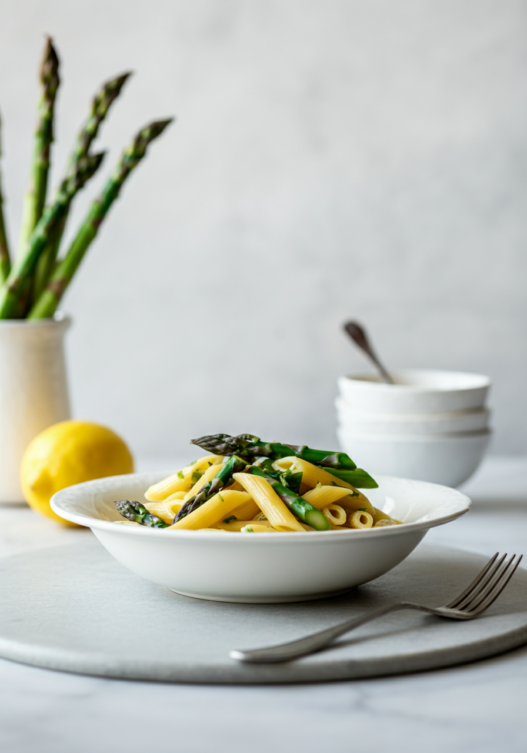
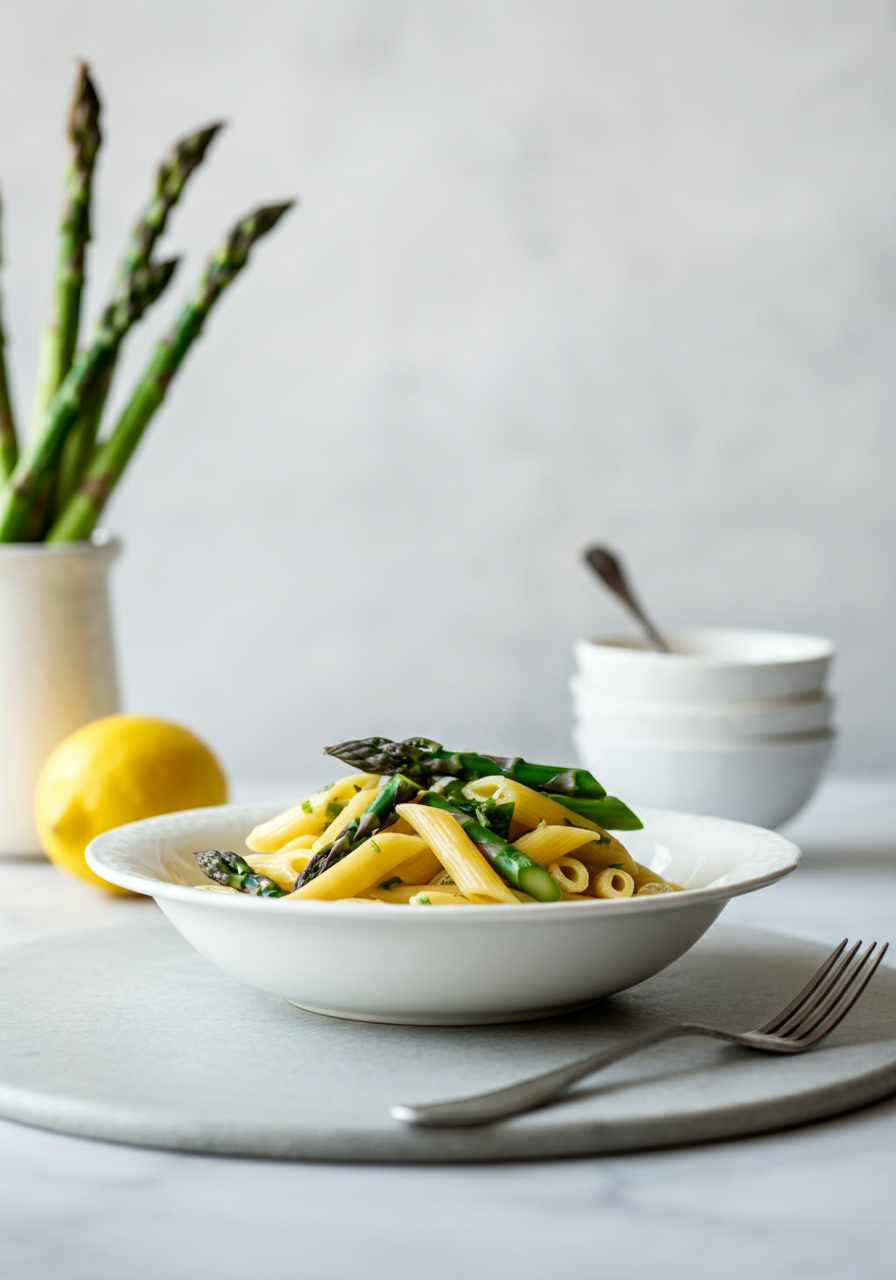
Spring pasta gets mangled by people who overthink it. Asparagus, good penne, olive oil, pecorino, lemon zest: you don’t need cream, you don’t need a sauce, and you definitely don’t need to roast anything. Simple enough. What you need is decent technique and a willingness to use pasta water like it matters, because here it genuinely does. Blanch the asparagus so it stays bright, build the pan with shallot and red pepper flakes in good oil, and by the time the pasta is almost done you’re just tossing everything together and letting the starchy water do its job. Pecorino over parmesan if you can get it; sharper, saltier, more interesting. Lemon zest at the end, not the juice. Juice makes it sour; zest keeps it fragrant.
How to Make Penne with Asparagus, Olive Oil, Pecorino and Lemon Zest
The pasta water is the sauce
This dish has no sauce in the traditional sense, which means pasta water is the whole game. Keep a ladle handy and add it in small amounts while you toss; the starch binds everything together and stops it from going dry. Try it. Don’t drain the pasta into a colander; transfer it directly with tongs so you carry some liquid with it.
Asparagus timing
Blanch the asparagus first, two minutes in salted boiling water, then pull it. You want it tender but not soft. It goes into the pan for just a few minutes more alongside the pasta, so if it’s already overcooked at the blanching stage you’ll end up with mush. Thin spears work better than fat ones for this; they heat through faster and stay cleaner-tasting. 
Pecorino, not parmesan
Parmesan works if that’s what you have, but pecorino is the right call. It’s saltier and has an edge to it that suits the lemon and heat from the pepper flakes. Grate it fine so it melts into the pasta rather than clumping. Add it off the heat so it doesn’t seize.
Penne with Asparagus, Olive Oil, Pecorino and Lemon Zest
- Total Time: 25 minutes
- Yield: Serves 2
- Diet: Omnivore
Description
A bright, fresh pasta dish. Perfect for a weeknight dinner or a casual get-together.
Ingredients
- 8 oz (227 g) asparagus blanched
- 3 oz (85 g) good penne
- 2 tbsp olive oil
- 1 shallot, minced
- 1/2 tsp hot red pepper flakes
- 1 oz (28 g) percorino or Parmigiano or a mixture, grated
- 1 lemon, for grating the zest
Instructions
- Drop the pasta.
- Slowly fry the shallot and pepper flakes in the oil.
- When the pasta has about 5 minutes left to cook, add asparagus to the pan.
- As the pan dries out, add big spoonfuls of pasta water to it.
- When the pasta is almost done, transfer it to the pan with the asparagus and start tossing and turning, adding more pasta water and tasting for salt.
- When 99.9% done, turn off the heat and add handfuls of cheese, keep tossing, tasting, and add more pasta water if needed.
- Taste for salt and pepper.
- At the very end, grate a little lemon zest over the pasta.
- Enjoy.
Notes
- For optimal asparagus texture, blanch it for only 2-3 minutes to maintain a slight crispness.
- To enhance the lemon flavor, use freshly squeezed lemon juice in addition to the zest.
- Leftovers can be stored in the refrigerator for up to 2 days; the pasta may absorb some of the sauce, so consider adding a little pasta water or olive oil before reheating.
- Prep Time: 10 minutes
- Cook Time: 15 minutes
- Category: Main Course
- Method: Sautéing
- Cuisine: Italian
Nutrition
- Serving Size: 1.5 cups
- Calories: 450
- Sugar: 2
- Sodium: 400
- Fat: 20
- Saturated Fat: 4
- Unsaturated Fat: 14
- Carbohydrates: 60
- Fiber: 4
- Protein: 15
- Cholesterol: 20
Frequently Asked Questions
Can I use a different pasta shape?
Rigatoni, fusilli, or orecchiette all work well since they catch the sauce in their ridges and curves. Spaghetti works too, but the chunky asparagus pairs better with shorter shapes.
Should I use pecorino or Parmigiano?
Either works, or use a mix of both. Pecorino is saltier and sharper, so adjust your seasoning accordingly. Parmigiano gives a milder, nuttier flavor.
How do I blanch the asparagus properly?
Trim the woody ends, cut into 1-inch pieces, and boil in salted water for 2 to 3 minutes until bright green and just tender. Transfer immediately to ice water to stop cooking.