
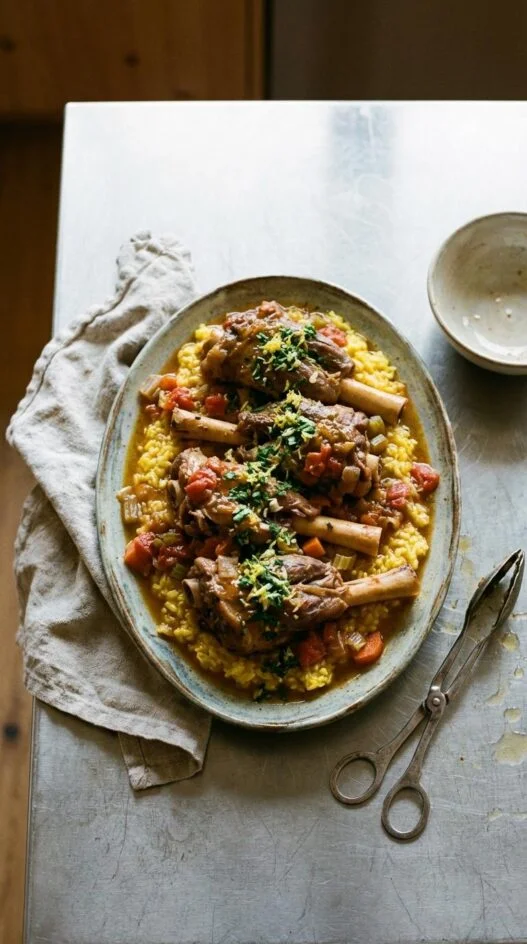
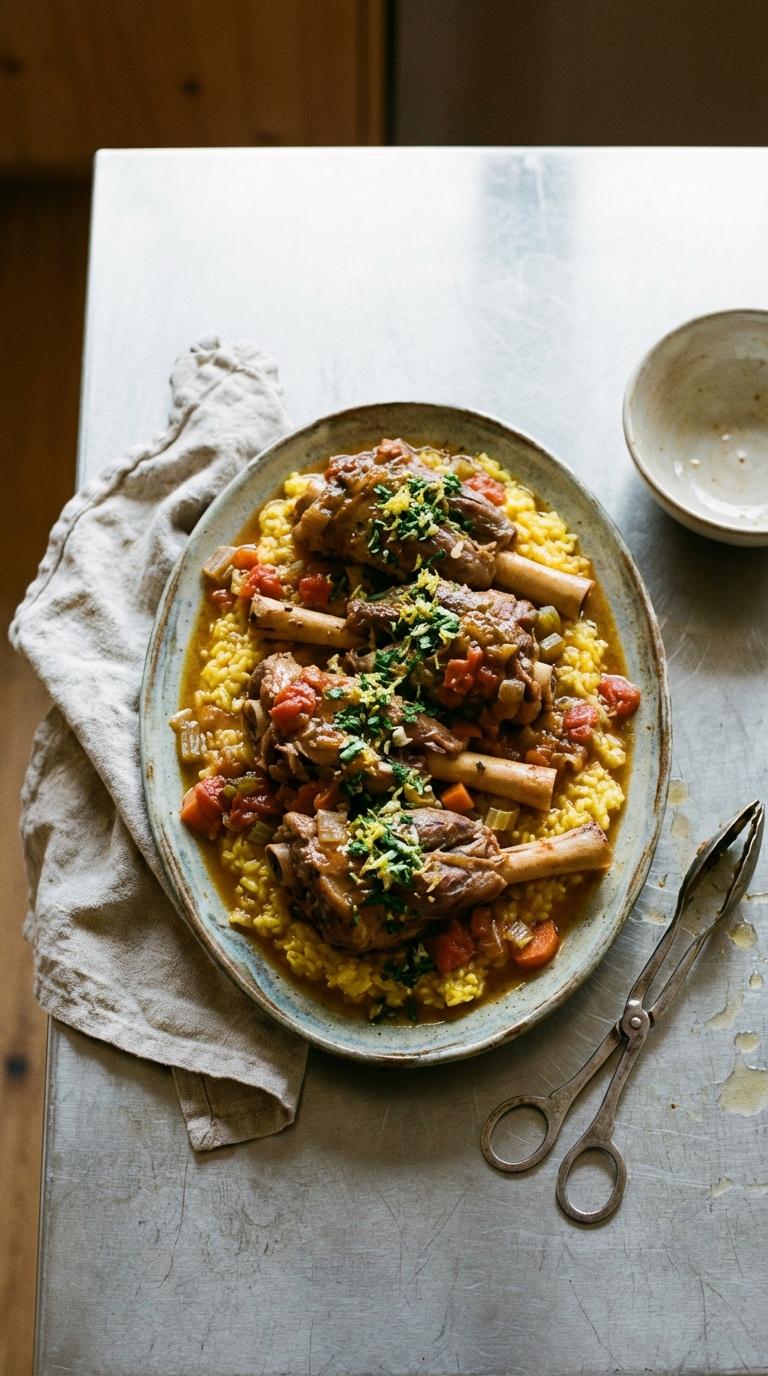
Osso buco is a dish that asks something of you: time, attention, and veal shanks that are worth the money. In return it gives you braised meat so tender it collapses at the touch of a fork, marrow that has spent two and a half hours turning into something trembling and rich. A sauce built from white wine, diced tomatoes, and the full aromatic base of onion, carrot, celery, and garlic. This is a dish for a weekend when you want to cook seriously. It is one of the reasons Milanese cuisine has the reputation it does.
Two details define the difference between a good osso buco and a great one. First, tie each shank with kitchen twine before braising: the meat shrinks as it cooks and without the twine it separates from the bone and falls apart. Second, do not treat the gremolata as optional garnish. Lemon zest, raw garlic, and flat-leaf parsley mixed together and scattered over the finished shanks is not decoration: it is the acidity and brightness that cuts alongside the richness of the braise and makes the whole thing cohere. Ask your butcher to cut the shanks 1.5 inches thick, and plan to serve this over saffron risotto — it’s the kind of Sunday cooking that’s worth clearing the afternoon for.
Prepare and Brown Shanks
Preheat oven to 325 degrees. Pat veal shanks dry and tie kitchen twine around circumference of each to help hold shape during braising. Season with salt and pepper, then dredge lightly in flour, shaking off excess. Heat olive oil in large Dutch oven over medium-high heat. Brown shanks on both sides, about four minutes per side, working in batches if needed. Remove and set aside.
Build Braising Liquid
Reduce heat to medium. Add butter, then diced onion, carrot, and celery. Cook for six to seven minutes until softened. Add garlic and cook thirty seconds. Pour in white wine and scrape up all fond from bottom. Let wine reduce by half, about three minutes. Add diced tomatoes, stock, and bouquet garni. Return shanks to pot, nestling snugly in single layer. Liquid should come about two-thirds up sides.
Braise and Finish
Bring to simmer, cover, and transfer to oven. Braise for two to two and a half hours, turning shanks once halfway through, until meat is extremely tender and pulling away from bone. Make gremolata by combining lemon zest, parsley, and garlic. Transfer shanks to platter and remove twine. If braising liquid is too thin, reduce on stovetop. Pour sauce over shanks and finish with generous gremolata. Serve over risotto.
Print
Osso Buco
- Total Time: 180 minutes
- Yield: 4 servings
Description
Osso Buco — literally “bone with a hole” — is one of Milan’s greatest contributions to the table. Cross-cut veal shanks are braised low and slow until the meat is falling-off-the-bone tender and the marrow in the center of each bone has become a trembling, unctuous treasure. Finished with gremolata — a bright punch of lemon zest, garlic, and parsley — and served over Risotto alla Milanese, it is one of the most satisfying braises in existence.
Ingredients
- 4 veal shanks, cut crosswise 1.5 inches thick (about 1 lb each)
- 1/2 cup all-purpose flour for dredging
- 3 tablespoons olive oil
- 2 tablespoons unsalted butter
- 1 medium yellow onion, diced
- 1 medium carrot, diced
- 1 stalk celery, diced
- 4 cloves garlic, minced
- 1 cup dry white wine
- 1 can (14.5 ounces) diced tomatoes
- 1 cup chicken or veal stock
- 1 bouquet garni (thyme, parsley, bay leaf)
- 1 teaspoon kosher salt
- 1/2 teaspoon freshly ground black pepper
- For the gremolata: zest of 1 lemon
- 2 tablespoons fresh flat-leaf parsley, finely chopped
- 1 clove garlic, finely minced
Instructions
- Preheat the oven to 325°F. Pat the veal shanks dry and tie a piece of kitchen twine around the circumference of each to help them hold their shape during braising. Season with salt and pepper, then dredge lightly in flour, shaking off the excess.
- Heat the olive oil in a large Dutch oven over medium-high heat. Brown the shanks on both sides, about 4 minutes per side, working in batches if needed. Remove and set aside.
- Reduce the heat to medium. Add the butter, then the onion, carrot, and celery. Cook for 6-7 minutes until softened. Add the garlic and cook for 30 seconds.
- Pour in the white wine and scrape up all the fond from the bottom. Let the wine reduce by half, about 3 minutes. Add the diced tomatoes, stock, and bouquet garni.
- Return the shanks to the pot — they should be nestled snugly in a single layer with the liquid coming about two-thirds up the sides. Bring to a simmer.
- Cover and transfer to the oven. Braise for 2 to 2.5 hours, turning the shanks once halfway through, until the meat is extremely tender and pulling away from the bone.
- While the shanks braise, make the gremolata by combining the lemon zest, parsley, and garlic. Set aside.
- Carefully transfer the shanks to a platter. Remove the twine. If the braising liquid is too thin, reduce it on the stovetop over medium-high heat until it coats the back of a spoon. Pour the sauce over the shanks and finish with a generous scattering of gremolata. Serve over Risotto alla Milanese.
Notes
- Tie each shank with twine — the meat shrinks as it braises and the twine keeps it from falling apart and separating from the bone.
- The gremolata is not a garnish — it is an essential component. Its brightness cuts through the richness of the braised meat and ties the whole dish together.
- Ask your butcher to cut the shanks 1.5 inches thick for the best ratio of meat to bone. Thinner cuts dry out, thicker ones take too long.
- Category: Main Course
- Cuisine: Italian
Nutrition
- Serving Size: 1 serving
- Calories: 720
- Sugar: 6g
- Sodium: 890mg
- Fat: 38g
- Carbohydrates: 24g
- Protein: 62g
Frequently Asked Questions
Why tie the shanks with twine?
The meat shrinks during braising and can fall apart and separate from the bone. Twine keeps each shank intact and looking presentable. Remove the twine before serving.
What thickness should the shanks be?
Ask your butcher for shanks cut one and a half inches thick. This is the ideal ratio of meat to bone. Thinner cuts dry out, thicker ones take too long to cook.
Can I skip the gremolata?
The gremolata is essential, not a garnish. Its raw lemon zest, garlic, and parsley provide the sharp, bright contrast that prevents this rich braise from becoming one-dimensional. Don’t skip it.
If You Liked This Recipe, You’ll Love These
- A Fun Way to Serve Pasta: Baked in a Tomato
- Bolognese Sauce with Zucchini Noodles
- Almond Biscotti
- Almond Milk Vanilla Panna Cotta with Blood Oranges





Would beef shanks work here or is it worth holding out for veal?
Hi Ingrid, beef shanks work well here! They have a beefier flavor than veal, and they usually need a little longer in the oven, closer to 3 hours, until they’re falling off the bone. Thanks for asking!