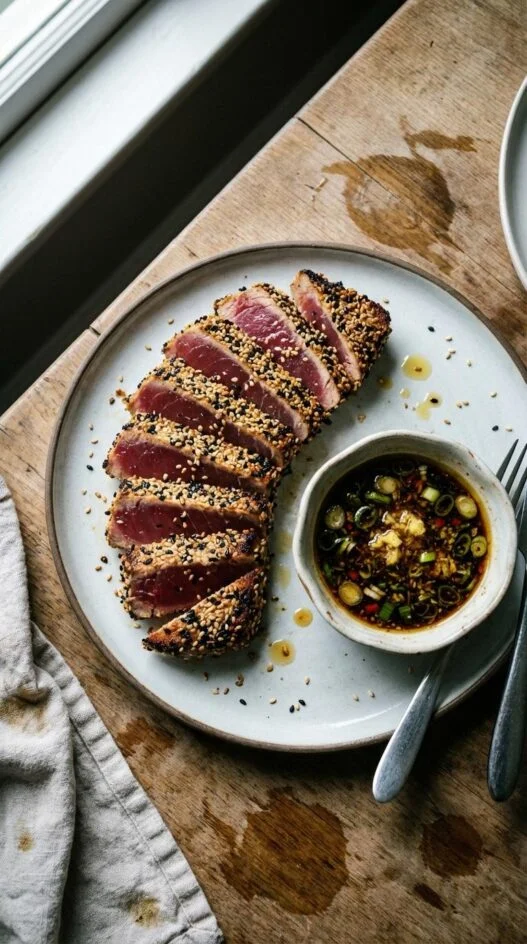
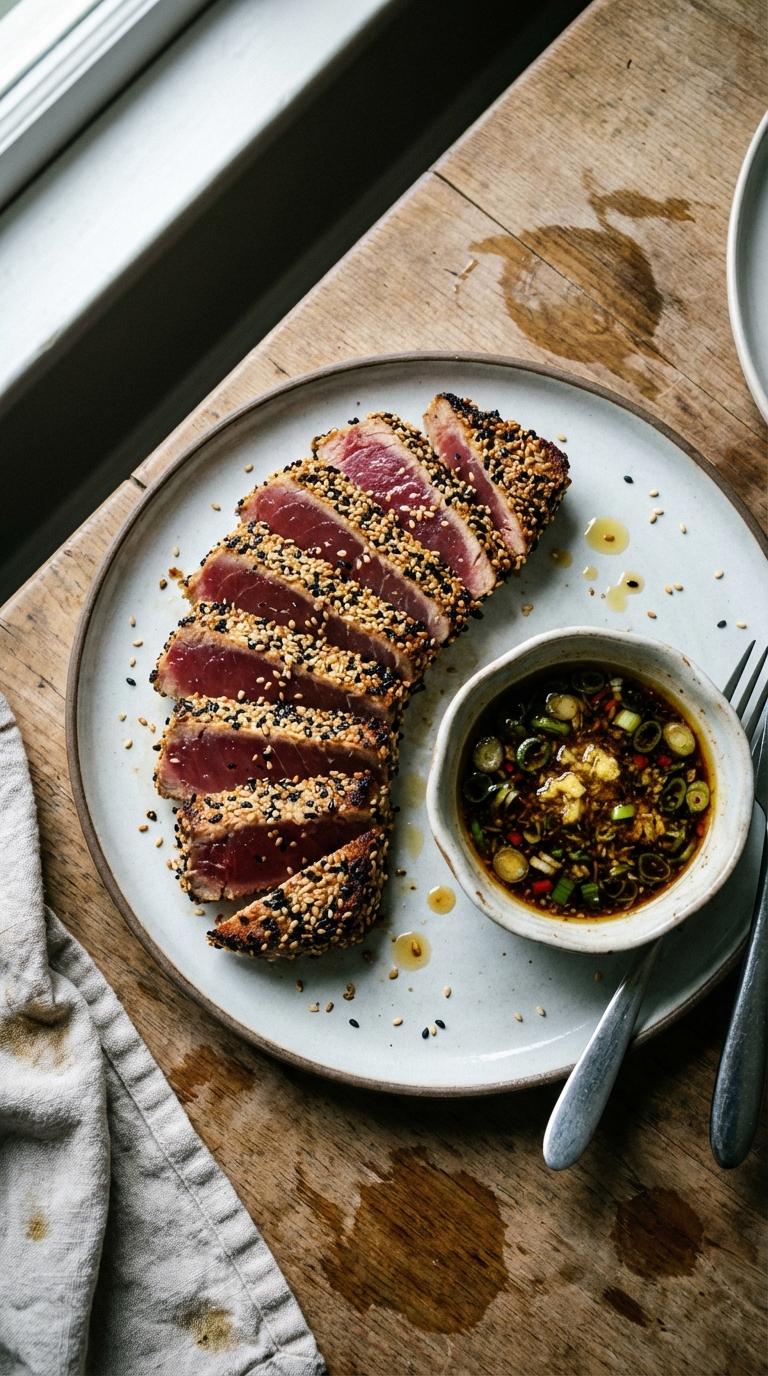
Tuna steaks should be seared hard and fast, then left rare in the center. The sesame crust adds texture and a nutty flavor that works with the meaty fish, but only if you don’t overcook it. This is a weeknight dinner that feels fancy but takes less than 15 minutes of actual cooking time. Buy sushi-grade tuna if you can find it.
Press the sesame seeds into the tuna before searing so they stick and form a proper crust. Use a mix of black and white sesame seeds for visual interest. A smoking-hot cast iron pan is best: you want a deep sear in under two minutes per side. Slice the tuna thin and serve it over rice or salad with soy sauce and pickled ginger on the side. This doesn’t reheat well, so only cook what you’ll eat immediately — it’s a five-minute job anyway, so there’s no real reason to make extra.
Coat the Tuna in Sesame Seeds
Mix white and black sesame seeds on a plate. Season the tuna steaks with salt and pepper on both sides. Press each tuna steak firmly into the sesame seeds, coating all sides evenly. The seeds should form a dense, even crust that covers the surface completely. Do not be shy with the seeds.
Sear in a Screaming-Hot Pan
Heat vegetable oil and sesame oil in a large skillet over high heat until the oil just begins to shimmer. Place the sesame-crusted tuna steaks in the pan and sear for forty-five seconds to one minute per side for rare. The sesame seeds should be golden and toasted. Do not move the tuna during searing or the crust will come off.
Rest and Slice Against the Grain
Let the seared tuna rest for one minute, then slice against the grain into half-inch thick pieces. Fan the slices on plates to show off the ruby-red center and golden sesame crust. Serve immediately with the soy-ginger dipping sauce alongside.
Print
Tuna Steaks with Sesame Crust
- Total Time: 15 minutes
- Yield: 4 servings
Description
Sushi-grade tuna seared in a sesame crust is one of those dishes that looks impossibly elegant but takes about five minutes of actual cooking. The outside gets a nutty, toasted crunch while the center stays ruby-red and cool. A soy-ginger dipping sauce ties it together. This is dinner party food disguised as weeknight cooking.
Ingredients
- 4 sushi-grade ahi tuna steaks (6 ounces each, about 1 inch thick)
- 1/3 cup white sesame seeds
- 1/3 cup black sesame seeds
- 2 tablespoons vegetable oil
- 1 tablespoon sesame oil
- 3 tablespoons soy sauce
- 1 tablespoon rice vinegar
- 1 tablespoon fresh ginger, grated
- 1 teaspoon honey
- 1 green onion, thinly sliced
- 1/2 teaspoon sriracha
- 1 teaspoon kosher salt
- 1/2 teaspoon freshly ground black pepper
Instructions
- Mix the white and black sesame seeds on a plate. Season the tuna steaks with salt and pepper on both sides.
- Press each tuna steak firmly into the sesame seeds, coating all sides evenly. The seeds should form a dense, even crust.
- Make the dipping sauce: whisk together the soy sauce, rice vinegar, ginger, honey, green onion, and sriracha. Set aside.
- Heat the vegetable oil and sesame oil in a large skillet over high heat until the oil just begins to shimmer.
- Sear the tuna steaks 45 seconds to 1 minute per side for rare, or up to 2 minutes per side for medium-rare. The sesame seeds should be golden and toasted.
- Let the steaks rest 1 minute, then slice against the grain into 1/2-inch thick pieces.
- Fan the slices on plates and serve with the dipping sauce alongside.
Notes
- Sushi-grade tuna is essential here since the center stays raw. Buy it from a trusted fishmonger and use it the same day.
- A screaming-hot pan and very short cooking time is the entire technique — do not overthink it or overcook it.
- Mixing black and white sesame seeds is not just visual. Black sesame has a slightly more intense, nutty flavor that adds depth.
- Prep Time: 10 minutes
- Cook Time: 5 minutes
- Category: Main Course
- Cuisine: Japanese
Nutrition
- Serving Size: 1 serving
- Calories: 350
- Sugar: 2
- Sodium: 680
- Fat: 18
- Carbohydrates: 6
- Fiber: 1
- Protein: 42
- Cholesterol: 65
Frequently Asked Questions
How do I know if tuna is sushi-grade?
Sushi-grade is not a regulated term, but it generally means the fish has been frozen to kill parasites and is safe to eat raw. Buy from a reputable fishmonger and ask specifically for sushi-grade or sashimi-grade tuna.
Can I cook the tuna all the way through?
You can, but you will lose the texture and flavor that makes this dish special. If you do not like rare tuna, sear for two to three minutes per side for medium, but do not use expensive sushi-grade fish for this.
What should I serve with sesame-crusted tuna?
Steamed rice, edamame, cucumber salad, pickled ginger, and wasabi are all traditional accompaniments. The tuna is rich, so keep the sides light and fresh.