
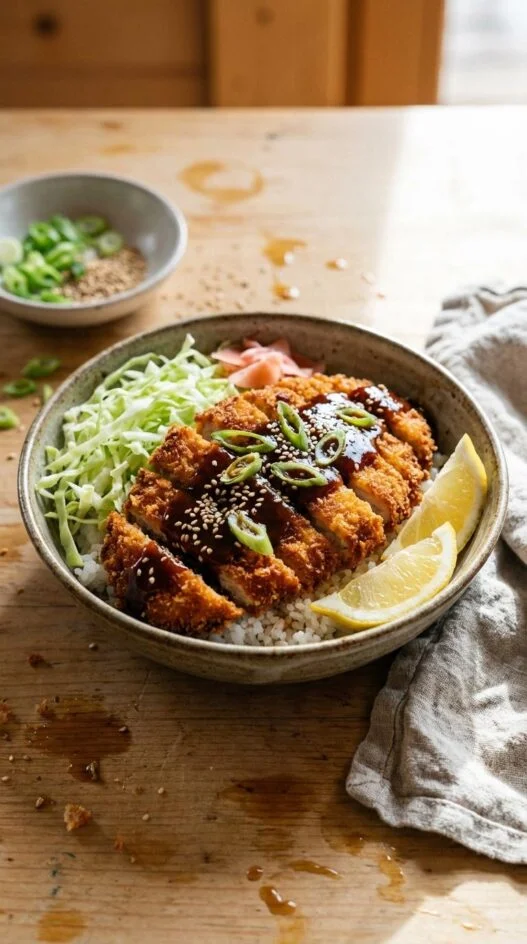
Chicken katsu is a dish that sounds like a weekend project but actually needs about 30 minutes. The contrast of a shatteringly crisp panko crust against tender, juicy chicken breast is what makes it so satisfying. Building it into a bowl with warm rice, crunchy shredded cabbage, and pickled ginger turns a simple cutlet into a proper meal. This is weeknight comfort food that feels a lot more special than the effort required. What separates a great katsu from a greasy one is temperature control. Panko breadcrumbs are lighter and airier than Italian breadcrumbs, which means they crisp faster and absorb less oil.
But only if you keep the heat at medium. Too high, and the coating burns while the chicken stays raw in the center. Pound each breast to an even thickness before breading so everything cooks at the same rate. For the sauce, store-bought tonkatsu sauce works fine, or make your own with ketchup, Worcestershire, soy sauce, and a little sugar. The whole bowl keeps well for meal prep, though the cutlet is best freshly fried. If you want to get ahead, bread the chicken and refrigerate it for up to a day before frying.
Pounding and Breading the Chicken
Place each chicken breast between two sheets of plastic wrap and use a meat mallet to pound it to an even half-inch thickness. Season both sides with salt and pepper. Set up your breading station with three shallow dishes: flour in the first, beaten eggs in the second, and panko in the third. Dredge each cutlet in flour, shaking off the excess. Dip it in the beaten eggs, letting the excess drip off. Finally, press it firmly into the panko, making sure both sides are evenly coated with a thick layer of breadcrumbs.
Frying at the Right Temperature
Heat about half an inch of vegetable oil in a large skillet over medium heat until it reaches 350°F. If you don’t have a thermometer, test it by dropping in a panko crumb. It should sizzle immediately but not burn. Carefully add the breaded cutlets to the hot oil, working in batches if necessary to avoid crowding. Fry for four to five minutes per side until the coating is deep golden brown and the chicken is cooked through. The internal temperature should reach 165°F. Remove the cutlets to a wire rack to drain, not paper towels. The rack keeps the bottom crispy.
Slicing and Assembling the Bowl
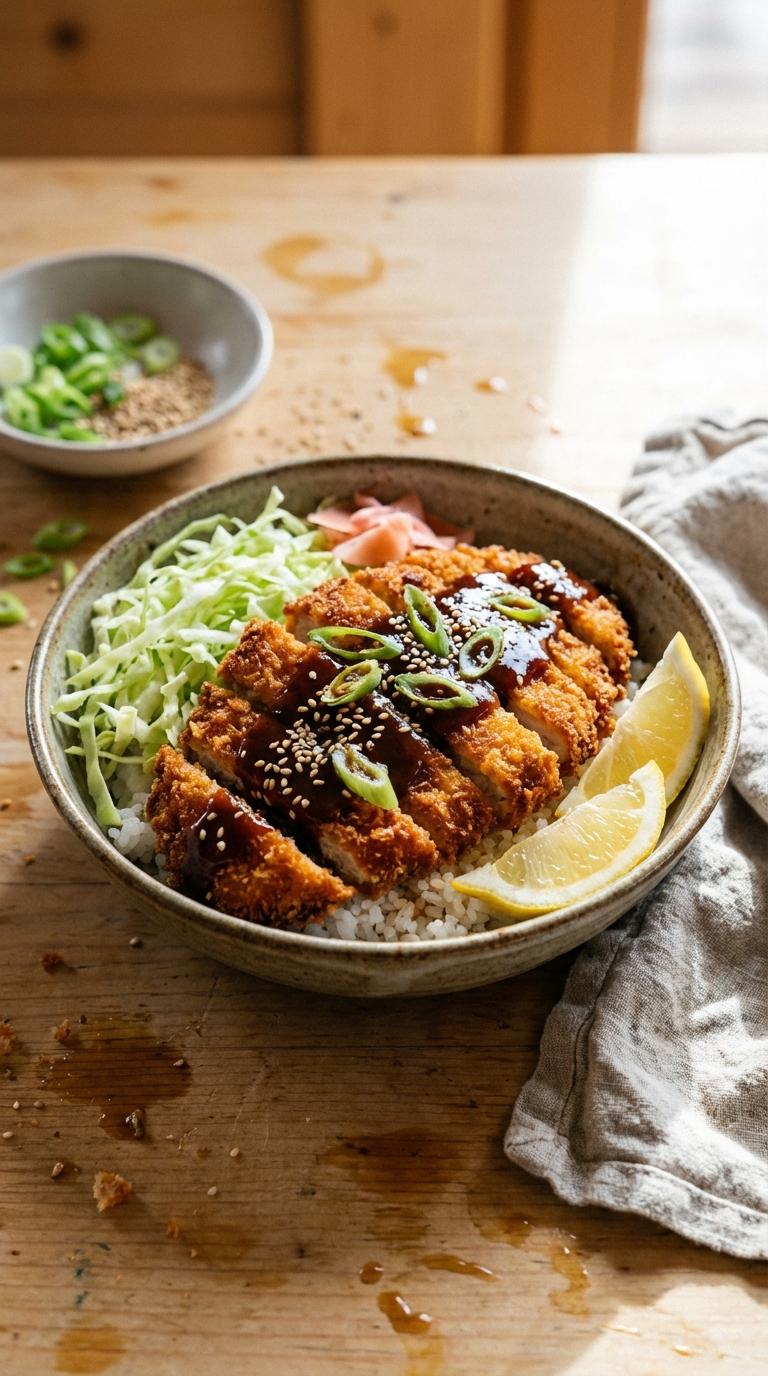
Let the fried cutlets rest for two minutes, then slice them crosswise into thick strips. This makes them easier to eat with chopsticks and shows off the crispy coating. Divide the cooked rice among four bowls. Arrange the sliced katsu alongside shredded cabbage and pickled ginger. Drizzle generously with tonkatsu sauce. Garnish with toasted sesame seeds, sliced green onions, and lemon wedges. The lemon adds brightness that balances the fried richness.
Print
Japanese Chicken Katsu Bowl
- Total Time: 30 minutes
- Yield: 4 servings
Description
Chicken katsu — breaded, pan-fried cutlets — is Japanese comfort food at its crunchiest. Served over steamed rice with shredded cabbage, pickled ginger, and a drizzle of tonkatsu sauce, it is the kind of bowl that feels like a treat but is really just good technique applied to a chicken breast. The panko coating is what makes the difference — lighter and crunchier than any Western breadcrumb.
Ingredients
- 4 boneless, skinless chicken breasts
- 1/2 cup all-purpose flour
- 2 large eggs, beaten
- 2 cups panko breadcrumbs
- 1 teaspoon kosher salt
- 1/2 teaspoon freshly ground black pepper
- 1/2 cup vegetable oil for frying
- 3 cups cooked Japanese short-grain rice
- 2 cups shredded green cabbage
- 2 tablespoons pickled ginger
- 1/4 cup tonkatsu sauce (store-bought or homemade)
- 1 tablespoon toasted sesame seeds
- 2 green onions, sliced
- Lemon wedges for serving
Instructions
- Place each chicken breast between plastic wrap and pound to an even 1/2-inch thickness.
- Season the chicken with salt and pepper. Set up a breading station: flour in one dish, beaten eggs in another, and panko in a third.
- Dredge each cutlet in flour, then egg, then press firmly into the panko to create a thick, even coating.
- Heat vegetable oil in a large skillet over medium heat to 350°F. Fry the cutlets 4 to 5 minutes per side until deep golden brown and cooked through. Drain on a wire rack.
- Let the cutlets rest 2 minutes, then slice crosswise into thick strips.
- Divide rice among 4 bowls. Arrange the sliced katsu alongside shredded cabbage and pickled ginger.
- Drizzle with tonkatsu sauce and garnish with sesame seeds, green onions, and lemon wedges.
Notes
- Japanese panko breadcrumbs are made from crustless white bread and create a lighter, crispier coating than Italian-style breadcrumbs.
- Medium heat is critical for katsu — too high and the coating burns before the chicken cooks through, too low and it absorbs oil.
- Shredded raw cabbage is not a side thought — in Japan it is considered an essential accompaniment that cuts through the richness of the fried cutlet.
- Prep Time: 15 minutes
- Cook Time: 15 minutes
- Category: Main Course
- Cuisine: Japanese
Nutrition
- Serving Size: 1 serving
- Calories: 560
- Sugar: 6
- Sodium: 780
- Fat: 24
- Carbohydrates: 50
- Fiber: 2
- Protein: 40
- Cholesterol: 130
Frequently Asked Questions
Can I bake this instead of frying?
You can bake breaded chicken at 400°F for about twenty minutes, but it won’t have the same crispy texture as pan-fried katsu. If you do bake it, spray the breaded chicken with oil before baking to help it brown.
What is tonkatsu sauce?
Tonkatsu sauce is a thick, sweet-savory Japanese condiment similar to Worcestershire sauce but sweeter and less tangy. You can find it at Asian grocery stores or online. In a pinch, mix equal parts Worcestershire sauce and ketchup with a bit of soy sauce.
Can I make this ahead?
Katsu is best eaten immediately while the coating is crispy. It doesn’t hold well after frying. You can bread the chicken ahead and refrigerate it for a few hours before frying.
Mine went soft by the time it was sitting on the rice, even resting them on a rack like it says. Any trick for keeping the crust crisp when you are frying four and the first ones have to wait?